

Leftover wings often lose their appeal when they become soggy in the microwave or dried out in a conventional oven. Learning how to reheat chicken wings in air fryer technology is the secret to reclaiming that fresh-from-the-fryer texture without the mess. By utilizing rapid air circulation, your appliance can restore the crunch of the skin while keeping the meat juicy and tender.
Whether you are dealing with takeout from a spot like Wingstop or leftover homemade wings, this method ensures your food tastes just as good as it did the first time. You will find that mastering this technique saves both time and flavor, turning yesterday’s dinner into a perfect snack.
Understanding the Physics of Air Fryer Reheating
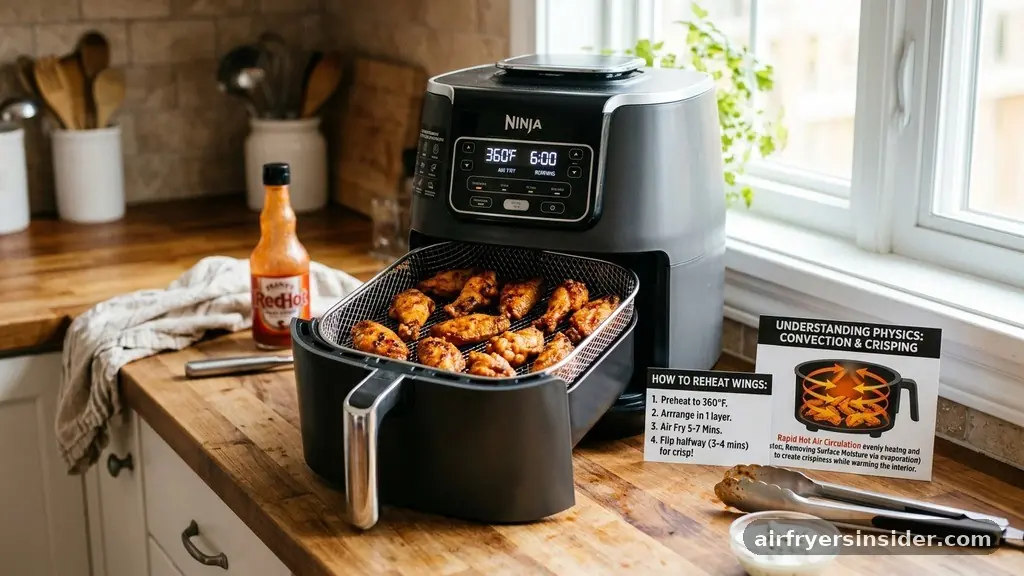
The primary reason an air fryer outperforms a microwave or a standard oven for reheating is its reliance on high-speed convection. When you place wings in the basket, the machine forces hot air to circulate around every inch of the surface.
This rapid movement of heat effectively re-crisps the skin by evaporating excess moisture that accumulated during storage. Unlike a microwave, which heats food by agitating water molecules, an air fryer creates a dry environment that promotes the Maillard reaction.
This process is essential for maintaining the integrity of the breading or the original glaze. Because the heat is concentrated and directional, the exterior becomes firm and golden while the interior stays moist.
You are essentially mimicking the original deep-frying process, albeit with significantly less oil and time. Understanding this mechanism allows you to adjust your settings based on the size of the wings and the density of the sauce, ensuring that you achieve a perfect reheat every single time.
The Importance of Preheating for Optimal Results
Many users make the mistake of tossing cold wings into a room-temperature air fryer. Preheating is a non-negotiable step if you want that signature crunch.
By running the machine at your target temperature for three to five minutes before adding the wings, you ensure that the cooking process begins the moment the food hits the basket. This initial blast of heat helps lock in moisture and prevents the meat from steaming in its own cold juices.
If you skip preheating, the wings will sit in the basket while the air gradually warms up. This extra time allows moisture to seep out of the meat, leading to a texture that is less than ideal.
Always check your specific model, such as a Ninja Foodi or a Cosori, to see if it has a dedicated preheat function. Even if it does not, manually setting the timer for a short burst before loading the wings will significantly improve the outcome of your reheat cycle.
Achieving Perfect Moisture Retention
One of the biggest fears when reheating poultry is ending up with dry, stringy meat. Moisture retention depends on the balance between the internal temperature of the wing and the external heat.
A common mistake is cranking the temperature too high, which scorches the outside before the center has a chance to warm up. Aim for a moderate temperature, typically around 350°F to 375°F, to allow for even heating throughout the bone-in piece.
If your wings were heavily sauced, consider adding a very light mist of oil or a splash of water to the basket bottom to create a humid environment. This helps prevent the sauce from burning or turning into a sticky, unpleasant residue.
Remember that the skin acts as a protective barrier; as long as you do not overheat the wings, the fat rendered within the skin will keep the meat succulent. Use a food thermometer occasionally to ensure you are not overcooking them, targeting an internal temperature of 165°F.
Managing Different Types of Wings
Not all wings are created equal, and your approach should shift depending on their composition. Breaded wings require a slightly lower temperature to prevent the coating from becoming burnt before the interior is hot.
Conversely, naked or smoked wings can handle higher heat to get that skin extra crispy. If you are dealing with wings that were tossed in a heavy buffalo sauce, you might find that the sauce thickens and becomes tacky during the reheat.
Handling Specific Styles
- Breaded Wings: Use a lower temperature (340°F) to avoid burning the flour-based coating.
- Naked/Roasted Wings: These can handle 375°F to ensure maximum crispiness.
- Sauced Wings: Add a fresh drizzle of sauce after reheating to restore the original flavor profile.
- Frozen Leftovers: Increase the reheat time by 2-3 minutes but ensure you do not crowd the basket.
When dealing with fast-food leftovers like KFC or Wingstop, remember that they often have a high sugar content in their glazes. Sugar burns quickly. Keep a close eye on the basket during the last minute of cooking, as the transition from perfectly glazed to charred can happen in a matter of seconds.
Strategic Basket Placement and Air Circulation
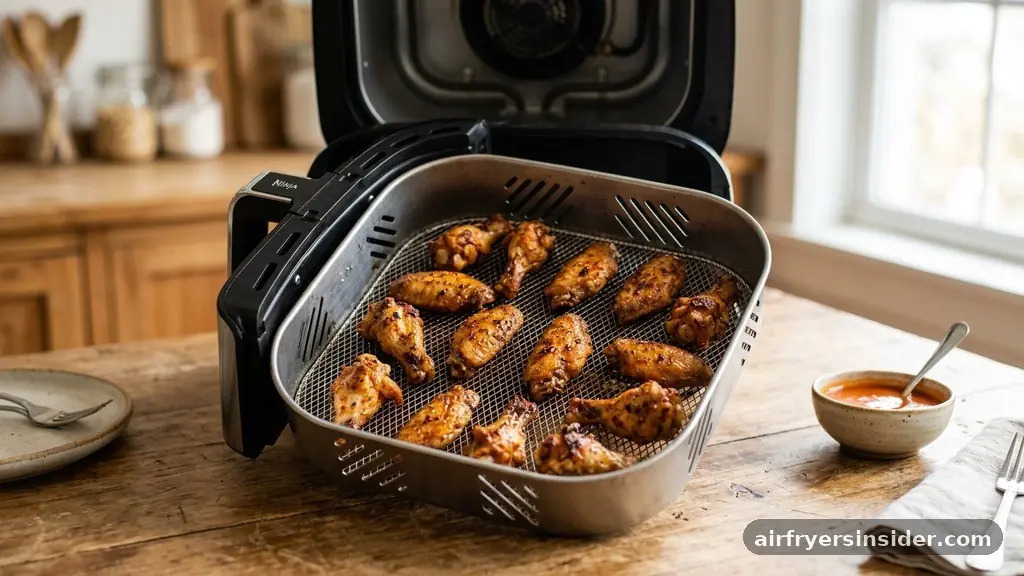
The efficiency of your air fryer depends entirely on airflow. If you pack the basket to the brim, you are essentially steaming the wings rather than frying them. For the best results, arrange the wings in a single layer with a small amount of space between each piece.
This allows the hot air to wrap around the entire circumference of the wing. If you have a large batch, it is much better to reheat them in two separate batches than to crowd the basket and settle for soggy results.
If you are concerned about cleanup, you might be tempted to use parchment paper. While this is great for preventing sticking, ensure that the paper does not block the airflow holes at the bottom of the basket.
Using a perforated parchment liner is a better choice than a solid sheet. If you don’t have liners, a light coat of cooking spray on the basket surface will suffice to prevent the skin from sticking during the heating process.
Addressing Common Topical Gaps
Many people struggle with the timing of the reheat cycle. A common question is whether the size of the wing affects the duration.
Larger, meatier wings naturally take longer to heat through than small drumettes. You should also consider the starting temperature of the wings; if you are pulling them directly from the refrigerator, they will need an extra minute compared to wings that have sat on the counter for ten minutes.
Comparison of Reheating Methods
| Method | Time Required | Texture Outcome |
|---|---|---|
| Air Fryer | 6-10 Minutes | Excellent Crisp |
| Microwave | 1-2 Minutes | Soft/Soggy |
| Conventional Oven | 15-20 Minutes | Good, but slow |
Another gap in knowledge involves carryover cooking. Because air fryers provide such intense heat, the temperature of the wings will continue to rise for a minute or two after you pull them out of the basket.
If you pull them when they reach exactly 165°F, they might end up slightly overdone by the time you sit down to eat. Aiming to pull them at 160°F is often the sweet spot for perfect, juicy results.
Essential Tools for Success
While an air fryer is the primary tool, a few accessories can make the process much smoother. A digital food thermometer is the most important item in your kitchen for food safety.
It takes the guesswork out of the process, ensuring that you are reaching the proper internal temperature without drying out the meat. You do not need an expensive model, but a fast-reading digital probe is worth the investment for any home cook.
An oil mister is another helpful tool. Using a store-bought aerosol spray can sometimes damage the non-stick coating of your air fryer basket due to the propellants used.
A refillable oil mister allows you to use your own high-smoke-point oil, such as avocado or grapeseed oil, to give the wings a quick spritz if they seem a bit dry. These small additions improve the overall quality of the reheat and help maintain the longevity of your appliance.
Best Practices for Food Safety
Reheating leftovers requires careful attention to food safety. Bacteria grow rapidly in the “danger zone” between 40°F and 140°F.
If your leftover wings have been sitting out at room temperature for more than two hours, it is best to discard them rather than trying to reheat them. When storing wings, ensure they are kept in an airtight container in the refrigerator to prevent them from absorbing odors or drying out.
When you are ready to eat, verify the internal temperature of the thickest part of the meat. While the skin may look hot and crispy, the center of a bone-in wing can remain cool if the heat hasn’t penetrated deeply enough.
Never rely solely on the timer; always use your senses and a thermometer to confirm that the food is steaming hot throughout. Proper handling ensures that your meal is not only delicious but also safe to consume.
FAQ
Can I reheat wings that are still frozen in the air fryer?
Yes, you can, but you will need to adjust the time and temperature. Lower the heat to 320°F to ensure the center thaws and heats through before the outside burns. This process usually takes 12 to 15 minutes. Check the internal temperature to ensure it reaches 165°F.
Why do my wings get dry when I reheat them?
Dryness usually occurs due to excessive heat or cooking for too long. If your air fryer is set above 375°F, the exterior moisture evaporates too quickly. Also, avoid over-crowding the basket, as this forces you to keep the wings in the heat longer than necessary to achieve a crisp texture.
Is it better to add sauce before or after reheating?
It is significantly better to add sauce after reheating. If you heat wings that are already heavily sauced, the sugars will caramelize and burn, leading to a bitter taste and a messy basket. Simply toss the crispy reheated wings in a bowl with fresh sauce before serving.
How do I know if my wings are safe to eat?
Use a food thermometer to check that the internal temperature has reached at least 165°F. Additionally, ensure the wings were stored properly in the refrigerator and have not been left out at room temperature for more than two hours, as this is the primary cause of foodborne illness.
Conclusion
Mastering the art of reheating chicken wings in air fryer equipment transforms a mediocre leftover meal into a restaurant-quality experience. By focusing on preheating your machine, managing your basket density, and utilizing a thermometer to ensure safety, you can maintain the perfect balance of crispy skin and succulent meat. Whether you are dealing with breaded varieties or simple buffalo-style wings, the convection power of the air fryer is your best tool for success.
Start by experimenting with your specific model to find the exact timing that works for your favorite style of wings. Now that you have the knowledge to refresh your leftovers perfectly, you can enjoy your favorite snacks exactly the way they were intended—hot, crispy, and full of flavor. Happy cooking!
Meta Description: Learn how to reheat chicken wings in air fryer perfectly. Get expert tips on maintaining crispy skin, moisture, and flavor for the best leftover wings.


