

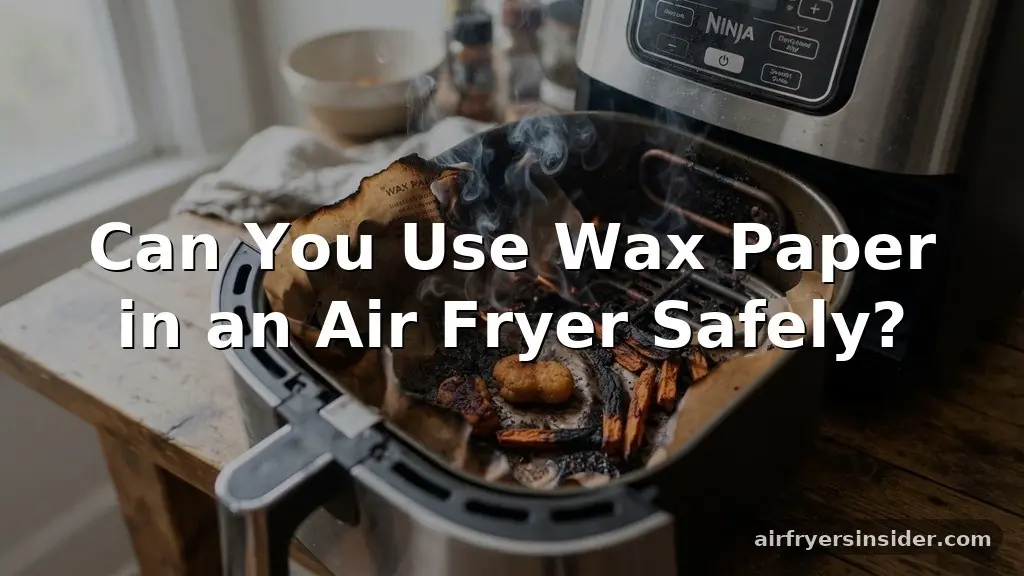
Determining whether you can use wax paper in an air fryer is a common point of confusion for home cooks looking to minimize cleanup time. While it might seem like a convenient way to keep your basket clean, the reality involves significant risks that could affect your kitchen safety and the longevity of your appliance.
Understanding how different materials react to the intense heat of a convection-style environment is essential before you place any liner inside your machine. This article explores the mechanics of heat transfer and why certain materials are simply not meant for high-heat cooking.
The Science of Why Wax Paper Fails Under Heat
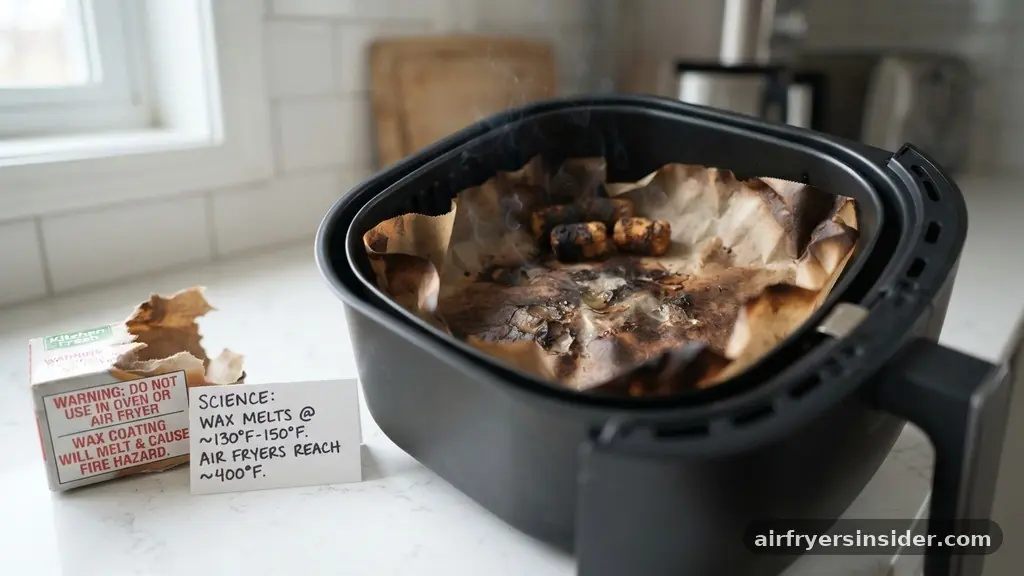
At the most basic level, wax paper is designed as a moisture-resistant barrier for food storage, not for cooking. It is made from paper coated in a thin layer of paraffin wax, which provides its signature non-stick and water-repellent properties.
This coating is the primary reason why it is dangerous to use in an air fryer. Unlike materials engineered for baking, paraffin wax has a relatively low melting point, typically ranging between 120 and 150 degrees Fahrenheit.
When you place wax paper inside an air fryer, the appliance’s heating element quickly raises the internal temperature well beyond the point where the wax begins to liquefy. Once the wax melts, it can drip onto the heating element or the bottom of the basket, creating a significant fire hazard.
Furthermore, the paper itself is not treated to withstand the constant, forceful air circulation that defines an air fryer. As the paper dries out and curls, it can easily fly up and touch the heating element, leading to smoke and damage to your appliance.
Comparing Wax Paper to Parchment Paper
Many people mistakenly assume that wax paper and parchment paper are interchangeable, but they are fundamentally different products. Parchment paper is treated with a silicone coating, which gives it superior heat resistance and prevents it from burning at temperatures commonly used for roasting or frying. While both serve as non-stick surfaces, their chemical compositions dictate their utility in the kitchen.
Parchment paper is specifically engineered to handle the high temperatures found in a convection oven or an air fryer. It can typically withstand heat up to 425 or 450 degrees Fahrenheit without degrading or releasing harmful fumes.
In contrast, wax paper is not for cooking, and its physical structure breaks down rapidly under thermal stress. Using the wrong paper creates an unnecessary risk of fire and can leave a waxy, unpalatable residue on your food, effectively ruining your meal while potentially causing permanent damage to your air fryer’s interior.
The Risks of Fire and Appliance Damage
Kitchen safety should always be the priority when experimenting with new cooking techniques or accessories. Placing any material that is not heat-rated into an air fryer introduces variables that the manufacturer did not account for during the design phase. Because air fryers rely on a powerful fan to circulate hot air, loose or lightweight materials like wax paper can be lifted by the airflow.
If a piece of wax paper is lifted into the heating element, it ignites almost instantly. This can lead to an open flame inside the appliance, which is a terrifying prospect for any cook. Even if the paper doesn’t catch fire immediately, the melting wax can create a mess that is notoriously difficult to clean.
If this residue reaches the internal components or the fan, it can lead to mechanical failure. You might find yourself facing costly repairs or, in the worst-case scenario, needing to replace the entire unit because of a simple, avoidable mistake.
Safer Alternatives for Air Fryer Lining
If your goal is to reduce the time spent scrubbing your basket, several safer alternatives exist that are specifically designed for the job. These options allow for easy cleanup without compromising the safety of your kitchen or the performance of your machine. Using the right tool for the task ensures that your food cooks evenly and that your appliance remains in top condition for years to come.
| Material | Heat Resistance | Best Use Case |
|---|---|---|
| Perforated Parchment Paper | Up to 450°F | Preventing sticking for sticky glazes |
| Silicone Air Fryer Liners | Up to 500°F | Daily use, dishwasher-safe cleaning |
| Aluminum Foil | Very High | Containment of juices or messy marinades |
Utilizing Perforated Parchment Paper
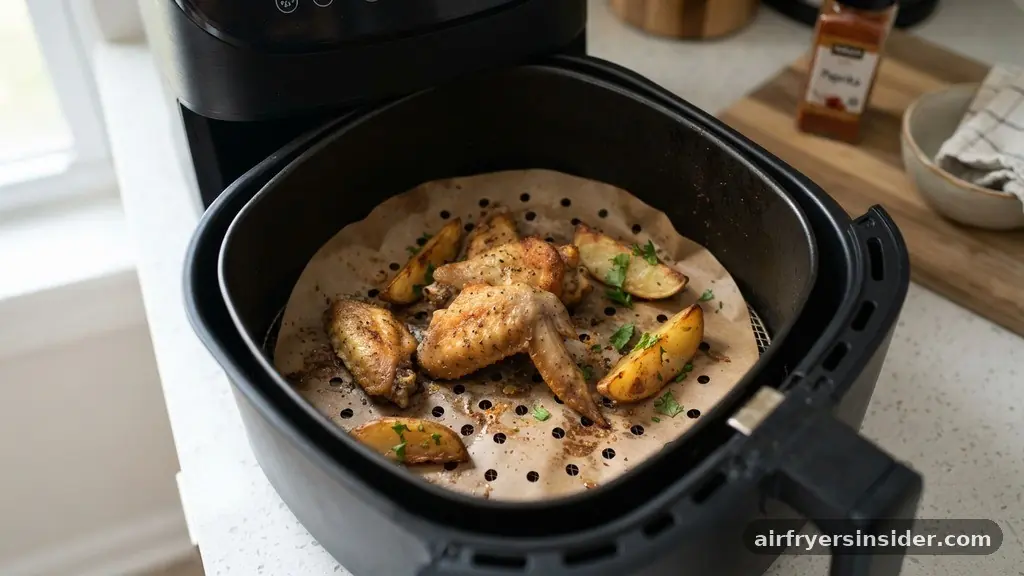
One of the most effective solutions is using perforated parchment paper. These liners come with pre-cut holes that are vital for maintaining the necessary air circulation that makes air frying effective. Because an air fryer works by blowing hot air around the food, blocking the holes in the basket can result in soggy, unevenly cooked meals.
Specifically designed for air fryers, these perforated sheets allow the hot air to pass through while still providing a non-stick surface for your chicken, vegetables, or snacks. They are designed to handle the high temperatures of the cooking process without scorching or releasing toxic chemicals.
When selecting these, ensure they are high-quality and fit the dimensions of your specific basket model. They are a much more reliable choice than standard kitchen paper, as they are built to withstand the rigors of the convection process.
The Benefits of Silicone Air Fryer Liners
For those who prefer a reusable option, silicone air fryer liners have become a staple in modern kitchens. These liners are generally non-stick, and dishwasher-safe, making them incredibly convenient for frequent users. Unlike paper, which must be discarded after every use, a silicone liner can be washed and reused hundreds of times.
Silicone is an inert material that can handle extreme temperature fluctuations, making it ideal for the high-heat environment of an air fryer. Because they are often molded to fit the bottom of the basket, they stay securely in place, minimizing the risk of the liner flying into the heating element. While they do not provide the same level of airflow as perforated paper, many modern versions feature raised ridges that help elevate the food, allowing air to circulate underneath while trapping grease and crumbs.
Handling Aluminum Foil Safely
Aluminum foil is another popular option that many cooks reach for when they want to avoid scrubbing their air fryer basket. Often, people use it to create a “boat” to hold marinades or to prevent small items from falling through the basket grates. However, it is important to exercise caution when using foil.
You must ensure that the foil is weighed down by the food you are cooking. If the foil is too light, the fan can lift it up, causing it to hit the heating element. This can cause the appliance to spark, short-circuit, or even start a fire.
Furthermore, avoid using foil with acidic foods like tomatoes or citrus, as the acid can cause the aluminum to leach into your food. Use foil primarily for catching drips or holding items that won’t move around during the cooking cycle, and always make sure it is tucked tightly against the bottom of the basket.
Addressing Common Misconceptions
There is a persistent myth that if you wrap food tightly enough, wax paper will work in an air fryer. This is a dangerous misconception.
The air velocity inside an air fryer is significant, and no amount of wrapping will prevent the paper from potentially unfolding or tearing when the fan kicks in. The heat is also ambient, meaning it surrounds the food regardless of how well you think you’ve secured the paper.
Another common question involves whether high-quality wax paper is different. Regardless of the brand or the thickness, the fundamental problem remains: the melting point of the wax coating. If you are looking for a way to achieve a “minimalist cooking” style that favors easy cleanup, stick to the materials that are explicitly rated for oven use.
Don’t rely on household items that were designed for wrapping sandwiches or lining cake tins. The risk to your appliance and the potential for a kitchen fire far outweigh the minor convenience of using a product you already have in your pantry.
Topical Gaps: What Happens to the Air Circulation?
A frequently overlooked aspect of using liners is how they affect the overall physics of your air fryer. The appliance relies on the Maillard reaction, which is facilitated by the rapid movement of hot, dry air.
When you cover the bottom of your basket, you are essentially changing the nature of the cooking process. If you use a solid liner that covers the entire surface area, you are effectively turning your air fryer into a tiny, inefficient oven.
This lack of airflow is why perforated parchment paper is superior to solid sheets or aluminum foil. By allowing the air to move through the bottom, you ensure that the food remains crispy on all sides rather than just the top. If you must use a liner, always opt for one that promotes air movement.
If you find that your food is coming out soggy or taking much longer to cook than the recipe suggests, it is likely because your liner is obstructing the air vents. Proper air circulation is the secret to getting that perfect, golden-brown crunch, and your choice of liner is a critical component in achieving that result.
FAQ: Common Questions About Air Fryer Liners
Can I use wax paper in an air fryer if I turn the heat down?
No, it is not recommended. Even at lower temperatures, the air circulation can cause the paper to lift and touch the heating element. Additionally, most air fryers have a minimum operating temperature that is still high enough to melt the wax coating, creating a fire hazard.
What can I use instead of parchment paper if I run out?
If you have no parchment paper, it is better to cook without a liner. Simply spray your basket with a light coating of oil or use a small amount of cooking spray to prevent sticking. You can then clean the basket once it has cooled down completely.
Is it safe to use aluminum foil every time I cook?
Using foil occasionally is generally safe, but it is not ideal for every meal. Frequent use can block air circulation and potentially cause the heating element to work harder. Only use it when necessary to catch drips or contain messy ingredients, and ensure it is firmly weighted down.
Why does my air fryer smoke when I use a liner?
Smoke usually indicates that the liner is either too close to the heating element or that the material is beginning to burn. If your liner is made of wax paper, it is likely melting or burning. Stop using the appliance immediately, let it cool, and remove the debris.
Final Thoughts on Safe Air Fryer Usage
Maintaining a safe and efficient kitchen means choosing the right tools for your appliances. While the temptation to use wax paper for an easy cleanup is understandable, the risks of melting wax, smoke, and potential fire damage are simply too high. By opting for safer, heat-rated alternatives like perforated parchment paper or reusable silicone liners, you can enjoy all the benefits of air frying without the stress.
Always prioritize the manufacturer’s guidelines and remember that your appliance’s longevity depends on proper use. If you are ever in doubt about a material, it is best to skip the liner entirely and use a quick soak in warm, soapy water to clean your basket after the meal is finished. Keep your cooking safe and your air fryer running smoothly by sticking to materials designed to handle the heat.
Meta Description: Can you use wax paper in an air fryer? Learn why it is a fire hazard and discover the safest alternatives for your appliance to ensure perfect results.


