

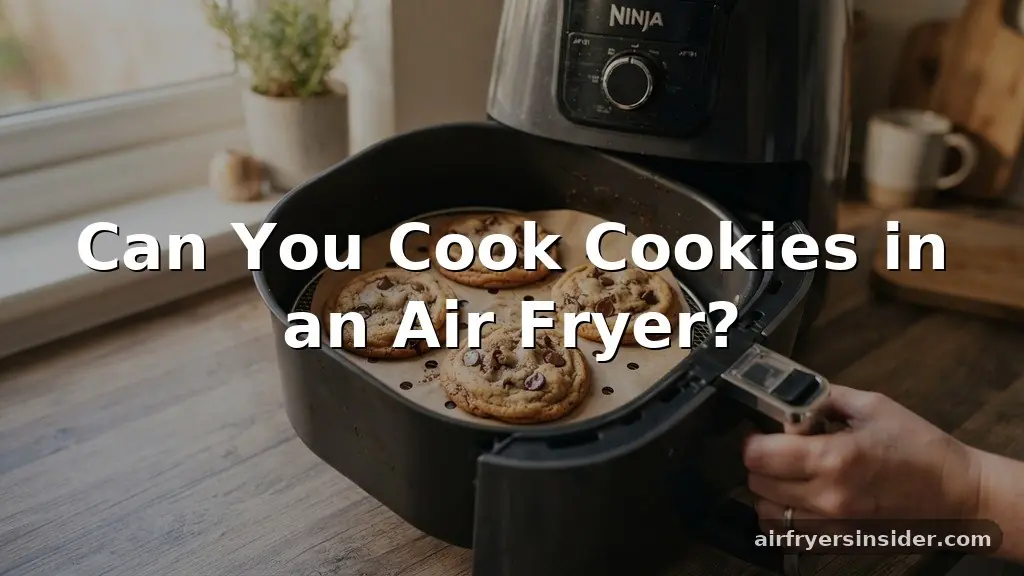
If you have ever wondered if you can cook cookies in an air fryer, the answer is a resounding yes. While these countertop appliances are famous for crispy fries and wings, they function essentially as high-powered convection ovens, making them surprisingly effective for small-batch baking.
Whether you are using premade dough or whipping up a batch from scratch, the rapid heat circulation creates a unique texture that many bakers find superior to traditional oven results. Understanding the nuances of temperature and timing allows you to achieve the perfect balance of crisp edges and soft, chewy centers without heating up your entire kitchen.
Understanding the Mechanics of Air Fryer Baking
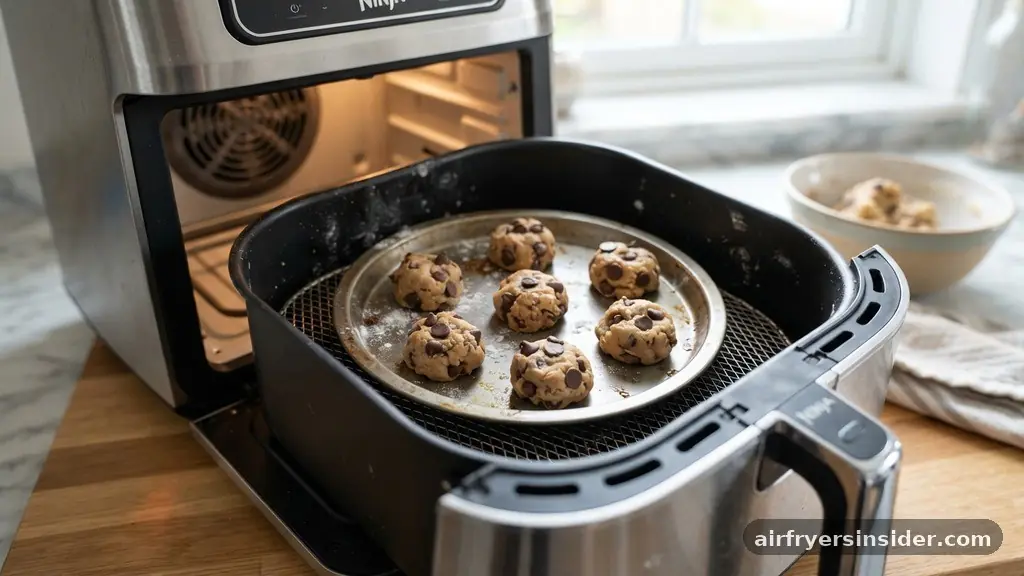
The primary reason you can successfully bake in an air fryer is that the device is essentially a compact convection oven. Most standard ovens rely on static heat, but an air fryer uses a powerful fan to circulate hot air at high speeds.
This intense airflow triggers the Maillard reaction much faster than a conventional oven, resulting in rapid browning and a distinct texture profile. When you place a tray of cookies inside, the air hits the dough from all sides, creating a crisp outer shell while the interior stays tender.
Because the heating element is located very close to the food, you must be mindful of the intensity. A standard baking temperature might be too aggressive for an air fryer, often leading to burnt tops before the center is cooked through.
Therefore, lowering your standard recipe temperature by about 25 degrees Fahrenheit is a professional trick that ensures the heat penetrates the dough evenly. This simple adjustment prevents the edges from hardening before the middle has had a chance to set properly.
Preparing Your Air Fryer for Optimal Cookie Results
Before you drop your dough into the basket, proper preparation is essential for both success and cleanup. Unlike a large oven, an air fryer creates a small, enclosed environment where airflow is king.
You should never crowd the basket, as restricted space prevents the hot air from circulating around each cookie. If the air cannot move freely, your cookies will end up unevenly cooked, with some parts raw and others overdone.
Preheating is another often-overlooked step that makes a significant difference. While many modern air fryers claim to reach temperature instantly, letting the unit run empty for three to five minutes allows the internal surfaces to stabilize.
This ensures that the moment your dough hits the basket, it begins cooking immediately rather than slowly warming up. Consistency in the starting environment leads to more predictable results, especially when you are working with delicate recipes like chocolate chip or sugar cookies.
Selecting the Right Tools for Air Fryer Baking
You cannot simply toss loose dough into a metal basket, as it will likely drip through the holes or stick permanently to the mesh. To achieve professional results, you need the right accessories.
Parchment paper is the most popular choice, but you must ensure it is weighted down by the dough so it does not fly up into the heating element. Many bakers prefer custom-cut perforated parchment sheets designed specifically for air fryers, which allow for necessary airflow while keeping the basket clean.
Silicone liners are another viable option, as they are reusable and provide a non-stick surface that is easy to wash. If you prefer not to use liners, you must lightly coat the base of your basket with non-stick spray, though this is less effective for cookies than for savory items. Below is a quick comparison of the most common materials used for air fryer baking:
| Material | Best Used For | Pros |
|---|---|---|
| Perforated Parchment | Dough-based recipes | Allows airflow, easy cleanup |
| Silicone Mats | Cookie batches | Reusable, non-stick |
| Aluminum Foil | Messy items | Heat reflective, disposable |
Managing Batch Size and Rack Placement
One of the biggest challenges when learning how to cook cookies in an air fryer is the limited capacity. You might be tempted to stack them or crowd the basket to save time, but this will almost certainly result in a doughy, unappealing mess.
A single layer is mandatory for even baking. If you are baking a large amount of dough, it is far better to work in several small batches rather than trying to cram everything in at once.
Rack placement is also critical, especially if your specific air fryer model has different height settings. If your unit has a rack, placing the cookies slightly higher can speed up the browning process on the top.
However, if you notice the tops browning too quickly, you should immediately move the tray to a lower position. Constant monitoring is necessary during your first few attempts, as every model—whether it’s a Ninja Foodi, a Cosori, or a generic brand—heats slightly differently.
Optimizing Cooking Time and Temperature
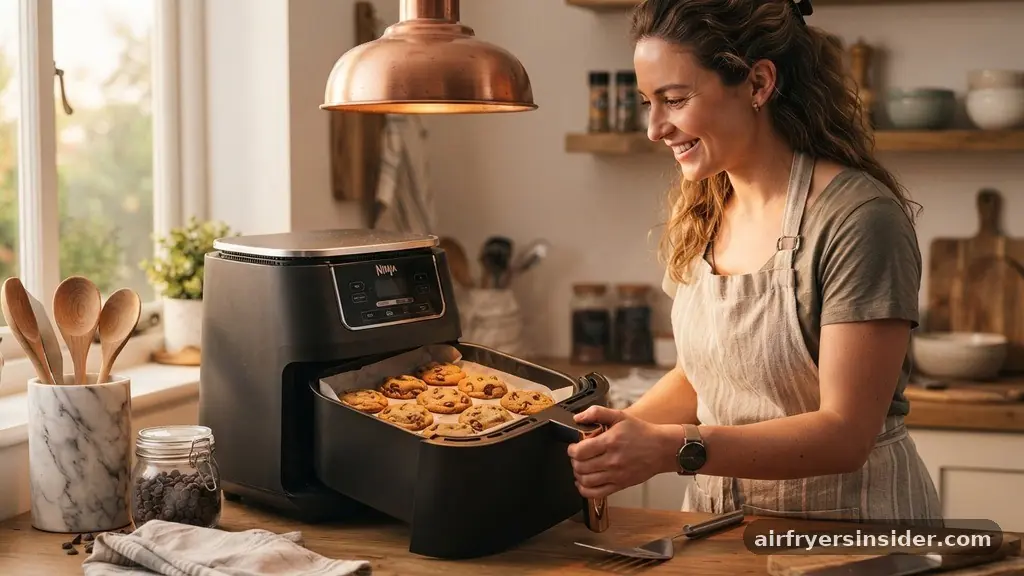
Finding the perfect baking temperature is the secret to avoiding burnt or undercooked treats. Most cookie recipes intended for a standard oven call for 350°F, but for the air fryer, you should aim for 325°F or even 300°F depending on the thickness of the cookie.
Lowering the heat allows the center of the cookie to bake through without the edges becoming excessively dark or brittle. Because the airflow is so intense, the cooking time will be significantly shorter than what you are used to.
- Start by checking your cookies at the 5-minute mark.
- If they look pale, add 1-2 minutes of cooking time.
- Look for golden brown edges as a sign of doneness.
- Let them rest in the basket for a minute to firm up.
- Always use a cooling rack to stop the carryover cooking.
These short intervals are vital because the difference between perfectly baked and overdone can be as little as 30 seconds. Do not rely solely on the timer; use your eyes and nose to tell you when they are ready.
Addressing Common Challenges and Topical Gaps
A common issue bakers encounter is the “flying parchment” problem, where the air current lifts the paper and forces it against the heating element, which can be a fire hazard. To solve this, always ensure the dough is placed directly on top of the paper, covering as much surface area as possible.
Another frequent question is whether you can cook premade dough from the refrigerator. The answer is yes, but you must account for the cold temperature of the dough, which might require an extra minute of cooking time compared to room-temperature homemade dough.
Some users worry about food safety when using air fryers for baking, but as long as you follow standard guidelines for egg-based doughs, there is no increased risk. The internal temperature of the cookie should reach a point where the eggs are safely cooked, which happens naturally when the edges are crisp and the center is set. If you are concerned about the bottom of the cookies not browning, you can flip them halfway through, though this is rarely necessary if you have decent airflow.
Converting Traditional Recipes for Air Fryer Use
When you decide to adapt your favorite family cookie recipe for the air fryer, the conversion process is straightforward. First, look at the required oven temperature and reduce it by 25 degrees.
Second, estimate the time by taking the original oven time and cutting it by roughly 30 to 40 percent. If a recipe says 12 minutes at 350°F, try 7 or 8 minutes at 325°F.
Consistency is the goal, so keep a small notebook or a note on your phone with the adjustments that worked best for your specific machine. If you find the cookies are too soft, it means you pulled them out too early; if they are too dry, shorten the time. Remember that cookies continue to cook for a minute or two after you take them out of the heat, so pulling them out while they still look slightly underdone in the center is usually the right call.
The Role of Airflow and Heat Circulation
The defining feature of an air fryer is its ability to circulate heat, but this can sometimes be a double-edged sword for baking. If the airflow is too strong, it can cause the edges of the cookies to crisp up while the center remains raw.
To mitigate this, some experienced bakers turn the fan speed down if their air fryer allows for variable settings. If you have a single-speed fan, simply keep the cookies slightly smaller to ensure the heat can penetrate the dough quickly.
Another factor is the density of the dough. Heavier, thicker doughs will take longer to bake and might require a slightly lower temperature for a longer duration.
Conversely, thin, buttery doughs will spread quickly and bake in just a few minutes. By observing how the dough behaves under the intense air current, you can adjust your techniques to ensure every batch turns out consistently delicious.
Finishing Touches and Serving Suggestions
Once your cookies have finished baking, the most important step is the cooling process. Never try to move them directly from the hot basket to a plate while they are still piping hot.
They need to sit on a cooling rack for at least 5 minutes to firm up. During this time, the internal structure of the cookie stabilizes, transitioning from a delicate, gooey state to a stable, chewy texture.
If you are aiming for that professional bakery look, you can add extra chocolate chips to the tops of the cookies immediately after pulling them from the air fryer while they are still soft. The residual heat will melt them slightly, giving the cookies a gourmet appearance. Whether you are making a quick dessert for one or a small batch for the family, air fryer cookies offer a level of convenience that is hard to beat, proving that you don’t need a full-sized oven to enjoy a fresh-baked treat.
Frequently Asked Questions
Is an air fryer actually better than an oven for baking cookies?
It depends on your goal. An air fryer is significantly faster and more energy-efficient for small batches, producing a crisp exterior and chewy center. However, for large quantities or delicate recipes that require very precise, gentle heat, a traditional oven remains the superior choice for consistency.
Do I really need to use parchment paper?
Yes, using parchment paper or a silicone liner is highly recommended. It prevents the dough from sticking to the mesh basket and makes cleanup much easier. Without a liner, the dough can melt through the holes or become impossible to remove once it cools and hardens.
Can I use premade refrigerated cookie dough?
Absolutely. Premade dough is actually a great way to start if you are new to air fryer baking. Since the dough is already portioned, you can easily fit the right amount into the basket. Just remember to monitor them closely, as they often bake faster than homemade recipes.
Why did my cookies burn on the top but stay raw in the middle?
This usually happens because the temperature is too high. The air fryer’s heating element is very close to the food, which can quickly char the surface. Lowering the temperature by 25 degrees and moving the basket to a lower position should resolve this issue effectively.
Conclusion
Mastering the art of baking in your air fryer opens up a world of quick, delicious possibilities. By adjusting your temperature, utilizing proper liners, and keeping a close watch on your batch, you can achieve results that rival a traditional oven in a fraction of the time. Whether you are experimenting with classic chocolate chip or trying out new dough recipes, the key is to embrace the unique convection environment of the appliance.
Now that you know you can cook cookies in an air fryer with great success, try a small test batch today to see how your specific model performs. Once you find your perfect timing and temperature, you will likely find yourself reaching for the air fryer every time a craving for something sweet strikes.
Meta Description: Curious if you can cook cookies in an air fryer? Learn how to get perfect crispy edges and soft centers with our comprehensive guide to air fryer baking.


