


Mastering how to cook tuna steak in air fryer allows you to achieve a restaurant-quality result with minimal fuss and cleanup. Many home cooks are intimidated by the prospect of searing fish, fearing that overcooking will turn a delicate, expensive cut of tuna into a dry, chalky disappointment. However, because an air fryer functions as a powerful, compact convection oven, it is uniquely suited for preparing high-quality seafood.
By circulating hot air at high velocity, the appliance creates a beautiful crust on the exterior while keeping the interior succulent and tender. Whether you are working with fresh ahi tuna or a frozen fillet, understanding the precise mechanics of temperature and timing is the key to culinary success.
Understanding the Science of Air Frying Tuna
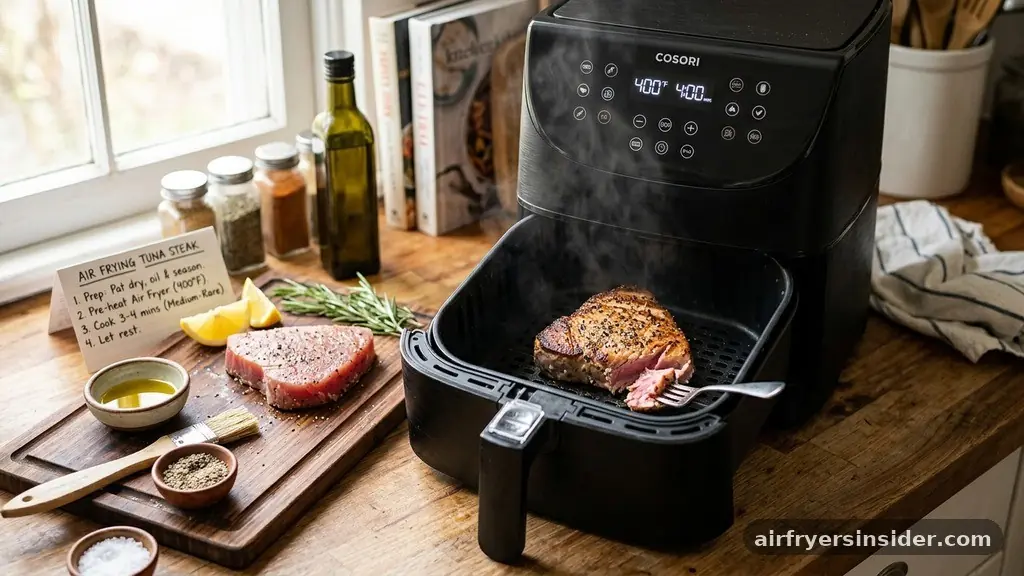
At its core, air frying is a form of convection cooking. Unlike a standard oven, which relies on radiant heat and often results in uneven browning, the air fryer uses a high-powered fan to blast hot air around the food.
When you place a tuna steak inside, the surface begins to dehydrate and brown almost instantly, thanks to the Maillard reaction. This is essential for fish, as it locks in moisture and creates a savory, caramelized exterior that contrasts beautifully with a cool or warm, raw-centered interior.
Because tuna is a lean protein with a low fat content compared to salmon or mackerel, it does not have a large margin for error. If you leave it in for even a minute too long, the texture changes from silky and firm to fibrous and brittle. The air fryer provides a controlled environment where you can manage the internal temperature with extreme precision.
By using a food thermometer, you remove the guesswork entirely. Aiming for an internal temperature of 115°F to 125°F is the gold standard for achieving a perfect medium-rare result. This ensures the fish remains buttery and flavorful, retaining its high protein content and beneficial omega-3 fatty acids throughout the cooking process.
Selecting and Preparing Your Tuna Steak
Before you even consider the appliance settings, the quality of your raw material matters. When shopping for tuna, look for sashimi grade or sushi-grade labels, especially if you intend to serve it medium-rare. This designation indicates that the fish has been handled with strict safety standards, minimizing the risk of parasites or bacteria.
A fresh steak should have a vibrant, deep red color and a clean, oceanic smell. If you are using frozen fish, ensure it is completely thawed in the refrigerator overnight before you attempt to air fry it. Cooking a partially frozen steak will result in an uneven texture where the outside is overcooked while the center remains icy.
Preparation begins with drying the surface of the tuna thoroughly. Moisture is the enemy of a good sear. Use a clean paper towel to pat the steak dry on all sides.
If the surface is wet, the air fryer will steam the fish instead of browning it. Once dried, brush the steak lightly with a high-heat oil. While olive oil is common, you might consider an oil with a higher smoke point, such as avocado or grapeseed oil, if you are cooking at temperatures above 400°F.
Seasoning should be simple but effective. A blend of black pepper, sea salt, and perhaps a touch of garlic powder works wonders. For an Asian-inspired flavor profile, you can press sesame seeds into the surface of the steak after oiling it to provide a nutty crunch.
Creating the Perfect Marinade and Crust
While a simple salt and pepper seasoning is classic, tuna is a versatile canvas for bold flavors. If you decide to marinate your tuna, keep the duration short—no more than 15 to 20 minutes.
Because tuna is delicate, acidic ingredients like lemon juice or vinegar can begin to “cook” the fish chemically, similar to how ceviche is made, which may result in a mushy texture if left too long. A well-balanced marinade usually consists of soy sauce, a small amount of sesame oil, and freshly grated ginger.
If you prefer a crust, consider applying a rub rather than a liquid marinade. A mixture of crushed coriander seeds, chili flakes, and toasted sesame seeds creates a fragrant, crunchy barrier that protects the delicate flesh from the direct heat of the air fryer.
When applying these rubs, make sure the surface of the tuna is lightly oiled so the spices adhere firmly. Avoid using sugar-heavy glazes or sauces before air frying, as the high sugar content will burn rapidly in the intense, circulating air of the appliance, resulting in a bitter, charred taste rather than a pleasant, caramelized finish.
Optimizing the Air Fryer Environment
To get the best results, you must treat your air fryer with the same respect as a professional oven. Start by ensuring you preheat the unit for at least three to five minutes.
Most modern air fryers, including the popular Ninja Foodi, reach their target temperature quickly, but a consistent heat source right from the start is critical for searing. If you crowd the basket, the air cannot circulate properly, which will cause the internal temperature to rise too slowly, leading to grey, overcooked fish.
Another professional tip is the use of parchment paper. While not strictly necessary, using perforated parchment paper liners specifically designed for air fryers makes cleanup significantly easier and prevents the delicate fish from sticking to the metal grate. However, do not use parchment paper if it blocks the airflow; ensure it is weighted down by the food.
If you are worried about cross-contamination, especially if you have been handling raw fish, make sure to clean the air fryer basket thoroughly after each use. You can also use a small silicone trivet or a specialized rack to elevate the steak slightly, allowing heat to hit the bottom of the fish for a more uniform sear.
Temperature and Timing Guidelines
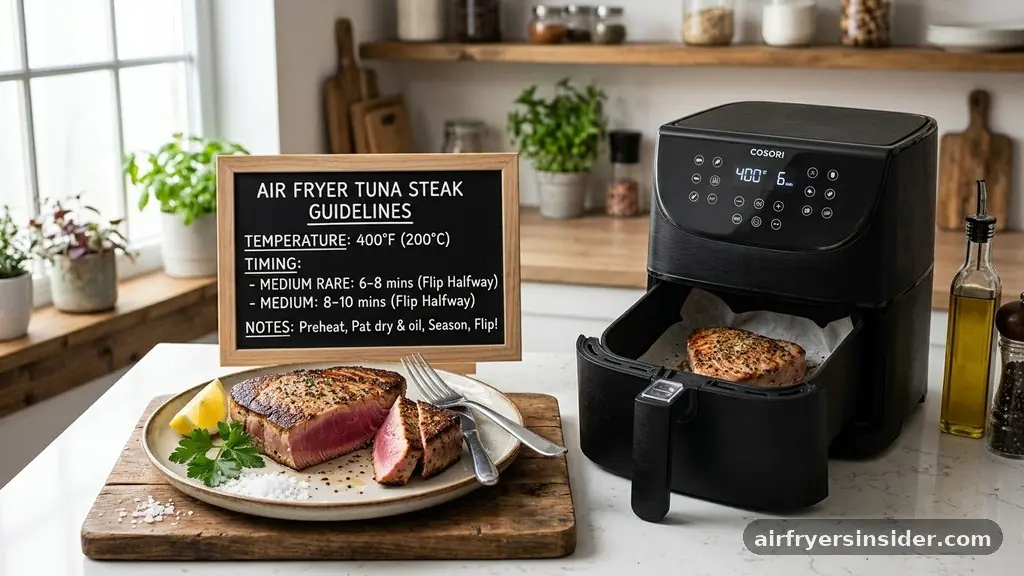
Determining the exact time to air fry tuna depends on the thickness of the steak and your preferred level of doneness. A standard 1-inch thick tuna steak typically requires about 4 to 6 minutes at 400°F. If you prefer your tuna completely cooked through, you will need to extend the time, but this is rarely recommended by chefs, as the quality of the fish is best preserved when the center remains pink.
| Doneness Level | Target Internal Temp | Estimated Time (at 400°F) |
|---|---|---|
| Rare | 110°F – 115°F | 3 – 4 Minutes |
| Medium-Rare | 115°F – 125°F | 4 – 6 Minutes |
| Medium | 130°F – 140°F | 6 – 8 Minutes |
| Well-Done | 145°F+ | 9+ Minutes |
These times are estimates. Always use your food thermometer to check the thickest part of the steak. Remember that carry-over cooking is a real phenomenon.
Even after you remove the tuna from the air fryer, the residual heat will continue to cook the center for a minute or two. To account for this, pull your steak out when the internal temperature is about 5 degrees lower than your final target.
Addressing Common Air Frying Mistakes
Many beginners struggle with the “tuna steak air fryer” process because they treat it like chicken or potatoes. The most common mistake is failing to account for the thickness of the protein.
A thin, supermarket-bought tuna steak will cook in half the time of a thick, butcher-cut loin. If you are cooking multiple steaks, ensure they are of similar thickness to guarantee they finish at the same time.
Another frequent error is neglecting the oil. Because air fryers don’t use submersion frying, the oil is the only thing helping to transfer heat and brown the exterior. If you skip the oil, the tuna will look pale and dry.
Conversely, using too much oil can cause smoking if the oil has a low smoke point. Stick to a light coating of high-heat oil.
Finally, don’t forget to flip the steak. While the air circulates all around, turning the fish halfway through ensures an even sear on both sides and helps prevent the bottom from becoming soggy if juices accumulate.
The Importance of Resting Time
Just like a beef steak, tuna benefits from a brief resting time. Once you remove the fish from the air fryer, transfer it to a warm plate or a cutting board and let it sit for 2 to 3 minutes before slicing. This allows the internal juices, which have been pushed toward the center by the heat, to redistribute throughout the meat.
If you slice into the tuna immediately, those juices will run out onto the board, leaving you with a drier piece of fish. Resting also allows the carry-over cooking process to finish, ensuring the final texture is consistent from edge to center.
While the tuna rests, you can prepare a simple pan sauce or a fresh herb garnish to serve alongside. A drizzle of high-quality extra virgin olive oil, a squeeze of fresh lime, or a scattering of microgreens can elevate the presentation. Resting is not just about temperature; it is about texture.
The muscle fibers relax as they cool slightly, resulting in a more tender bite. If you are serving the tuna as part of a meal, coordinate your sides so they are ready the moment the fish finishes its rest.
Solving Topical Gaps: Advanced Air Frying Techniques
A common question that often goes unanswered is how to handle a “seared” versus “cooked through” result simultaneously. Some people want the crust of a sear but the tenderness of a rare center. The secret is the “two-stage” air fry.
Preheat your air fryer to the highest setting (usually 400°F or 450°F) to blast the exterior for 2 minutes. Then, drop the temperature to 350°F for the remaining time to gently cook the interior without toughening the outer layers. This technique mimics the process of searing in a cast-iron skillet followed by finishing in an oven.
Another gap in many guides is the use of flavor-infused oils. If you don’t have time to marinate, mix your spices into a small amount of melted butter or sesame oil and brush it on right before cooking. The fat acts as a carrier, bringing the flavors deeper into the surface of the fish than a dry rub ever could.
Additionally, consider the placement of the steak. If your air fryer basket has a specific “hot zone” where the fan is closest, place your thickest piece of tuna there to ensure it gets the most heat, adjusting smaller pieces toward the outer edges.
Nutritional Benefits and Serving Suggestions
Tuna is a nutritional powerhouse, and preparing it in an air fryer is one of the healthiest ways to enjoy it. Because you are using minimal added fat, you preserve the natural integrity of the fish’s omega-3 fatty acids, which are essential for heart health and cognitive function.
The high protein content makes it an excellent choice for post-workout recovery or a light, satisfying dinner. When paired with steamed vegetables or a crisp salad, it becomes a complete, nutrient-dense meal.
For a balanced plate, consider serving your air-fried tuna with:
- A refreshing cucumber and seaweed salad with a rice vinegar dressing.
- Roasted asparagus or charred broccoli tossed with lemon zest.
- Quinoa or brown rice bowls topped with avocado and pickled ginger.
- A light dipping sauce made from soy sauce, mirin, and a hint of wasabi.
By focusing on fresh, whole-food sides, you complement the clean, oceanic flavor of the tuna rather than masking it with heavy creams or sauces. This approach ensures you get the maximum benefit from your protein source while keeping the meal light and vibrant.
Frequently Asked Questions
How long do I need to cook tuna in the air fryer for a perfect medium-rare?
For a standard 1-inch thick tuna steak, cook at 400°F for approximately 4 to 6 minutes. The goal is to reach an internal temperature of 115°F to 125°F. Always use a food thermometer to ensure accuracy, as air fryer models vary in power and efficiency.
Can I cook frozen tuna steaks directly in the air fryer?
It is highly recommended to thaw tuna steaks completely in the refrigerator before air frying. Cooking from frozen often leads to an uneven texture, where the outside becomes overcooked and dry before the center has a chance to reach a safe, palatable temperature.
What are the best seasonings to use on tuna steaks?
Tuna pairs exceptionally well with simple, bold flavors. A classic combination is black pepper, sea salt, and garlic powder. For a more adventurous profile, try a rub of toasted sesame seeds, ginger powder, and a light brushing of soy sauce or sesame oil before air frying.
Do I need to flip the tuna steak while it is air frying?
Yes, flipping the tuna steak halfway through the cooking process is essential. Even though air fryers circulate hot air, flipping ensures that both sides develop an even, appetizing crust and prevents the bottom of the steak from becoming soggy due to the accumulation of natural juices.
In conclusion, learning how to cook tuna steak in air fryer is a highly effective way to expand your home-cooking repertoire. By prioritizing the quality of your fish, mastering the use of a food thermometer, and respecting the need for proper resting time, you can achieve results that rival high-end seafood restaurants. The combination of high-velocity convection cooking and careful temperature management ensures that the protein remains moist, tender, and packed with nutrients.
Whether you prefer a simple seared crust or a more complex spice-rubbed finish, the air fryer provides the versatility and consistency needed to make this dish a regular part of your culinary rotation. With the right technique, you will find that perfectly prepared tuna is both simple to execute and incredibly rewarding to serve.


