

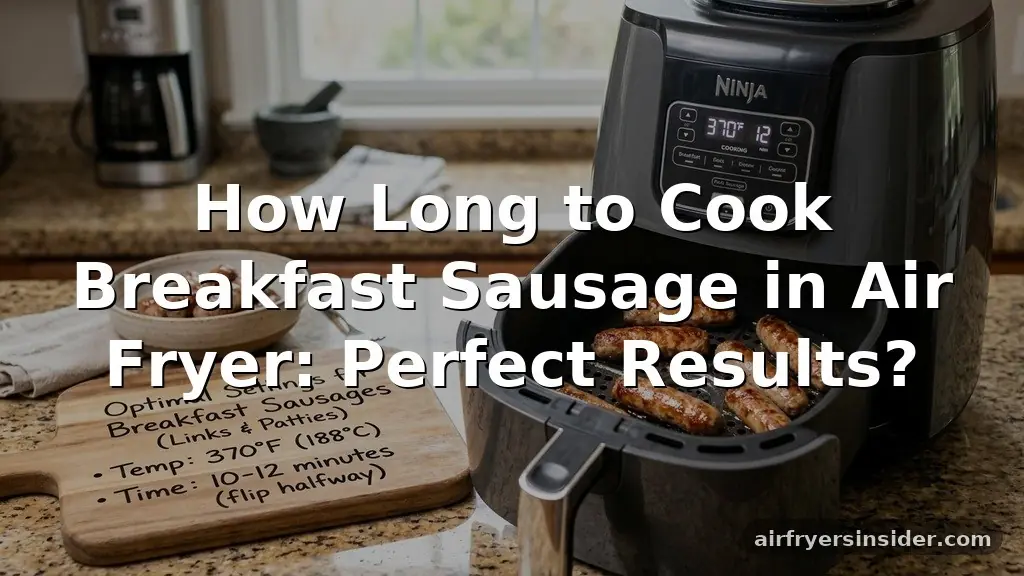
Achieving the perfect breakfast sausage involves more than just tossing meat into a basket and hoping for the best. When determining how long to cook breakfast sausage in air fryer setups, you must balance crisp, golden-brown exteriors with juicy, fully cooked interiors.
Because air fryers rely on rapid air circulation to mimic convection oven environments, they are uniquely suited to rendering fat and browning proteins efficiently. Whether you are dealing with traditional pork links, turkey-based patties, or even plant-based alternatives, the air fryer offers a level of convenience and texture that traditional stovetop frying often lacks, provided you understand the nuances of time and temperature management.
Understanding Optimal Air Fryer Temperature Settings
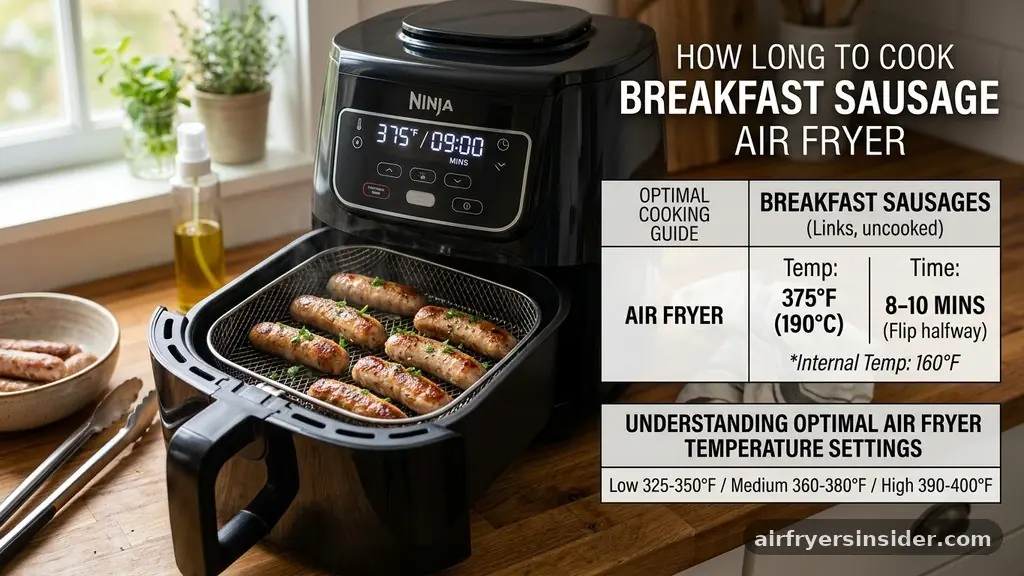
When you set out to cook breakfast sausage, the temperature is just as critical as the duration. Most air fryers function best for sausages when set between 375 and 400 degrees.
At 375 degrees, you allow the heat to penetrate the center of the meat without scorching the outer casing too aggressively. If you prefer a faster cook with a more pronounced, crispy skin, 400 degrees is the standard setting, though it requires closer monitoring to prevent burning.
For the average breakfast link, the sweet spot for cooking is generally between 8 and 12 minutes. This range is dictated by the density of the meat and the diameter of the casing. Thicker, bratwurst-style sausages will naturally require the higher end of that time spectrum, while thinner, pre-cooked style breakfast links may be ready in as little as 6 to 8 minutes.
By maintaining a steady temperature, you ensure that the grease management system of your device works effectively, as the fat will render steadily rather than smoking or splattering prematurely. Consistent heat application is the secret to avoiding the “burnt outside, raw inside” scenario that plagues novice air fryer users.
The Nuance of Preheating for Quality Control
While many modern air fryers boast that they don’t require preheating, taking the time to warm your unit for three to five minutes before adding your ingredients can significantly improve texture. Preheating creates an immediate sear upon contact, which helps in locking in juices and creating that desirable snap in the casing. Without a preheated environment, the sausages start in a cool chamber and gradually warm up, which can sometimes lead to the meat releasing its moisture too slowly, resulting in a slightly steamed rather than roasted texture.
Furthermore, preheating ensures that the cooking time remains predictable. If you start with a cold basket, you might find yourself constantly checking the food, which disrupts the internal temperature of the air fryer and leads to uneven browning.
For those who prioritize a uniform, restaurant-quality finish, preheating is a non-negotiable step. It prepares the basket for optimal air circulation, ensuring that the hot air hits the surface of the sausage from all angles simultaneously, which is essential for uniform browning.
Managing Frozen Sausages Versus Thawed Links
One of the most common questions involves the difference between fresh and frozen sausage. When you cook from frozen, the time will inevitably increase to account for the defrosting process that happens during the first few minutes of the cycle.
Generally, you should add three to five minutes to the total cook time when starting with frozen products. It is important to separate the links or patties as soon as they become pliable enough to move, which usually happens around the halfway point of the cooking process.
Managing frozen sausages requires a bit more vigilance regarding the internal temperature. Because the exterior cooks much faster than the icy interior, you might be tempted to pull them out early. Use a meat thermometer to ensure that the thickest part of the link has reached a safe temperature of 160 degrees Fahrenheit.
This is the gold standard for food safety when dealing with pork or poultry products. By giving the frozen links a little extra time and ensuring they aren’t overcrowded in the basket, you can achieve results that are indistinguishable from fresh, thawed meat.
Cooking Patties Versus Links: Key Differences
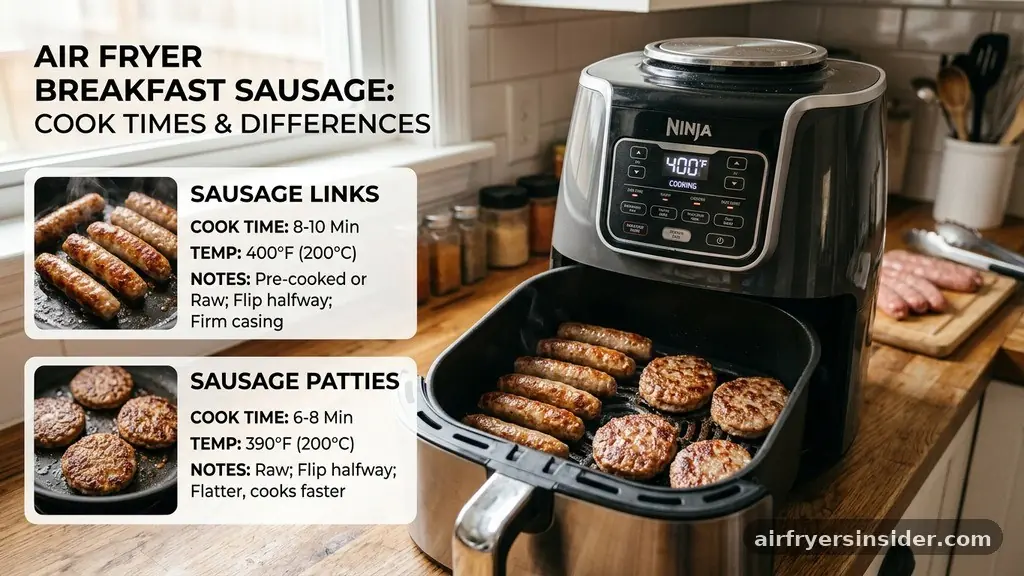
The shape and density of your breakfast meat significantly alter the cooking strategy. Cooking patties vs. links requires different approaches to spacing and flipping. Breakfast links are cylindrical and tend to roll, meaning they naturally benefit from the air fryer’s convection, but they should be shaken or turned with silicone tongs to ensure all sides are browned evenly. Patties, on the other hand, have a flat surface area that is prone to sticking if the basket isn’t properly prepared.
Patties often cook faster than links because they are thinner, usually requiring only 6 to 9 minutes. Because of their shape, you should avoid stacking them. If you are preparing a large batch, it is better to cook in multiple cycles rather than overcrowding the basket.
Overcrowding restricts airflow, which is the primary mechanism of the air fryer. When air cannot circulate around the patty, the surface will not brown, and the texture will remain pale and unappealing. Always prioritize a single layer for the best results, regardless of whether you are frying links or patties.
Tools and Accessories for Better Air Frying
Equipping your kitchen with the right accessories can make the process of air frying breakfast sausage cleaner and more efficient. Silicone tongs are essential because they allow you to rotate the sausages without scratching the non-stick coating of your air fryer basket. Metal utensils, while durable, are often the primary cause of premature wear on air fryer baskets, which can lead to food sticking in future cooking sessions.
Additionally, using parchment paper specifically designed for air fryers can be a game-changer for cleanup. These perforated liners prevent grease from pooling at the bottom of the basket, which reduces smoke and makes the post-cooking cleanup process significantly easier.
However, be cautious: never place parchment paper in the air fryer during the preheating phase without food on top to weigh it down, as the light paper can be lifted by the fan and hit the heating element, creating a fire hazard. By using the right tools, you protect your appliance and improve the quality of your breakfast.
Common Troubleshooting Tips for Perfect Sausages
Even experienced cooks run into issues when experimenting with new appliances. Common troubleshooting tips often revolve around smoke or uneven cooking. If your air fryer is smoking, it is almost always due to excess grease at the bottom of the unit.
To solve this, you can place a slice of bread or a small amount of water at the very bottom of the drawer (underneath the basket) to catch the dripping fat. However, the most effective method is simply to drain the grease halfway through the cooking cycle.
If you find that the sausages are browning too fast on the outside while remaining cold inside, your temperature is likely too high. Lowering the heat by 25 degrees and extending the cooking time will allow the heat to penetrate the center of the meat more effectively.
If the links are sticking together, ensure they are not touching when you first place them in the basket. A little space between each piece allows the air to move freely, which is the secret to even, golden-brown browning on every side of the sausage.
Addressing Frequently Asked Questions
People often wonder about the specifics of food safety and technique when using this appliance. Below is a breakdown of the most common inquiries regarding breakfast sausage preparation in an air fryer environment.
| Sausage Type | Estimated Time (mins) | Temperature (F) |
|---|---|---|
| Fresh Links | 8-10 | 380 |
| Frozen Links | 12-14 | 380 |
| Breakfast Patties | 6-8 | 375 |
| Pre-cooked Links | 4-6 | 360 |
- Always check the internal temperature to ensure safety.
- Avoid overcrowding the basket to maintain airflow.
- Use silicone tongs to flip sausages halfway through.
- Drain excess grease to prevent smoking.
- Preheat your air fryer for consistent texture.
Handling Different Sausage Varieties
Not all breakfast meats are created equal. Handling different sausage varieties requires a basic understanding of their fat content and casing type. Pork-based breakfast sausages are generally quite fatty, which means they will render a significant amount of grease during the cooking process. If you are cooking these, you must be diligent about grease management to prevent smoke.
Conversely, turkey or chicken breakfast sausages are much leaner and can dry out if overcooked. For poultry-based links, you should aim for the lower end of the time range and perhaps brush them with a small amount of oil before cooking to keep them moist.
If you are dealing with bratwurst-style sausages that are larger and thicker than standard breakfast links, you will need to adjust your expectations. These require a longer cook time—often 15 to 18 minutes—at a slightly lower temperature to ensure the middle cooks through before the skin becomes tough.
Always treat each variety as a unique ingredient. If you are switching from a standard pork link to a specialty herb or apple-infused variety, keep a close eye on the browning process, as different casings react differently to high-heat air frying.
Topical Gaps and Advanced Techniques
One area often overlooked in basic guides is the impact of seasoning and surface preparation. Many people assume sausage is “ready to go,” but scoring the casing lightly with a knife can prevent the sausage from bursting during the high-heat expansion phase. This also allows for the internal fat to render out more evenly.
Another advanced technique involves a “rest” period. Just like a steak, sausages benefit from resting for two to three minutes after coming out of the air fryer. This allows the internal juices to redistribute throughout the meat, resulting in a much more succulent bite.
Furthermore, consider the environment of your kitchen. If your air fryer is placed directly against a wall, the exhaust vent may be restricted, which impacts the unit’s ability to maintain a consistent temperature. Ensure there is at least five to six inches of clearance around the appliance.
By focusing on these granular details—surface scoring, resting, and proper kitchen ventilation—you elevate your cooking from merely “heating up food” to a refined culinary process. The goal is to master the relationship between the appliance’s capabilities and the physical properties of the meat, ensuring that every breakfast is consistent, safe, and delicious.
Conclusion
Mastering how long to cook breakfast sausage in air fryer setups is a matter of combining temperature control, proper spacing, and monitoring for internal safety. By following the guidelines for both fresh and frozen products, and utilizing the right tools like silicone tongs and parchment paper, you can consistently achieve the perfect balance of a crispy exterior and a juicy, flavorful interior. Remember that food safety remains paramount; always rely on a meat thermometer to confirm the product has reached a safe internal temperature of 160 degrees Fahrenheit.
Whether you are preparing a quick morning meal for yourself or a large batch for the family, the air fryer remains one of the most efficient ways to prepare breakfast meat, provided you respect the mechanics of air circulation and grease management. With these techniques in your repertoire, you will find that perfectly cooked sausage is a reliable staple in your morning routine, offering both convenience and quality without the mess of a stovetop frying pan.
Frequently Asked Questions
Is it necessary to poke holes in breakfast sausages before air frying them?
While not strictly necessary, poking small holes or lightly scoring the casing can prevent the sausages from splitting as the internal fat renders. This technique helps the heat penetrate more evenly and allows excess grease to escape, resulting in a crispier, more uniform finish for your links.
Can I cook frozen breakfast sausages directly in the air fryer?
Yes, you can cook frozen sausages directly in the air fryer. Simply add an extra three to five minutes to the total cooking time compared to fresh links. Ensure you separate the sausages halfway through the process to allow for proper airflow, which ensures they brown evenly.
How do I know when the breakfast sausages are finished cooking?
The most accurate way to determine doneness is by using a meat thermometer to ensure the internal temperature reaches 160 degrees Fahrenheit. Visually, the sausages should be browned, the skin should have a slight snap, and there should be no signs of pink in the center.
Should I preheat my air fryer for breakfast sausages?
Preheating is highly recommended for the best results. Warming your unit for three to five minutes ensures an immediate sear, which helps lock in juices and creates a better texture. It also makes the cooking time more predictable, preventing the sausages from drying out while waiting for the air to heat up.


