

Mastering the art of cooking a pork chop in an air fryer transforms a humble weeknight staple into a succulent, restaurant-quality meal. By leveraging rapid air circulation, you can achieve a perfect sear while keeping the center tender and juicy. Many home cooks struggle with dry meat, but understanding the precise balance of heat and timing ensures your dinner is never overcooked.
Whether you prefer a quick crust or a slow-roasted finish, this method offers unparalleled convenience. You will discover how to select the right cuts, prepare flavorful seasonings, and monitor internal temperatures to ensure your pork chops turn out golden brown and delicious every single time you fire up the appliance.
Choosing the Right Cut for Air Frying
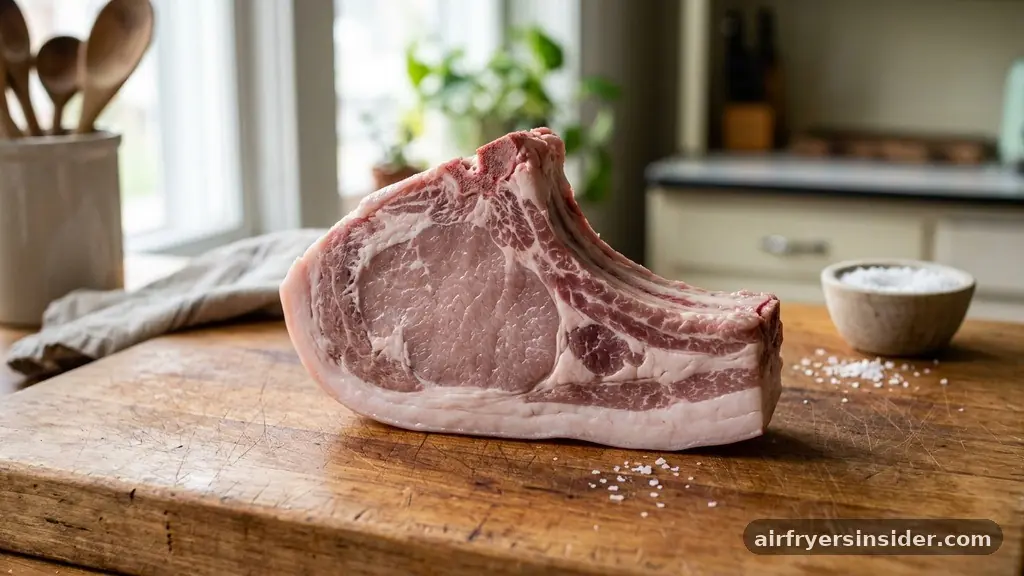
The success of your meal begins at the butcher counter. When deciding how to cook pork chop in an air fryer, the thickness of the meat is your most critical factor.
Thin-cut chops often dry out before they develop a proper crust, while excessively thick cuts may remain raw in the center if the heat is too high. Aim for chops that are at least one inch thick; these provide the best buffer against the intense heat of the air fryer.
You must also decide between bone-in pork chops and boneless pork chops. Bone-in varieties generally offer more flavor and better moisture retention because the bone acts as a heat conductor, protecting the meat immediately surrounding it.
However, boneless pork loin chops are leaner and cook more evenly, making them excellent candidates for quick, weeknight preparations. If you choose a thick-cut loin, ensure you remove any excess silverskin or thick fat caps that might prevent the heat from penetrating uniformly.
The Science of the Perfect Seasoning Blend
Flavor starts with a solid foundation. A well-constructed dry rub is essential because the air fryer’s convection cooking style can blow away loose spices if they aren’t properly adhered to the meat. Start by patting your chops completely dry with paper towels; moisture on the surface creates steam, which prevents the Maillard reaction—the browning process that produces complex, savory flavors.
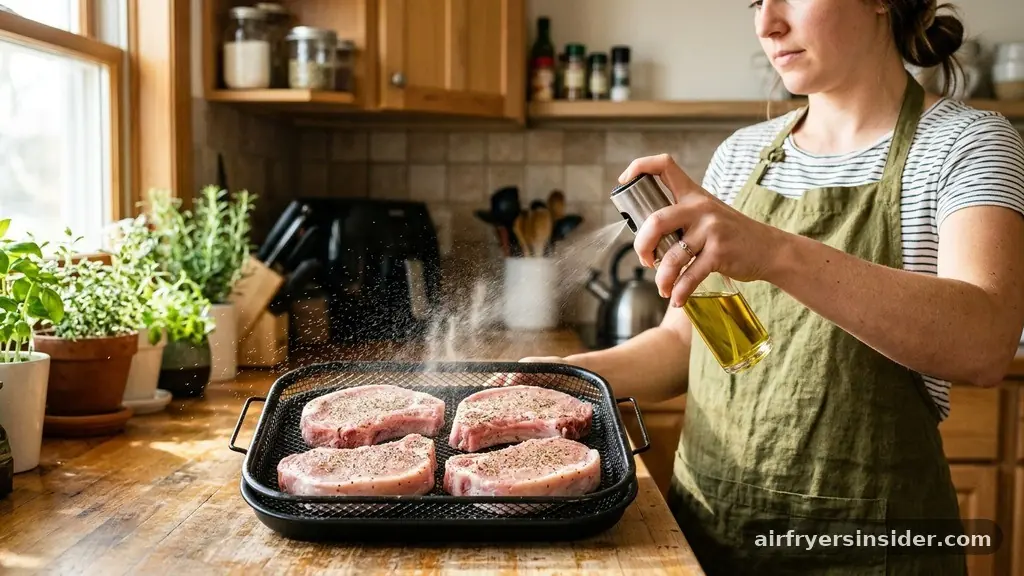
After drying, coat the meat lightly with high-quality olive oil. This acts as a binder for your seasoning blend and helps transfer heat to the surface of the meat. A classic rub often includes garlic powder, smoked paprika, and a touch of brown sugar.
The sugar caramelizes under the intense heat, creating a deep, golden brown finish that is visually appealing and delicious. If you enjoy a bit of heat, add cayenne pepper or chili flakes to your mix. Avoid using fresh herbs before cooking, as they will likely burn in the high-velocity air; instead, garnish with fresh parsley or thyme once the meat has finished resting.
Mastering Temperature and Air Circulation
One of the most common mistakes is failing to preheat the unit. Even though air fryers are small, they require a few minutes to reach the target temperature. Preheating ensures that the moment the pork hits the basket, the searing process begins immediately.
For most pork chops, 375 to 400 degrees Fahrenheit is the sweet spot. This range is hot enough to trigger the Maillard reaction without burning the exterior before the inside reaches the safe internal temperature.
Air circulation is the defining feature of this cooking method. Because the appliance forces hot air around the food, you must avoid overcrowding the basket. If the chops are touching or overlapping, the air cannot reach the sides, resulting in steamed, pale meat rather than a crispy, flavorful exterior.
If you are cooking for a crowd, it is better to work in batches than to cram everything into one basket. Using a small piece of parchment paper designed for air fryers can also help with cleanup, but ensure it is properly weighted down by the meat so it doesn’t fly up into the heating element.
Using a Meat Thermometer for Precision
The only way to guarantee perfectly cooked pork is by using a digital meat thermometer. Relying on visual cues or timer guesswork is a recipe for disaster, as every air fryer model has slightly different airflow patterns and power outputs. The USDA recommends an internal temperature of 145 degrees Fahrenheit for pork, which allows for a slight pinkness in the center that ensures the meat remains juicy.
Insert your thermometer into the thickest part of the chop, being careful not to hit the bone, as the bone will give you a false, higher reading. Once the center hits about 140 degrees, you can pull the meat from the air fryer.
The temperature will continue to rise during the resting time due to carryover cooking. If you wait until the thermometer reads 145 while inside the hot basket, the final temperature will likely climb to 150 or higher, which can lead to a dry, tough texture.
Common Mistakes to Avoid
Even experienced cooks can fall into traps when learning how to cook pork chop in an air fryer. One frequent error is skipping the resting time.
Resting is non-negotiable; as the meat sits, the juices redistribute throughout the fibers. If you cut into a chop immediately after pulling it from the machine, the juices will run out onto the cutting board, leaving you with a dry, disappointing piece of protein.
Another mistake is failing to use an oil spray correctly. While you need oil to aid the browning, using too much can cause the oil to pool at the bottom of the basket, potentially leading to smoke if the temperature exceeds the oil’s smoke point. Use a light, even coating of oil spray.
Furthermore, avoid opening the basket too frequently to check on the progress. Every time you pull the basket out, you lose significant heat, which forces the unit to work harder to recover and disrupts the consistent convection cooking environment.
The Role of Brining for Moisture Retention
If you find that your pork chops consistently turn out dry, consider brining them before cooking. A simple brine—a solution of water, salt, and perhaps a few aromatics like peppercorns or bay leaves—changes the structure of the protein, allowing it to hold onto more moisture during the cooking process. Even a short soak of 30 minutes can make a massive difference in the final texture.
To brine, submerge your chops in the salt solution and keep them in the refrigerator. After the soaking period, it is vital to rinse the chops and pat them extremely dry.
If you skip the drying step, the surface will be too wet to brown properly, and you will miss out on that desirable crust. Brining is particularly beneficial for leaner, boneless loin chops that have very little intramuscular fat to keep them moist while under high heat.
Comparing Cooking Methods
Understanding how air frying compares to traditional methods helps contextualize why it has become so popular. The table below highlights the differences between air frying, pan-searing, and oven-roasting.
| Method | Texture | Speed | Ease of Cleanup |
|---|---|---|---|
| Air Frying | Crispy and Juicy | Fast | Easy |
| Pan-Searing | Very Crusty | Moderate | Difficult |
| Oven-Roasting | Tender/Soft | Slow | Moderate |
Addressing Common Topical Gaps
Many enthusiasts often wonder if they can use frozen chops directly in the air fryer. The answer is yes, but you must adjust your expectations and timing. Cooking from frozen requires a lower starting temperature to thaw the meat while the surface browns, followed by a slight increase in heat to finish the cooking.
You will need to add roughly 5 to 8 minutes to the total cooking time compared to thawed chops. Always ensure the internal temperature reaches the safe threshold before serving.
Another gap in knowledge involves the use of breading. While traditional breaded pork chops are usually deep-fried, you can replicate this in an air fryer using a panko-based coating. The secret is to spray the breaded exterior generously with oil spray to ensure the crumbs achieve a golden brown color.
Without that extra layer of fat, the breading will remain powdery and pale. Always press the breading firmly into the meat to ensure it adheres during the high-velocity air cycle.
Essential Gear and Accessories
To elevate your experience, consider investing in a few air fryer-specific tools. A high-quality digital instant-read thermometer is the most important piece of equipment you will own. Additionally, silicone-tipped tongs are superior to metal ones because they won’t scratch the non-stick coating of your air fryer basket.
If you plan on cooking frequently, look into silicone liners. These are reusable and often feature perforated designs that allow air circulation to continue while protecting the bottom of the basket from stubborn, burnt-on residue. Avoid using aluminum foil unless absolutely necessary, as it can block the airflow patterns designed by the manufacturer, potentially leading to uneven cooking.
Frequently Asked Questions
How long should I cook pork chops in an air fryer?
Most one-inch thick pork chops require 10 to 14 minutes at 375 or 400 degrees Fahrenheit. The exact time depends on the thickness and whether the chop is bone-in or boneless. Always rely on a meat thermometer to confirm they reach 145 degrees internally.
How do I keep pork from drying out?
To keep pork juicy, never overcook it. Use a meat thermometer to pull the chops at 140 degrees, allowing carryover cooking to reach 145. Additionally, brining the meat for 30 minutes before cooking significantly improves moisture retention, especially for leaner, boneless cuts.
Is it better to bake pork chops at 350 or 400 degrees?
For an air fryer, 400 degrees is generally preferred to encourage the Maillard reaction and create a golden crust. If you use 350 degrees, the meat will cook more slowly and might dry out before the exterior browns, making 400 degrees the superior choice for most chops.
What are common mistakes when air frying pork chops?
The most common mistakes include overcrowding the basket, which prevents air circulation, and failing to pat the meat dry before seasoning. Skipping the resting period after cooking is also a major error, as it causes essential juices to escape the meat.
Conclusion
Learning how to cook pork chop in an air fryer is a reliable way to ensure you have a protein-packed meal ready in minutes. By focusing on the fundamentals—selecting the right thickness, properly drying the surface, and using a thermometer to verify doneness—you eliminate the guesswork that often leads to dry, uninspired results. The combination of intense heat and rapid air circulation provides a texture that is difficult to replicate with traditional ovens, making this appliance a true asset in your kitchen.
As you become more comfortable with the timing and seasoning, you can experiment with different spice blends and brines to suit your palate. Start with a basic rub, keep a close eye on your temperatures, and enjoy the convenience of perfectly cooked, succulent pork chops whenever you need a quick and satisfying dinner.


