

Figuring out exactly how long to warm up pizza in air fryer settings can be the difference between a sad, chewy slice and a meal that tastes even better than it did the night before. Many people struggle with the dreaded soggy crust or dried-out cheese that happens in a microwave, but the air fryer offers a superior solution.
Because these appliances use intense convection heat, they mimic the effect of a professional pizza oven on a smaller, more accessible scale. By mastering the right timing and temperature, you can transform cold leftovers into a crispy, delicious treat in just a few minutes.
The Science Behind Air Fryer Reheating
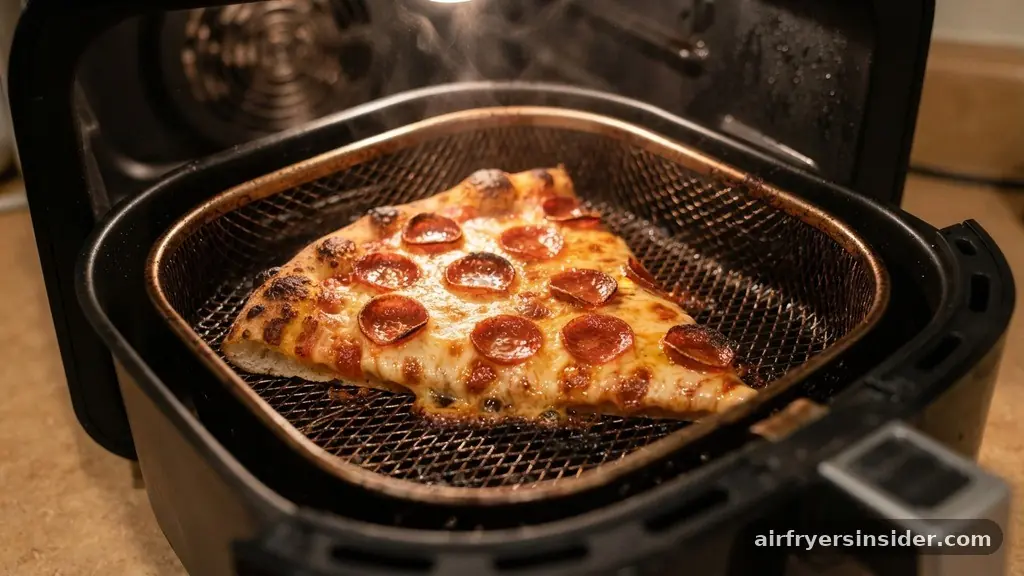
The primary reason air fryers excel at reviving leftover slices is their use of rapid air technology. Unlike a microwave, which vibrates water molecules to heat food, an air fryer circulates hot air at high speeds around the entire surface of the slice.
This creates a uniform environment that focuses on both the top toppings and the bottom crust simultaneously. When you understand how long to warm up pizza in air fryer units, you are essentially managing the thermal conductivity of the dough and the melting point of the cheese.
The convection heat works by drying out the surface moisture of the crust just enough to restore its crunch without turning the internal bread into a brick. This balance is delicate, which is why the specific cooking time is so vital. If you leave the slice in for too long, the cheese will lose its oils and the crust will become brittle.
Conversely, if you pull it out too early, the center might remain cold while the outer edges are hot. Achieving that perfect, restaurant-quality texture requires a consistent flow of air that reaches every part of the crust.
Ideal Temperature Settings for Perfect Slices
Choosing the correct temperature is just as important as the duration of the cycle. While many people default to high heat, the best results usually come from a moderate range that allows the heat to penetrate the slice evenly.
For most standard slices, setting your device to 350 degrees Fahrenheit is the sweet spot. This temperature is high enough to generate that desirable crispy crust but low enough to prevent the cheese from scorching before the middle of the slice is warmed through.
If you are dealing with a thicker crust or a deep-dish style, you might consider adjusting your air fryer temperature settings slightly lower to ensure the center reaches a safe internal temperature without burning the exterior. On the other hand, if you prefer an ultra-crispy finish, you can bump the heat up to 400 degrees Fahrenheit, but you must significantly reduce the time. Always remember that smaller units, such as a compact Ninja air fryer or a Cosori, may heat up faster than larger basket models like the Instant Pot Vortex, so your first batch should always be monitored closely.
Determining the Right Cooking Time
When asking how long to warm up pizza in air fryer baskets, the answer depends heavily on the thickness of the crust and the quantity of toppings. For a standard, thin-crust slice, three to four minutes at 350 degrees is typically sufficient to get the cheese bubbling and the bottom crispy. If you are reheating multiple slices at once, you will need to add an extra minute or two to account for the reduced air circulation in the basket.
It is helpful to think of the process as a two-stage event: the initial heating phase and the final crisping phase. You don’t need to preheat your air fryer for more than a minute, as the small chamber reaches temperature rapidly.
If you notice your slices aren’t heating through, don’t just add more time immediately; instead, check the underside of the crust. If the bottom is already golden brown, you may want to lower the heat to allow the internal temperature to rise without further browning the exterior.
Managing Slice Thickness and Toppings
The physical characteristics of your pizza play a massive role in how it reacts to high-speed air. A slice laden with heavy vegetables or piles of meat will naturally take longer to warm up than a simple cheese slice.
This is because the moisture in the toppings acts as a heat sink, absorbing energy that would otherwise go into crisping the crust. If you are working with very thick, loaded slices, you might find that the top of the pizza gets hot while the bottom remains cool.
In these cases, consider using a piece of parchment paper at the bottom of the basket to keep things clean, but avoid using aluminum foil if you want maximum crispness. Aluminum foil can sometimes block the air from reaching the bottom of the crust, leading to a soggy texture that defeats the purpose of using an air fryer. If you must use a liner, ensure it is perforated to maintain the necessary airflow that makes this cooking method so effective.
Equipment Variations and Performance
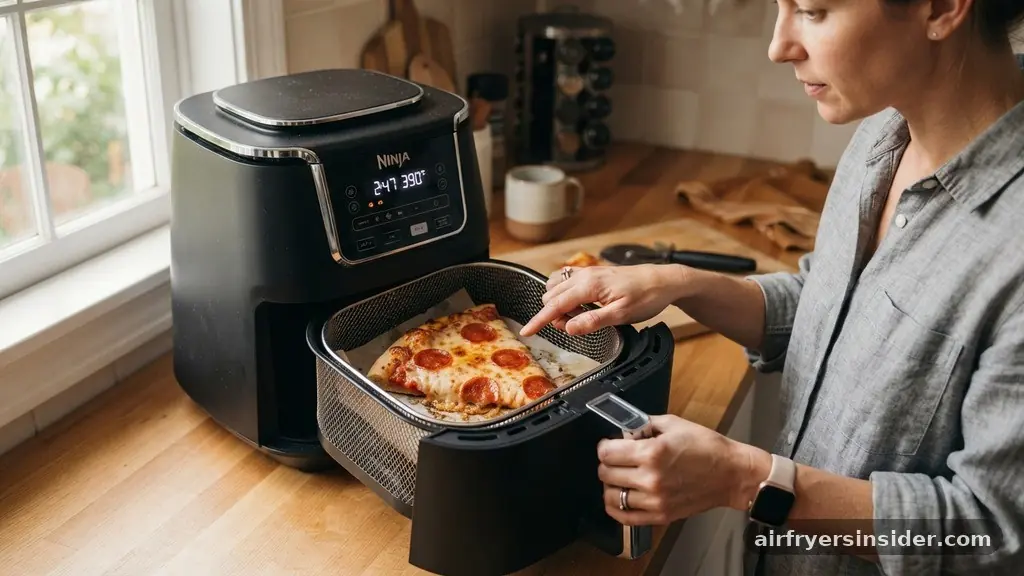
Not all appliances perform the same way, which is a common point of confusion for home cooks. A Ninja air fryer, for instance, often has a very powerful fan that creates intense air circulation, which can shorten your cooking time by 30 to 60 seconds compared to other brands. Similarly, an Instant Pot Vortex or a Cosori model might have different heating element placements, which affects how close the food sits to the heat source.
When you are learning how long to warm up pizza in air fryer hardware, start with a conservative estimate. Set your timer for three minutes, check the progress, and then add time in 30-second increments.
This method prevents the heartbreak of burnt edges and ensures that your food safety remains a priority. Since you are reheating cooked food, the goal isn’t to “cook” the pizza, but simply to bring it back to its original serving temperature.
| Pizza Type | Recommended Temp | Estimated Time |
|---|---|---|
| Thin Crust | 350°F | 3-4 Minutes |
| Hand-Tossed | 350°F | 4-5 Minutes |
| Deep Dish/Thick | 325°F | 6-8 Minutes |
| Frozen Slices | 375°F | 7-9 Minutes |
Addressing Common Reheating Challenges
The most frequent complaint when reheating pizza is the soggy crust, which usually happens when the pizza has been sitting in the refrigerator for too long, absorbing moisture from the toppings. To combat this, you can try a quick trick: place the slice in the air fryer for the first minute at a lower temperature to evaporate excess moisture, then crank the heat for the final two minutes to finish the crust. This two-stage approach is highly effective for reviving pizza that has lost its structural integrity.
Another challenge is the “dried-out” effect, where the crust becomes hard and chewy. This often occurs if you reheat the pizza for too long at too high of a temperature.
If you find your crust is becoming too hard, try brushing a tiny amount of olive oil on the edges before placing it in the basket. This adds a bit of fat back into the dough, which helps maintain a pleasant texture while the air fryer works its magic.
Food Safety and Internal Temperature
While we often focus on the flavor and texture, food safety is an essential component of the reheating process. You want to ensure the center of the pizza reaches a safe internal temperature of at least 165 degrees Fahrenheit.
While most people rely on visual cues like bubbling cheese, using a digital food thermometer is the only way to be absolutely certain. This is especially important if your pizza contains meat toppings like pepperoni, sausage, or chicken, which can harbor bacteria if not heated thoroughly.
If you are reheating a large batch of slices, be careful not to overcrowd the basket. Proper air circulation is the key to food safety and quality. When slices are stacked or touching, the air cannot reach the surfaces, leading to uneven heating.
This creates “cold spots” where bacteria could potentially survive. If you have a large amount of leftovers, it is much safer and more effective to reheat them in multiple smaller batches.
Comparing Methods: Air Fryer vs. Toaster Oven
Many people debate whether an air fryer is truly superior to a traditional toaster oven. A toaster oven relies on radiant heat, which is excellent for melting cheese but often struggles to crisp the bottom of the crust unless you are using a dedicated pizza stone. The air fryer, however, uses convection heat to blast the surface, which is significantly more efficient at restoring that “fresh-baked” crunch.
If you are looking for convenience, the air fryer wins every time. It heats up in seconds, whereas a toaster oven or a full-sized oven requires several minutes to reach the desired temperature. Additionally, the air fryer is much easier to clean.
While a pizza stone in a regular oven might produce a slightly more authentic “brick oven” crust, the time investment is rarely worth it for just one or two slices. Most home cooks find that the air fryer offers the best balance of speed, texture, and ease of use.
Advanced Tips for Consistent Results
To truly master the process, consider these additional tips for your reheating routine:
- Avoid stacking slices; keep them in a single layer to ensure even heat distribution.
- If you want a softer crust, use a small piece of aluminum foil to shield the edges during the last minute.
- Always check the bottom of the crust halfway through; if it’s browning too fast, flip the slice or move it to a higher rack position if your model allows.
- Let the pizza rest for 30 seconds after removing it from the basket; this allows the cheese to set and prevents it from sliding off the slice.
- If you have a spray bottle, a very light mist of water before heating can sometimes help revive a dry crust, but use this sparingly to avoid sogginess.
By integrating these small adjustments into your workflow, you will find that you can achieve professional-grade results every single time. It is all about observing how your specific appliance interacts with the dough and making micro-adjustments to your timing. Once you have a handle on the relationship between heat and moisture, you will never look at leftover pizza as a subpar meal again.
Frequently Asked Questions
Can I reheat frozen pizza in an air fryer?
Yes, you can easily reheat frozen pizza. Simply increase the cooking time by two to three minutes compared to refrigerated leftovers. Set your temperature to 375 degrees Fahrenheit to ensure the center thaws and heats through while the crust achieves a satisfying, crispy finish.
Is it better to use 350 or 400 degrees for reheating?
For most slices, 350 degrees is the safest bet to avoid burning the cheese. If you have a thin-crust slice and want it extra crispy, 400 degrees works well, but you must reduce the time significantly and keep a close eye on it to prevent burning.
Do I need to preheat my air fryer for pizza?
Preheating is not strictly necessary for such a short duration. Most air fryers reach their target temperature within 60 seconds. Simply start your timer and put the pizza in; the initial minute of the cycle acts as a natural preheat, ensuring the unit is ready for optimal crisping.
What should I do if the crust is getting too hard?
If your crust is drying out, you are likely using too much heat or leaving it in for too long. Try lowering the temperature by 25 degrees and adding a tiny brush of olive oil to the outer edge of the crust before reheating to retain moisture.
Conclusion
Mastering the art of how long to warm up pizza in air fryer appliances is a simple way to elevate your leftovers from a dull snack to a satisfying meal. By leveraging the power of convection heat, you can restore the perfect balance of a crispy base and gooey, melted cheese that most other reheating methods fail to achieve. Focus on maintaining proper airflow, choosing the right temperature for your specific slice thickness, and monitoring the process to prevent overcooking.
With just a few attempts, you will find the rhythm that works best for your specific machine, ensuring every slice is as enjoyable as it was when it was first delivered. Don’t be afraid to experiment with the timing and settings to dial in your personal preference for crunch and heat.
Meta Description: Learn exactly how long to warm up pizza in air fryer units to achieve a perfectly crispy crust and melted cheese. Master the best settings for your leftovers.


