

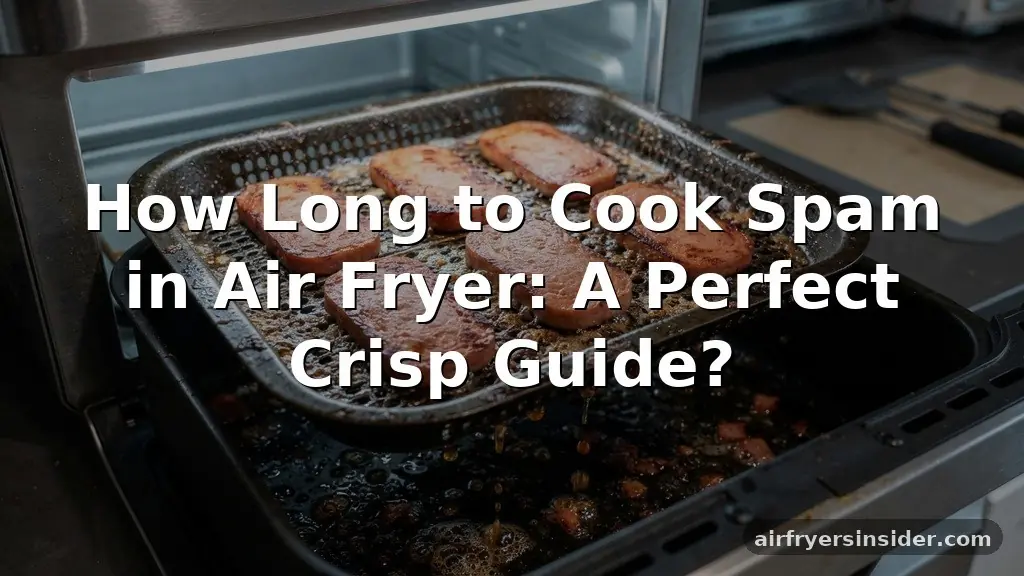
Determining exactly how long to cook Spam in an air fryer is the secret to transforming this humble canned meat into a genuine culinary delight. While many people simply pan-fry their slices, the convection cooking environment of an air fryer offers a superior method for achieving that elusive, perfect crunch without the mess of splattering grease.
By mastering the right timing and temperature, you can turn a shelf-stable block of protein into a savory, golden-brown snack or a crucial component for homemade musubi. Understanding the nuances of heat distribution will ensure your results are consistently delicious every time you reach for the air fryer basket.
Understanding the Mechanics of Air Fryer Spam
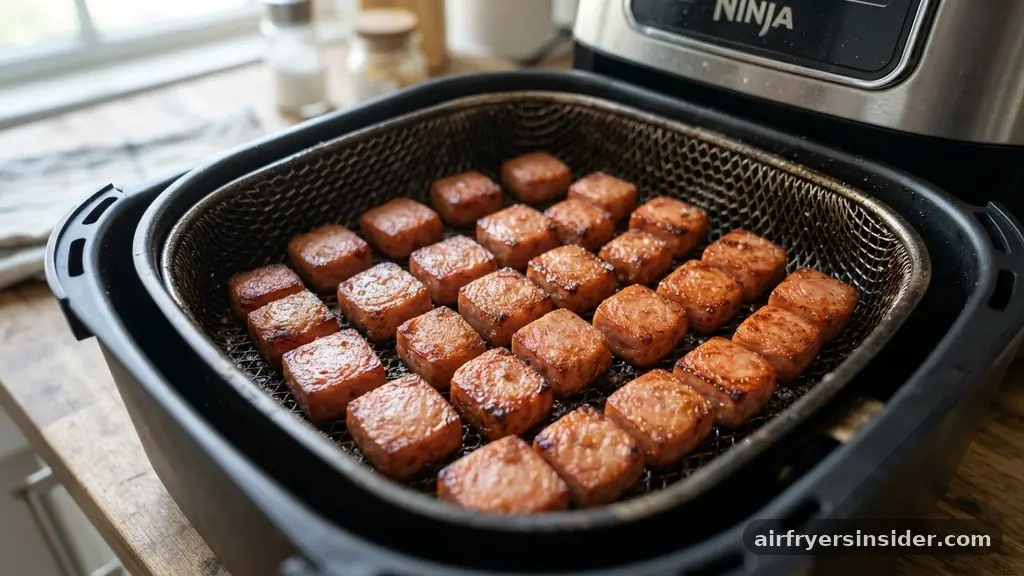
The air fryer functions as a powerful convection oven, circulating hot air rapidly around the food to create a crispy exterior. When you place slices of Spam inside, this intense airflow works to dehydrate the surface of the meat, which is essential for browning.
Unlike traditional pan-frying, where the meat often sits in a pool of its own rendered fat, the air fryer allows that fat to drip away through the basket grate. This process not only makes the final product slightly lighter but also ensures that the heat hits every side of the slice simultaneously, provided you manage your space correctly.
To achieve the best texture, you must pay attention to the thickness of your cuts. If you slice the block too thin, the edges will burn before the center reaches a satisfying temperature. Conversely, slices that are too thick may remain rubbery in the middle.
The ideal thickness is typically between one-quarter and one-half of an inch. At this size, the meat benefits from the concentrated heat, allowing the edges to curl slightly while the interior remains warm and tender. Because this is a pre-cooked product, you are essentially reheating and surface-searing, which is why the cooking window is relatively short.
Optimal Cooking Time and Temperature Settings
When setting your device, 375 to 400 degrees Fahrenheit is the sweet spot. At 400 degrees, you get a faster, more aggressive sear, which is perfect if you enjoy a crunchier, more well-done texture. If you prefer a slightly softer bite, stick to 375 degrees.
Regarding the duration, most batches require between 8 and 12 minutes. It is vital to remember that air fryers vary significantly in power, so the first time you try this, you should check the contents at the 6-minute mark.
If you find that your slices aren’t browning as quickly as you would like, resist the urge to crank the temperature to the maximum setting immediately. Instead, add one or two minutes at a time.
The goal is to avoid carbonizing the exterior while the interior is still cool. By maintaining a steady, moderate-high heat, you allow the surface sugars and proteins in the canned meat to undergo the Maillard reaction, resulting in that deep, savory flavor profile that makes the dish so addictive.
Preparation Tips for Better Texture
Preparation is the silent partner to cooking time. Before you even think about putting the meat in the basket, pat the slices dry with a paper towel. Even though the meat contains fat, the surface moisture from the canning liquid can impede the crisping process.
Removing this excess liquid gives the hot air a head start on the browning process. Some cooks also enjoy lightly dusting the slices with a touch of cornstarch or garlic powder, though the meat is already quite salty, so go easy on additional seasonings.
Another critical step is how you arrange the slices. You must place them in a single layer, ensuring they do not overlap, which allows for maximum airflow. If the slices touch or stack, the parts that are covered will steam rather than fry, leading to a limp, unappealing texture.
If you are cooking for a crowd, it is much better to cook in multiple batches than to overcrowd the basket. Proper air circulation is the primary advantage of this appliance, and stacking your food effectively negates that benefit.
The Importance of Flipping and Monitoring
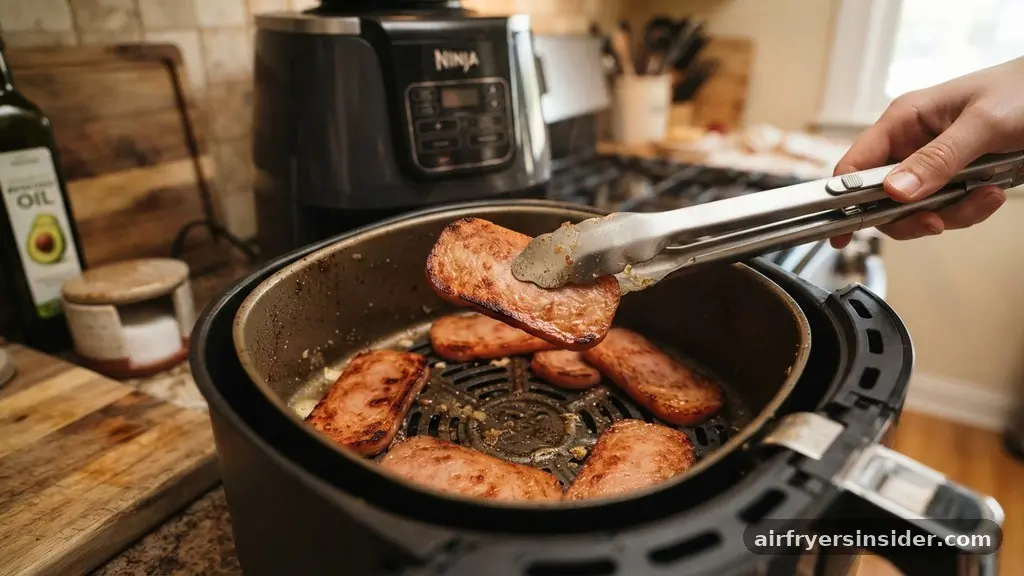
Flipping your slices halfway through the cooking time is non-negotiable. While the air circulates, the bottom of the slice usually stays slightly less crisp than the top because it is resting against the metal rack.
By turning them over at the halfway point, you ensure that both sides receive direct exposure to the heat. This simple action results in a uniform color and texture across the entire piece of meat.
Monitoring your food toward the end of the cycle is equally important. Because the fat content in this product is high, it can go from perfectly browned to burnt in a matter of seconds. If you are using a high-wattage air fryer, the last two minutes are critical.
If you notice the edges are curling significantly, it is a sign that the fat is rendering out and the meat is nearing its peak state of crispness. Trust your eyes more than the timer during these final moments to ensure a high-quality result.
Safety and Maintenance Considerations
Safety is paramount when using an air fryer, particularly when dealing with high-fat foods. As the fat renders out, it collects in the bottom of the unit. If you do not clean your air fryer regularly, this grease can smoke at high temperatures or, in extreme cases, pose a fire hazard.
After cooking, let the basket cool down completely before attempting to clean it. Use a mild degreasing soap to ensure that all residue is removed from the grate, as lingering fats can become rancid and negatively impact the flavor of your next meal.
Furthermore, always ensure the unit is on a heat-resistant surface with plenty of clearance around the vents. Air fryers rely on intake and exhaust to maintain the correct internal temperature.
If you push the machine too close to a wall, the air cannot flow freely, which will lead to uneven cooking and potential overheating. A well-maintained machine not only produces better food but also lasts significantly longer, ensuring you can enjoy your favorite quick meals for years to come.
Addressing Common Cooking Challenges
One frequent issue is the tendency for the meat to become overly salty. Because the product is cured, the heat can concentrate that sodium, making it feel intense. To balance this, consider serving it with neutral-flavored sides.
Fresh, sliced avocado acts as a perfect cooling agent, as its creaminess and healthy fats mellow out the saltiness of the protein. You might also pair it with plain white rice or fresh cucumber slices to provide a refreshing crunch that contrasts with the density of the meat.
Another challenge is uneven browning. If you notice that one side of your air fryer seems to cook faster, it might be due to the position of the heating element or the fan. If your machine allows it, rotate the basket 180 degrees when you flip the slices.
This simple adjustment corrects any minor internal heat discrepancies and ensures that every slice in the basket comes out with a consistent golden-brown finish. Don’t be afraid to experiment with your specific machine; every model has a personality that you will learn to navigate with practice.
Serving Suggestions and Culinary Pairings
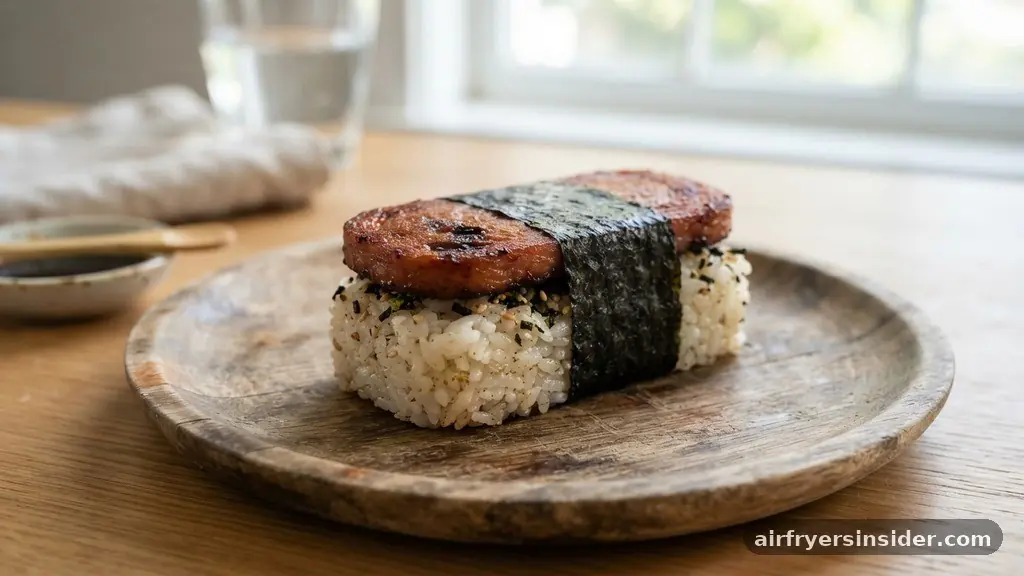
Once you have mastered the timing, the possibilities for serving are endless. Many people default to the classic musubi, which involves wrapping the crispy slice in a thin sheet of nori over a block of seasoned sushi rice.
The crunch of the air-fried meat combined with the chewy texture of the rice is a classic for a reason. You can also incorporate the slices into breakfast bowls, topping them with a fried egg and sautéed spinach to round out the meal.
If you are looking for something more casual, try dicing the meat into small cubes after air frying. These crispy bits can be tossed into salads, mixed into fried rice, or used as a flavorful topping for loaded baked potatoes.
The key is to treat the meat as a flavor enhancer rather than just a main dish. Because it is so savory, a little bit goes a long way, and the texture provided by the air fryer makes it feel more like a gourmet addition than a canned convenience food.
Comparing Air Frying to Other Methods
To understand why air frying has become the preferred method for many, it helps to compare it to traditional techniques. The following table highlights the differences between common cooking styles for this specific ingredient.
| Cooking Method | Texture Result | Grease Level | Ease of Cleanup |
|---|---|---|---|
| Pan-Frying | Soft to crispy | High | Difficult |
| Microwaving | Soft/Rubber-like | Medium | Easy |
| Air Frying | Evenly Crispy | Low | Moderate |
| Baking | Dry/Chewy | Low | Easy |
As shown in the table, air frying offers the best balance of texture and cleanliness. While pan-frying can produce a great crust, the cleanup of a grease-splattered stove is a significant drawback.
Microwaving, while fast, fails to provide any texture at all, often resulting in a limp, unappealing product. Air frying provides the best of both worlds: a professional-grade sear with minimal mess and no added oils.
Filling the Gaps: Frequently Asked Questions
Should I preheat my air fryer before cooking the meat?
Preheating is highly recommended. By starting with a hot basket, you ensure that the browning process begins the moment the food enters the chamber. This prevents the meat from drying out during a slow warm-up period, resulting in a much better, crisper texture throughout the entire slice.
Can I stack the slices if I’m in a hurry?
It is best to avoid stacking. When you stack the slices, the air cannot reach the surfaces between them, which leads to steaming rather than frying. This results in soft, pale patches on the meat. For the best quality, always arrange your slices in a single layer with space between them.
Is it necessary to add extra oil to the basket?
No, you do not need to add extra oil. The meat has a high natural fat content that renders out during the cooking process. Adding more oil would only make the final product feel heavy and greasy, while also increasing the risk of smoke inside your air fryer.
How do I know when the meat is perfectly done?
The meat is ready when it reaches a deep, golden-brown color and the edges have become slightly curled and crispy. Because it is pre-cooked, you are simply looking for the right surface texture and heat throughout. If it looks crispy, it is ready to be served and enjoyed immediately.
Refining Your Technique
Achieving the perfect result with your air fryer is a matter of practice and observation. By focusing on consistent slice thickness, proper spacing, and the right temperature, you can elevate a simple staple into a satisfying, crispy treat. Remember to prioritize safety by keeping your equipment clean and ensuring adequate ventilation during the cooking process.
Whether you are using it for a quick snack or preparing a traditional dish like musubi, the air fryer is an indispensable tool for getting the most out of your ingredients. Start with these guidelines, observe how your specific model performs, and don’t be afraid to adjust your technique to suit your personal preferences for crispiness and flavor. Happy cooking!
Meta Description: Learn exactly how long to cook Spam in air fryer for the perfect crisp. Follow our expert tips on temperature, prep, and safety for the best results.


