

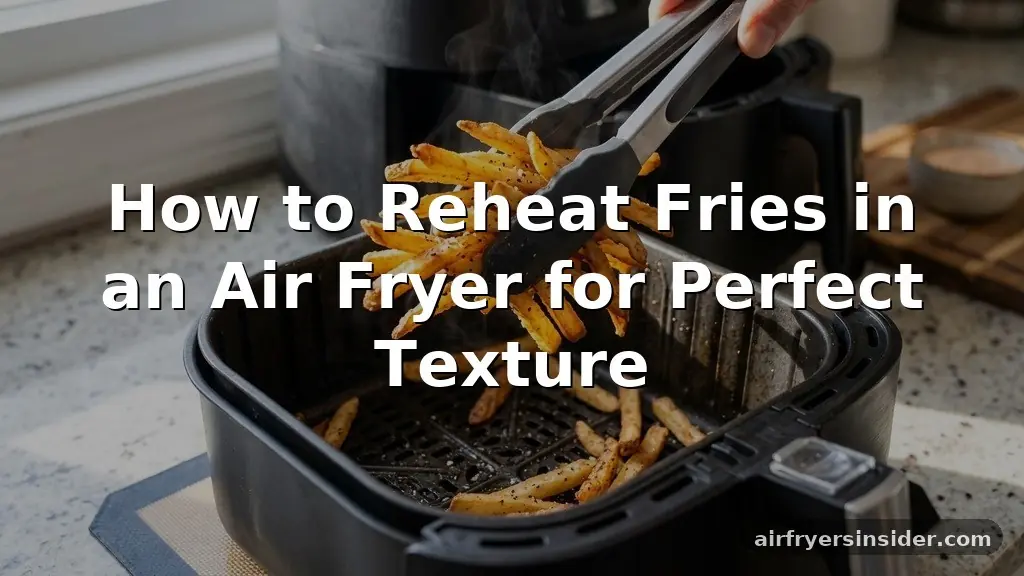
Getting leftover fries back to their original glory can feel like an impossible task, especially if you have tried the microwave and ended up with a sad, limp mess. Learning how to reheat fries in an air fryer changes the game entirely because the intense convection heat mimics the original deep-frying process.
By understanding the right temperature and timing, you can restore that coveted crunch without burning the edges or drying out the potato. Whether you are dealing with thin shoestring fries or hearty steak-cut wedges, the air fryer is the most effective tool in your kitchen for saving those leftover potatoes from the trash.
Why the Air Fryer Outperforms Other Methods
Most reheating methods fail because they either steam the food or heat it unevenly. Microwaves are notorious for turning crispy exteriors into rubbery, soggy remnants because they excite water molecules without removing excess moisture. Traditional ovens can work, but they often take far too long to preheat, which leads to the potatoes drying out completely before they ever reach a satisfying temperature.
The magic of the air fryer lies in its high-speed fan and compact heating chamber. This system creates a convection environment that circulates hot air around every surface of the fry simultaneously.
When you place your fries in the basket, the air fryer effectively dehydrates the surface while heating the interior, which is exactly how those fries were cooked in the first place. This rapid heat transfer ensures that you aren’t just warming the food; you are essentially re-crisping it.
Optimizing Your Temperature Settings
Finding the right heat level is the secret to success. If you set the temperature too low, the fries will sit in the machine for too long and become dehydrated, resulting in a woody or chalky mouthfeel. If you set it too high, the outside will char before the center of the fry has a chance to warm up.
For most standard potato sticks, 350 degrees Fahrenheit (approximately 175 degrees Celsius) is the sweet spot. This temperature is hot enough to trigger the Maillard reaction—the chemical process that creates browning and flavor—without causing the edges to turn bitter. If you are working with very thin, shoestring-style fries, you might consider dropping the heat slightly to 325 degrees Fahrenheit to prevent them from burning, as their surface area-to-volume ratio is much higher.
The Importance of a Single Layer
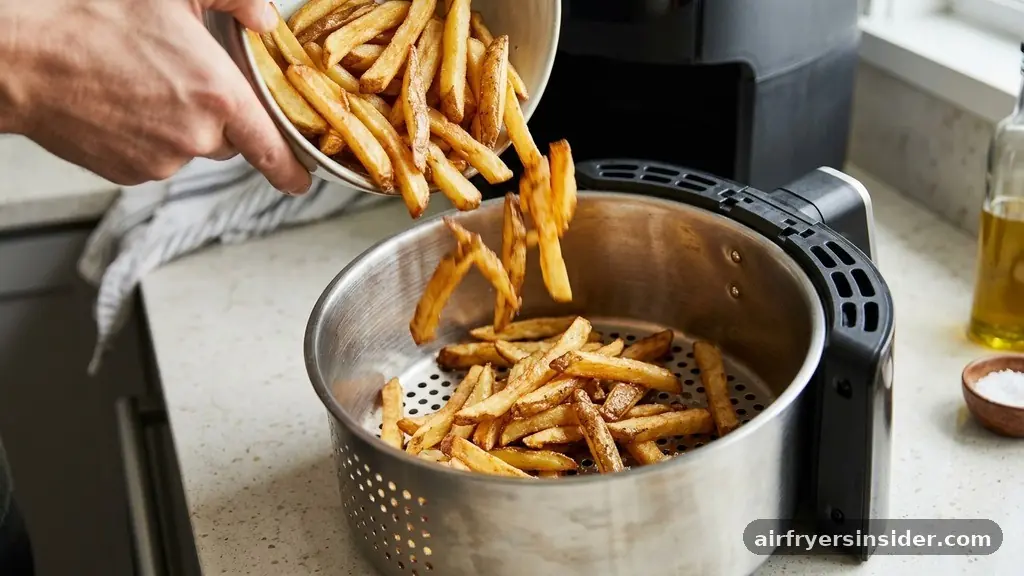
One of the most common mistakes people make is overcrowding the air fryer basket. When you dump a massive pile of fries into the tray, they essentially steam each other. The moisture trapped between the layers prevents the hot air from reaching the surface of the potatoes, which is why you end up with a soggy batch even after several minutes of cooking.
Always arrange your fries in a single layer whenever possible. If you have a large batch, it is much better to reheat them in two separate rounds rather than rushing the process.
This spatial arrangement allows the air to flow freely around each piece, ensuring that the heat is distributed evenly. Even if they are slightly overlapping, you should aim for a loose distribution that doesn’t block the airflow.
Mastering the Shake Technique
Even with a perfect single layer, the fries underneath or in the corners of the basket may not receive the same intensity of airflow as those directly in the path of the fan. This is where the shake the basket technique becomes essential. About halfway through your reheating time, pull the basket out and give it a vigorous shake.
This simple movement redistributes the fries, exposing previously hidden surfaces to the hot air. If you are using a tray-style air fryer like a Ninja Foodi or a Cosori model that doesn’t allow for easy shaking, use a pair of silicone-tipped tongs to flip them individually. This ensures that every piece of potato regains its texture, preventing uneven results where one side is crispy and the other remains soft.
Should You Use Oil Spray or Parchment Paper?
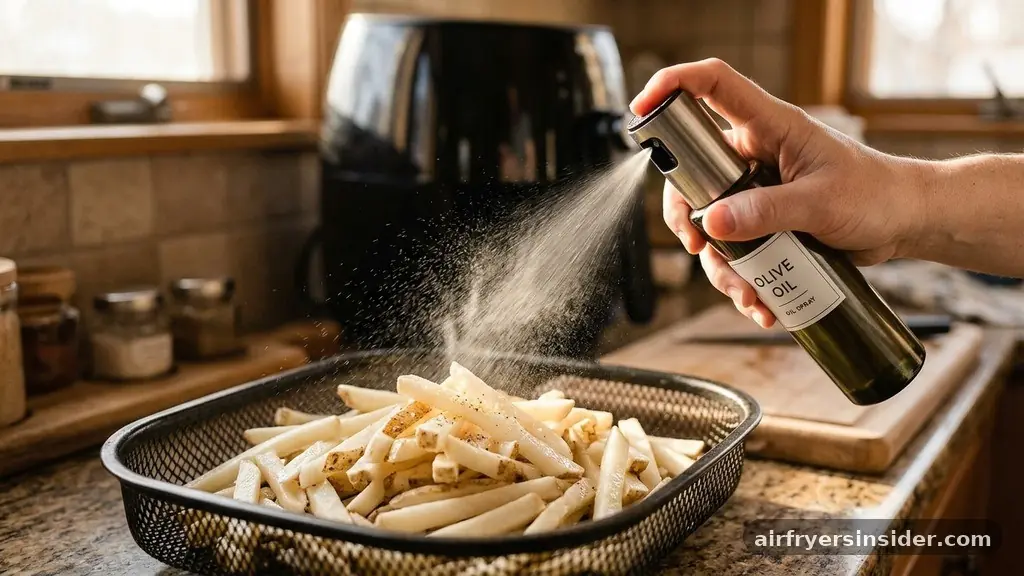
Many home cooks wonder if they need extra fat to get the best results. A light mist of oil spray can be beneficial if the fries look particularly dry or if they were cooked in a way that stripped them of their natural fats.
A quick spritz of avocado or canola oil can help conduct heat and improve the final crispiness. However, do not overdo it, as excess oil can pool at the bottom of the basket and create a greasy mess.
Regarding parchment paper, it is generally unnecessary for reheating fries and can actually hinder the process. The air fryer relies on airflow from the bottom of the basket as well as the top.
Placing a sheet of paper down blocks these vents, which can lead to sogginess. Only use parchment if you are trying to avoid a difficult cleanup, and even then, opt for perforated liners specifically designed for air fryers that allow air to pass through.
Reheating Times for Different Fry Cuts
The thickness of the potato matters significantly when calculating your reheating time. A thick-cut steak fry holds onto more internal moisture than a thin shoestring fry, meaning it requires a bit more time to heat through to the center. Conversely, thin fries require less time and higher vigilance to avoid burning.
Estimated Reheating Times by Style
| Fry Style | Temperature | Time Estimate |
|---|---|---|
| Shoestring Fries | 325°F | 3-4 Minutes |
| Standard Cut | 350°F | 4-5 Minutes |
| Steak Fries / Wedges | 375°F | 6-8 Minutes |
Addressing Common Topical Gaps
A common concern involves food safety and the internal temperature of the fries. While fries are generally safe as long as they were handled correctly initially, you want to ensure they reach an internal temperature that makes them palatable.
You do not need to worry about reaching a specific safe-for-consumption temperature like you would with poultry, but you should aim for a hot center. If the center is still cold, the texture will be unappealing.
Another gap in knowledge is how to handle fast-food leftovers like McDonald’s fries. These are often coated in thin layers of salt and flavorings that can easily burn. Because they are so thin, they are particularly prone to drying out.
The key here is to keep the time very short. Often, just three minutes at 350 degrees Fahrenheit is enough to bring them back to life. If you leave them in for five or six minutes, they will likely become brittle and lose their potato-like interior texture.
Utilizing Your Kitchen Appliances
Whether you own a high-end Ninja Foodi, a standard Cosori basket air fryer, or a toaster-oven style unit, the physics remains the same. The main difference is the power of the fan and the distance of the heating element from the food. If you have a larger oven-style air fryer, you may need to add an extra minute to your cooking time because the interior volume is greater, which means the air isn’t as concentrated as it is in a small, compact basket unit.
Always preheat your machine for two to three minutes before adding the fries. This ensures that the moment the food enters the chamber, it is met with the target temperature rather than a slow ramp-up.
Preheating is the difference between a quick, crisp result and a slow, drying process. If you skip this step, the fries will be sitting in the machine while the temperature climbs, which allows moisture to leach out of the potato before the surface can crisp up.
Troubleshooting Common Reheating Issues
If your fries still end up soggy, check your ventilation. Most air fryers need to be placed away from walls and other kitchen appliances to ensure the exhaust vents can function properly.
If the hot, moist air cannot escape the machine, the interior remains humid, which is the enemy of crispy food. Ensure your unit is in an open space on your countertop.
If you find that the fries are consistently burning, your temperature settings might be too high for your specific unit. Some air fryers run “hotter” than others.
If you notice a burnt smell within the first two minutes, drop your temperature by 25 degrees Fahrenheit and extend the time slightly. It is always better to reheat slowly and check frequently than to have to discard a batch that has turned into carbonized potato sticks.
Frequently Asked Questions
Is it necessary to preheat the air fryer before reheating fries?
Yes, preheating is highly recommended. It ensures the air fryer reaches the required temperature immediately, which allows the exterior of the fries to crisp up quickly before the moisture inside evaporates. This prevents the potatoes from becoming dry or woody during the heating process.
Can I reheat fast food fries like McDonald’s in an air fryer?
Absolutely. McDonald’s fries are excellent candidates for air fryer reheating because their thin shape benefits from the intense, circulating heat. Keep a close eye on them, as they can go from perfectly reheated to burnt in a matter of seconds due to their small size.
What is the best temperature for reheating thicker fries?
For thicker cuts like steak fries or potato wedges, use a slightly higher temperature, around 375 degrees Fahrenheit. Because these pieces have more mass, they need more heat to ensure the interior reaches an enjoyable, hot temperature without drying out the outer layer entirely.
How do I stop my fries from drying out while reheating?
The key is to avoid overcooking them. Set a timer for shorter intervals, such as three minutes, and check them frequently. If they look like they are starting to lose too much moisture, remove them immediately. A light spray of oil can also help retain a bit of moisture.
Conclusion
Mastering the art of how to reheat fries in an air fryer is a simple way to reduce food waste while ensuring your quick snack remains enjoyable. By focusing on a single layer arrangement, using the correct temperature settings, and remembering to shake the basket, you can achieve a result that rivals the original cook. Don’t be afraid to experiment with the timing based on your specific kitchen appliances, as every unit has slight variations in performance.
With a little practice, your leftover potatoes will never have to go to waste again. Give these techniques a try the next time you have a few fries left over, and you will see how easy it is to bring back that perfect texture.
Meta Description: Learn how to reheat fries in an air fryer to achieve the perfect crispy texture. Follow these expert tips on temperature, timing, and proper layering.


