


Many home cooks wonder if they can make toast in an air fryer when their standard toaster is occupied or broken. The short answer is yes, you absolutely can achieve professional-level results with this versatile kitchen appliance. Because an air fryer functions essentially as a powerful convection oven, it is perfectly suited for browning bread slices to a delicious crunch.
By understanding how the internal fan and heating element work together, you can master the art of the perfect slice without needing a dedicated slot toaster. Learning the nuances of temperature settings and timing will ensure your breakfast remains consistent and enjoyable every single morning.
Understanding the Mechanics of Air Fryer Toasting
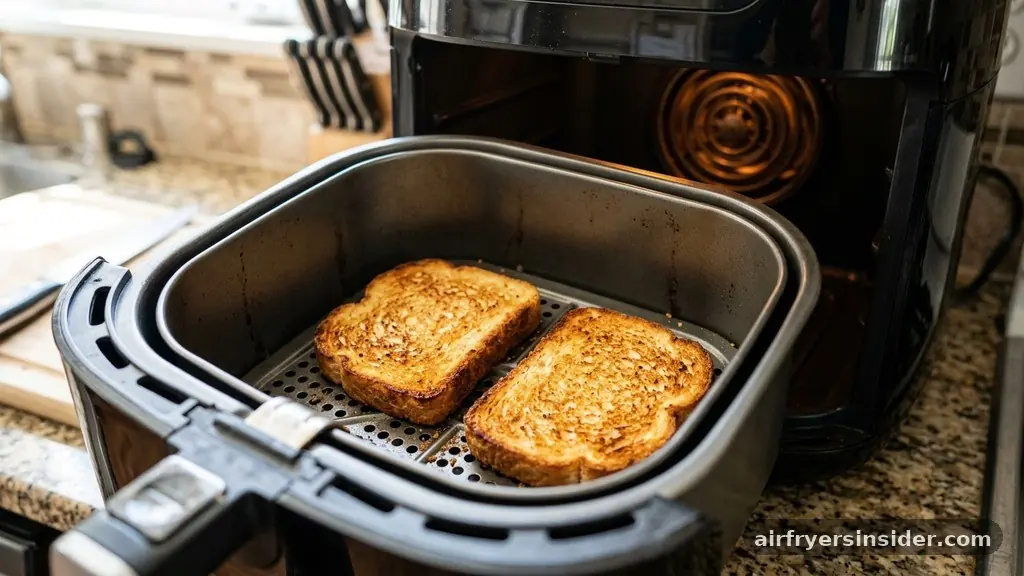
At its core, an air fryer is a compact convection oven that relies on rapid air circulation to cook food. When you place bread slices inside, the heating element warms the air, and the high-speed fan forces that hot air to surround the bread completely.
Unlike a standard toaster, which uses radiant heat from wires directly next to the bread, the air fryer uses convection heat to dry out the surface of the bread quickly. This process is highly efficient at removing moisture content, which is the primary driver of crispiness.
Because the heat is circulating rather than just sitting in a fixed position, you often get a more uniform browning across the entire surface of the bread. However, this intensity can also lead to bread flying around inside the basket if it is too light, which is something you need to manage.
The physics of the appliance allows for a Maillard reaction that creates that classic golden brown color we associate with high-quality toast. By controlling the airflow and the heat intensity, you are essentially mimicking the environment of a professional bakery oven on a miniature scale.
Essential Preparation for Optimal Texture
Achieving that perfect crunch requires a bit more preparation than just dropping a slice into a toaster. Since air fryers are designed to move air, very thin or lightweight bread slices can sometimes be blown around by the fan.
To prevent this, you might need to use a small metal rack or even a heavy-duty mesh screen to weigh the bread down. If you are toasting sourdough or thicker whole wheat slices, they are usually heavy enough to stay put on their own.
Preheating your air fryer is another step that many people overlook, yet it is vital for texture. If you start from a cold unit, the bread will dry out and become tough before it has a chance to brown properly. By preheating for just two or three minutes, you ensure that the browning process begins the moment the bread touches the heat.
Additionally, consider how you arrange the slices. Overcrowding the basket prevents the air from circulating around the edges, which results in uneven browning levels. Always aim for a single layer with enough space between each slice to allow the hot air to do its job effectively.
Managing Temperature and Timing
Finding the right balance for your specific appliance is the most important part of the process. Most air fryers run hotter than traditional toaster ovens, so you should generally start at a lower temperature than you might expect.
A temperature of 350°F to 375°F is usually the sweet spot for achieving a golden brown crust without burning the exterior. If you go too high, the outside will char before the center of the bread has reached the desired texture.
Cook time will vary depending on the thickness of your bread and the wattage of your air fryer. Generally, you are looking at a window of three to five minutes. It is highly recommended to flip the bread midway through this duration to ensure both sides receive equal exposure to the convection heat.
If you are using a thicker bagel or a rustic artisanal loaf, you may need to extend the time slightly or adjust the fan speed if your model allows it. Always keep a close eye on the process during your first few attempts, as the high-speed air can turn bread into croutons faster than you might anticipate.
Addressing Common Topical Gaps in Air Fryer Usage
Many users are confused about whether they can toast bread with toppings already applied. While a standard toaster would cause a fire or a massive mess if you inserted a slice covered in butter or cheese, the air fryer is surprisingly capable of handling these tasks.
When making cheese toast, the convection heat melts the cheese evenly while simultaneously crisping the bread underneath. However, you must be careful with loose ingredients.
Another common gap in knowledge involves the use of parchment paper. While parchment paper is a staple for cleaning up, you should avoid using it when toasting plain bread. The fan will likely lift the paper up and press it against the heating element, which creates a significant food safety risk.
If you are melting cheese or adding toppings, ensure the parchment is weighed down by the food itself. Otherwise, it is better to toast the bread directly on the rack or basket surface to allow for the best possible air circulation.
Guidelines for Toasting Variations
- Sourdough: Requires a slightly longer cook time due to density.
- Whole Wheat: Watch closely; the darker color makes it harder to judge browning.
- Bagels: Toast the cut side facing up for the best texture.
- Butter: Apply after toasting to prevent the bread from becoming greasy during the process.
Comparison of Toaster Types
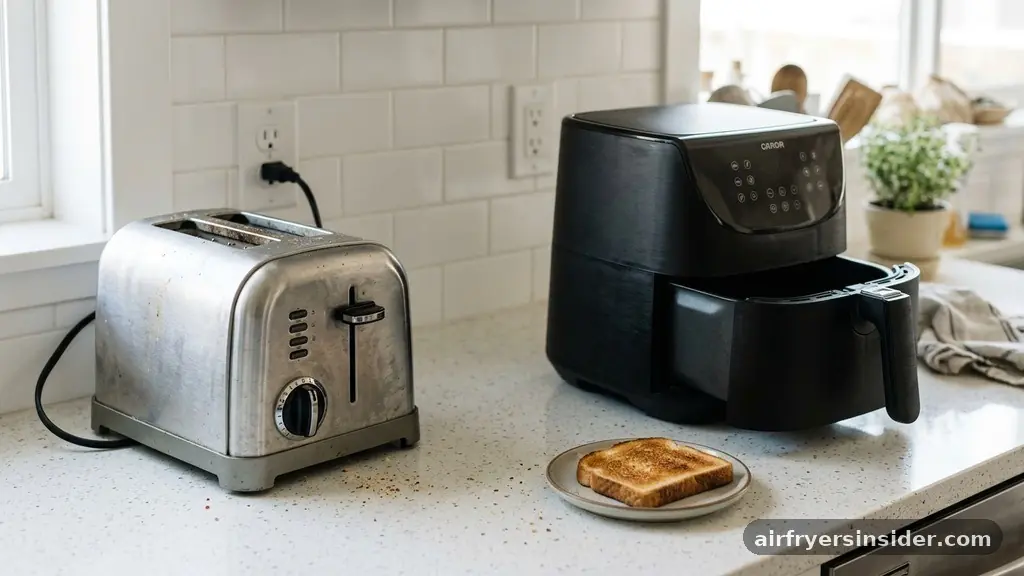
Choosing between a dedicated toaster and an air fryer often comes down to the specific goals you have for your breakfast. While a pop-up toaster is faster for a simple slice of white bread, an air fryer offers much more control over the final texture and allows for more creative culinary experiments.
| Feature | Pop-up Toaster | Air Fryer |
|---|---|---|
| Heating Method | Radiant Heat | Convection Heat |
| Speed | Very Fast | Moderate |
| Versatility | Low | High |
| Evenness | Variable | Consistent |
As shown in the table, the air fryer provides a more consistent browning level, which is ideal if you are particular about your toast. While the toaster is a specialized kitchen appliance for one specific task, the air fryer’s ability to handle bagels, thick-cut sourdough, and even open-faced sandwiches makes it a more flexible tool for the modern kitchen.
The Role of Fats and Toppings
Deciding when to add butter or oils is a significant factor in the quality of your toast. It is a common mistake to butter the bread before it goes into the air fryer.
The high-velocity air can blow melted butter into the internal components of the machine, which is difficult to clean and could potentially cause smoke. Instead, toast the bread plain until it reaches your desired browning level, then apply the butter immediately upon removal.
If you are aiming for a specific flavor profile, such as garlic toast, you can apply a thin layer of compound butter or olive oil just before the final minute of cooking. This allows the fat to crisp up without the risk of it liquefying and dripping throughout the entire cycle.
Keep in mind that any added fat will increase the heat absorption, meaning the bread will brown much faster during that final minute. Using a brush to apply a light coating is far more effective than trying to spread cold butter on a soft slice before it begins the toasting process.
Safety Considerations and Maintenance
Operating any high-heat kitchen appliance requires attention to safety protocols. When using an air fryer, ensure that the basket is properly seated and that there is sufficient clearance around the unit.
Because the air is being forced at high speeds, crumbs can sometimes be ejected from the basket. It is important to clean the bottom of your air fryer regularly to prevent these crumbs from burning during subsequent uses, which can lead to unwanted smoke and odors.
Additionally, always use silicone-tipped tongs to remove your toast. Metal tongs can scratch the non-stick coating of your air fryer basket, which degrades the performance of the unit over time.
If you notice a buildup of residue, a gentle wipe with a soft cloth while the unit is still warm is usually enough to maintain the surface. By keeping the interior clean, you ensure that the air circulation remains unobstructed, which is vital for maintaining the performance of the heating element and fan.
Troubleshooting Common Issues
Even with the best preparation, you might occasionally face issues like uneven browning or bread that is too dry. If your toast is consistently coming out too dry, you are likely cooking it for too long at a temperature that is too low.
Try increasing the temperature by 25 degrees and reducing the cook time by a minute. This locks in the moisture in the center while still achieving the necessary crunch on the exterior.
If you find that the edges are burning while the middle remains pale, your air fryer might have a “hot spot” where the fan is most intense. Try rotating the bread slices halfway through the process or moving them to a different part of the basket.
If you are using a basket-style air fryer, try to keep the bread in the center, as the air velocity is usually most balanced in that area. Remember that every model is different; the wattage and fan speed of a large unit will differ significantly from a smaller one, so treat your first few attempts as a calibration phase.
Adapting Recipes for Air Fryer Toasting
Once you have mastered basic toast, you can start adapting more complex recipes that require the unique environment of an air fryer. For instance, making avocado toast often involves toasting the bread first and then building the toppings. However, you can also place the bread with the avocado already on it into the air fryer for a very brief period to warm the topping without drying out the bread.
This technique works well for bruschetta or other open-faced snacks where you want the bread to be toasted but the toppings to be warm and slightly caramelized. The convection heat is particularly good at warming toppings like cheese, tomatoes, or even thinly sliced meats without making the bread soggy.
Experimenting with different types of bread—such as rye, pumpernickel, or even gluten-free varieties—will show you just how much control you have. Because each bread has a different moisture content and density, you will quickly learn which ones benefit most from the air fryer’s unique drying effect.
Frequently Asked Questions
Is it better to use an air fryer or a toaster for bread?
It depends on your goal. A toaster is faster for standard white bread, but an air fryer is superior for thicker breads, bagels, or when you want to melt toppings. The air fryer provides a more consistent, even crunch through its convection heat technology.
What is the ideal temperature for toasting bread in an air fryer?
Most users find that 350°F to 375°F is the ideal range. This temperature is high enough to create a golden brown exterior through the Maillard reaction without burning the bread before the center has had a chance to reach the perfect crispiness level.
Can I put butter on my bread before air frying?
It is generally better to avoid adding butter before air frying. The high-speed air can blow the butter into the heating element or the fan, creating a mess and potential smoke. Apply butter or other spreads immediately after removing the toast from the basket.
How do I stop my bread from flying around in the air fryer?
Lightweight bread slices can sometimes be moved by the powerful internal fan. To prevent this, use a small metal rack or a heavy-duty mesh screen to weigh the bread down. Alternatively, ensure your bread slices are thick enough to have some weight of their own.
Conclusion
Mastering the process of making toast in an air fryer opens up a new level of culinary convenience and control in your kitchen. By understanding how the convection heat and fan speed influence your bread, you can achieve a perfect golden brown finish that rivals any traditional toaster. Remember to prioritize safety by keeping the interior clean and avoiding loose items like parchment paper, and always adjust your timing based on the specific type of bread you are using.
Whether you are prepping a quick breakfast or a more elaborate open-faced meal, the air fryer is a reliable tool for the job. Start with a few test slices to calibrate your machine’s settings, and you will soon find that this appliance is an indispensable part of your morning routine. Feel free to experiment with different breads and toppings to see what works best for your personal taste.


