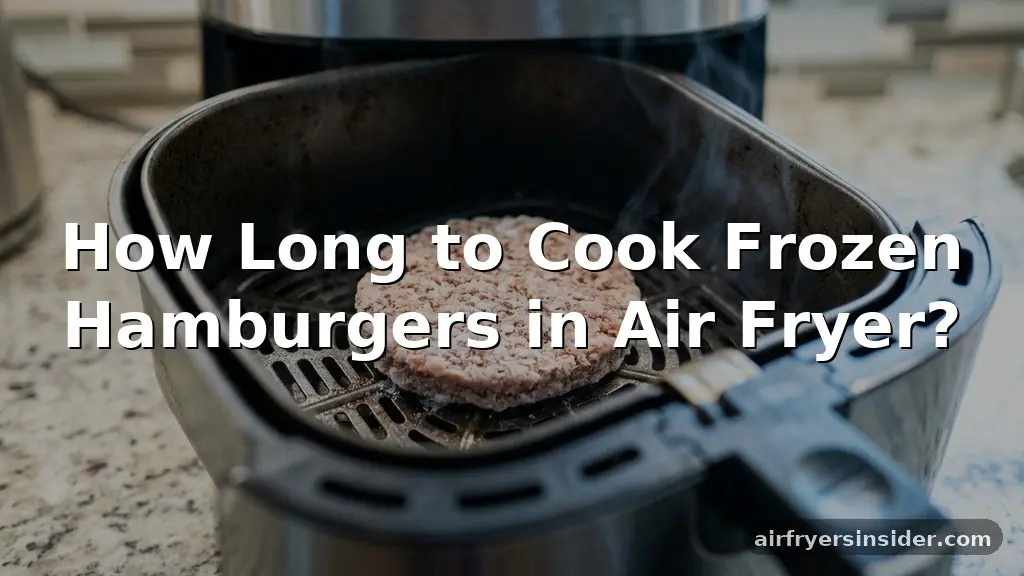
Determining how long to cook frozen hamburgers in air fryer settings requires balancing the need for a deep, flavorful crust with the safety requirements of ground beef. Because air fryers rely on intense convection cooking, they are uniquely suited to transforming rock-solid patties into juicy, restaurant-style burgers in a fraction of the time a conventional oven would take.
You’ll find that mastering this process saves you from the last-minute dinner scramble while ensuring your meal is cooked thoroughly. By understanding the interaction between heat intensity and patty density, you can achieve that elusive perfect sear without sacrificing the interior moisture that defines a truly great burger.
The Mechanics of Air Fryer Heat Distribution
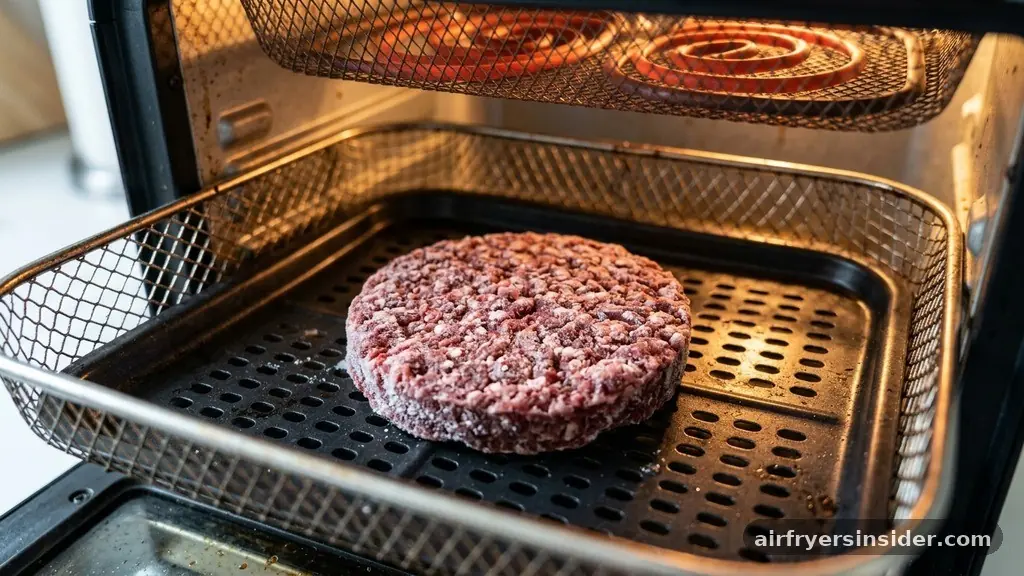
Air fryers are essentially high-powered convection ovens. They utilize a heating element and a high-speed fan to circulate hot air rapidly around the food. When you place a frozen burger into the basket, the air circulation creates a concentrated thermal environment that works differently than traditional pan-frying.
Instead of relying on direct contact with a hot surface to initiate the Maillard reaction, the air fryer forces hot air into every crevice of the frozen patty. This rapid movement of air allows the exterior to brown quickly, creating a savory crust while the frozen center slowly thaws and cooks simultaneously.
Because air fryers are so efficient, the cooking time is significantly shorter than grilling or baking. However, the lack of a flat surface means you don’t get the same kind of conductive sear you would from a cast-iron skillet. To compensate, you must ensure your appliance is properly preheated.
Preheating allows the air to reach the target temperature before the meat enters the chamber, which is crucial for jumpstarting the browning process. Without preheating, the burger may start to steam rather than sear, leading to a gray, unappealing exterior that lacks the deep flavor development expected from a quality hamburger.
Determining Proper Cooking Temperatures
When deciding on the temperature for your frozen patties, 375 to 400 degrees Fahrenheit is the sweet spot. Setting your air fryer to 400 degrees Fahrenheit provides the most aggressive heat, which is necessary to achieve a decent crust on a frozen item.
If you prefer a more gentle, even cook, 375 degrees might be safer for thicker patties to ensure the center reaches a safe temperature before the outside becomes charred. The goal is to balance the rate of external browning with the internal temperature rise.
Consistency is key when working with frozen goods. If you frequently cook burgers, you might notice that different air fryer models, such as a Ninja Foodi or a Cosori, have slightly different airflow patterns and wattage. A higher wattage unit will move air more aggressively, potentially cooking the outside faster than the inside.
Always start by checking your specific manufacturer’s recommendations for frozen meats, then adjust your timing based on the first batch you cook. Remember that the goal is reaching a safe internal temperature while maintaining the integrity of the beef fat, which contributes to the overall juiciness of the patty.
Safety and Internal Temperature Requirements
Following USDA guidelines is non-negotiable when preparing ground beef. The agency recommends that ground beef reaches an internal temperature of at least 160 degrees Fahrenheit to ensure the destruction of harmful bacteria. Relying solely on a timer is a common mistake; instead, you should always use a reliable meat thermometer.
Insert the probe into the thickest part of the patty to get an accurate reading. This simple step is your best defense against foodborne illness, especially when dealing with frozen food handling where internal temperature can be deceptive.
Salmonella prevention is a major reason why thermometers are essential. Because frozen burgers can appear browned on the outside while remaining dangerously undercooked in the center, visual cues are unreliable. Even if the patty looks done, the core might still be in the “danger zone.”
By confirming the 160-degree threshold, you ensure the burger is safe to eat while also learning how your specific appliance performs. Carryover cooking will occur once you remove the burgers, causing the temperature to rise by another few degrees, so pulling them out at 158 degrees is often acceptable.
The Impact of Patty Thickness and Composition
Not all frozen burger patties are created equal. You will find significant differences between pre-packaged, thin, mass-produced patties and thicker, butcher-style frozen burgers. Patty thickness is the primary variable that dictates cooking time.
A thin, quarter-pound patty might be ready in 10 to 12 minutes, whereas a thick, half-pound patty could require 15 to 18 minutes. The density of the meat, as well as the fat content, also plays a role in how the burger behaves under high heat.
High-fat content contributes to the juiciness of the burger as the beef fat renders during the cooking process. However, if the fat content is too high, it can lead to excessive smoking in the air fryer basket.
If your kitchen starts to fill with smoke, it’s a sign that the fat is hitting the heating element or the bottom of the basket and burning. To mitigate this, consider placing a small piece of parchment paper or a perforated silicone mat at the bottom of the basket to catch drips, though ensure the air can still circulate freely around the patty.
Optimizing the Cooking Process with Strategic Flipping
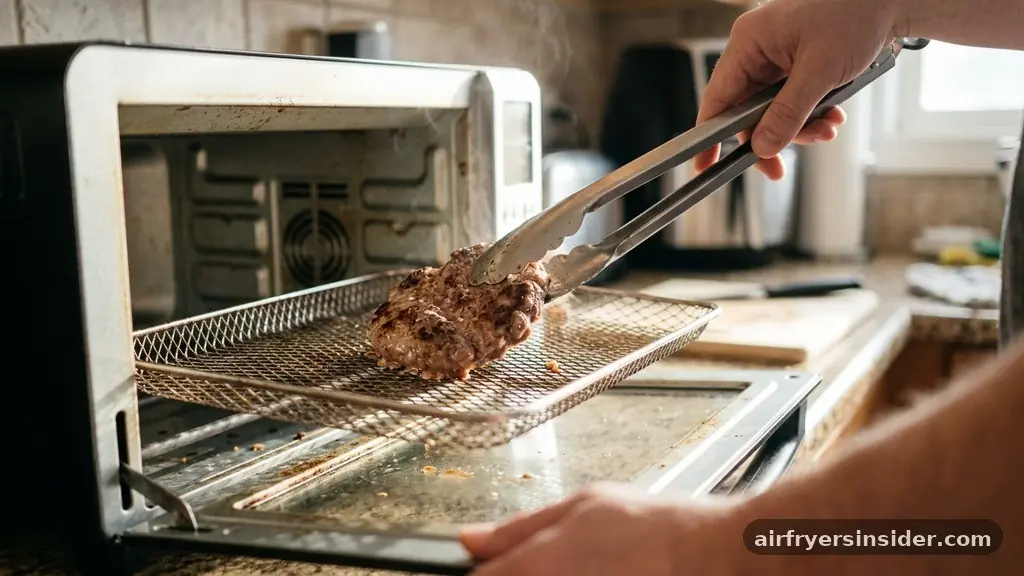
Flipping your burgers halfway through the cooking time is essential for even heat distribution. While the convection air flows all around, the bottom of the patty often stays slightly cooler because it rests against the air fryer rack or basket.
By flipping the burger, you ensure that both sides are exposed to the direct airflow, which promotes a more uniform crust and consistent internal temperature. This simple act of maintenance prevents the burger from developing a soggy bottom and a dry, overcooked top.
When you flip the burgers, it is also the perfect time to add seasonings if you haven’t already. While some people prefer to season before cooking, salt can draw out moisture if left on for too long. If you’re working with frozen patties that are already seasoned, focus on the flipping technique.
Use a set of silicone-tipped tongs to avoid scratching the non-stick coating of your air fryer basket. Be gentle when flipping to ensure the frozen patty doesn’t break apart, especially if it has started to thaw and soften in the center.
Addressing Common Cooking Challenges
One of the most frequent frustrations when learning how long to cook frozen hamburgers in air fryer units is freezer burn. Freezer burn occurs when moisture evaporates from the surface of the meat during long-term storage, leading to dry, icy patches that negatively affect the texture of the finished burger.
If your patties have significant freezer burn, they will likely turn out dry and tough regardless of how perfectly you time the cooking. To combat this, always store your patties in airtight packaging and try to use them within a reasonable timeframe.
Another challenge is seasoning adherence. Because the meat is frozen, traditional dry rubs and salt often slide right off the surface. You can fix this by lightly brushing the frozen patty with a small amount of oil or a splash of Worcestershire sauce before adding your spices.
This acts as a binder, helping the seasoning stick to the meat. As the fat begins to render, the spices will toast in the hot air, creating a much more flavorful crust than you would get by just tossing a frozen, unseasoned patty into the basket.
Comparative Cooking Times and Temperatures
To help you gauge your cooking process, the following table provides a general estimate for different patty sizes when cooking at 400 degrees Fahrenheit. Please note that these are estimates; your specific appliance and the starting temperature of your freezer may cause slight variations.
| Patty Thickness | Estimated Time | Internal Target |
|---|---|---|
| Thin (1/4 lb) | 10-12 Minutes | 160°F |
| Medium (1/3 lb) | 12-14 Minutes | 160°F |
| Thick (1/2 lb+) | 15-18 Minutes | 160°F |
Use this table as a starting point rather than a strict rule. If you find your burgers are browning too quickly on the outside but are still cold in the middle, reduce the temperature to 375 degrees and extend the time by a few minutes. This allows the heat to penetrate the core of the meat more gradually, which is particularly useful for thicker patties that require more time to reach a safe internal temperature without burning the exterior.
Topical Gaps: What Most Guides Miss
Many people struggle with the concept of “carryover cooking” when using an air fryer. Because the air fryer is such a high-intensity environment, the meat continues to cook for a minute or two after you turn off the machine. If you wait until the thermometer reads exactly 160 degrees, you might end up with a burger that is slightly overdone once it hits the plate.
Pulling the meat at 155-158 degrees is often the secret to achieving that perfect, juicy medium-well finish. Additionally, many guides fail to mention the importance of resting the meat. Allowing the burger to sit for three to five minutes after cooking lets the juices redistribute, ensuring every bite is moist.
Another overlooked aspect is the basket capacity. It is tempting to crowd the air fryer to cook for a crowd, but doing so drastically reduces the efficiency of the air circulation. If you pack the basket, the air cannot move around the patties, and they will effectively steam each other.
For the best results, cook in batches and ensure there is at least an inch of space between each patty. This allows the hot air to hit every side of the burger, which is the only way to get a consistent, high-quality result that mimics a grilled burger.
The Role of Accessories and Maintenance
Maintaining your air fryer is just as important as the cooking technique itself. Over time, grease buildup in the bottom of the basket can lead to smoke and off-flavors.
Cleaning the basket thoroughly after each use, especially when cooking fatty items like ground beef, is essential for the longevity of your appliance. If you use parchment paper, ensure it is specifically designed for air fryers and is weighted down by the food so it doesn’t fly up into the heating element, which is a major fire hazard.
For those who cook frozen burgers frequently, investing in a high-quality meat thermometer is the best upgrade you can make. While a built-in timer is convenient, it cannot account for the variations in ambient room temperature, the starting temperature of the frozen meat, or the performance degradation of the air fryer fan over time. A digital instant-read thermometer provides the precision necessary to ensure you are consistently hitting that 160-degree mark, making your home-cooked burgers safer and more professional every single time you use the machine.
FAQ Section
Do I need to defrost frozen burgers before air frying?
No, you do not need to defrost them. Cooking from frozen is one of the primary advantages of using an air fryer. Simply adjust your cooking time to account for the frozen state, starting with a slightly lower temperature if you find the outside is browning too quickly compared to the center.
How do I stop my air fryer from smoking when cooking burgers?
Smoking usually happens when beef fat drips onto the heating element or the bottom of the basket. To prevent this, add a tablespoon of water or a small piece of parchment paper to the bottom of the basket to catch the grease, and make sure your basket is cleaned of old oil residue before you begin.
Is it possible to achieve a medium-rare burger with frozen patties?
Achieving medium-rare with frozen ground beef is not recommended due to safety concerns. Because frozen patties are often mass-produced and ground, the risk of surface bacteria being mixed into the center is higher. Always follow the USDA recommendation of cooking ground beef to at least 160 degrees Fahrenheit.
Can I cook frozen burgers and fries at the same time?
You can, provided they have similar cooking times and temperatures. However, because burgers release fat, they might make your fries greasy. It is generally better to cook them separately or ensure the burgers are placed on a rack that allows the grease to drip away from the fries below.
Conclusion
Mastering the process of cooking frozen hamburgers in your air fryer is a straightforward path to delicious, convenient meals. By focusing on consistent temperatures, using a reliable thermometer, and respecting the need for proper air circulation, you can achieve results that rival traditional cooking methods. The key lies in the balance of heat and time, ensuring that the exterior develops a savory crust while the internal temperature reaches the necessary safety threshold.
Whether you are using a Ninja Foodi, a Cosori, or another convection-based appliance, the principles of air frying remain the same. Start with the suggested times, observe how your specific unit performs, and don’t be afraid to adjust based on the thickness of your patties. Happy cooking, and enjoy the ease of a perfectly prepared burger in your own kitchen.
Meta Description: Learn exactly how long to cook frozen hamburgers in air fryer to achieve a juicy, safe, and flavorful result every time with our expert tips.