Learning how to cook broccolini in air fryer setups provides a fast, efficient path to achieving perfectly charred, tender-crisp vegetables without the long wait of a traditional oven. By leveraging rapid air circulation, you can transform these slender stalks into a restaurant-quality side dish in under ten minutes.
Whether you are aiming for a simple, healthy vegetable side dish or a sophisticated accompaniment to a main course, the air fryer offers a level of consistency that is hard to replicate. You will find that mastering this method allows you to enjoy the natural sweetness of the vegetable while highlighting its nutty flavor profile through simple, high-impact seasoning.
Understanding the Basics of Air Fryer Vegetable Prep
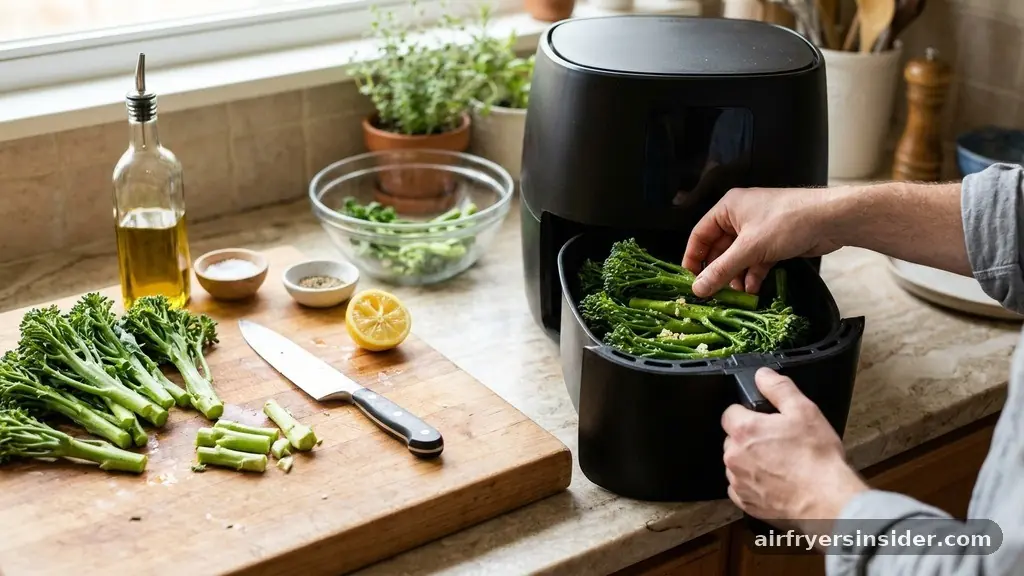
Achieving that perfect, restaurant-style finish starts long before you place the greens in your machine. Proper vegetable prep is the most critical step in ensuring your broccolini doesn’t end up soggy or unevenly cooked. First, you must rinse the stalks thoroughly under cool running water to remove any grit or debris hidden within the florets.
After washing, patting them dry is non-negotiable. A dry surface is essential for the oil to adhere properly, which in turn facilitates the Maillard reaction. If the vegetable remains wet, it will steam rather than roast, preventing those desirable crispy florets from forming.
Once cleaned and dried, evaluate the stalk thickness. Broccolini often comes with woody, thick ends that are unpleasant to chew. You should trim about an inch off the bottom of each stalk.
If the stems are exceptionally thick, you can slice them lengthwise to ensure they cook through at the same rate as the delicate florets. Consistency in size is the secret to uniform cooking. By taking these few minutes to prep correctly, you set the stage for a result that is tender near the center but pleasantly charred on the edges.
Mastering the Seasoning Process
Seasoning is where you can truly customize the flavor profile of your dish. Because the air fryer uses high heat, you want to use oils with a higher smoke point, such as avocado oil or a high-quality olive oil. These fats help distribute heat evenly across the stalks.
Place your trimmed broccolini into a large mixing bowl, drizzle with your chosen oil, and toss until every inch is lightly coated. Do not over-oil; a light sheen is sufficient to crisp the leaves without making the vegetable greasy.
For a classic, savory profile, stick to basics like garlic powder, kosher salt, and a pinch of black pepper. If you enjoy a bit of heat, adding red pepper flakes before cooking allows the spice to bloom directly into the oil, infusing the stalks with a subtle kick. For those who prefer a brighter finish, wait until the cooking process is complete before adding a squeeze of fresh lemon juice.
This acidity cuts through the richness of the oil and highlights the natural, earthy notes of the vegetable. Remember that the air fryer intensifies flavors, so start with a modest amount of seasoning and adjust to your personal preference after the first batch.
Optimal Temperature and Timing Strategy
The roasting temperature and cook time are the two variables that dictate the final texture of your vegetable. Most air fryer models perform best at a range between 375°F and 400°F. At 375°F, you get a slower, more even cook that is ideal if you prefer a slightly softer stalk.
If you are chasing those deeply caramelized, crispy florets, 400°F is your target. Generally, the cook time will fall between 6 and 9 minutes, depending on the thickness of the stems and how crowded your basket is.
It is helpful to keep a close watch during the last two minutes of the cycle. Air fryers are powerful, and broccolini can transition from perfectly roasted to burnt in a matter of seconds. If you are using a specific model like a Ninja Foodi, the high-velocity fan might cook the food slightly faster than a standard basket-style fryer.
Always rely on visual cues—the florets should look browned and slightly wilted, while the stems should be tender when pierced with a fork. Using kitchen tongs to shake the basket halfway through the cycle helps ensure even air circulation, which prevents one side from burning while the other remains raw.
Addressing Common Cooking Variables
| Cooking Variable | Impact on Texture | Recommended Adjustment |
|---|---|---|
| Stalk Thickness | Affects tenderness | Slice thick stems in half |
| Basket Crowding | Causes steaming | Cook in a single layer |
| Oil Coating | Determines crispiness | Use light, even application |
| Preheating | Controls browning | Preheat for 3 minutes |
Managing Basket Capacity and Air Circulation
One of the most frequent mistakes home cooks make is overcrowding the air fryer basket. Air circulation is the fundamental mechanism that makes this appliance work; it relies on hot air moving rapidly around the food to crisp the exterior.
If you pile the broccolini too high, the air cannot penetrate the center of the mass. This creates a pocket of trapped moisture, resulting in steamed, limp vegetables rather than the roasted, crispy texture you are aiming for.
Always aim to place your stalks in a single, comfortable layer. If you have a large amount of produce, it is better to cook in two smaller batches than to force everything into one load. If you must stack them slightly, be prepared to shake the basket more frequently—ideally every two or three minutes—to redistribute the heat.
Remember that the goal is to expose as much surface area as possible to the circulating air. If you find your basket capacity is consistently too small, consider investing in air fryer racks that allow for tiered cooking, which effectively doubles your surface area without increasing the footprint of the device.
Flavor Variations and Culinary Creativity
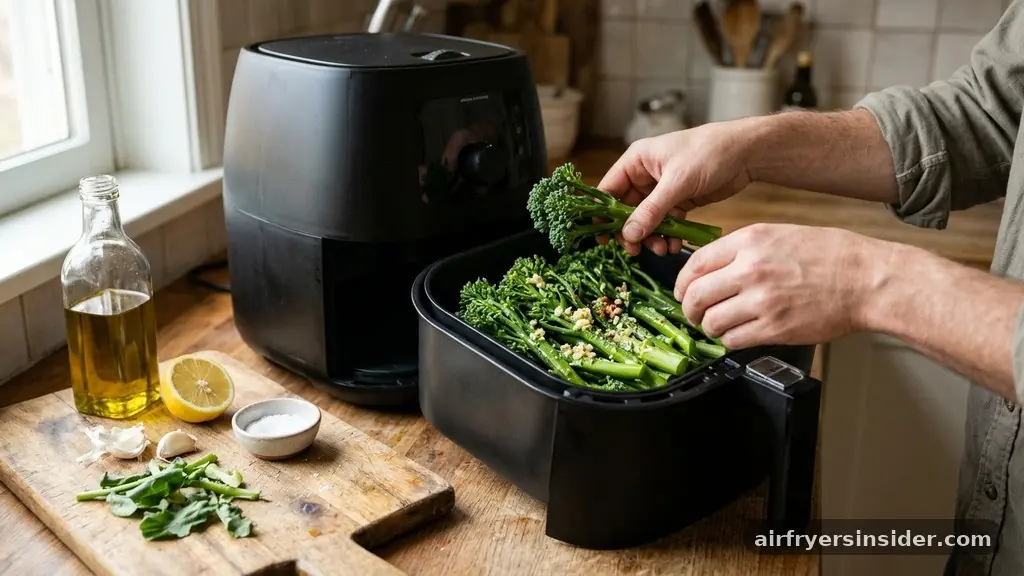
Once you have mastered the basic technique, you can experiment with global flavor profiles to keep your vegetable side dishes exciting. Because broccolini has a mild, slightly sweet flavor, it acts as a perfect canvas for bolder ingredients.
For an Asian-inspired side, toss the stalks with a blend of toasted sesame oil and a splash of soy sauce before cooking. Once finished, a light sprinkle of sesame seeds adds a satisfying crunch that complements the texture of the stems.
If you prefer a Mediterranean influence, finish the dish with a generous dusting of parmesan cheese during the final minute of cooking. The heat will melt the cheese into the florets, creating a savory crust.
Alternatively, a drizzle of balsamic glaze added right before serving provides a sophisticated, tangy sweetness that pairs beautifully with the charred notes. You can also experiment with aromatics like fresh minced garlic or shallots, though be careful to add these toward the end of the cook time to prevent them from burning and becoming bitter.
Topical Gaps: Troubleshooting Common Issues
Many users find themselves asking why their vegetables are coming out mushy or uneven. The primary culprit is almost always moisture.
If you wash your greens and don’t ensure a dry surface, the heat of the air fryer is immediately spent evaporating that water rather than browning the vegetable. Another common issue is the “bitter floret” syndrome, which usually occurs if the temperature is set too high or if the florets are too thin and burn before the stalks become tender.
If you find your stalks are tough but your florets are burnt, try blanching the stalks for two minutes in boiling water before placing them in the air fryer. This “pre-cook” ensures the stem is already soft, meaning you only need the air fryer to provide the final char. This is a pro-tip for those who prefer a very tender stem.
Also, don’t ignore the importance of preheating. Just like an oven, an air fryer needs a few minutes to reach the desired temperature. Dropping cold food into a cold machine leads to uneven results.
- Always trim woody ends to ensure a pleasant eating experience.
- Use high-smoke point oils like avocado oil to prevent burning.
- Shake the basket every 3 minutes to maintain even airflow.
- Avoid overcrowding to ensure the heat reaches every stalk.
- Season with salt after cooking if you want to prevent moisture loss.
The Role of Preheating and Equipment
While many air fryer recipes claim you can skip preheating, doing so often results in a less efficient cooking process. Preheating for just three minutes allows the heating element to reach the set temperature, ensuring that the Maillard reaction begins the moment the food hits the basket. This initial blast of heat is essential for sealing in juices and creating that characteristic crispiness.
If you have a model with a dedicated preheat button, use it. If not, simply run the empty unit at your target temperature for a short duration before adding your prepared vegetables.
Your choice of equipment also plays a role in the outcome. A Ninja Foodi or a similar high-wattage air fryer will typically move air more aggressively than a smaller, countertop model. Consequently, you might find that you need to reduce the cook time by one or two minutes to avoid overcooking.
Always start on the conservative side of the recommended time range. You can always add more time, but you cannot fix a burnt vegetable. Using high-quality kitchen tongs is also vital; they allow you to flip or move the stalks with precision without damaging the delicate florets.
Health Benefits of Air Fried Vegetables
Cooking your vegetables in an air fryer is a fantastic way to maintain a healthy diet without sacrificing flavor or texture. Compared to deep-frying, which requires submerging food in a large volume of oil, air frying uses only a fraction of the fat.
This significantly reduces the overall caloric density of the dish while still providing that satisfying “fried” mouthfeel. Because you are using heat-stable oils like olive or avocado, you also benefit from the heart-healthy fats they provide.
Furthermore, the quick cooking time helps preserve the nutrient profile of the broccolini. Prolonged exposure to high heat—like in a traditional oven—can lead to the degradation of heat-sensitive vitamins.
By roasting the vegetable for a shorter duration, you retain more of the vitamins and minerals that make it such a healthy vegetable side dish. It is a simple, effective way to incorporate more greens into your daily meals without the monotony of steaming or boiling, which often leaches flavor and color from the produce.
FAQ: Frequently Asked Questions
How long do you cook broccolini in an air fryer?
You should generally cook broccolini for 6 to 9 minutes at 375°F to 400°F. The exact time depends on the thickness of the stalks and your preference for crispiness. Start checking at the 6-minute mark to ensure the florets do not burn.
Is it better to cook broccoli or broccolini in the air fryer?
Both work well, but broccolini is often preferred because its longer, thinner stalks and smaller florets cook more evenly. Standard broccoli requires more careful cutting to ensure the dense stems cook at the same rate as the heavy, clustered florets.
Can you put raw broccolini straight into the air fryer?
Yes, you can cook it raw, provided it is properly trimmed and lightly coated in oil. Ensuring the vegetable is completely dry after washing is the most important step to achieving a crispy texture rather than a steamed, mushy result.
Should I preheat my air fryer for vegetables?
Preheating for 3 minutes is highly recommended. It ensures the cooking chamber is at the correct temperature from the start, which helps initiate the browning process immediately and results in a more consistent, professional-quality char on the vegetable.
Final Thoughts on Mastering the Method
Learning how to cook broccolini in air fryer units is a straightforward process that yields impressive results with minimal effort. By focusing on proper preparation, including drying the stalks thoroughly and avoiding overcrowding, you guarantee a texture that is both tender and delightfully crispy. The versatility of this vegetable means you can adapt your seasoning to match whatever main course you are serving, whether it is a simple weeknight chicken dish or an elaborate weekend meal.
As you become more comfortable with your specific machine, you will find that the timing becomes second nature. Feel free to experiment with different oils, spices, and finishes to discover your personal favorite combination.
Once you realize how easy it is to produce a delicious, healthy vegetable side dish in under ten minutes, it will likely become a permanent fixture in your culinary rotation. Start with the basics, stay attentive to your cook times, and enjoy the process of refining your technique for perfect results every time.