Figuring out exactly how long to cook catfish in air fryer setups can feel like a guessing game if you are new to convection-style countertop cooking. Because catfish is a delicate white fish, it requires precise timing to ensure the exterior reaches a satisfying crispness while the interior remains moist and tender.
Whether you prefer a light, flour-dusted coating or a hearty crust made from cornmeal, mastering the timing prevents the common pitfalls of dry, rubbery, or undercooked seafood. By understanding the relationship between thickness, heat, and airflow, you can consistently achieve restaurant-quality results in your own kitchen without the excess oil associated with traditional deep-frying.
Understanding the Mechanics of Air Fryer Fish
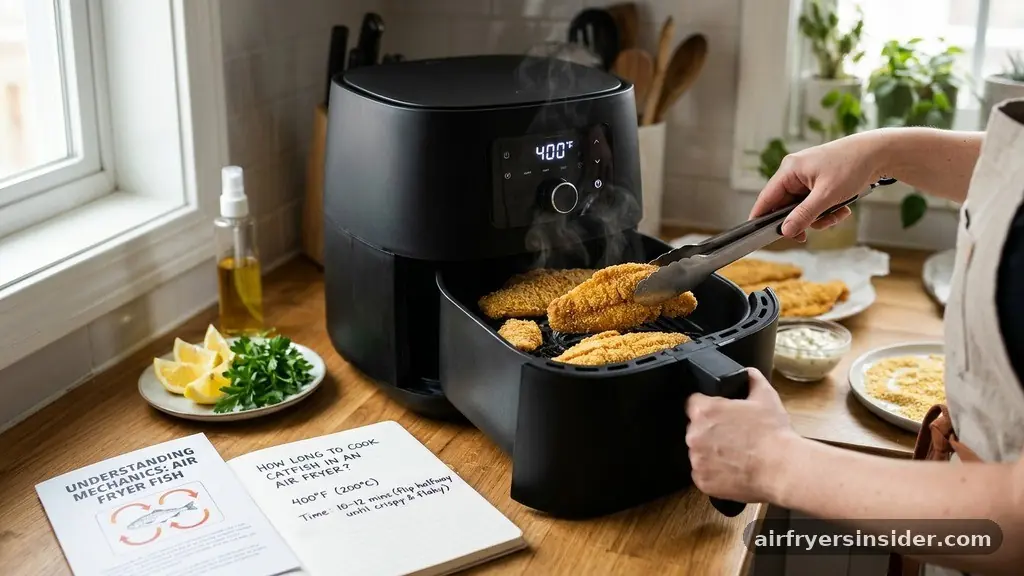
The air fryer works by circulating superheated air around the food at high speeds, mimicking the effect of deep-frying through convection. When you cook catfish, this rapid movement of air is what creates that golden-brown crust we all love. However, because catfish fillets are often thin or uneven, they can transition from perfectly cooked to overdone in a matter of seconds.
For most catfish fillets, the ideal temperature range sits between 375 and 400 degrees Fahrenheit. At these temperatures, the heat penetrates the protein quickly enough to crisp the surface before the internal moisture evaporates. If you set the temperature too low, the fish will steam rather than crisp, leading to a soggy breading.
If it is too high, the outside might burn before the center reaches a safe, flaky consistency. Always remember that the air fryer basket acts as a mini-oven; if you overcrowd it, the air cannot circulate properly, which ruins the texture of the breading.
Preparing Catfish for the Best Texture
Preparation is half the battle when you are determining how long to cook catfish in air fryer appliances. You want the surface of the fish to be as dry as possible before applying any seasoning or coating. Use a paper towel to pat the fillets gently; excess surface moisture creates steam, which is the enemy of a crunchy crust.
If you are going for a classic Southern style, a light dredge in flour-dusted spices or a thicker layer of cornmeal works wonders. When using a breaded coating, ensure the fish is lightly coated in a binder like egg wash or a thin layer of avocado oil.
Avocado oil is particularly excellent for air frying because it has a high smoke point, meaning it won’t break down or create off-flavors at the high temperatures required for a crispy finish. Once coated, let the fish rest for a few minutes so the breading adheres properly, which helps prevent it from blowing off during the cooking process.
Selecting the Right Temperature and Time
The standard timeframe for cooking catfish fillets in an air fryer is typically between 8 to 12 minutes, depending on the thickness of the fish. As a general rule, thinner fillets need less time, while thicker, meatier portions require the full 12 minutes to ensure the center is opaque and reaches a safe internal temperature.
Time and Temperature Reference Table
| Method | Temperature | Estimated Time |
|---|---|---|
| Thin Fillets (Lightly Dusted) | 375°F | 8-9 minutes |
| Thick Fillets (Breaded/Cornmeal) | 400°F | 10-12 minutes |
| Blackened Seasoning (No Breading) | 400°F | 7-8 minutes |
Preheating your unit is often skipped, but it is a critical step for consistent results. By preheating the air fryer basket for three to five minutes, you ensure that the fish begins crisping the moment it hits the surface. If you skip preheating, the fish essentially sits in a warming chamber, which can lead to a mushy texture.
Achieving a Crispy Crust with Coatings
Many home cooks struggle with breaded catfish coming out uneven or falling apart. When using panko or cornmeal, the key is to press the coating firmly into the fish. Panko provides a light, airy crunch, while cornmeal offers that traditional, dense, and nutty flavor profile associated with catfish.
If you prefer a blackened seasoning approach, you don’t necessarily need a breaded coating. A simple rub of paprika, garlic powder, onion powder, and cayenne, combined with a light brush of avocado oil, will create a delicious, savory crust. Because there is no heavy breading to insulate the fish, these fillets cook slightly faster than their breaded counterparts.
Keep a close eye on the timer during the last two minutes, as spices can turn bitter if they scorch. If you find the seasoning is darkening too quickly, you can lower the heat by 25 degrees for the final minute of cooking.
Troubleshooting Common Cooking Issues
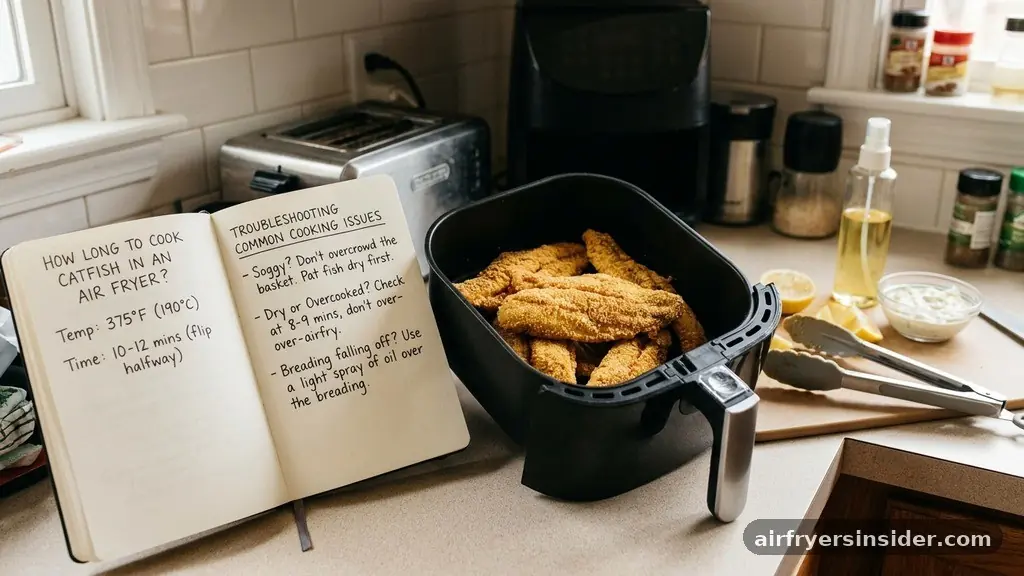
Common troubleshooting often revolves around the texture of the fish or the appearance of the breading. If you notice your catfish is coming out unevenly cooked, it is almost always an issue with the layout in the basket. If the pieces are touching, air cannot circulate properly, creating “cold spots” where the fish remains undercooked or the breading stays soft.
Another issue involves the fish sticking to the basket. While many modern air fryers have non-stick coatings, a layer of parchment paper with small holes can be a lifesaver. It keeps the breading intact and makes cleanup significantly faster.
If you don’t have parchment paper, be sure to spray the basket lightly with oil before placing the fish inside. Always use an instant-read thermometer to verify doneness; the internal temperature should reach 145 degrees Fahrenheit to ensure food safety. When the fish is done, it will have a distinct flaking texture and opaque flesh that separates easily with a fork.
The Importance of Air Circulation
The defining feature of the air fryer is its ability to move hot air at high velocity. This air circulation is what dehydrates the surface of the food, creating a crispy barrier. If you block this airflow by stacking fillets or overcrowding the basket, you negate the very technology that makes the air fryer superior to a standard oven.
When you are cooking for a larger group, it is far better to cook in batches rather than cramming everything in at once. While it might take longer overall, the quality of the finished product will be vastly superior.
If you find your fish is browning too fast on the top but is still raw in the middle, try flipping the fillets halfway through the cooking time. This simple action ensures that both sides receive equal exposure to the heat, resulting in a more uniform finish.
Answering Topical Gaps in Air Fryer Cooking
There is a common misconception that fish must be cooked at the highest possible temperature to get crispy. However, for delicate proteins like catfish, “high” is not always “better.”
Many users ask if they should wrap the fish in foil; the answer is generally no, unless you are trying to steam it. Foil prevents the air from hitting the surface of the fish, which stops the crisping process entirely.
Another gap in knowledge is the use of non-breaded techniques. Can you air fry catfish without breading? Absolutely.
By using a light coating of oil and a heavy dose of dried herbs or blackened spices, you can create a very healthy, low-carb meal. Without the breading, the catfish is much more forgiving regarding timing because you don’t have to worry about the coating burning. Simply cook it at 400 degrees Fahrenheit for about 7 to 8 minutes, and you will have a perfectly seared piece of fish ready for a salad or a taco wrap.
Essential Tips for Even Cooking
To ensure every bite is perfect, consider these professional-grade tips for your kitchen routine:
- Always pat the fish dry with paper towels to remove surface moisture before seasoning.
- Use an instant-read thermometer to check the thickest part of the fillet; aim for 145 degrees Fahrenheit.
- Avoid using aerosol cooking sprays directly on the basket, as they can degrade non-stick coatings over time; use a pump sprayer with avocado or olive oil instead.
- If you are using a breaded coating, place the fish in the refrigerator for 10 minutes before cooking; this helps the breading set.
- Leave at least half an inch of space between each fillet to allow for optimal air movement.
- If the fish is extra thick, reduce the temperature by 25 degrees and add 2 minutes to the cook time to ensure the center cooks through without burning the exterior.
These small adjustments to your technique will make a noticeable difference in the consistency of your meals. By controlling the environment inside the air fryer, you take the guesswork out of the process, allowing you to focus on flavor profiles and side dishes.
Refining Your Technique Over Time
As you get more comfortable with your specific air fryer model, you will notice that every unit has its own personality. Some are more powerful than others, meaning your 400-degree setting might be hotter than someone else’s. Start by following the general timing guidelines, but don’t be afraid to adjust based on the specific power output of your device.
Keep a small log or note on your phone regarding how long your specific fillets took to reach that perfect flaking texture. Over time, you will develop an intuitive sense of when the fish is done just by looking at the color and the way the crust has set. Remember that residual heat will continue to cook the fish for a minute or two after you pull it from the basket, so pulling it just a hair early is often the secret to maintaining that tender, moist interior.
Final Thoughts on Perfect Catfish
Mastering the process of cooking catfish in an air fryer is a rewarding skill that brings a lighter, crunchier version of a classic favorite into your home. By focusing on the moisture levels of the fish, the spacing within the basket, and the careful monitoring of internal temperatures, you can avoid the common traps of overcooking or soggy breading. The key is to respect the delicate nature of the protein while leveraging the powerful convection technology of your air fryer.
Whether you enjoy a simple, flour-dusted fillet or a crunchy, cornmeal-crusted masterpiece, consistency comes down to preparation and heat management. Start with the suggested guidelines, keep your fillets properly spaced, and always trust your thermometer over the timer. With these fundamentals in place, you are ready to experiment with different seasonings and styles, turning your air fryer into a go-to tool for quick, healthy, and delicious seafood dinners.
FAQ
Is it necessary to flip catfish while it is in the air fryer?
Yes, flipping the fish halfway through the cooking time is recommended. This ensures that both sides of the fillet receive direct exposure to the hot air, which helps achieve a uniform, crispy texture on both the top and the bottom of the fish.
How do I know when the catfish is fully cooked?
The best way to determine doneness is by using an instant-read thermometer. The internal temperature should reach 145 degrees Fahrenheit. Visually, the fish should appear opaque throughout, and the flesh should easily flake apart when gently pulled with a fork.
Can I cook frozen catfish fillets directly in the air fryer?
It is possible, but not ideal for breaded fish. If the catfish is frozen and unbreaded, you can cook it, but you should increase the time by about 3 to 5 minutes. For breaded fish, it is better to thaw it first to ensure the coating stays crisp.
Why does my breading fall off in the air fryer?
Breading often falls off if the fish is too wet when you apply the coating or if you don’t use a binder like egg wash. Ensure you pat the fish dry and allow the breading to set for a few minutes before putting it into the basket.
Meta Description: Learn exactly how long to cook catfish in air fryer for perfect, crispy results. Follow our expert tips on timing, temperature, and breading techniques.