Figuring out how long to cook scallops in air fryer can feel like a high-stakes guessing game, especially given how quickly these delicate mollusks move from perfectly tender to rubbery. When you master the timing, you unlock a method that creates a professional-quality crust without the mess of stovetop splattering.
Because air fryers use intense, concentrated convection cooking, they are surprisingly well-suited for achieving that coveted golden-brown finish on sea scallops. By focusing on temperature control and proper preparation, you can turn a premium protein into a quick meal that rivals high-end restaurant fare right in your own kitchen.
The Importance of Surface Moisture
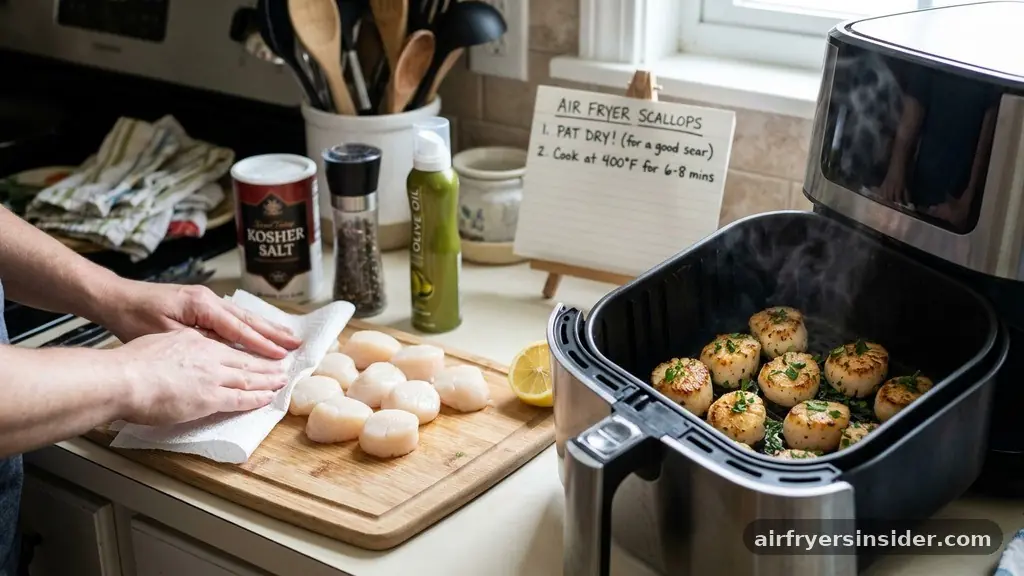
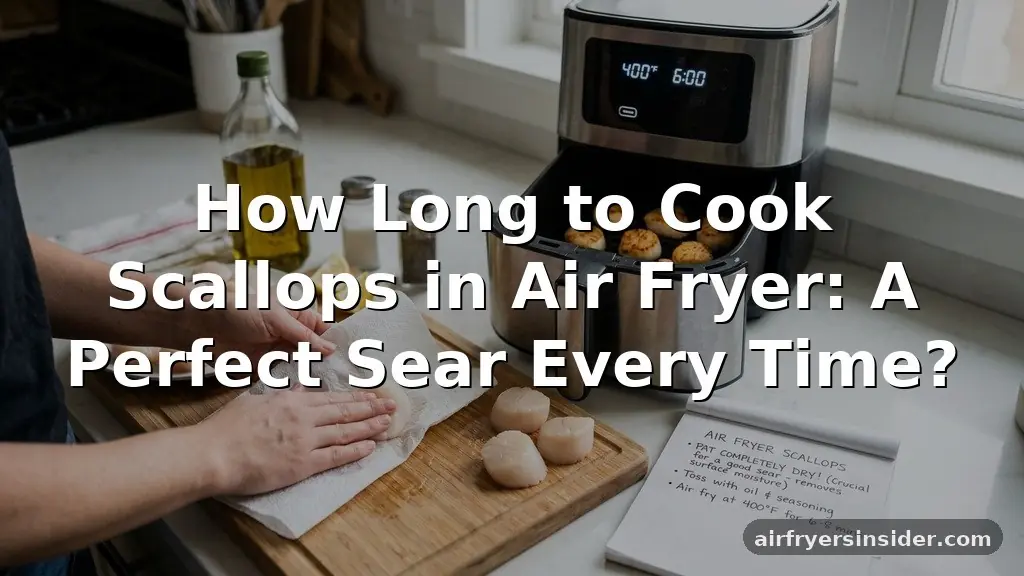
The biggest enemy of a beautiful sear is moisture. If your scallops are damp when they go into the basket, they will steam instead of caramelizing, resulting in a pale, flabby exterior. Before you even consider your seasoning, you must pat dry every single scallop thoroughly.
Using heavy-duty paper towels is the most effective way to remove excess liquid from the surface. Press down firmly but gently to ensure you aren’t just wiping the top, but drawing out moisture from the sides as well.
If you skip this step, the heat of the air fryer will be spent evaporating water rather than browning the protein. This is a common mistake that leads to disappointment.
Many home cooks assume that because scallops are seafood, they naturally contain a lot of water, but controlling that surface moisture is the secret to a professional texture. Once the surface is bone-dry, you can lightly coat them in a high-smoke point fat, such as avocado oil, which helps conduct heat more efficiently than butter at the initial stage of cooking.
Selecting the Right Scallops
Not all scallops are created equal, and the type you choose will dictate your cooking strategy. Sea scallops are the large, meaty variety usually served as a main dish or upscale appetizer. Because of their size, they hold up beautifully to the high-intensity environment of an air fryer.
Bay scallops, conversely, are tiny and sweet. While they can be air-fried, they are much more prone to overcooking due to their small surface area. If you are using bay scallops, the cooking time will be significantly shorter, often requiring only a few minutes.
When shopping, look for “dry” scallops whenever possible. These are scallops that have not been treated with sodium tripolyphosphate, a chemical often used to increase water retention. While “wet” scallops are cheaper and more common, they release an excessive amount of liquid during the cooking process, making it almost impossible to achieve a decent sear.
If you only have access to wet scallops, you must be even more diligent with your paper towels. Some cooks even place them on a rack in the fridge for an hour to air-dry before seasoning.
Temperature Control and Preheating
Preheating your air fryer is non-negotiable when dealing with proteins that require a fast, hard sear. You want the chamber to be at full heat the moment the scallops hit the basket. Aim for 400°F (200°C) for the best results.
This high temperature allows the exterior to brown rapidly while the center remains tender and succulent. If you start at a lower temperature, the scallops will spend too long in the machine, causing them to lose their internal juices and turn tough.
Think of the air fryer as a compact convection oven. The fan moves hot air around the food, which is perfect for browning, but it also dries things out if they stay in too long. By ensuring the unit is preheated, you minimize the “ramp-up” time.
Always check your manufacturer’s manual, but generally, three to five minutes of empty preheating is sufficient. Once the unit is hot, arrange the scallops in a single layer with space between them. Crowding the basket prevents proper airflow, which will lead to uneven cooking and patches of grey, un-seared meat.
Determining the Ideal Cooking Time
So, exactly how long to cook scallops in air fryer? For large, U-10 or U-15 sea scallops, the window is remarkably narrow. At 400°F, you are typically looking at six to eight minutes total.
You should flip them halfway through to ensure both sides develop a nice crust. However, timing is only a guideline. The thickness of the scallop, the specific model of your air fryer, and the ambient temperature of the scallops themselves—whether they were pulled straight from the fridge or sat on the counter for ten minutes—will all influence the final result.
Cooking Time Reference Table
| Scallop Size | Temperature | Estimated Time |
|---|---|---|
| Large Sea Scallops | 400°F | 6-8 Minutes |
| Medium Sea Scallops | 400°F | 5-6 Minutes |
| Bay Scallops | 400°F | 3-4 Minutes |
The best way to gauge doneness is to watch for visual cues. You want a firm, opaque appearance and a distinct golden-brown crust on the top and bottom. If you are uncertain, using an instant-read thermometer is a foolproof method.
You are aiming for an internal temperature of approximately 130°F to 135°F. Remember that carryover cooking will continue to raise the internal temperature slightly after you remove them from the basket, so pulling them just a hair early is usually the safer bet.
Seasoning and Flavor Profiles
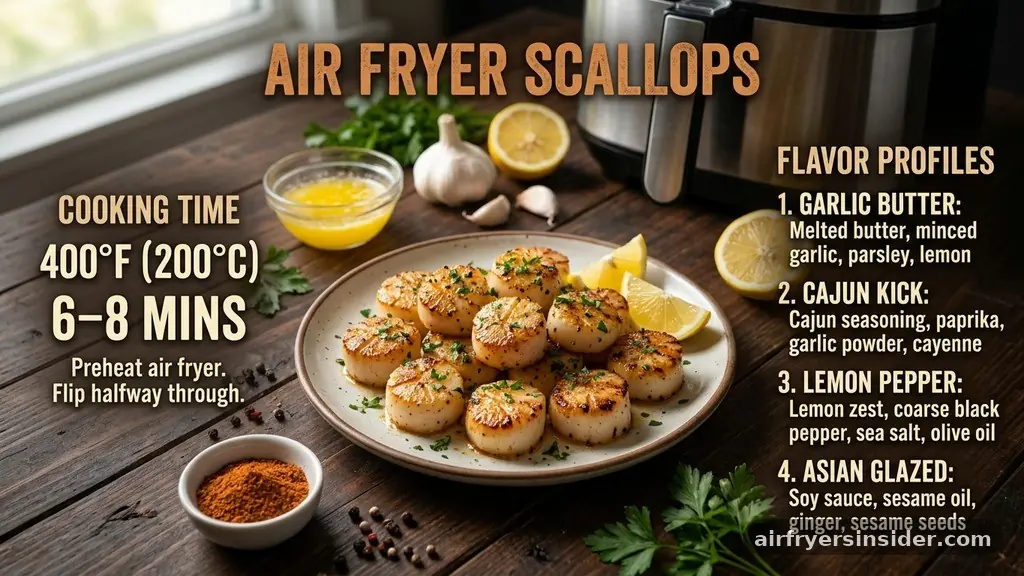
While a simple sear is delicious on its own, adding the right seasoning can elevate your dish. Because air fryers circulate air so forcefully, fine powders can sometimes blow off the food. To prevent this, ensure the scallops are lightly coated in oil before applying your dry rub.
A classic combination includes garlic powder, sea salt, and black pepper. If you want a more complex profile, consider using a high-quality seafood seasoning blend that incorporates dried herbs like thyme or parsley.
If you love a buttery finish, resist the urge to add butter before cooking. Butter has a relatively low smoke point and can burn or create excessive smoke in an air fryer before the scallops are finished. Instead, melt your unsalted butter separately with a squeeze of fresh lemon juice and some minced garlic.
Drizzle this mixture over the scallops immediately after they come out of the air fryer. This technique preserves the delicate flavor of the butter and gives you the best of both worlds: a crispy, seared crust and a rich, velvety finish.
Common Mistakes to Avoid
Even experienced cooks can stumble when transitioning from a cast-iron pan to an air fryer. One of the most frequent errors is overcrowding the basket. When scallops touch, they create a “steam zone” where they cannot brown.
Always work in batches if necessary; it is better to wait a few extra minutes than to end up with a batch of pale, rubbery seafood. Another common pitfall is ignoring the importance of parchment paper. While many air fryer baskets are non-stick, using a perforated parchment liner can make cleanup significantly easier and prevent the delicate edges of the scallops from tearing when you try to flip them.
- Forgetting to pat the scallops dry with paper towels.
- Using an oil with a low smoke point, like extra virgin olive oil.
- Crowding the basket so air cannot circulate around each piece.
- Neglecting to flip the scallops halfway through for even browning.
- Starting with a cold air fryer instead of preheating.
- Overcooking by relying solely on a timer instead of checking for doneness.
Avoid the temptation to keep checking on them every thirty seconds. Every time you pull the basket out, you drop the internal temperature of the air fryer, which disrupts the cooking process. Trust your timing and the visual cues.
If you find your specific machine runs hot, start checking at the five-minute mark. It is much easier to add another minute of cooking than it is to fix a scallop that has already turned into a dense, chewy puck.
Addressing Topical Gaps
There is a common misconception that you cannot achieve a restaurant-style crust without massive amounts of butter or oil in a heavy pan. The reality is that convection cooking is an incredibly efficient way to transfer heat to the exterior of the scallop. Another gap in common advice is the role of breading.
While breaded scallops are delicious, they are a completely different dish than a seared scallop. If you choose to use panko or breadcrumbs, you must ensure the breading is adhered well, perhaps with a light egg wash or a thicker layer of oil. Breading also necessitates a slightly lower temperature—around 375°F—to prevent the crumbs from burning before the scallop reaches the appropriate internal temperature.
Furthermore, many guides fail to mention the role of the scallop’s “foot.” This is the small, tough muscle on the side of the scallop that attaches it to the shell. While it is usually removed by the fishmonger, sometimes you will find one still attached.
If you see a small, rectangular tab of muscle on the side of your scallop, peel it off with your fingers before cooking. It has a much tougher texture than the rest of the scallop and can ruin the eating experience if left on. Taking these few seconds to inspect and prep your ingredients is what separates a mediocre home meal from a truly impressive one.
The Science of Carryover Cooking
Understanding the thermal dynamics of your food is vital for success. When you pull a scallop out of the air fryer, the heat from the exterior continues to migrate toward the center. This is known as carryover cooking.
Because scallops are such small, dense proteins, they are particularly susceptible to this effect. If you pull them out when they are already perfectly cooked to your preference, they will likely be overdone by the time you sit down to eat.
Aim to remove them when they are just slightly under your target internal temperature. For a medium-rare to medium finish, which is generally considered the sweet spot for scallops, pull them when they reach about 125°F. By the time they hit the plate, they will settle into that perfect 130°F range.
This technique ensures a tender texture that melts in your mouth. If you are serving them as part of a larger meal, ensure your side dishes are ready to go, as scallops wait for no one and are best enjoyed within minutes of leaving the heat.
Maximizing Flavor with Aromatics
While the scallop itself is the star, the environment in which it cooks can be enhanced. If you want to infuse a subtle flavor during the air-frying process, consider placing a thin slice of lemon or a sprig of fresh thyme directly under each scallop on the parchment paper. As the air circulates, the volatile oils from these aromatics will perfume the scallops, adding a layer of depth that is difficult to achieve otherwise.
Do not go overboard, however. The goal is to highlight the natural sweetness of the seafood, not mask it.
A light dusting of citrus zest just before serving can also act as a bright counterpoint to the richness of the seared crust. Because air frying is such a dry-heat method, the addition of these fresh, moisture-rich aromatics can also help maintain a slightly more succulent environment within the basket, preventing the scallops from drying out during the final stages of the cooking cycle.
FAQ
Can I cook frozen scallops directly in the air fryer?
Yes, but you must thaw them first for the best texture. If you cook them from frozen, they will release too much water, preventing a proper sear. Thaw them in the refrigerator overnight, then pat them extremely dry before proceeding with your seasoning and cooking.
What is the best way to prevent the scallops from sticking?
Using a perforated parchment paper liner is the most effective solution. If you don’t have liners, ensure your basket is lightly greased with a high-heat oil spray. Always give the scallops a gentle nudge with tongs halfway through the cooking process to ensure they aren’t adhering to the surface.
Do I need to flip the scallops halfway through?
Flipping is essential for even cooking and a consistent crust on both sides. Because the air fryer heats from the top down, the bottom of the scallop will not brown as effectively as the top unless it is turned. Flip them carefully at the halfway mark of your total time.
Can I bread the scallops before air frying?
Absolutely. If you want breaded scallops, coat them in a thin layer of flour, then egg wash, and finally panko breadcrumbs. Spray the breaded exterior lightly with oil to help the crumbs turn golden and crispy. Lower the temperature to 375°F to ensure the breading doesn’t burn before the center is cooked.
The secret to mastering how long to cook scallops in air fryer lies in the balance between high-heat preparation and careful monitoring. By focusing on surface moisture, proper spacing, and the science of carryover cooking, you can easily achieve a restaurant-grade result. Whether you prefer them simply seared with a touch of butter and lemon or lightly breaded for added crunch, the air fryer offers a convenient and effective path to a delicious meal.
Start with the suggested timing, use your thermometer to verify the internal temperature, and don’t be afraid to adjust based on the specific size of your scallops. With a little practice, this quick meal will become a staple in your culinary repertoire, providing a sophisticated dinner option that is ready in under ten minutes.