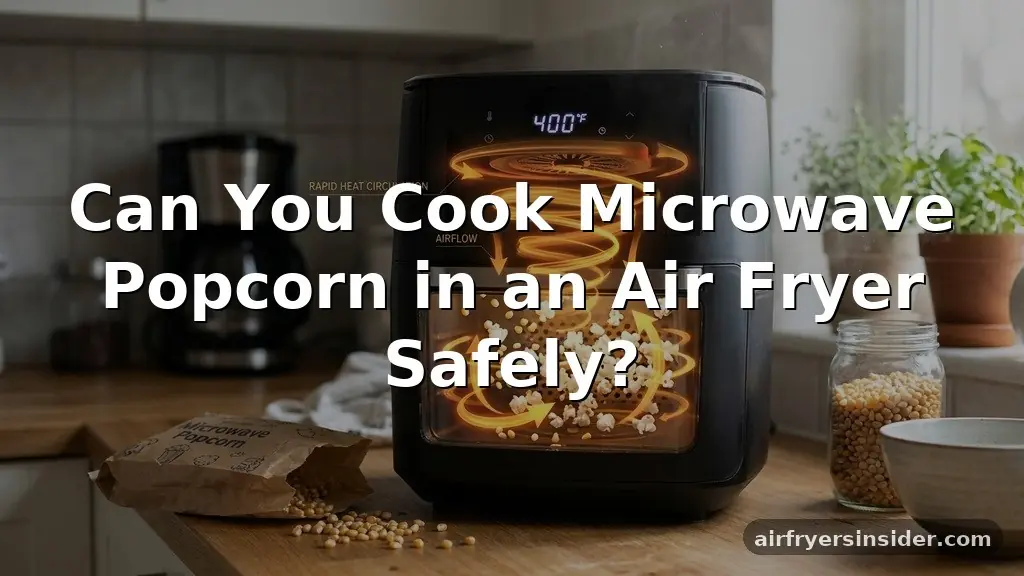
Determining whether you can cook microwave popcorn in an air fryer is a common dilemma for those looking to skip the microwave or stovetop. While the idea of repurposing convenient pre-packaged bags seems logical, the mechanics of these two appliances differ significantly. Air fryers rely on intense, high-velocity heat circulation that can pose specific risks when paper-based packaging is introduced.
Understanding how your appliance functions is key to deciding if this shortcut is worth the effort or if you should stick to traditional methods. We will look at why this specific combination is often discouraged and how to achieve the best results with your kernels.
The Mechanics of Air Fryer Heat Circulation
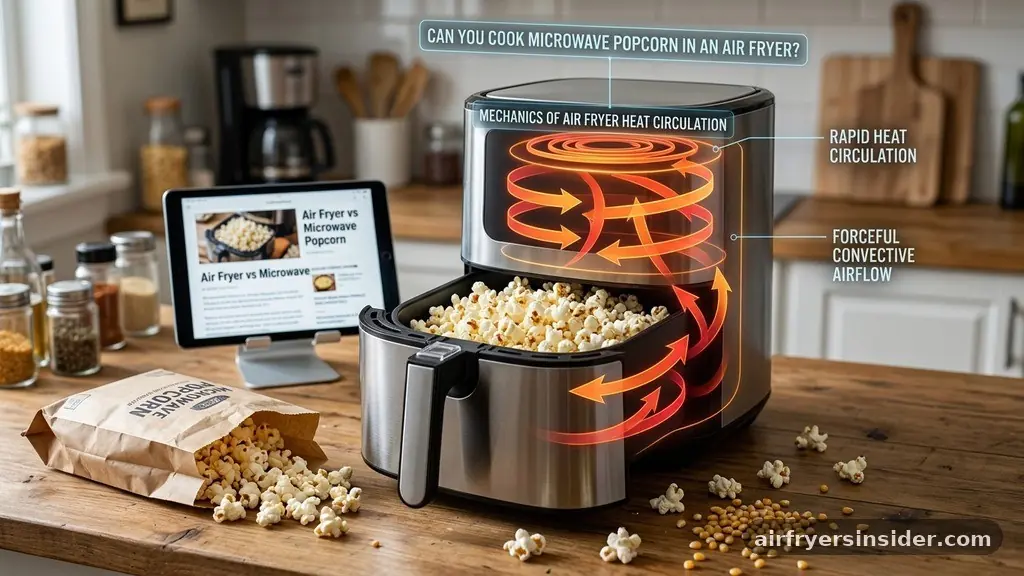
An air fryer is essentially a compact, high-powered convection oven. It features a heating element located above the food, paired with a powerful fan that forces hot air to circulate rapidly throughout the chamber.
This forced air is designed to hit the food from all angles, creating a crisp exterior. When you place a standard microwave popcorn bag inside an air fryer basket, you are placing a paper object directly in the path of this high-speed, concentrated heat.
Unlike a microwave, which uses electromagnetic radiation to excite water molecules within the kernels to produce steam, an air fryer relies on external heat transfer. The air fryer fan moves air at such high speeds that lightweight items like a paper bag can easily be caught in the current.
If the bag lifts and touches the heating element, you are inviting an immediate fire hazard. Furthermore, the paper packaging is engineered to withstand the specific moisture-based heating of a microwave, not the dry, intense convection heat of an air fryer.
Understanding the Fire Hazard Risks
Appliance safety is paramount when modifying how you use kitchen tools. A microwave popcorn bag is constructed with a susceptor—a metallic-looking layer designed to absorb microwave energy and get hot enough to pop the corn.
In an air fryer, this layer serves no purpose and can overheat rapidly. Because air fryers operate with an exposed heating element, there is a very real risk that the edges of a paper bag could ignite if they drift upward.
Most manufacturers explicitly state that only oven-safe materials should be used in their air fryers. A flimsy paper bag from a grocery store box is not rated for the high temperatures required to reach the popping temperature of maize.
If you are determined to experiment, you must ensure the bag is heavy enough to remain stationary and far enough from the top of the unit. However, the risk of a small fire or the bag simply shredding in the high-speed wind makes this a practice most experts advise against.
Why Standard Microwave Bags Fail in Air Fryers
When you consider whether you can cook microwave popcorn in an air fryer, you must look at the structural integrity of the bag. Microwave popcorn bags are designed to expand as the steam builds up inside.
In a microwave, the bag stays relatively flat on the glass turntable. In an air fryer, the restricted space of the basket and the constant flow of air make it difficult for the bag to expand correctly without hitting the sides or the top.
The thermal conductivity of the paper is also a problem. Without the moisture-heavy environment of a microwave, the paper bag can become brittle and scorched.
You might find that the kernels on the outside of the cluster pop, while the ones in the center remain hard or burnt. The uneven heat distribution in an air fryer simply isn’t optimized for a sealed paper container, leading to a frustrating mix of scorched paper and unpopped kernels.
The Proper Way to Make Popcorn in an Air Fryer
If you want to enjoy air-popped corn, you don’t need the pre-packaged microwave bag at all. You can easily cook raw popcorn kernels directly in your air fryer with much better results.
The secret lies in using a dedicated silicone bowl or a metal container that fits inside the air fryer basket. By using a deeper vessel, you prevent the kernels from flying around the chamber and hitting the heating element.
Steps for Perfect Air Fryer Popcorn
- Preheat your air fryer to 400°F (200°C) for a few minutes to ensure even heating.
- Place a heat-safe glass or silicone bowl inside the basket.
- Add a tablespoon of high-smoke point oil, such as avocado or coconut oil, to the kernels.
- Cover the bowl with a piece of aluminum foil, poking small holes in it to allow steam to escape while keeping the kernels contained.
- Cook for approximately 7 to 10 minutes, listening closely for the popping to slow down to once every few seconds.
Comparing Cooking Methods for Popcorn
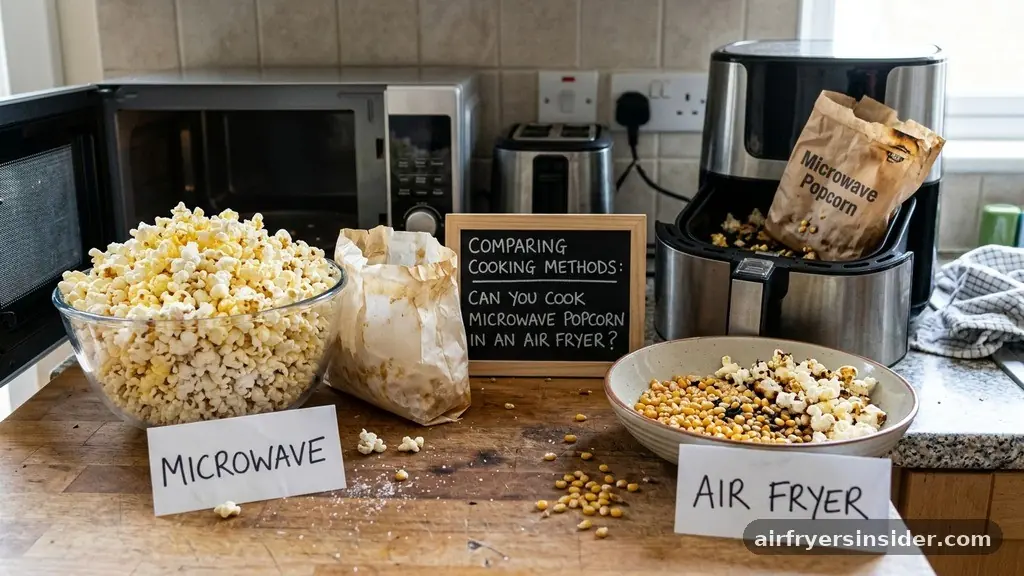
To understand why the air fryer is a unique challenge, it helps to look at the differences between standard cooking methods. Each appliance uses a different principle to reach the popping temperature of roughly 350°F to 400°F required for the moisture inside the kernel to turn into steam and explode.
| Method | Mechanism | Risk Level | Texture |
|---|---|---|---|
| Microwave | Electromagnetic radiation | Low | Soft/Steamy |
| Stovetop | Direct conduction | Low | Crispy/Buttery |
| Air Fryer | Forced convection | High (with bags) | Light/Crisp |
Addressing Topical Gaps: Can You Use Foil or Parchment?
A common question is whether using aluminum foil or parchment paper as a barrier helps when cooking microwave popcorn in an air fryer. While these materials are generally heat-resistant, they do not solve the fundamental issue of the bag’s design.
If you wrap a microwave bag in foil, you are essentially insulating it from the hot air, which defeats the purpose of the air fryer. The kernels will likely burn before the center gets hot enough to pop.
Parchment paper is even more dangerous in an air fryer if it is not weighed down properly. Because it is so lightweight, the air fryer fan can easily lift the parchment paper and blow it directly onto the heating element, causing it to smoke or catch fire.
If you want to use these materials, use them to line a dedicated popcorn bowl, not to wrap a pre-packaged bag. Always ensure your liner is heavy enough to stay at the bottom of the basket.
The Importance of the Smoke Point
When choosing an oil to go with your kernels in the air fryer, you must consider the smoke point. Since the air fryer uses high-velocity hot air, the temperature inside the chamber can spike quickly. If you use an oil with a low smoke point, like extra virgin olive oil or butter, you risk creating a smoky kitchen and an off-putting, burnt flavor on your popcorn.
Stick to oils that can handle the heat, such as refined coconut oil, avocado oil, or grapeseed oil. These fats will help distribute heat more effectively among the kernels, ensuring that more of them pop.
When the oil hits its smoke point, it begins to break down and release harmful compounds, which is why monitoring the temperature is a vital part of appliance safety. If you smell smoke, turn the unit off immediately and reduce your temperature settings for the next batch.
Maximizing Flavor and Texture
The beauty of making popcorn from scratch in an air fryer is the ability to control exactly what goes into it. Without the chemical-laden butter substitutes found in microwave bags, you are free to experiment with fresh ingredients. Once the popping is finished, remove the bowl carefully—it will be extremely hot—and toss the popcorn with your favorite seasonings.
For the best results, consider adding your seasoning while the popcorn is still warm, as this helps the flavors adhere to the surface. You can use melted real butter, sea salt, nutritional yeast, or even smoked paprika for a gourmet touch. Because air fryer popcorn is cooked with forced air, it often has a lighter, airier texture than stovetop popcorn, which can sometimes become heavy or greasy.
Troubleshooting Common Issues
If your popcorn isn’t popping, the issue is usually related to temperature or moisture. If the kernels are too old, they have lost the internal moisture necessary to create the steam that pops the hull.
If your air fryer isn’t set to a high enough temperature, the kernels will simply toast rather than pop. Always check that your kernels are fresh and that you are giving them enough room to expand.
Another common issue is the “flying kernel” problem. If you don’t cover your bowl, the air fryer fan will blow the unpopped kernels around, and they may get stuck in the heating element or the fan housing.
This is not only a nuisance but can also damage your appliance. Always use a secure lid or a perforated foil cover to keep the contents of your bowl contained throughout the entire cycle.
Frequently Asked Questions
Is it safe to put a standard microwave popcorn bag in an air fryer?
No, it is not recommended. Microwave bags are designed for specific moisture-based heating and can become a fire hazard in an air fryer. The paper can easily be blown into the heating element by the internal fan, causing smoke or potential ignition.
Why do my kernels burn instead of popping in the air fryer?
This usually happens because the air temperature is too high, or the kernels are too dry. If you are using a bag, the uneven heat distribution causes the exterior kernels to scorch while the center remains raw. Use a proper bowl and consistent heat to solve this.
Can I make popcorn in an air fryer without oil?
Yes, you can, but the texture might be slightly tougher. Oil helps conduct heat to the kernel more efficiently, leading to a better pop. If you choose to go oil-free, make sure your kernels are high-quality and fresh, as they will need all the internal moisture they can get.
How do I stop the popcorn from flying around the basket?
The air fryer fan is quite powerful, so you must use a cover. A piece of aluminum foil with small holes poked in it, secured tightly over a heat-safe bowl, will prevent the kernels from being blown into the heating element while still allowing steam to escape.
Conclusion
While the convenience of a pre-packaged microwave bag is tempting, trying to cook it in an air fryer is a risk that simply isn’t worth taking. The mechanical differences between the two appliances make the air fryer ill-suited for paper bags, which can quickly become a fire hazard when exposed to high-velocity forced air. By shifting your approach to using raw kernels in a secure, heat-safe bowl, you can achieve superior results that are healthier and just as easy to prepare.
Take the time to experiment with different oils and seasonings, and you will find that the air fryer is actually an excellent tool for making delicious, crisp popcorn. Enjoy your next snack session by staying safe and using the right equipment for the job.