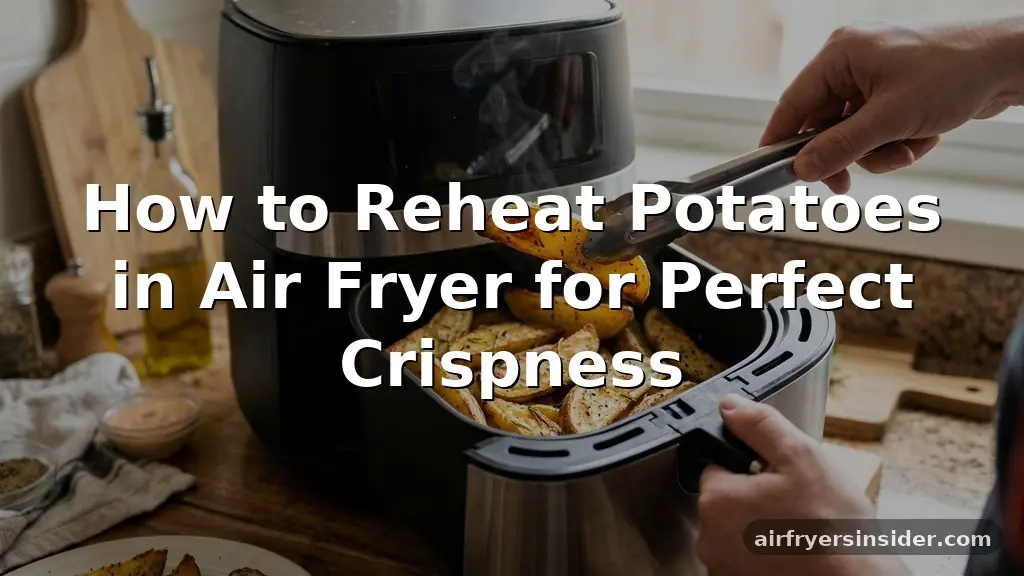
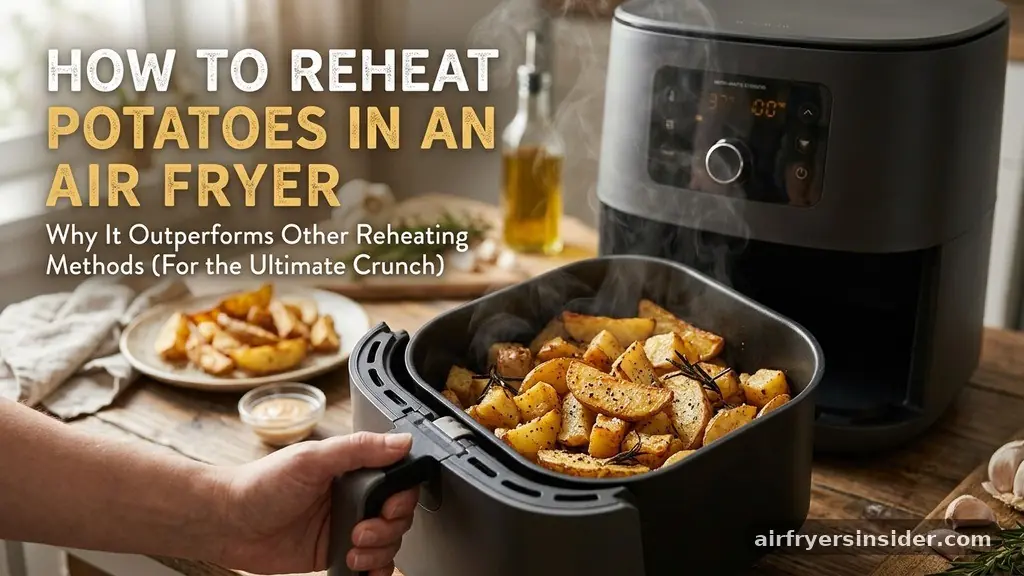
Mastering the art of reheating potatoes in air fryer settings is the secret to avoiding the dreaded mushy microwave texture. When you have leftover roasted, fried, or baked spuds, the convection power of an air fryer restores that signature crunch better than any other kitchen appliance.
By circulating intense, dry heat, the machine mimics the original cooking process, ensuring your leftovers taste as fresh as they did when first pulled from the oven. This approach saves time, reduces food waste, and keeps your meals satisfyingly crispy every single time you need a quick snack or side dish.
Why the Air Fryer Outperforms Other Reheating Methods
Most people instinctively reach for the microwave when hunger strikes, but that is a major mistake for potato-based dishes. Microwaves work by exciting water molecules, which effectively steams your food from the inside out. While this is efficient for soup or rice, it is the enemy of a crisp potato skin.
When you reheat potatoes in air fryer units, you are utilizing convection technology that actively removes excess moisture from the exterior while warming the interior through. This rapid movement of hot air prevents the sogginess that plagues stovetop or microwave reheating, maintaining the structural integrity of the starch.
Another significant advantage is the sheer speed of the process. Because the heating element is located close to the food and the fan is powerful, it works much faster than a conventional oven. You don’t have to wait twenty minutes for the oven to preheat, nor do you have to deal with the uneven hotspots associated with toaster ovens.
The compact nature of the basket creates a focused environment where heat is distributed evenly, provided you don’t overcrowd the space. This efficiency makes it the go-to choice for busy weeknight dinners or quick lunches.
Determining the Optimal Temperature and Timing
Achieving the perfect reheat requires a balance between heat intensity and duration. If the temperature is too low, the potatoes will dry out before they get hot in the center. If it is too high, the outside will burn while the middle remains cold.
For most potato types, an optimal temperature and timing configuration involves setting your air fryer to 350°F (175°C) or 375°F (190°C). At this heat level, you are essentially “refreshing” the exterior crust without scorching it.
Timing generally ranges between four to eight minutes depending on the size of the potato pieces. Small, diced cubes need very little time, while larger chunks or halved roasted potatoes require a slightly longer duration. Always err on the side of caution; you can always add an extra minute, but you cannot fix a burnt potato.
It is helpful to start checking the progress at the four-minute mark to ensure you don’t overshoot your goal. Keeping a close eye on the color change is a reliable way to gauge progress, as you want a deep golden brown, not dark brown or black.
Essential Techniques for Better Texture
To achieve professional-level results, you must employ specific techniques for better texture. The most important factor is the arrangement of the food in the basket. You should never stack potatoes in a deep pile, as this restricts airflow.
If the potatoes are touching, the steam released from the center of the pile will prevent the surfaces from becoming crispy. Spread them out in a single layer so that the air can hit every side of the vegetable.
Another pro tip is to use a light mist of oil before starting the cycle. Even if the potatoes were cooked in oil originally, a tiny spritz helps conduct the heat more effectively during the reheating process.
If you are worried about the potatoes losing flavor, a light dusting of sea salt or freshly cracked black pepper right before they go into the machine can revitalize the seasoning. This simple step bridges the gap between old leftovers and a freshly prepared side dish, ensuring the flavor profile remains vibrant and appetizing.
Addressing Different Potato Varieties
Not all spuds behave the same way under high heat. Addressing different potato varieties is crucial because starch content and moisture levels vary significantly between types. Russet potatoes, which are high in starch, tend to get the crispiest and hold up best to reheating.
Waxy potatoes, such as red bliss or fingerlings, have a higher moisture content and might require an extra minute or two to achieve that desired crunch. When dealing with baby potatoes, be mindful that their smaller surface area means they can dry out faster, so keep the temperature slightly lower.
If you are reheating thick-cut steak fries or wedges, consider flipping them halfway through. This ensures that the side sitting against the rack doesn’t become soft while the top gets crispy. For loaded baked potatoes, the process is slightly different.
You want to focus the heat on the skin to crisp it up without turning the fluffy interior into a dry, chalky mess. In this case, slightly lower the temperature to 320°F and reheat for a longer period to allow the center to warm through thoroughly before the skin gets too charred.
Common Mistakes to Avoid
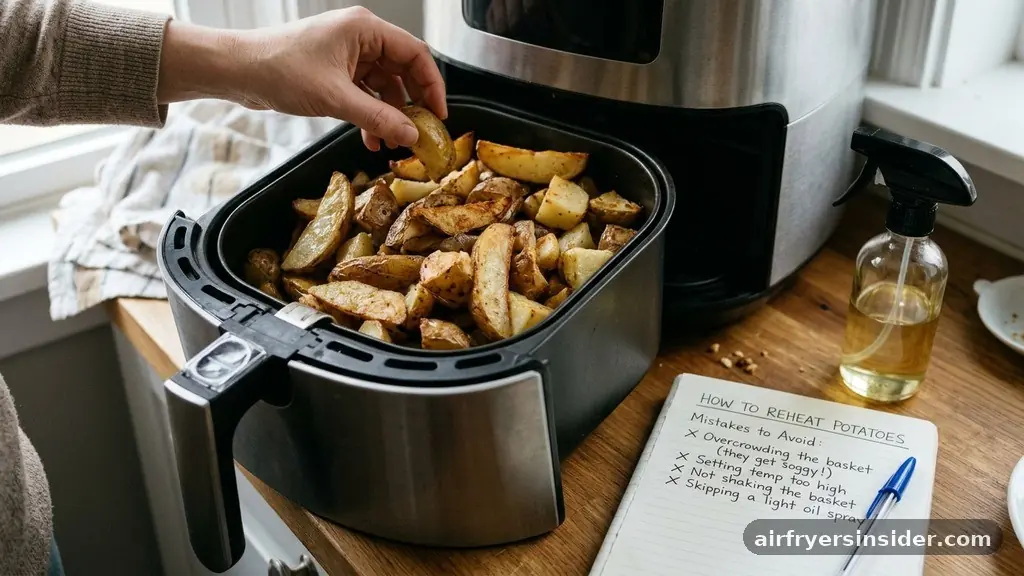
Even with the best intentions, there are common mistakes to avoid that can ruin your leftovers. One of the biggest errors is over-crowding the basket.
When you shove too many potatoes in at once, the air cannot circulate effectively, leading to uneven heating. This results in some pieces becoming rock-hard while others remain cold and damp. If you have a large batch, it is always better to reheat in two smaller batches rather than one massive, ineffective one.
Another frequent oversight is failing to move the food during the cycle. Simply shaking the basket halfway through or manually flipping halfway is the difference between a uniform texture and a patchy one. Additionally, many people forget to clean the basket of old crumbs before starting.
Burnt bits from previous meals can smoke and impart an acrid, bitter flavor to your potatoes. Taking thirty seconds to wipe out the basket ensures that the only thing you taste is the delicious potato, not the remnants of last night’s dinner.
Addressing Topical Gaps
Many users wonder if they can safely reheat potatoes in foil within the air fryer. While you technically can, it is generally discouraged if your goal is crispness.
Foil acts as a barrier that traps steam, which is the exact opposite of what you want. If you are reheating a baked potato and want to keep the center moist while crisping the skin, you could use a small piece of foil to cover the very top, but it is rarely necessary.
Another gap often found in common advice is the issue of “reheated” flavor. To avoid the “reheated” taste, consider tossing your cold potatoes in a tiny bit of fresh garlic powder or smoked paprika before reheating. Old potatoes often lose their aromatic punch, and a quick refresh of the seasoning brings back that fresh-cooked appeal.
Finally, always check for doneness by piercing a piece with a fork. If the resistance is gone and the center is hot, your meal is ready to serve immediately.
Comparative Analysis of Reheating Methods
To understand why the air fryer is superior, consider how it stacks up against other common kitchen tools. The table below highlights the performance metrics of each method when applied to leftover roasted potatoes.
| Method | Texture Outcome | Speed | Best For |
|---|---|---|---|
| Air Fryer | Very Crispy | Fast | Roasted, Wedges, Fries |
| Microwave | Soft/Soggy | Very Fast | Mashed Potatoes |
| Conventional Oven | Crispy | Slow | Large Batches |
| Stovetop/Pan | Medium Crisp | Medium | Hash browns |
As indicated in the data, the air fryer sits in the “sweet spot” of being both fast and providing a superior texture. While the oven provides a high-quality result, the wait time is often prohibitive for a simple leftover meal. The microwave, while fast, fails completely on the texture front, making it suitable only for soft preparations like mashed or boiled potatoes.
Step-by-Step Execution for Success
Follow this sequence to ensure consistent results every time you use your device:
- Preheat the air fryer for 2-3 minutes to ensure the chamber is at the correct temperature from the start.
- Lightly coat your leftover potatoes with a small amount of oil or cooking spray to promote browning.
- Arrange the potatoes in a single layer, ensuring there is enough space for air to move around each piece.
- Set the temperature to 360°F and the timer for 5 minutes as a baseline.
- Midway through, perform the essential step of shaking the basket or flipping the pieces to ensure even heat coverage.
- Remove from the basket immediately once the desired level of crispness is reached.
- Season with additional salt, pepper, or herbs if necessary before serving.
By following these steps, you eliminate the guesswork. The consistency provided by this method allows you to predict exactly how long your specific air fryer model needs to finish the job. If you find your specific unit runs hotter or cooler, adjust the baseline time by 30-second increments until you find your perfect rhythm.
FAQ
Can I reheat baked potatoes in the air fryer?
Yes, you can. Place the baked potato in the basket at 350°F for about 8 to 10 minutes. This will crisp up the skin while warming the center perfectly. If you want to speed it up, you can slice the potato in half before reheating.
How do I stop my potatoes from drying out?
To prevent them from becoming too dry, use a light spritz of oil or a tiny pat of butter before reheating. This adds back necessary moisture and helps the exterior crisp up without turning the inside into a dry, chalky texture.
Is it necessary to preheat the air fryer for leftovers?
While not strictly required, preheating for two minutes significantly improves the texture. It ensures that the potatoes begin crisping the moment they hit the basket, preventing them from softening while the machine slowly builds up heat.
Can I reheat different types of potatoes together?
It is better to reheat similar sizes and types of potatoes together. If you mix large wedges with tiny cubes, the small ones will overcook and burn before the larger pieces are heated through to the center.
Final Thoughts on Reheating
Mastering the process of reheating potatoes in air fryer units transforms leftovers from a compromise into a delicious, crunchy treat. By focusing on proper airflow, temperature control, and the right preparation, you can enjoy the same quality as a freshly cooked meal. Remember that the goal is to drive off excess moisture while maintaining heat, which is exactly where this appliance excels.
Avoid the temptation to overcrowd the basket, stay diligent about flipping or shaking your food, and don’t be afraid to add a quick splash of seasoning to revive those faded flavors. With these simple habits, you will find yourself looking forward to leftovers rather than dreading them, making your kitchen routine both more sustainable and significantly more enjoyable. Next time you have a bowl of cold potatoes, put these techniques to the test and enjoy the perfect crunch.
Meta Description: Learn how to reheat potatoes in air fryer for perfect crispness. Discover the optimal temperatures, timing, and techniques to avoid soggy leftovers.