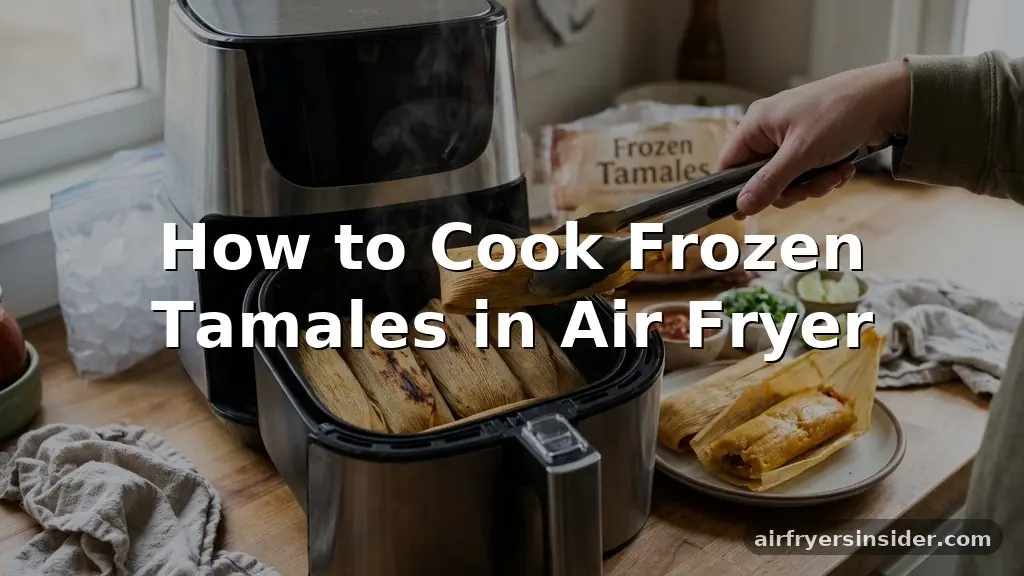
If you have a stash of tamales tucked away in your freezer, you might be wondering how to cook frozen tamales in air fryer without losing that signature soft, authentic texture. While steaming is the traditional method, the high-speed convection of an air fryer can transform a frozen block of masa and filling into a delicious meal in a fraction of the time.
By managing moisture and heat correctly, you can achieve a delightful contrast between a slightly crisp exterior and a tender, steaming-hot center. This approach is ideal for busy weeknights when you want comfort food without the wait.
Why the Air Fryer Excels at Reheating Tamales
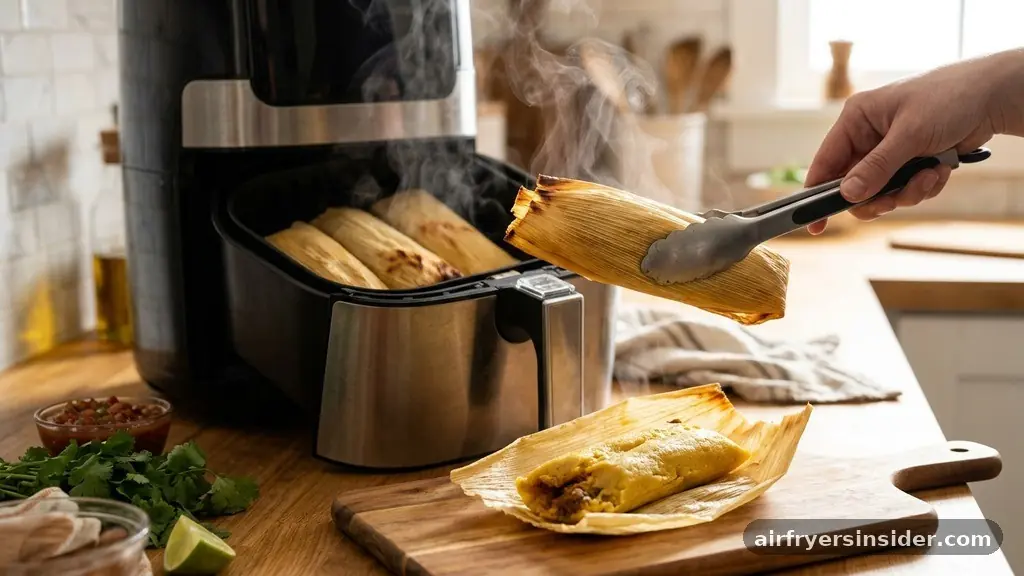
The primary advantage of using an air fryer for frozen tamales is the efficiency of the air circulation. Unlike a microwave, which often leaves tamales unevenly heated or rubbery, an air fryer uses forced hot air to penetrate the dense masa dough more effectively.
Because an air fryer is essentially a compact convection cooking unit, it mimics the effects of a high-end oven but with much better heat distribution. This allows for a quick reheat that retains the integrity of the corn husk wrapping while ensuring the filling reaches a safe internal temperature.
Many home cooks find that traditional steaming takes far too long, especially if you are only preparing one or two tamales. With an air fryer, you don’t have to wait for a pot of water to come to a boil. The rapid heat-up time means you can have lunch or a snack ready in under twenty minutes.
Furthermore, the air fryer creates a subtle crispy texture on the edges of the masa, which many people find preferable to the purely soft texture produced by steaming. It provides a unique culinary experience that bridges the gap between traditional preparation and modern convenience.
Preparing Your Frozen Tamales for the Air Fryer
Before you place anything in the basket, you need to consider the state of your tamales. If they are heavily coated in ice crystals due to freezer burn, you should gently scrape off the excess ice. While you do not need to thaw them completely, giving them a few minutes on the counter can help, though it is perfectly fine to go straight from the freezer to the machine.
You should leave the corn husks on during the initial phase of the cooking process. This acts as a natural barrier that prevents the masa from drying out too quickly under the direct, intense heat.
If your tamales are wrapped in parchment paper, you can keep that on as well. However, if they are wrapped in plastic, remove it immediately; plastic will melt and ruin your meal.
Once the tamales are prepped, lightly mist them with a small amount of oil using a kitchen spray or an oil mister. This thin layer of fat helps conduct heat evenly across the surface of the husk, which encourages that desirable golden brown finish if you decide to unwrap them toward the end of the cooking cycle.
Optimal Temperature and Timing Settings
Achieving the perfect balance requires a two-stage approach to your cook time. Start by preheating your air fryer to 350°F (175°C). A preheat step is crucial because it ensures the air inside the chamber is already at the target temperature, preventing the tamales from sitting in warm air while waiting for the machine to get up to speed.
Place the tamales in a single layer, ensuring there is enough space between them for the air to flow freely. If you crowd the basket, the center of the tamales will remain cold while the outer ones might char.
For most standard-sized tamales, set the timer for 12 to 15 minutes. Halfway through, use a pair of tongs to flip the tamales. This ensures that the bottom side, which often sits against the basket, receives adequate exposure to the hot air.
If you prefer a slightly crispier edge, you can carefully unwrap the husks during the final three minutes of the cycle. This exposes the masa to direct heat, allowing it to firm up and develop a pleasant crust. Always keep an eye on them during this final stage, as the masa can dry out quickly once the protective husk is removed.
Managing Moisture Retention During Cooking
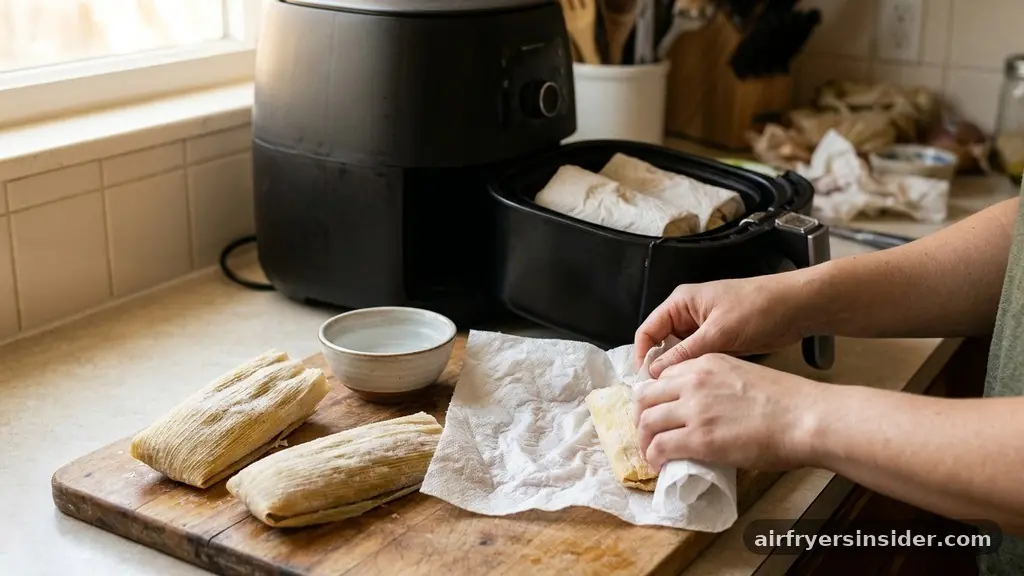
A common complaint when using an air fryer is that food can become dehydrated. Because the air is constantly moving, it wicks away moisture from the surface of your food. To counteract this, consider wrapping your tamales in aluminum foil for the first ten minutes of the process.
The foil traps the steam inside, effectively steaming the tamale within the air fryer. After the initial ten minutes, remove the foil to allow the heat to crisp the exterior. This hybrid method ensures the interior remains moist while the outside develops a satisfying texture.
Another effective trick is to place a small, damp damp paper towel or a small oven-safe dish containing a tablespoon of water at the bottom of the air fryer basket, away from the heating element. As the air heats up, this moisture will evaporate and circulate through the chamber, creating a humid environment that prevents the masa from cracking or becoming brittle. This is particularly helpful if your tamales have been in the freezer for a long time, as they tend to lose more moisture the longer they sit in cold storage.
Equipment Variations: Ninja Foodi vs. Cosori
Your specific machine will influence the final result, as different brands have varying fan speeds and heating element distances. Owners of a Ninja Foodi often find that the “Air Crisp” function is quite powerful, meaning you may need to reduce the temperature by 10 to 15 degrees to avoid burning the husks.
Because the Ninja Foodi has a high-velocity fan, the heat transfer is very efficient, often requiring a shorter cook time than other models. Keep a close watch during your first attempt to gauge how your specific unit handles the task.
In contrast, a Cosori air fryer often has a slightly more gentle airflow, which is ideal for delicate items like tamales. You might find that you need the full 15 minutes at 350°F to get the center heated all the way through. Regardless of the brand, the key is to use a food thermometer to verify the center has reached at least 165°F.
This is the only way to be certain that the filling is hot and safe to eat. Once you have calibrated your specific machine, you will find that the process becomes second nature.
Addressing Topical Gaps: Safety and Texture
Many people worry about the safety of cooking frozen items, but the air fryer is perfectly capable of bringing frozen masa to a safe temperature. The most important factor here is consistency. If you have a very large, thick tamale, you may need to slice it in half after the first ten minutes to ensure the heat reaches the very center.
Some users also wonder about the potential for the husks to catch fire. While rare, it is important to ensure the husks are tucked tightly around the tamale and are not loose enough to be sucked up into the heating element by the fan.
Regarding texture, if you find that your tamales are still too soft after the recommended time, it is often because they were stacked. Air fryers rely on the movement of hot air to work; if the airflow is blocked, the machine essentially becomes a very inefficient oven.
If you are cooking for a large group, it is better to cook in batches. While this takes longer, it guarantees that every single tamale is heated evenly, avoiding the disappointment of a cold, doughy center that can happen when trying to rush the process by overloading the basket.
| Cooking Method | Time Required | Texture Outcome |
|---|---|---|
| Steaming | 30-45 Minutes | Very Soft/Uniform |
| Air Frying (Foil-Wrapped) | 15-20 Minutes | Moist and Tender |
| Air Frying (Unwrapped) | 12-15 Minutes | Crispy Exterior/Hot Interior |
Tips for Enhancing Flavor After Reheating
Once you have mastered the basics of how to cook frozen tamales in air fryer, you can begin to experiment with ways to serve them. Because the air fryer can create a slightly drier exterior, pairing your tamales with a vibrant, acidic sauce is a great way to balance the richness of the masa.
Fresh salsa verde, a spicy roja sauce, or even a dollop of crema can add the necessary moisture back into the dish. You can also sprinkle some fresh cilantro or diced onions over the top to provide a crunch that contrasts with the soft interior.
If you are looking for a more substantial meal, consider serving your tamales alongside a simple side of beans or Mexican rice. Because the air fryer is so fast, you can easily prepare these sides while the tamales are heating.
Some enthusiasts even like to slice the finished tamales and pan-fry them quickly in a skillet with a little butter, though this is only necessary if you are looking for an even deeper, crunchier texture than the air fryer can provide on its own. The goal is to highlight the flavors of the masa and the savory filling.
Common Mistakes to Avoid
Avoiding common pitfalls will make your experience much smoother. One frequent error is failing to flip the tamales. Even with a powerful fan, the bottom of the tamale will not cook at the same rate as the top.
Another mistake is using the wrong temperature. If you set the air fryer too high, the outside of the husk will burn and become brittle before the inside has a chance to thaw. Stick to the 350°F range; it is the “sweet spot” for most frozen goods that need to be heated through without scorching the exterior.
Another issue is the improper use of parchment paper. While parchment is useful for cleanup, ensure it is weighted down by the tamales. If the paper is loose, the fan will blow it around, potentially covering the food and preventing even cooking.
If you are using aluminum foil, make sure it is wrapped tightly enough that it doesn’t flap around, but loose enough that it doesn’t tear. These small adjustments in technique lead to significantly better results, ensuring your meal is as delicious as possible every single time you use your air fryer.
Frequently Asked Questions
Is it necessary to thaw tamales before air frying?
No, you do not need to thaw them. You can cook them directly from frozen. Just adjust your time slightly, usually adding 3 to 5 minutes compared to refrigerated tamales, to ensure the center reaches the proper temperature for food safety.
Can I leave the corn husks on while air frying?
Yes, it is highly recommended to keep the husks on for the majority of the cooking time. The husk acts as a protective layer that keeps the masa from drying out. You can remove them for the final few minutes if you prefer a crispier texture.
How do I know when the tamales are fully cooked?
The best way to check is by using a food thermometer. Insert it into the thickest part of the tamale; it should register at least 165°F. If you don’t have a thermometer, ensure the center is steaming hot and the masa is firm and not doughy.
What if my tamales are wrapped in plastic?
You must remove the plastic wrap before cooking. Plastic is not heat-safe for the temperatures reached inside an air fryer and will melt onto your food and the machine, creating a health hazard and a difficult cleanup job.
Final Thoughts on Air Fryer Tamales
Learning how to cook frozen tamales in air fryer is a game-changer for anyone who loves Mexican cuisine but values their time. By utilizing the consistent heat and airflow of your appliance, you can turn a forgotten freezer item into a warm, satisfying meal that tastes almost as good as if it were freshly prepared. Remember to keep an eye on your timing, use the husk to your advantage for moisture retention, and always verify that the center is hot before serving.
With these simple techniques, you will find yourself reaching for your air fryer whenever you need a quick, delicious, and comforting meal. Experiment with your own favorite toppings and side dishes to make each batch your own, and enjoy the convenience of this modern cooking method.