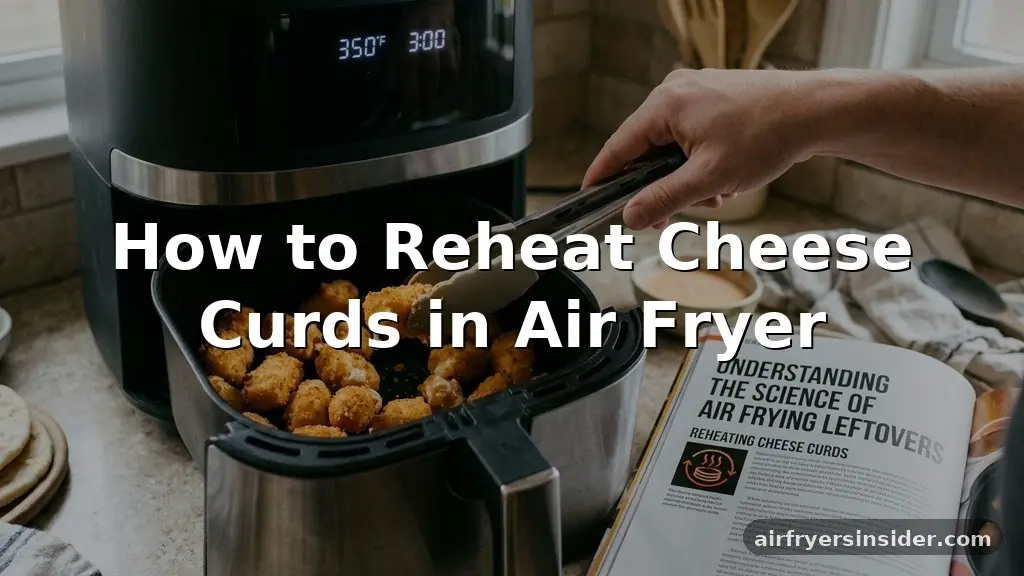
Finding the best way to reheat cheese curds in air fryer settings can be the difference between a sad, soggy snack and a crispy, melty treat that tastes like it just left the deep-fryer. Many people struggle with leftovers because the breading loses its snap or the cheese turns into a rubbery mess, but with the right approach, you can restore that freshly prepared quality.
Whether you are dealing with a leftover portion from a restaurant or a batch you made at home, mastering the timing and temperature is essential for success. This guide provides the specific techniques you need to bring your favorite dairy snack back to its former glory.
Understanding the Science of Air Frying Leftovers
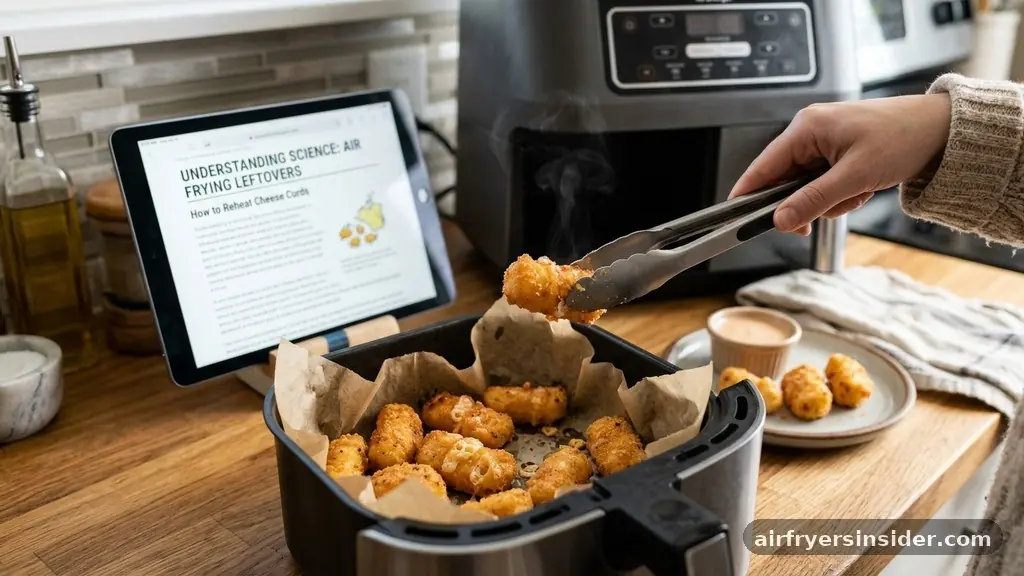
When you decide on reheating cheese curds in air fryer baskets, you are essentially leveraging rapid air technology to reverse the damage done by refrigeration. Unlike a microwave, which vibrates water molecules and often leaves breaded items mushy, an air fryer acts as a powerful convection oven. The circulating hot air works to dehydrate the surface of the breading just enough to make it crunch, while simultaneously warming the center.
The primary challenge with fried cheese is the delicate balance between the coating and the core. If you use too much heat for too long, the internal temperature of the cheese rises so quickly that it leaks out of the crust, leaving you with empty shells. If the heat is too low, the oil trapped in the breading remains cold and unappealing.
By using the air fryer, you are forcing the trapped moisture to evaporate from the exterior coating while the interior reaches a warm, gooey state. This process mimics the original deep-fried method, providing a much better result than a standard oven or toaster oven could achieve.
Preparing Your Leftover Curds for the Best Results
Before you even touch the dial, preparation plays a massive role in the outcome. You should never toss cold, clumped-together curds directly into the basket.
Instead, take a moment to spread them out on a plate to lose some of the chill before they go into the machine. If your curds have been sitting in a container where they have absorbed moisture from condensation, pat them very lightly with a paper towel.
Using parchment paper is a pro tip that helps with both heat distribution and cleanup. By placing a perforated sheet of parchment in the bottom of your basket-style air fryer, you ensure that the bottom of the curds doesn’t stick to the metal grate.
If you are worried about the breading being too dry, a very light spritz of oil spray can help revive the golden color. However, be conservative; most restaurant-style curds are already quite oily, and adding more can make them greasy rather than crispy.
Setting the Optimal Temperature for Reheating
The secret to success lies in finding the optimal heat. Most air fryers default to high temperatures, but for breaded items, you want a moderate approach.
Aiming for a temperature between 325°F and 350°F is usually the sweet spot. Anything higher than 375°F will likely burn the exterior before the center of the cheddar curds has a chance to soften.
Preheating your unit is non-negotiable. If you drop cold food into a cold chamber, the breading will absorb the fat as the machine warms up, leading to a heavy, greasy texture. Run your air fryer for three minutes empty before adding your food.
This allows the heating element to reach its target, ensuring that the moment the curds hit the air, they begin crisping immediately. This initial burst of heat is what separates a professional-grade reheat from a mediocre snack.
Timing and Monitoring the Process
Timing is everything when you are working with small, delicate items. Unlike larger foods like chicken wings or potatoes, cheese curds can go from perfect to molten in a matter of seconds.
For a typical batch of chilled curds, three to five minutes is usually sufficient. You should check them at the three-minute mark to assess their progress.
If you are using a food thermometer, you might be tempted to probe the center, but this often causes the cheese to leak. Instead, use a gentle touch with a pair of tongs. If the exterior feels firm and the curds yield slightly to pressure, they are ready.
If you notice the cheese starting to ooze out of the sides, pull them out immediately, regardless of the timer. The residual heat will continue to warm the center even after they are removed from the basket.
Common Mistakes to Avoid During Reheating
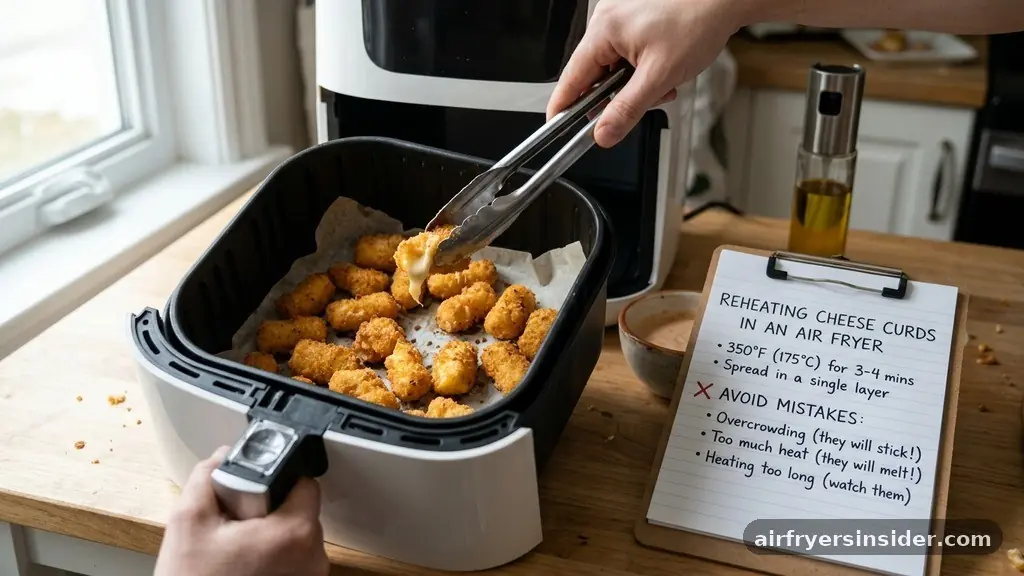
Many home cooks fall into the trap of overcrowding the basket. When the curds are stacked on top of each other, the air cannot circulate effectively, which leads to uneven heating and a soggy texture in the middle of the pile. Always arrange them in a single layer with a little bit of breathing room between each piece.
Another common error is failing to use a cooling rack after the process. When you take the curds out, they are at their most fragile. If you pile them onto a plate immediately, the steam trapped underneath will soften the bottom breading.
By transferring them to a wire rack for just sixty seconds, you allow the moisture to escape, locking in that crispy texture you worked so hard to achieve. It’s a small step that makes a noticeable difference in the final mouthfeel of your snack.
Comparing Methods for Reheating Fried Foods
To understand why the air fryer is superior, it helps to look at the other common appliances found in most kitchens. Each method has distinct characteristics that affect the final quality of your snack food.
| Method | Texture Quality | Speed | Ease of Use |
|---|---|---|---|
| Air Fryer | Excellent (Crispy) | Fast | Moderate |
| Microwave | Poor (Soft/Rubbery) | Very Fast | Easy |
| Oven | Good | Slow | Easy |
| Toaster Oven | Good | Moderate |
As shown in the table, the air fryer offers the best balance of speed and quality. The microwave is convenient but ruins the integrity of the breading, while a standard oven takes too long and often dries out the cheese. The air fryer mimics the original frying environment by using high-velocity air, which is the closest you can get to the restaurant experience at home.
Addressing Topical Gaps in Reheating Techniques
One question that often arises is how to handle different types of coatings. For example, beer-battered curds behave differently than those with a standard breadcrumb coating. Beer batter is more delicate and prone to absorbing moisture, which is why a slightly higher temperature—around 360°F—for a shorter time is often preferred.
Another gap is the issue of seasoning. Reheating often dulls the salt and herbs on the outside of the crust. A quick sprinkle of sea salt or a dash of garlic powder immediately after pulling them from the air fryer can brighten the flavor profile and make the snack feel brand new.
Furthermore, if you are reheating a large batch, do not try to do it all at once. It is much better to run two smaller, high-quality batches than one large, soggy pile.
Serving Suggestions for Revived Curds
Once you have successfully mastered how to reheat cheese curds in air fryer cycles, you might want to elevate the presentation. Since the curds are already warm and crispy, pair them with a dipping sauce that contrasts with the richness of the dairy. A spicy ranch, a tangy marinara, or even a sweet chili sauce can cut through the fat and provide a balanced flavor experience.
Consider the context in which you are eating them. If these are leftovers from Culver’s or a similar establishment, they likely came with a specific dipping sauce that was designed to complement the saltiness of the cheese.
Replicating that sauce or using a similar high-quality condiment will go a long way in making the leftovers feel like a fresh purchase. Remember that the cheese will firm up as it cools, so serve them while they are still steaming for the best pull.
Safety and Storage Considerations
Food safety is paramount when dealing with leftovers. Never leave fried cheese out at room temperature for more than two hours.
If you aren’t planning to eat the leftovers within three days, it is better to freeze them. When reheating frozen curds, you do not need to thaw them first, but you should increase your cooking time by about two minutes and lower the temperature slightly to ensure the center thaws and warms before the outside burns.
If you notice a sour smell or the cheese has taken on a strange, discolored appearance, discard it immediately. While the air fryer is a great tool for revival, it cannot save food that has passed its prime. By storing your curds in an airtight container in the refrigerator, you maintain the quality of the breading for a longer period, making the eventual reheating process much more successful.
Frequently Asked Questions
How can I tell if my cheese curds are perfectly reheated?
You will know they are ready when the breading is a deep golden brown and the cheese inside feels soft to the touch. If you press down slightly with tongs, they should offer little resistance. They should be hot to the touch but not leaking excessively.
Is it possible to reheat cheese curds without them getting dry?
Yes, the key is to avoid overcooking them. Using a preheated air fryer at 325°F for only three to five minutes prevents the moisture loss that usually causes dryness. A very light mist of oil spray can also help maintain the surface texture without making them overly greasy.
Can I reheat different types of cheese snacks like mozzarella sticks using this method?
Absolutely. The technique for mozzarella sticks is nearly identical to that of cheese curds. Because mozzarella sticks are usually larger, you may need to add an extra minute or two to the cooking time, but the principle of using moderate heat to avoid leakage remains the same.
What should I do if my air fryer basket is too small for my portion?
If you have a large amount of leftovers, work in batches. Overcrowding the basket prevents the air from circulating, which is the main cause of soggy results. It is better to have two warm, crispy batches than one single batch that is unevenly heated and lacks the desired crunch.
Reheating your favorite fried snacks doesn’t have to be a gamble. By utilizing the consistent, high-velocity heat of your air fryer, you can bypass the common pitfalls of sogginess and rubbery textures that plague other methods. Start by preheating your device, keep your portions in a single layer, and monitor the process closely to catch the curds at their peak of warmth and crispiness.
With these adjustments, you will find that your leftovers are just as satisfying as they were when they were first served. If you find your own favorite temperature or timing, keep track of it for future snacking sessions. Enjoy your perfectly restored treat, and don’t hesitate to experiment with different dipping sauces to keep things interesting next time you decide to reheat cheese curds in air fryer.
Meta Description: Learn how to reheat cheese curds in air fryer to get that perfect, crispy texture. Follow these simple steps for a golden, melty snack every time.