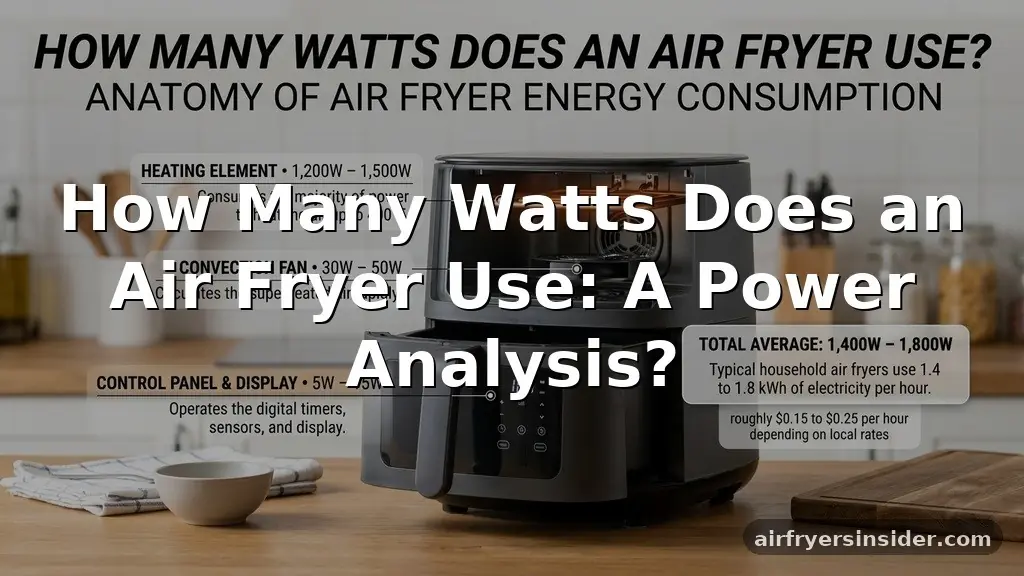
When you are looking to understand how many watts does an air fryer use, it helps to look at the internal mechanics that make these devices so effective. Most modern air fryers operate within a specific power window designed to balance rapid heating with electrical safety.
Whether you are trying to estimate your monthly utility bill or simply curious about your kitchen setup, understanding the relationship between the heating element and the convection fan is essential. This article breaks down the technical details behind these popular appliances, helping you manage your energy consumption while enjoying your favorite crispy meals.
The Anatomy of Air Fryer Energy Consumption
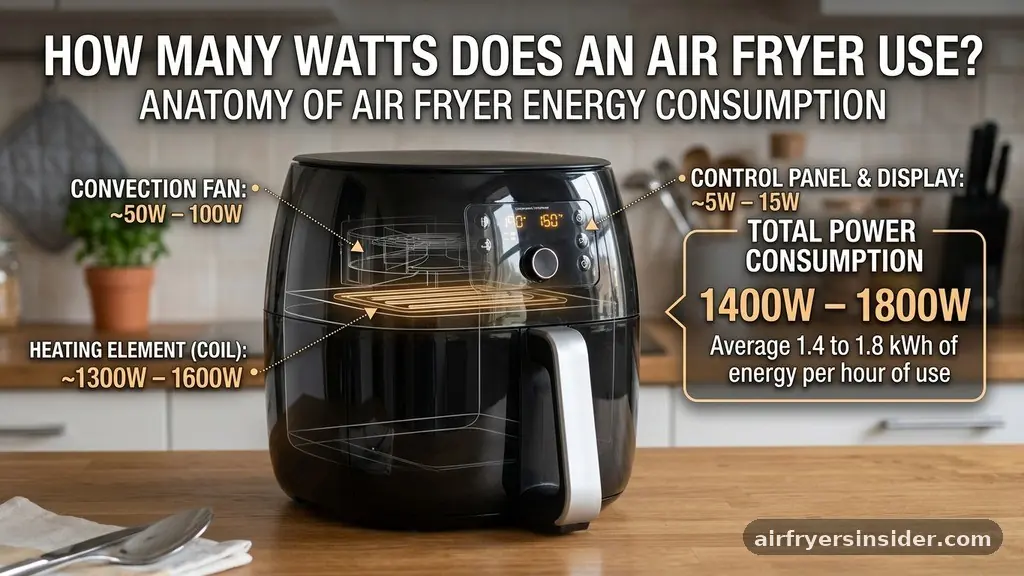
At its core, an air fryer is essentially a high-powered, compact convection oven. The primary components driving the energy consumption are the heating element and the high-speed convection fan.
When you turn the dial or press start, the device draws a significant amount of current to bring the internal chamber to the desired temperature almost instantly. Because these units are smaller than traditional ovens, they don’t require the same amount of sustained heat to maintain a cooking environment, which is where the efficiency often comes from.
The heating element acts as the primary power consumer. Depending on the size of the unit, this component typically draws between 800 and 1,700 watts. When you consider how many watts does an air fryer use in a typical cycle, you must account for the fact that the heater cycles on and off to maintain stability.
The fan, while drawing far less power than the heating coil, runs continuously to circulate hot air. This combination creates a rapid air technology environment that cooks food faster than conventional methods, effectively shortening the total cooking duration and lowering the overall energy footprint.
Typical Wattage Ranges for Different Models
Not every appliance is built with the same power requirements. Smaller, personal-sized air fryers, often ranging from 1 to 3 quarts, typically operate at lower power levels. These compact units usually hover between 800 and 1,200 watts.
They are perfect for single-portion meals or small snacks, and because their internal volume is limited, they reach target temperatures extremely quickly. If you are dealing with limited kitchen outlet capacity, these smaller models provide a safer way to enjoy air-fried foods without overloading your circuit.
Mid-to-large capacity air fryers, which range from 4 to 10 quarts, require more power to heat the larger volume of air. You will find that these models generally fall into the 1,400 to 1,800-watt range. Some high-end, dual-basket, or oven-style air fryers might even push toward 2,000 watts when both heating zones are active.
It is important to check the appliance power rating on the back or bottom of the unit to get the exact figure for your specific model. This rating represents the peak wattage the device can draw during its most intensive operation phase.
Comparing Power Usage to Other Kitchen Appliances
Understanding how many watts does an air fryer use is best done by comparing it to other common household tools. A standard electric oven, for instance, can draw anywhere from 2,000 to 5,000 watts. While the oven has a higher wattage, it also takes significantly longer to preheat and cook food.
Because the air fryer is so compact, the total kilowatt-hours used for a single meal are often lower than those used by a full-sized oven. This is the primary reason many people consider air frying to be more energy-efficient.
Microwaves operate differently, usually drawing between 600 and 1,200 watts. While a microwave is often more efficient for heating liquids or steaming vegetables, it cannot replicate the browning and crisping effects of an air fryer. When you compare an air fryer to a toaster oven, the gap narrows.
Both use similar heating element technology, but the air fryer’s superior convection fan allows for more consistent heat distribution. This efficiency means that even if the wattage seems high on paper, the shorter cooking time results in a smaller overall energy cost calculation.
| Appliance Type | Typical Wattage Range | Energy Efficiency Context |
|---|---|---|
| Small Air Fryer | 800W – 1,200W | High efficiency for small portions |
| Large Air Fryer | 1,400W – 1,800W | Faster than conventional ovens |
| Electric Oven | 2,000W – 5,000W | High consumption, slow preheat |
| Microwave | 600W – 1,200W | Very efficient for specific tasks |
Managing Electrical Circuit Loads in Your Kitchen
A common concern involves the electrical circuit load. Most residential kitchen outlets in the United States are rated for 15 or 20 amps. Since a high-powered air fryer can draw up to 15 amps at peak performance, running it on the same circuit as a coffee maker or a toaster can easily trip a breaker.
This is a critical factor for anyone wondering how many watts does an air fryer use in relation to their home’s infrastructure. If you frequently use multiple high-wattage appliances, you might need to rotate their usage or move the air fryer to a dedicated outlet.
The power cord specifications are usually matched to the device’s peak wattage. You should never use an extension cord with an air fryer, as these devices draw a consistent, high current that can cause thin-gauge extension cords to overheat.
Always plug the unit directly into a wall outlet to ensure compliance with electrical safety standards. By respecting the limits of your kitchen’s wiring, you can prevent unnecessary power outages and ensure your appliance operates safely over its entire lifespan.
The Role of Thermal Insulation and Efficiency
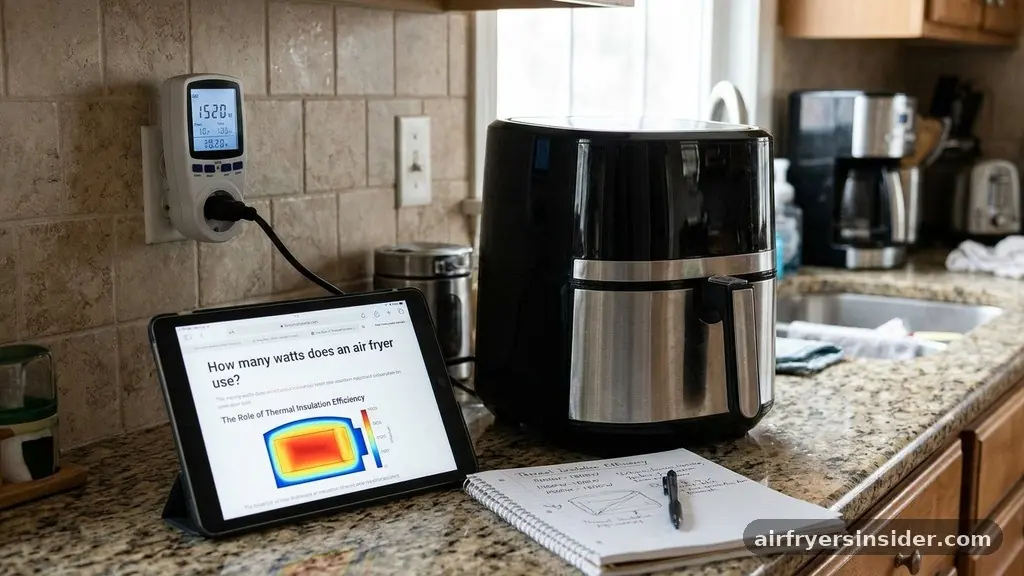
The build quality of your air fryer significantly impacts its efficiency. Devices with better thermal insulation will lose less heat to the environment, meaning the heating element doesn’t have to cycle on as frequently to maintain the target temperature.
When the internal heat is contained effectively, the machine uses less electricity to perform the same task. This is a subtle factor, but over months of regular use, it can make a noticeable difference in your energy consumption.
Some premium models feature double-walled construction or high-quality seals around the basket. These features are not just for safety; they are for performance. An air fryer that leaks heat forces the heating element to work harder, increasing the total power consumption per cycle.
When evaluating different brands, look for units that feel sturdy and have tight-fitting components. This investment in quality often pays off in both the longevity of the machine and the consistency of your cooking results, while also keeping your energy usage in check.
Calculating Your Real-World Energy Costs
To determine exactly how much your air fryer costs to run, you need to use your local residential electricity rates. The formula is straightforward: divide the wattage of your air fryer by 1,000 to get the kilowatts (kW), then multiply that by the number of hours you use it, and finally multiply by the cost per kilowatt-hour (kWh) charged by your utility provider.
For example, if you have a 1,500-watt air fryer and you use it for 30 minutes, you are using 0.75 kWh. If your electricity costs $0.15 per kWh, that session costs you roughly 11 cents.
This energy cost calculation is a great way to see if your cooking habits align with your budget. While 11 cents per use might seem minor, it adds up if you are air frying multiple times a day.
By being mindful of your cooking duration and ensuring you aren’t leaving the unit in standby power mode for hours at a time, you can optimize your usage. Most modern air fryers have a small standby draw even when not in active use, so unplugging the unit when it isn’t in use is a simple habit that saves a small but measurable amount of electricity.
Addressing Common Topical Gaps
Many users ask how many watts does an air fryer use when compared to a portable generator or a solar power setup. If you are planning to use an air fryer while camping or during a power outage, you need to be aware of the “surge” or peak wattage. While a device might be rated at 1,500 watts, it may briefly draw more when the heating element first kicks on.
Ensure your inverter or generator can handle the starting load, not just the running watts. This is a gap in many guides, but it is critical for anyone operating off-grid.
Another frequently overlooked area is the impact of altitude and environment. In colder climates, an air fryer may take longer to reach its cooking temperature, which increases the total energy used.
Similarly, if you overstuff your basket, the air cannot circulate properly, leading to longer cook times and higher energy consumption. Properly spacing your food ensures the convection technology can work as intended, which is the most efficient way to use the power that your unit draws.
Important Safety Considerations for High-Wattage Appliances
High-wattage appliances require respect regarding electrical safety standards. Because these machines generate intense heat, the area around them should be clear of flammable materials. Never place an air fryer under low-hanging cabinets where heat can accumulate and damage the surface.
The ventilation ports on the back of the device must remain unobstructed. If the airflow is blocked, the machine will struggle to vent hot air, leading to higher internal temperatures and potential damage to the internal components.
* Always check the power cord for signs of fraying or heat damage.
* Allow the unit to cool down completely before storing it.
* Avoid using power strips or multi-tap adapters for your air fryer.
* Clean the heating element regularly to prevent grease buildup.
* Unplug the device if you notice a burning smell or unusual electrical buzzing.
Following these steps ensures that you aren’t just managing how many watts does an air fryer use, but you are also maximizing the lifespan of your appliance. A well-maintained air fryer is more efficient and safer to operate. When the heating element is free of debris, it heats more evenly, and the convection fan can maintain a steady flow of air without resistance, keeping your power usage optimized.
Choosing the Right Air Fryer for Your Power Needs
When you are in the market for a new unit, consider how your lifestyle matches the available wattage ranges. If you are a single person who only needs to reheat leftovers or cook small portions, a lower-wattage model is perfectly sufficient and will be easier on your kitchen’s electrical load.
If you are cooking for a family, a larger unit is necessary, but be aware that it will pull more power. It is a balancing act between convenience and electrical capacity.
Look for models that offer precise temperature control, as this allows you to use only the power you need for the specific food you are cooking. Some digital models provide more granular control than mechanical dial versions.
While the difference in energy usage between a mechanical and digital unit is negligible, the ability to fine-tune your cooking duration can prevent overcooking and wasted energy. Ultimately, knowing how many watts does an air fryer use empowers you to make an informed decision that fits your kitchen setup and your energy goals.
Frequently Asked Questions
Do air fryers draw a lot of electricity?
Air fryers are relatively efficient compared to traditional ovens because of their smaller size and faster cooking speeds. While they draw a high amount of power (typically 800 to 1,800 watts) while running, the short cooking duration means the total electricity consumption per meal is usually quite low.
What size generator do I need to run an air fryer?
You should look for a generator that can handle at least 2,000 to 2,500 watts of starting power to accommodate the peak wattage spike when the heating element engages. While the running wattage is lower, the initial draw can trip the overload protection on smaller generators.
How many watts should a good air fryer be?
For most households, an air fryer between 1,400 and 1,700 watts is considered ideal. This power level provides enough heat to crisp food effectively without being so high that it consistently trips standard 15-amp kitchen circuit breakers. Larger capacity units generally require this higher wattage range.
Is it cheaper to use an air fryer than an oven?
Yes, in most cases, using an air fryer is cheaper than using a conventional oven. The air fryer does not require a long preheating period and heats a much smaller volume of air, leading to significantly lower total energy usage for the same amount of food cooked.
Conclusion
Understanding how many watts does an air fryer use is a key step in managing your home’s energy efficiency. By recognizing the role of the heating element, the convection fan, and the importance of proper electrical circuit management, you can enjoy the convenience of modern cooking without unnecessary power spikes. Whether you are choosing a new model or simply monitoring your current usage, remember that the efficiency of these devices comes from their ability to cook quickly and effectively.
Maintaining your appliance and being mindful of your cooking habits will help you get the best results while keeping your utility costs predictable. If you have questions about your specific model, check the manufacturer’s label to see its exact power rating and start saving today.
Meta Description: Discover how many watts does an air fryer use and learn how to manage your kitchen energy consumption for optimal efficiency and safety.