
Learning how to dehydrate strawberries in air fryer setups provides a fantastic way to transform fresh seasonal produce into long-lasting, nutrient-dense treats. By utilizing the appliance’s built-in convection technology, you can achieve professional-quality results right on your kitchen counter. This method focuses on gentle moisture removal, turning soft berries into sweet, concentrated snacks without the need for specialized equipment.
Whether you are aiming for a chewy texture or a crisp finish, understanding the nuances of temperature control and slice thickness will ensure your success. This process is surprisingly straightforward and allows you to preserve the vibrant flavor of summer berries for months of enjoyment.
Mastering the Preparation Phase
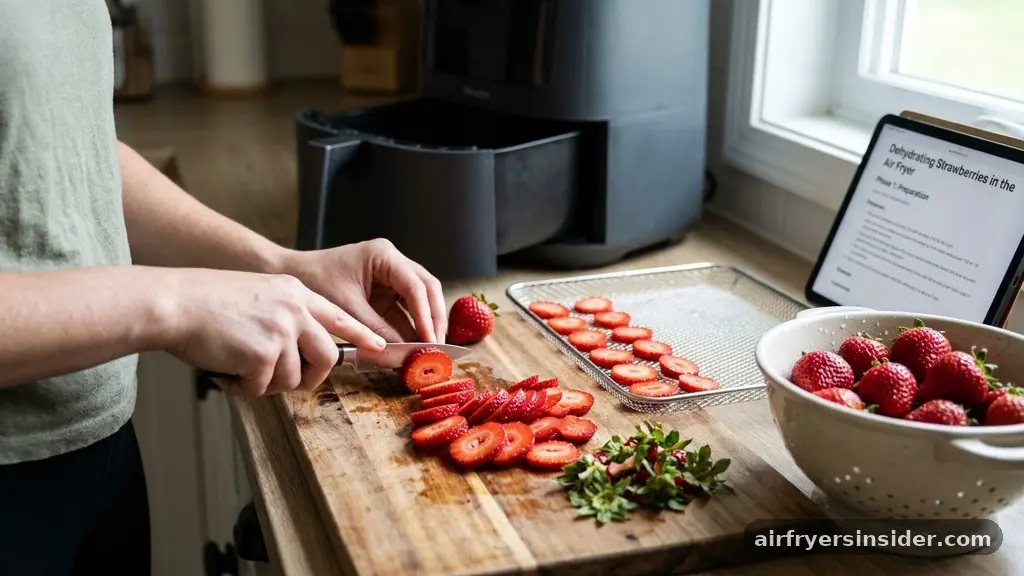
Before you begin the process of dehydrating strawberries, you must focus on proper strawberry preparation. Start by selecting firm, ripe berries that are free from bruises or mold. Soft or overripe fruit will not hold up well during the dehydration process and may result in a mushy final product rather than a snackable chip.
After washing the berries thoroughly in cold water, pat them dry with a clean kitchen towel. Excess moisture on the surface of the fruit can significantly increase the drying time, so taking a moment to ensure they are completely dry before cutting is a vital step in achieving the best results.
The next phase involves berry hulling and slicing. Use a sharp paring knife to remove the green leafy tops and the tough white core. Once hulled, you need to slice the strawberries into pieces of uniform thickness.
Using a mandoline slicer is highly recommended here, as it ensures every slice is identical. If the slices vary in thickness, some will become brittle and burnt while others remain soft and under-dried.
Aim for slices that are approximately one-eighth to one-quarter of an inch thick. Consistency in size is the secret to even moisture removal across the entire batch, preventing the frustration of having to sort through half-finished fruit later.
Optimizing Air Fryer Settings for Success
Understanding your air fryer settings is crucial when you want to dehydrate strawberries in air fryer environments effectively. Most modern air fryers have a dedicated dehydrate mode, which is specifically calibrated to run at a lower temperature for an extended period.
If your machine does not have this specific setting, you must manually set it to the lowest possible temperature, usually between 130°F and 150°F. Anything higher than this will likely cook the exterior of the strawberry too quickly, sealing the moisture inside and preventing it from drying out properly.
Proper air circulation is the engine behind this process. Because air fryers rely on forced convection heat, you should avoid overcrowding the basket. If the slices are layered on top of each other, the air cannot pass through the gaps to carry away the moisture.
Place the strawberries in a single, even layer, making sure they do not touch. Some users prefer using parchment paper or a dedicated silicone dehydrator rack to prevent the fruit from sticking to the basket’s mesh. If you choose to use parchment paper, ensure it is cut to size and does not block the airflow vents, as this can cause uneven drying and potentially trigger safety sensors in some models.
Managing Moisture Removal and Texture
The time required to achieve your desired outcome depends heavily on the specific model of your air fryer and the humidity level of your kitchen. Generally, the process takes anywhere from three to six hours. It is essential to check the strawberries periodically after the three-hour mark.
If you prefer a chewy texture, you will want to pull them out sooner, while a crispy dried fruit consistency requires a longer duration. Remember that the fruit will continue to firm up slightly as it cools down, so don’t be alarmed if they feel slightly pliable when you first remove them from the heat.
To test for doneness, remove a single slice and let it cool for a minute or two. Once cooled, it should be dry to the touch, and when you bend it, it should not release any visible beads of moisture. If you notice any dampness, return the tray to the air fryer for another thirty minutes.
This patience is part of the art of food dehydration. Since you are working with natural sugars, you want to avoid the “candy-like” stage where the fruit becomes brittle and caramelized, unless that is your specific goal. Finding that sweet spot between a flexible fruit leather and a crunchy chip is what makes this technique so rewarding.
Addressing Common Topical Gaps
One common question regarding this process is whether you need to pre-treat the fruit to prevent oxidation. While many people simply slice and dry, some prefer a quick soak in a lemon juice and water solution to keep the color bright. However, for strawberries, this is rarely necessary unless you are drying them for a specific aesthetic purpose, as the fruit’s natural acidity helps maintain its integrity.
Another gap in knowledge involves the “sticky factor.” Because strawberries are high in natural fructose, they can become quite tacky. If your strawberries are particularly juicy, you might find that they stick to the basket even with careful preparation.
| Feature | Chewy Texture | Crispy Texture |
|---|---|---|
| Temperature | 135°F | 145°F |
| Time Required | 3-4 Hours | 5-6 Hours |
| Final Feel | Pliable, Bendable | Brittle, Snaps |
| Best Use | Trail Mix, Toppings | Snacking, Baking |
Another consideration is the noise level. Because the fan runs continuously for hours, the air fryer can be quite loud. If you are sensitive to noise, consider placing the unit in a well-ventilated area away from living spaces.
Finally, many people worry about the energy cost of running an appliance for several hours. While air fryers are more efficient than full-sized ovens, they still consume electricity. However, compared to the cost of buying store-bought dehydrated fruit, which often contains added sugars and preservatives, the home-made version remains a cost-effective and healthier alternative for your healthy snacks rotation.
Ensuring Food Safety and Longevity
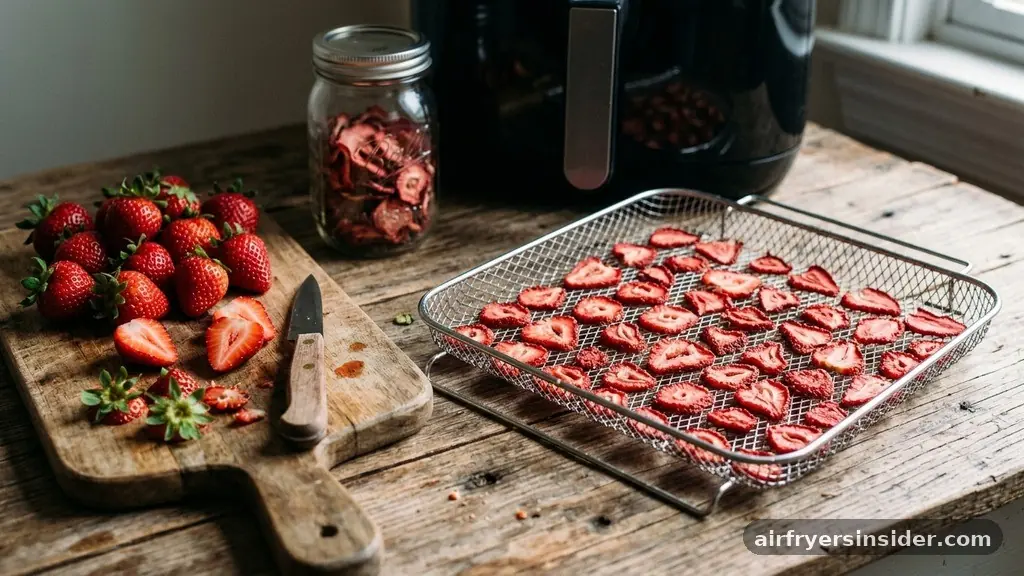
When you engage in food preservation, safety is paramount. The primary risk with home-dehydrated fruit is residual moisture, which can lead to mold growth if stored improperly. Always ensure your strawberries are completely cooled to room temperature before sealing them in any container.
If they are still warm, the residual heat will create condensation inside the jar, which is a breeding ground for bacteria. This simple step is vital to maintaining the shelf life of your product.
For long-term storage, you should use airtight jars made of glass or heavy-duty plastic. Mason jars are excellent for this purpose because they create a reliable seal. To further protect your fruit, consider adding silica gel packets to the jars.
These little packets absorb any lingering humidity, acting as an insurance policy for your hard work. Keep your pantry storage location cool, dry, and away from direct sunlight.
While properly dried strawberries can last for several months, they are best consumed within the first few weeks to enjoy the peak of their flavor and texture. If you notice any off-smells or signs of mold, discard the batch immediately to ensure complete food safety.
Maximizing Nutrient Retention
One of the significant advantages of home-based food dehydration is the ability to control the process, which supports better nutrient retention compared to high-heat commercial processing. By using low-temperature settings, you preserve more of the fruit’s natural vitamins and antioxidants. Strawberries are packed with Vitamin C and manganese, and while some heat-sensitive nutrients will inevitably degrade during the drying process, the concentrated form allows you to pack a high density of these nutrients into a small, portable snack.
Furthermore, you have total control over the ingredients. Store-bought dried fruit often contains added sulfur dioxide to maintain color, or high-fructose corn syrup to enhance sweetness. When you prepare these at home, you are dealing with pure fruit.
This makes them a superior choice for those managing their sugar intake or following clean-eating protocols. The natural sweetness of the strawberry becomes significantly more intense once the water is removed, meaning you don’t need to add any sugar or sweeteners to satisfy a craving for candy-like snacks. It is a pure, unadulterated way to enjoy the harvest.
Creative Culinary Applications
Once you have mastered the basics of dehydrating strawberries, you can move beyond simple snacking. These concentrated bursts of flavor are incredibly versatile in the kitchen.
You can chop them up and add them to your morning oatmeal or yogurt, where they will rehydrate slightly and provide a sweet, fruity contrast to the creamy base. They also work exceptionally well in homemade granola bars or trail mix, providing a chewy element that pairs perfectly with nuts and seeds.
For those who enjoy baking, these strawberries can be incorporated into muffin or scone batters. Because they have had their moisture removed, they won’t make the dough soggy, allowing them to remain as distinct, flavorful pockets of fruit throughout the bake. You can even grind the crispier batches into a fine powder using a spice grinder.
This “strawberry dust” can be used as a natural topping for desserts, a flavorful stir-in for smoothies, or even a colorful rimmer for cocktail glasses. The possibilities are limited only by your imagination, and having a jar of these on hand turns basic pantry staples into something truly special.
Troubleshooting Common Dehydration Issues
Even with the best preparation, you might occasionally encounter problems. If your strawberries turn brown rather than keeping their vibrant red color, it is usually a sign that they were exposed to too much heat or that the drying time was too long. While the flavor might still be excellent, the visual appeal is diminished.
To prevent this, try lowering the temperature by another 5-10 degrees and checking the fruit more frequently. If you find your fruit is becoming too brittle, you may have sliced it too thin or left it in the machine past the point of ideal moisture removal.
Another common issue is uneven drying, where one side of the basket is crisp while the other remains soft. This is almost always a result of poor airflow. Modern air fryers have specific “hot spots” where the air hits harder.
About halfway through the process, take a moment to rearrange the slices or rotate the tray if your model allows it. This ensures that every piece of fruit receives equal exposure to the circulating air. Don’t be afraid to experiment with your specific machine; every air fryer has a slightly different personality, and learning how yours distributes heat is the final step toward becoming an expert at this craft.
Final Thoughts on Home Preservation
Successfully learning how to dehydrate strawberries in air fryer setups opens up a world of convenience for your kitchen. It is a simple, effective, and rewarding way to ensure that nothing goes to waste.
By taking control of the process, you gain the ability to create high-quality, preservative-free snacks that are perfect for busy days or long-term pantry storage. Whether you are a fan of the chewy, fruit-leather style or the intense crunch of a dried strawberry chip, the process remains accessible and easy to replicate.
The beauty of this method lies in its simplicity. You don’t need to invest in expensive, bulky equipment that takes up precious counter space, nor do you need to spend hours monitoring a traditional oven. With just a few minutes of prep and a little bit of time, you can preserve the essence of fresh strawberries year-round.
As you get more comfortable with the timing and the settings, you can start experimenting with other fruits like apples, bananas, or mangoes, using the same core principles. Start small, observe how your specific appliance reacts, and enjoy the delicious results of your efforts.
Frequently Asked Questions
How long do dehydrated strawberries usually last in storage?
When stored in airtight jars in a cool, dark place, properly dehydrated strawberries can last for three to six months. If you include a silica gel packet to absorb any residual moisture, you can often extend their shelf life closer to the six-month mark without any loss of quality.
Can I dehydrate frozen strawberries in an air fryer?
It is generally not recommended to use frozen strawberries for dehydration. Thawing them releases excessive moisture, resulting in a soggy, unappealing texture. For the best results, always start with fresh, firm strawberries that have been properly washed and sliced to ensure an even, consistent drying process.
What is the ideal temperature for dehydrating fruit?
The ideal temperature for dehydrating strawberries and most other fruits is between 130°F and 150°F. This low-temperature range allows for the steady evaporation of water without actually “cooking” the fruit, which helps preserve the natural color, nutrients, and intense flavor profile of the strawberries.
Why are my strawberries turning out brown instead of red?
Browning is typically caused by excessive heat or over-drying. If your air fryer runs hot, try lowering the temperature by 10 degrees. Additionally, ensure you are not leaving the fruit in the machine for too long; check for the desired texture frequently toward the end of the recommended time.
Meta Description: Master how to dehydrate strawberries in air fryer with this guide. Learn the best settings, preparation tips, and storage methods for perfect snacks.