

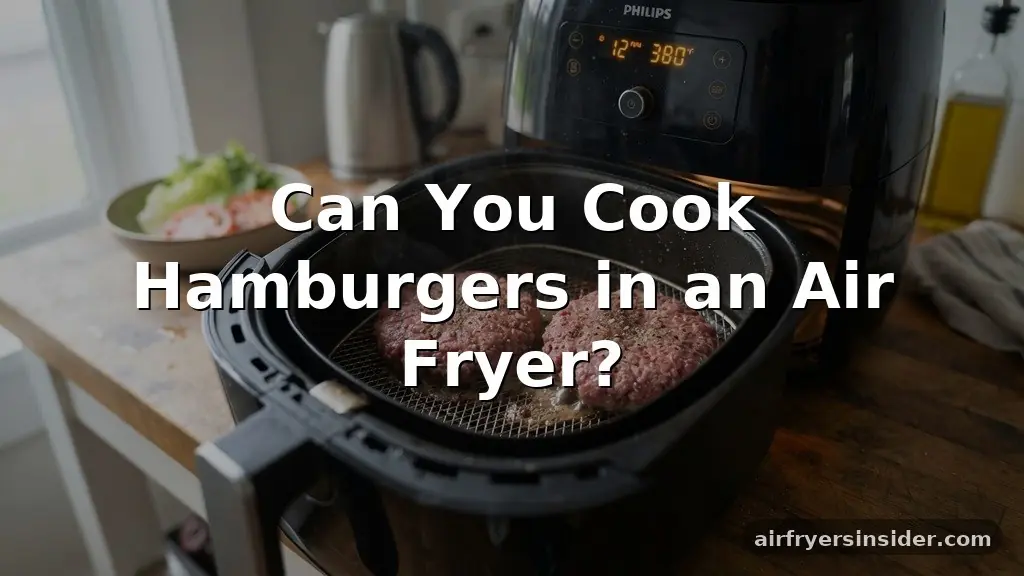
If you have ever wondered whether you can cook hamburgers in an air fryer, the short answer is a resounding yes. Many home cooks are moving away from the traditional stovetop or outdoor grill in favor of this appliance because of its convenience and speed. By utilizing rapid hot air circulation, you can achieve a result that is remarkably similar to a pan-seared patty, complete with a flavorful crust.
Understanding how to manage the process properly ensures that your burgers stay juicy on the inside while developing a pleasant exterior texture. Mastering this method allows you to enjoy a classic meal without the hassle of excessive smoke or cleanup.
Understanding the Mechanics of Air Fryer Cooking
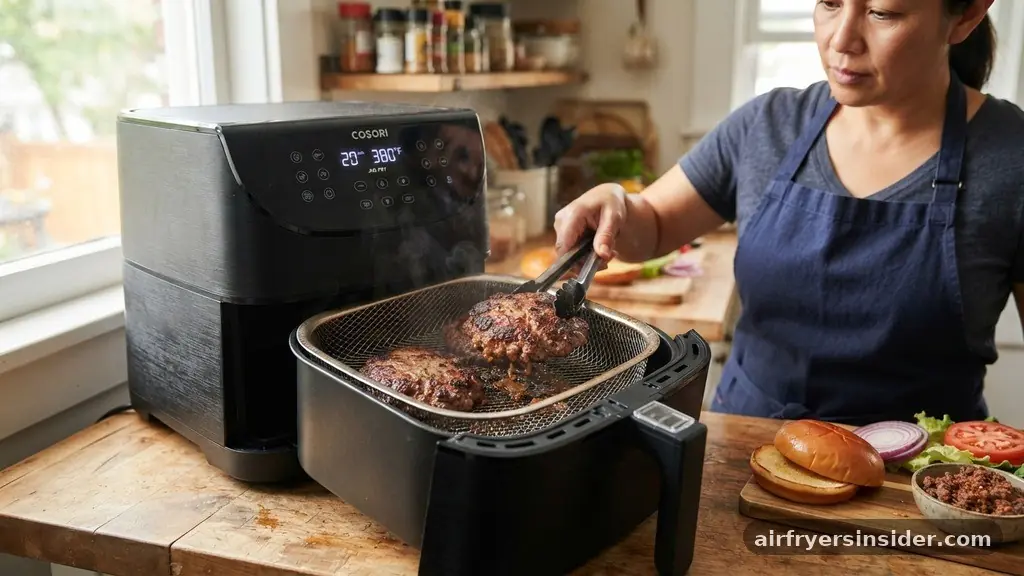
The science behind why you can cook hamburgers in an air fryer so effectively lies in the appliance’s design. At its core, an air fryer is a compact, high-powered convection oven. It uses a heating element located near the top and a powerful fan to circulate heat at high speeds.
When you place a patty inside, the hot air hits the surface of the meat instantly. This process mimics the Maillard reaction, which is the chemical interaction between amino acids and reducing sugars that gives browned food its distinctive, savory flavor.
Unlike a standard oven, which relies on ambient heat, the air fryer forces heat into the meat, significantly reducing cooking time. Because the space is small, the heat density is much higher than in a conventional oven. This is why you can achieve a level of browning that you might otherwise struggle to get without a cast-iron skillet.
However, this intensity requires careful management of the internal temperature to ensure the center of the patty doesn’t remain raw while the exterior overcooks. Achieving that perfect balance is the primary goal for any home cook using this method.
Selecting the Right Ground Beef for Best Results
The quality and composition of your ground beef play a massive role in how your burger turns out. For the best flavor and juiciness, most chefs recommend a fat content of 20 percent.
If you choose lean beef, you run the risk of the burger drying out, as the air fryer’s convection process is very efficient at pulling moisture from the meat. Conversely, choosing meat with at least 20 percent fat ensures there is enough rendering to keep the patty moist during the relatively short cooking cycle.
When shaping your patties, uniformity is your best friend. Try to make them about three-quarters of an inch thick and slightly wider than your burger buns. Because meat tends to shrink as it cooks, a wider patty ensures you have a good bun-to-meat ratio once it is finished.
You should also consider pressing a small dimple into the center of each patty with your thumb. This prevents the burger from puffing up into a ball shape as it cooks, helping it stay flat and ensuring even patty thickness across the entire surface.
Managing Grease and Smoke During Cooking
One of the most common concerns when people ask if you can cook hamburgers in an air fryer is the potential for mess. Because burgers release a significant amount of fat, that grease can drip into the bottom of the basket. If the grease hits the heating element or gets too hot, it can cause smoke.
To handle this, always ensure your drip tray is clean before you start. Many modern units, such as the Ninja Foodi or Cosori, are designed with decent grease management, but you can improve the experience by adding a small amount of water or a slice of bread to the bottom of the tray to soak up drippings.
If you find that your kitchen gets smoky, it is usually because the fat is burning on the bottom of the unit. You can mitigate this by placing a small piece of parchment paper under the burgers, but you must be careful. Never put parchment paper in the air fryer during the preheating phase, as it can blow into the heating element and catch fire.
Only add the paper once the patties are resting on it, which holds it down securely. This simple trick also makes cleaning up the basket significantly easier after the meal is done.
Temperature Settings and Cooking Durations
To get the best results, you need to be precise with your degrees Fahrenheit. Most recipes suggest cooking at 375 to 400 degrees Fahrenheit. If you prefer your burgers with a bit more of a crust, 400 degrees is the way to go.
If you want a more gentle cook that keeps the middle tender, 375 degrees is safer. The total time depends on the thickness of the patty and your desired level of doneness. Generally, a standard-sized burger takes about 8 to 12 minutes to reach a medium-well state.
| Doneness Level | Internal Temperature | Estimated Time (at 375°F) |
|---|---|---|
| Medium | 140°F – 145°F | 8-9 Minutes |
| Medium-Well | 150°F – 155°F | 10-11 Minutes |
| Well Done | 160°F+ | 12+ Minutes |
It is vital to use a meat thermometer to verify the doneness. Relying on visual cues or time alone can be risky, especially with ground meat. USDA guidelines recommend an internal temperature of 160 degrees Fahrenheit for ground beef to ensure food safety. While some people prefer their burgers slightly pink, using a thermometer is the only way to guarantee you are hitting the safety target while avoiding overcooking.
The Role of Preheating and Airflow
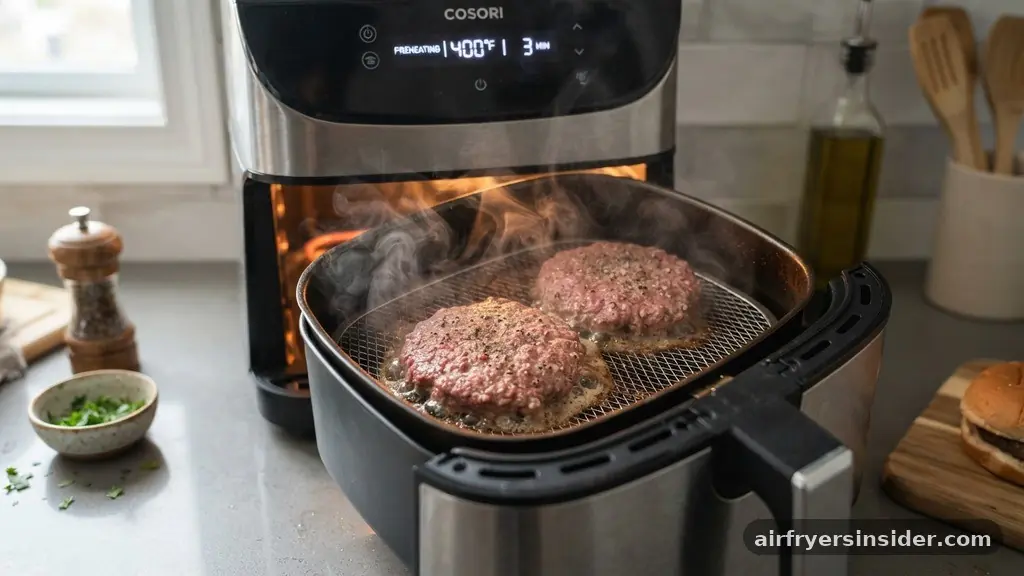
Does your air fryer need to be preheated? While many manufacturers claim their units don’t require it, preheating is highly recommended when cooking proteins like burgers. When you place a cold patty into a cold basket, the meat starts to steam rather than sear.
By running the machine empty for three to five minutes at the target temperature first, you ensure that the cooking process begins the moment the meat touches the basket. This is essential for achieving that desirable char-grilled flavor and texture.
Furthermore, you must never overcrowd the basket. Proper air circulation is the engine that makes the air fryer work. If you stack the patties or crowd them so there is no space between them, the hot air cannot hit the sides of the meat.
This leads to uneven cooking and a grey, unappealing exterior. If you are cooking for a crowd, work in batches. It is much better to cook two or three burgers at a time and keep them warm in a low-temperature oven than to cram five burgers into a space meant for two.
Handling Frozen Patties Successfully
Many people choose to use frozen patties for their convenience. The good news is that you absolutely can cook frozen burgers in an air fryer. The process is similar to using fresh meat, but you will need to increase the cooking time by about three to five minutes.
Because the meat starts frozen, the exterior will thaw and start to sear while the interior is still icy. This actually helps prevent the inside from overcooking while the outside develops a crust.
When using frozen patties, it is even more important to monitor the temperature. Since you aren’t shaping the meat yourself, you have less control over the thickness. Check the internal temperature after about 10 minutes and adjust as needed.
Some frozen patties have a higher fat content, so keep an eye on the fat splatter and smoke levels. If you notice a lot of smoke, you might want to pause the cycle, carefully drain some of the grease from the bottom of the basket, and then finish the cooking process.
Toasting Your Buns and Final Assembly
A great burger is about more than just the meat. Bun toasting is a step that many people skip, but it makes a world of difference in the final product. Once your burgers are done and resting, you can toss your buns into the air fryer for the last 60 seconds of cooking.
The residual heat and circulating air will toast the cut side perfectly. This creates a barrier that prevents the juices from the meat from making the bread soggy, ensuring every bite has a pleasant crunch.
After toasting the buns, let the meat sit for a moment. A short resting period of two to three minutes allows the juices to redistribute throughout the patty.
If you bite into a burger immediately after taking it out of the air fryer, the juices will run out onto the bun or your plate. Giving the meat a brief rest keeps those juices inside the patty where they belong, resulting in a much more flavorful and satisfying eating experience.
Addressing Common Misconceptions and Gaps
There is a common belief that air fryer burgers are just “dried out pucks.” This usually happens when people cook them for too long or use meat that is too lean. Another gap in common knowledge is the difference between air frying and actual grilling.
You won’t get the exact smoky essence of charcoal, but you can mimic it by adding a drop of liquid smoke to your seasoning rub or using a high-quality smoked paprika. The air fryer is not a replacement for a charcoal grill, but it is a superior tool for consistent, indoor, year-round burger preparation.
Some users worry about the health aspects of air frying. While it is true that much of the fat drains away into the basket, this does not mean the burger is “healthy” in a dietary sense; it simply means you are consuming less of the rendered fat that would otherwise be absorbed by the patty if cooked in a pan.
The biggest benefit is the lack of added oils. You do not need to brush the patties with oil before cooking, as the natural fat content is more than enough to facilitate the browning process.
FAQ: Frequently Asked Questions
Can you put raw hamburger in an air fryer?
Yes, you can absolutely put raw ground beef patties into an air fryer. It is one of the most efficient ways to cook them. Just ensure the patties are shaped consistently, you don’t overcrowd the basket, and you use a thermometer to reach the safe internal temperature of 160 degrees Fahrenheit.
Are air fryer hamburgers any good compared to grilled ones?
They are very good, though the taste is slightly different. They won’t have the smoky, charcoal-infused flavor of an outdoor grill, but they are incredibly juicy and develop a fantastic, crispy exterior crust. They are often more convenient, faster, and produce less mess than traditional stovetop or outdoor grilling methods.
What foods should you never put in an air fryer?
While you can cook almost anything, avoid putting loose, wet batters in an air fryer, as they will drip through and create a mess. Also, avoid extremely light items like leafy greens that can fly up into the heating element and burn, or cheese-topped items that aren’t contained, as the cheese will melt and slide off.
How do you cook burgers in an air fryer without making a mess?
To minimize mess, clean the drip tray before starting. You can place a slice of bread or a small amount of water at the bottom of the tray to catch grease. Avoid using too much oil on the patties, as the fat they release is enough for the cooking process.
Final Thoughts on Air Fryer Burgers
Mastering the art of the air fryer burger comes down to a few simple habits: choosing the right fat content, monitoring your temperature, and respecting the need for airflow. Once you get the timing down for your specific appliance, you will find that this method provides a level of consistency that is hard to achieve with other cooking tools. It is a reliable, efficient way to prepare a classic meal without the need for an outdoor setup or a greasy stovetop experience.
If you haven’t tried it yet, grab some quality ground beef and experiment with your next dinner. You will likely find that this technique earns a permanent spot in your weekly rotation for its simplicity and superior results.
Meta Description: Learn how to cook hamburgers in an air fryer perfectly every time with our expert tips on temperature, meat selection, and grease management.


