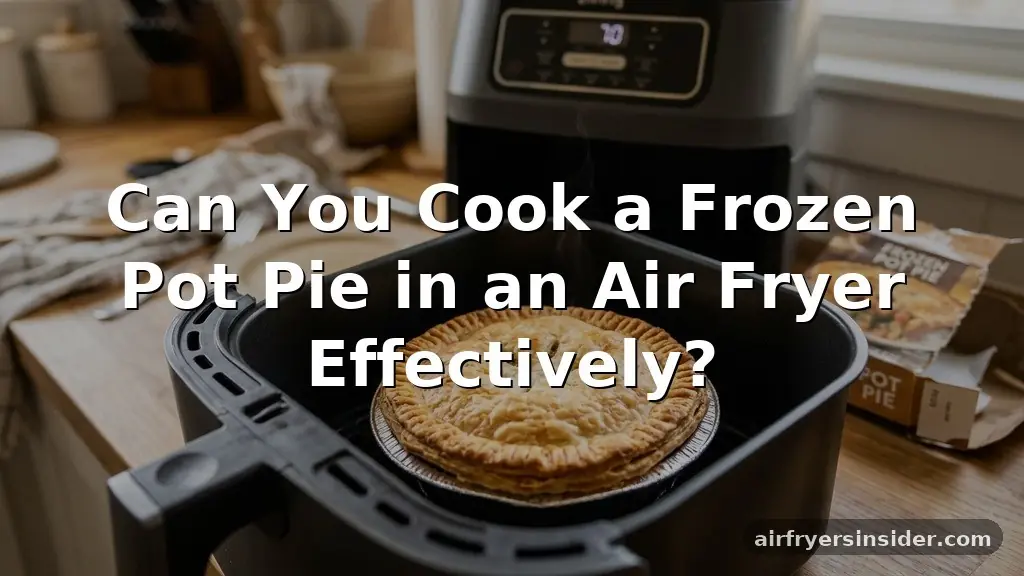
Many home cooks are looking for ways to speed up dinner prep, and wondering if you can cook a frozen pot pie in an air fryer is a common question. The short answer is yes, you absolutely can, and it often produces a far superior result compared to a standard oven.
By utilizing the rapid convection cooking technology inherent in these countertop appliances, you can transform a standard frozen meal into a dinner with a perfectly flaky, golden brown exterior. This method bypasses the long preheating times of traditional ovens while ensuring the pastry crust achieves the ideal texture that many microwave-reliant methods lack.
Understanding the mechanics of your appliance is the first step toward success. Because an air fryer works by circulating intense heat around the food, it mimics the effect of a high-end convection oven on a smaller, more efficient scale.
When you decide to cook a frozen pot pie in an air fryer, you are essentially leveraging that powerful convection fan to drive moisture out of the crust, creating that signature crunch. This guide breaks down the science, the safety, and the step-by-step process to ensure your meal is cooked evenly throughout every single time.
Why Air Frying Is Better Than Conventional Baking
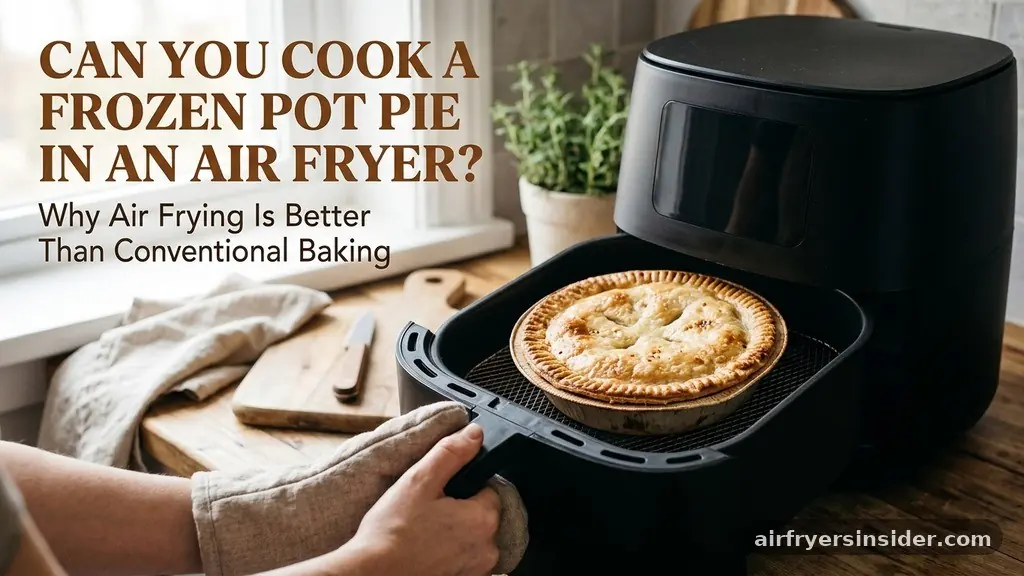
When you compare standard oven baking to air frying, the primary difference lies in the volume of space and the intensity of air circulation. An oven is a large, cavernous space that requires significant time to reach a stable temperature, and even then, heat distribution can be uneven.
In contrast, an air fryer creates a high-velocity environment where hot air is pushed directly onto the surface of the food. This is particularly beneficial for a savory pie, as the pastry crust requires consistent, high-heat exposure to puff up and become crispy without the filling becoming overly hot or boiling over.
The efficiency of this process is rooted in the appliance’s wattage and the size of the air fryer basket. Smaller, more compact units tend to circulate air more aggressively, which often translates to a faster cooking time. If you have ever felt disappointed by a soggy, limp bottom crust on a pot pie baked in an oven, the air fryer is the solution you need.
The direct heat effectively crisps the dough from the top down, while the ambient heat inside the chamber gently warms the interior filling. This dual-action approach is why many home cooks are switching to this method for their quick weekday dinners.
Managing the Aluminum Foil Tray and Safety Concerns
A frequent point of confusion involves the packaging that comes with most store-bought items, such as a classic Marie Callender’s or Swanson product. Most of these come in a thin aluminum foil tray designed for oven use. You might wonder if it is safe to place this directly into your appliance.
Generally, it is safe to put the original foil tray into an air fryer, provided that the tray does not touch the heating element at the top of the unit. If the tray is too close to the element, it can cause sparking or damage to the appliance, which is a major safety hazard.
If your specific air fryer basket is quite small and the foil tray is a tight fit, you have a few options to ensure even cooking and safety. You can carefully remove the pot pie from its original packaging and place it on a small piece of parchment paper or directly onto a heat-safe ramekin that fits inside the basket.
Removing the tray entirely can actually improve the air circulation around the bottom of the pie, leading to an even crispier crust. Always check your manufacturer’s manual to confirm the maximum temperature and material restrictions for your specific model.
Determining the Right Temperature and Cooking Time
Achieving the perfect balance between a crisp exterior and a steaming hot center requires dialing in the right settings. Most frozen pot pies are designed to be cooked at 400 degrees Fahrenheit in a conventional oven.
When transitioning to an air fryer, you should start by slightly lowering that temperature to avoid burning the top crust before the center is cooked through. A temperature of 350 to 375 degrees Fahrenheit is usually the sweet spot for most standard-sized pies.
The cooking time will vary based on the size of the pie and the wattage of your air fryer. As a general rule, you should plan for 20 to 30 minutes of total time. It is helpful to start checking the progress at the 15-minute mark to see how the crust is browning.
If the top becomes golden brown too quickly, you can loosely tent a small piece of aluminum foil over the top of the pie to prevent it from burning while the rest of the filling finishes heating. This simple adjustment ensures that you get a perfectly cooked meal without the common pitfalls of uneven heating.
Ensuring Food Safety with Internal Temperature Checks
While the visual cue of a golden brown crust is a great indicator of readiness, you must prioritize food safety when preparing frozen convenience food. The center of a pot pie contains gravy and meat, which must reach a safe internal temperature to ensure that any potential bacteria are eliminated.
Relying solely on the timer is not as accurate as using a food thermometer. You want the center of the pie to reach at least 165 degrees Fahrenheit.
To measure this accurately, carefully insert the probe of your thermometer into the thickest part of the filling, avoiding the very bottom of the crust if possible to get a true reading of the gravy. If the center is still cold or lukewarm, simply return the pie to the air fryer for another three to five minutes.
This extra step is essential, especially if you are cooking a larger, deep-dish variety of savory pie that takes longer for the heat to penetrate the dense, frozen center. Never guess when it comes to the safety of your food.
Optimizing Air Circulation for Even Browning
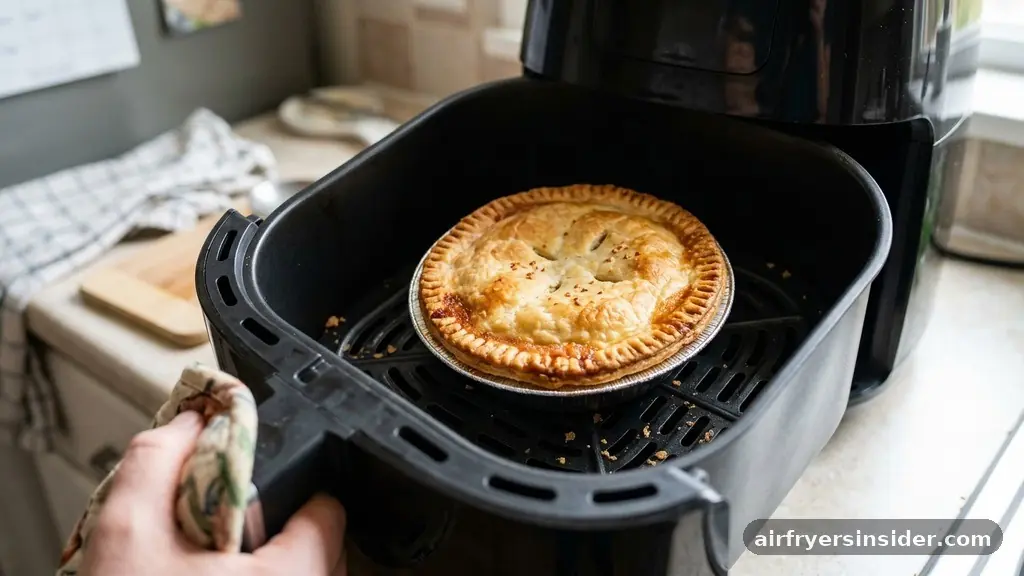
The secret to a professional-quality crust in an air fryer is maximizing the flow of hot air. If you crowd your air fryer basket, you are essentially steaming the food rather than air frying it.
If you are cooking multiple smaller pot pies, ensure there is at least an inch of space between them and the walls of the basket. This gap allows the convection fan to push air around the sides of the pies, ensuring that the edges get just as crispy as the top.
If you find that your pot pie is browning unevenly, you can rotate the tray halfway through the cooking process. Even though air fryers are designed for even distribution, some models have “hot spots” near the back or the sides of the basket.
A quick rotation can correct any minor inconsistencies in browning. Additionally, avoiding the use of too much oil or extra toppings that might drip down can keep the airflow clear and prevent smoking during the cooking cycle.
Addressing Topical Gaps: Common Pitfalls
Many people struggle with the “soggy bottom” issue, which happens when the moisture from the filling is trapped by the crust. A common mistake is to keep the pie in its original, high-walled foil tray for the entire duration.
If you find the bottom is not crisping up, try removing the pie from the tray halfway through the cooking time and placing it directly onto the air fryer rack or a piece of perforated parchment paper. This allows the air to hit the bottom crust directly.
Another gap in knowledge involves the difference between “reheating” and “cooking from frozen.” If you are reheating a leftover pie, you need significantly less time—usually about 8 to 10 minutes at 320 degrees Fahrenheit.
Many users mistakenly use the same high-heat setting for reheating as they do for the initial cook, which often leads to a dried-out, hard crust. Always adjust your settings based on whether the food is starting from a frozen state or if it is already cooked and simply needs a temperature boost.
Comparison of Cooking Methods
The following table provides a quick reference for how different methods affect the final texture and time requirements for a standard frozen pot pie.
| Cooking Method | Cooking Time | Crust Quality | Ease of Use |
|---|---|---|---|
| Conventional Oven | 45-60 Minutes | Good, but often uneven | Low (Long preheat) |
| Microwave | 5-8 Minutes | Soft, soggy, pale | High |
| Air Fryer | 20-30 Minutes | Excellent, flaky, crispy | Medium (Tray management) |
Essential Tips for the Best Results
To get the most out of your experience, consider these best practices that seasoned air fryer users swear by. First, always preheat your air fryer for at least three to five minutes before putting the pie inside.
This ensures that the cooking cycle begins at the optimal temperature, which is crucial for the pastry to rise and flake properly. A cold start can lead to a denser, more doughy crust that lacks the desired crunch.
Second, consider the type of pastry crust you are working with. Puff pastry, which is common in many savory pies, is very sensitive to heat. If you notice it browning too fast, don’t hesitate to use the aluminum foil tenting method mentioned earlier.
Finally, let the pie rest for two to three minutes after taking it out of the air fryer. This allows the filling to thicken slightly, making it easier to slice and preventing the molten gravy from spilling out immediately upon the first cut.
Common Mistakes to Avoid
Even with a reliable appliance, there are a few common errors that can ruin your dinner. One is ignoring the wattage of your specific unit. If you have a high-wattage air fryer (1700W or higher), it will likely cook faster than a smaller, lower-wattage unit.
Always err on the side of caution and check your food earlier than the recipe suggests. Another mistake is using non-stick cooking spray directly on the basket if it isn’t necessary. Many frozen pies have enough butter or fat in the crust that they won’t stick to a well-maintained basket, and excess spray can lead to a sticky, gummy buildup over time.
Also, avoid the temptation to cook a “jumbo” or “family-sized” pot pie in a small air fryer. These units are designed for individual portions. If the pie is too large, the top will burn while the center remains frozen.
If you have a larger family, it is better to cook individual pies in batches or stick to the oven for larger formats. Keeping the food size proportional to the air fryer capacity is the most important rule for consistent, high-quality results.
FAQ Section
Can I put a frozen pot pie in an air fryer while it is still in the paper or cardboard box?
No, you should never place the cardboard box or any paper packaging inside the air fryer. Only the metal foil tray that the pie comes in is safe to use. Always remove all external cardboard packaging before placing the pie into the air fryer basket.
Do I need to spray the pot pie with oil before air frying?
You generally do not need to add extra oil. The pastry crust of most frozen pot pies already contains enough fat to achieve a golden brown finish. Adding more oil might lead to excessive smoke or an overly greasy crust, so it is best to skip it.
What should I do if the crust is browning too fast but the center is still cold?
This is a common issue with thicker pies. Simply place a small piece of aluminum foil over the top of the pie to act as a shield. This allows the convection air to continue heating the center without further browning or burning the delicate pastry crust.
Is it safe to use parchment paper in the air fryer?
Yes, using parchment paper is safe as long as it is weighed down by the food. Never place a loose sheet of parchment paper in the air fryer without the food on top, as the fan can blow it into the heating element, which creates a fire hazard.
Conclusion
Learning how to properly prepare a quick meal in your air fryer can significantly change your nightly routine for the better. When you decide to cook a frozen pot pie in an air fryer, you are choosing a method that prioritizes texture and speed without sacrificing the quality of the pastry. By following the guidelines regarding temperature, safety, and tray management, you can achieve a result that rivals a traditional oven in a fraction of the time.
Whether you are grabbing a quick lunch or a late-night dinner, this technique ensures your savory pie is hot, crispy, and ready to eat whenever you are. Next time you reach for that box in the freezer, skip the microwave and let your air fryer do the heavy lifting for a much more satisfying meal.