

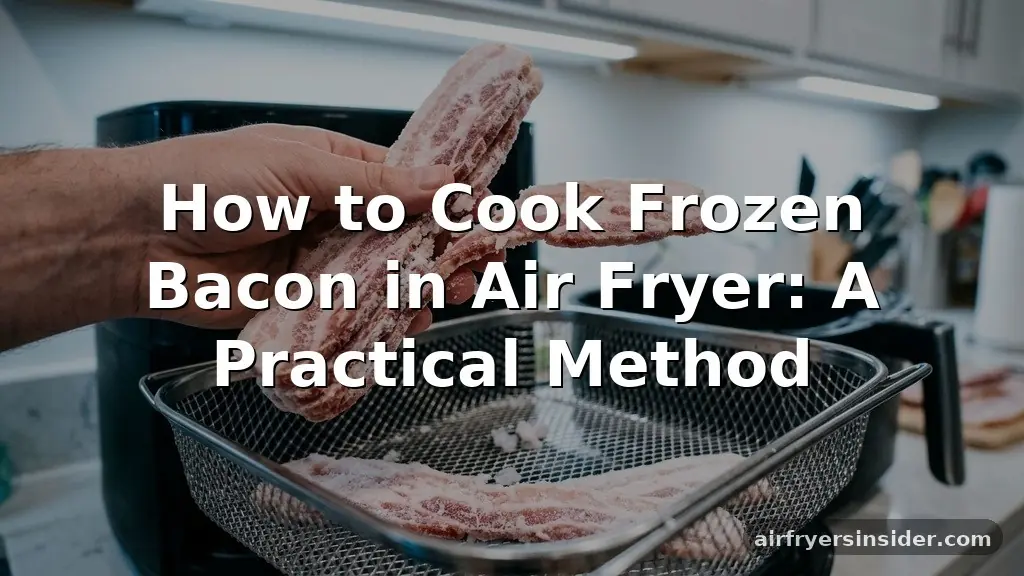
Learning how to cook frozen bacon in air fryer setups is a clever way to save time when you’ve forgotten to thaw your breakfast meat. Many home cooks assume you need to defrost pork belly slices before they hit the heat, but the high-velocity convection of an air fryer handles the transition from frozen to crispy with ease.
By understanding the mechanics of how these kitchen appliances manage heat, you can achieve a perfect result without the usual mess of stovetop frying. This approach ensures you get that classic crunch while maintaining the integrity of the meat, making it a reliable technique for quick meal preparation on busy mornings.
Understanding the Mechanics of Air Frying Frozen Meat
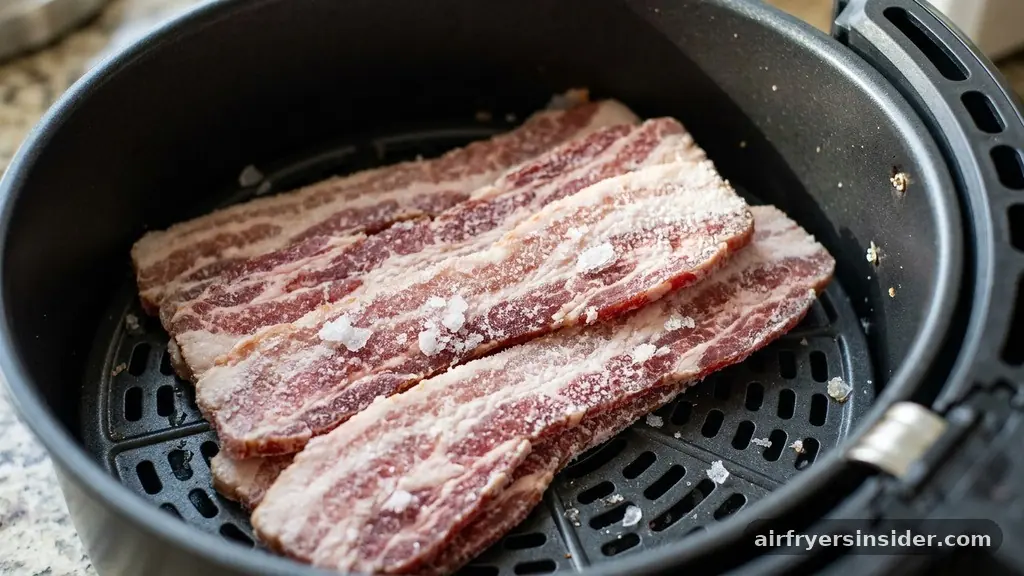
When you place frozen food into an air fryer, you are essentially using a powerful convection oven that circulates hot air at high speeds. Unlike a traditional oven, which might take longer to penetrate a frozen block of meat, an air fryer creates a concentrated environment where the exterior begins to crisp almost immediately.
Because bacon strips are typically thin, they are uniquely suited for this method. The intense airflow helps to separate the strips as they thaw, allowing the heat to reach all sides of the pork belly efficiently.
The primary concern when cooking from frozen is ensuring that the center reaches a safe temperature before the outside burns. Because the air fryer temperature is adjustable, you can start at a moderate level to allow the meat to thaw gently, then increase it toward the end to maximize the crispy texture.
This two-stage approach prevents the edges from turning into charcoal while the middle remains cold or undercooked. It is a balancing act of time and thermal energy that rewards a bit of patience.
Essential Safety Precautions and Food Quality
Maintaining proper food safety standards is non-negotiable when dealing with raw pork products. Even though air fryers are efficient, you must ensure that your bacon reaches an internal temperature that eliminates any risk of foodborne illness.
Using a meat thermometer is the most accurate way to verify that your bacon is fully cooked. While bacon is thin and often difficult to probe, you should aim for a deep brown color and a rigid structure, which usually indicates that the fat has properly rendered and the meat is safe to consume.
Another aspect of quality control involves managing the grease. As the fat renders, it drips through the grate into the bottom of the appliance basket. If you are cooking a large batch, this accumulation can lead to smoking if the fat hits the heating element.
Always monitor your kitchen ventilation, as cooking fatty meats at high temperatures can occasionally produce smoke. Keeping the air fryer clean and ensuring that you aren’t overloading the basket will help you avoid unnecessary smoke and ensure the highest possible food quality.
Step-by-Step Process for Perfect Results
To start, you don’t need to do much prep work. Simply remove the bacon from the freezer and place the frozen block directly into the basket. Many people worry about the bacon sticking together, but as the air circulates, the individual strips will naturally loosen.
It helps to check the progress after the first few minutes. Once the edges start to curl, you can use tongs to carefully separate the strips if they remain joined.
Here is a recommended approach for achieving consistent results:
- Preheat your air fryer for 3-5 minutes to ensure a steady initial heat.
- Place the frozen bacon in a single layer if possible, though a frozen brick will work if you have a larger basket.
- Set the air fryer temperature to 350°F (175°C) to allow for gradual thawing.
- Increase the heat to 400°F (200°C) for the final 3-5 minutes to achieve that signature crunch.
- Use tongs to flip the pieces halfway through the process to ensure even browning.
- Drain the finished bacon on a paper towel to remove excess rendered fat.
Managing Grease and Smoke Points
One of the biggest hurdles when frying bacon is the sheer amount of liquid fat produced. When you cook bacon in an air fryer, this rendered fat can be a blessing or a curse.
If the fat pools at the bottom of the basket, it can reach its smoke point and start to fill your kitchen with haze. To mitigate this, consider placing a small piece of parchment paper or a specialized bacon rack at the bottom of the basket.
However, be cautious with parchment paper, as it can be blown around by the high-velocity fans, potentially covering the food or touching the heating element. If you choose to use liners, ensure they are weighed down by the food.
Alternatively, simply pouring off the grease halfway through the cooking time is a highly effective way to keep the smoke level low. This small habit significantly improves the overall experience and keeps your kitchen air clean and fresh.
Comparison of Cooking Methods
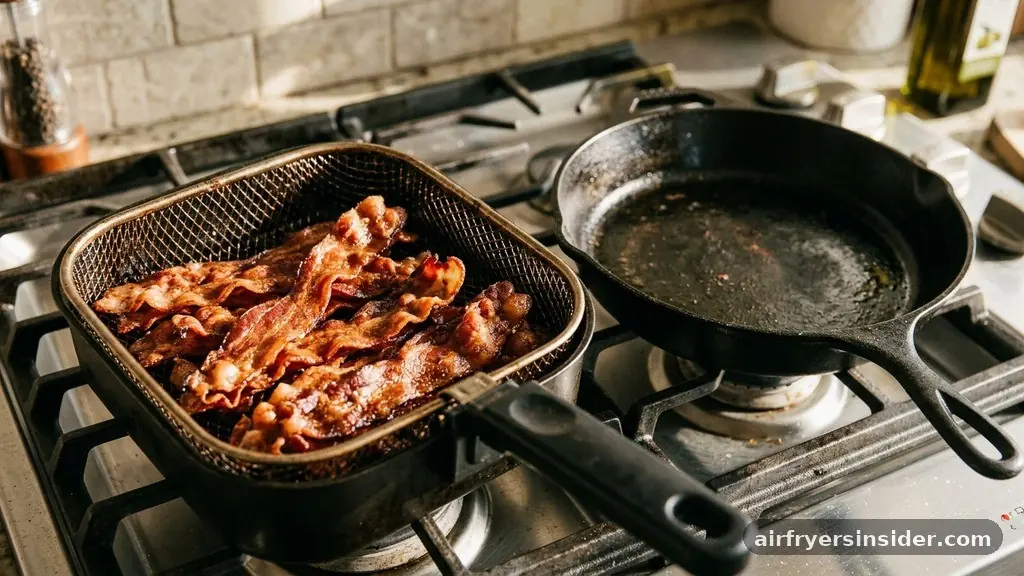
Choosing the right method for your bacon depends on your equipment and how much time you have. While the air fryer is superior for speed and texture, other methods have their own merits. Understanding these differences helps you decide when to use your air fryer versus a traditional pan or oven.
| Method | Speed | Texture | Cleanup |
|---|---|---|---|
| Air Fryer | Fast | Extra Crispy | Moderate |
| Stovetop | Medium | Variable | High |
| Oven | Slow | Even | Low |
The table above illustrates why many home cooks are switching to air fryers. The combination of speed and the ability to achieve an extra crispy texture without constant monitoring makes it a favorite for busy households. While cleanup for a pan can be messy due to grease splatter, the air fryer basket is usually dishwasher safe, making the post-meal process much simpler.
Addressing Common Topical Gaps
A common question that arises is whether you need to use cooking spray before starting. Generally, bacon is high in fat, so adding extra oil is rarely necessary. In fact, adding oil can increase the risk of smoking.
Stick to the natural fat content of the pork to achieve the best results. Another gap in knowledge involves the size of the bacon cut.
Thick-cut bacon will naturally require more time than thin-cut strips. Always adjust your cooking time based on the thickness of the meat, rather than strictly following a timer.
Furthermore, many users wonder if they can cook other items simultaneously. While it is tempting to throw in eggs or hash browns, the grease splatter from the bacon will contaminate other foods.
It is best to cook your bacon in isolation to ensure that the flavors remain distinct and the cooking environment stays manageable. Finally, don’t worry about the residual heat in the appliance; it will continue to cook the bacon for a minute or two after you turn it off, so pull the bacon out just before it reaches your desired level of crispness.
Optimizing the Appliance for Best Texture
Airflow is the secret ingredient to success. If you pack the bacon too tightly, the air cannot reach the center of the strips, leading to uneven cooking.
Even if you start with a frozen block, make sure that as the strips thaw, you spread them out to maximize the surface area exposed to the hot air. This ensures that every inch of the bacon strip gets that beautiful, golden-brown finish.
If you find that your bacon is not getting crispy enough, it is likely due to the grease buildup. When the strips are submerged in their own rendered fat, they are essentially frying in a pool, which can lead to a chewy texture rather than a crunchy one. By ensuring the fat has a way to drain away—either through the holes in the basket or by removing it manually—you allow the hot air to dry out the meat, which is the key to creating that desirable crispy texture.
Troubleshooting Common Issues
If your bacon is burning on the edges but raw in the middle, you are likely using too high a temperature too early. Lowering the starting temperature is a simple fix that allows the heat to penetrate the frozen core without scorching the exterior.
If you notice your kitchen is filling with smoke, check the heating element for any residue from previous meals. Sometimes, a dirty air fryer is the culprit, not the bacon itself.
Another issue is bacon that sticks to the basket. While most air fryers have non-stick coatings, some brands are more prone to sticking than others. If you struggle with this, a very light coating of oil on the basket grate can help, though it is usually unnecessary if the bacon has a high enough fat content.
If the bacon is consistently too salty or greasy, try patting it dry with a paper towel before placing it in the basket. While this seems counterintuitive for frozen items, it can help remove some of the surface ice crystals that turn into steam, allowing for a better sear.
The Role of Timing and Temperature
Cooking time is highly variable depending on the specific model of your air fryer. Some units have more powerful fans, which can cook food significantly faster than others. For this reason, the first time you try this method, treat it as a test run.
Start checking the bacon at the 8-minute mark, even if the recipe calls for 12. Because you are starting from a frozen state, the ice content can affect the initial minutes of cooking.
Always remember that the internal temperature of the air fryer is higher than the actual temperature of the food during the thawing phase. Once the ice has melted and the meat begins to cook, the temperature of the bacon will rise rapidly. This is why vigilance is required in the final minutes.
Standing by for those last few moments will save you from having to start over with a fresh batch. If you are cooking for a large group, plan to work in batches to maintain the quality of the airflow and ensure that every piece is cooked to perfection.
FAQ
Can I cook bacon from frozen in an air fryer?
Yes, you can cook bacon directly from frozen. The air fryer’s high-speed circulation thaws the meat quickly while rendering the fat, resulting in a crispy texture. Simply monitor the process closely to ensure the strips separate as they thaw and don’t burn on the edges.
Do I need to defrost the bacon first?
No, defrosting is not required. Cooking from frozen is a safe and efficient method, provided you monitor the internal temperature. Using a frozen block is fine, as the air fryer’s heat will naturally loosen the strips after a few minutes, allowing them to cook evenly.
How do I prevent smoke when cooking bacon?
Smoke occurs when rendered fat hits the heating element. To prevent this, pour off excess grease halfway through the cooking process or place a piece of bread or a small amount of water at the bottom of the basket to absorb the dripping fat and prevent it from burning.
Is it safe to cook bacon this way?
It is perfectly safe as long as the bacon reaches a proper internal temperature. Because bacon is a thin cut of meat, it cooks rapidly. Always ensure the bacon is browned and crispy, which indicates the fat has rendered and the meat is thoroughly cooked through.
Cooking frozen bacon in your air fryer is a reliable way to get a delicious result when you are short on time. By focusing on airflow, managing the rendered fat, and keeping a close eye on the cooking time, you can consistently achieve the perfect level of crispness without the mess of traditional frying. This method proves that you don’t need to plan ahead to enjoy a hearty breakfast.
Start by experimenting with your specific appliance to find the exact timing that works for your preferred level of crunch, and soon you’ll find that this becomes your go-to technique for quick meal preparation. Enjoy the convenience of this process and the high quality of the results it provides.
Meta Description: Learn how to cook frozen bacon in air fryer with this expert guide. Get perfectly crispy results using simple techniques for quick meal preparation.


