

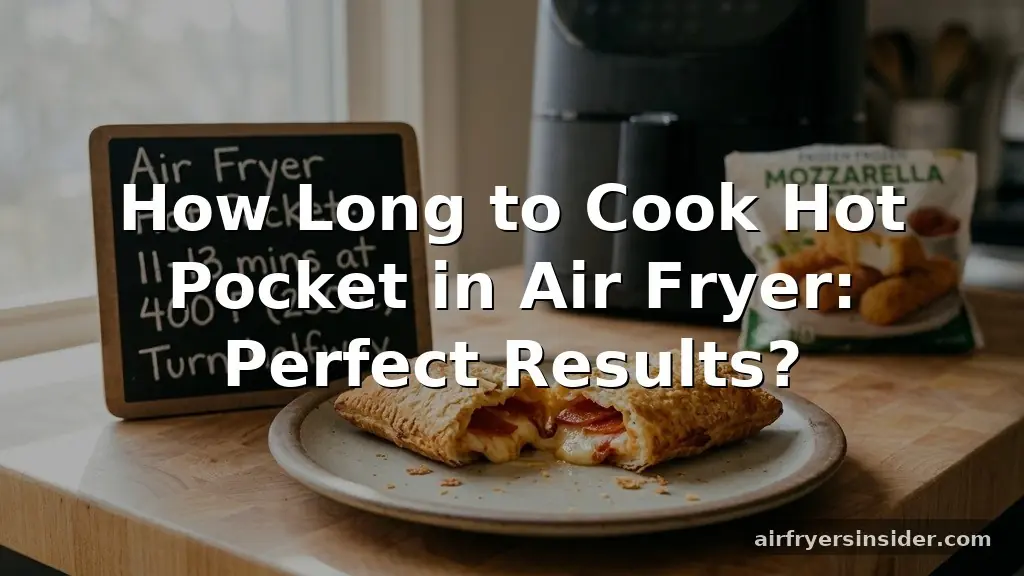
Achieving the perfect texture for a frozen snack often feels like a gamble when you are limited to a traditional microwave. If you have been wondering how long to cook hot pocket in air fryer equipment, you are likely looking for that elusive, flaky pastry crust that microwaves simply cannot replicate. Using high-speed air circulation, your appliance transforms a standard frozen item into a meal that rivals the quality of a convection oven.
By understanding the ideal time and temperature settings, you can ensure your snack reaches the perfect internal temperature without burning the outside. Let’s look at the best methods to achieve a crispy exterior every single time.
Understanding the Air Fryer Advantage for Frozen Snacks
When you decide to transition from microwave heating to using an air fryer, you are essentially switching to a form of compact convection cooking. Microwaves work by exciting water molecules within the food, which often leads to a soggy, chewy texture for bread-based items.
In contrast, the air fryer uses a powerful fan to circulate hot air rapidly around the food. This movement creates a Maillard reaction on the surface, which is the scientific process that browns the crust and provides that satisfying crunch.
Because an air fryer is essentially a high-performance convection oven, it handles pastry crusts significantly better than other kitchen appliances. The intense airflow mimics the effect of a deep fryer but uses only a fraction of the oil, if any at all.
When you place a frozen item inside, the hot air hits the surface immediately, sealing in moisture while simultaneously crisping the outer layer. This balance is crucial for a product like a Hot Pocket, which relies on a distinct contrast between the crunchy exterior and the molten, savory filling inside.
Determining the Ideal Cooking Time and Temperature
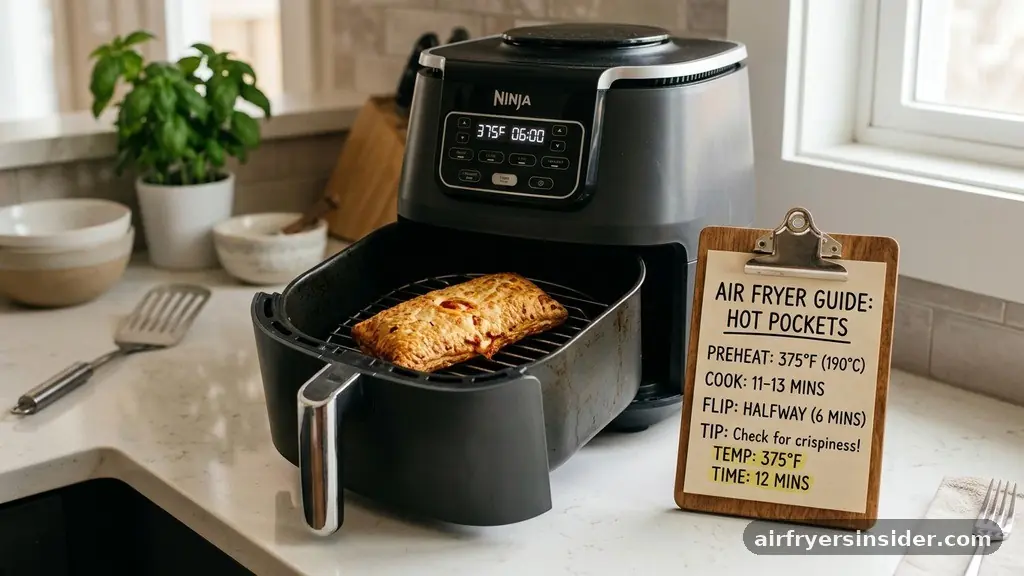
The question of how long to cook hot pocket in air fryer units usually lands on a standard range. For most models, setting your device to 375°F (190°C) is the sweet spot.
At this temperature, you should plan for a cooking time of approximately 12 to 15 minutes. If you prefer a darker, more golden brown finish, you can extend the time by one or two minutes, but you must monitor it closely to prevent the edges from becoming too hard.
It is important to remember that every air fryer—whether it is a Ninja Foodi, a Cosori, or a Hamilton Beach model—has slightly different heating characteristics. Some units run hotter than others, and the size of your basket significantly impacts the air circulation.
If you are cooking two at once, you might need to add a minute or two to the total duration to account for the increased density in the basket. Always start on the conservative side; you can always add more time, but you cannot fix a burnt pastry.
The Role of the Crisping Sleeve and Packaging
Many people wonder if they should keep the proprietary crisping sleeve that comes inside the box when using an air fryer. The short answer is that you generally do not need it. That sleeve is specifically designed to concentrate microwave energy to create heat where it is otherwise lacking.
In an air fryer, the hot air is already doing that work for you. In fact, keeping the sleeve on can actually block the airflow and prevent the sides of the pastry from crisping up properly.
Instead of using the sleeve, place your frozen item directly onto the cooking rack or the bottom of your basket. If your air fryer basket has a non-stick coating that is prone to scratching, you can use a piece of parchment paper, but ensure it is weighted down by the food so it does not fly up into the heating element. By exposing the entire surface of the snack to the circulating air, you ensure an even, golden brown texture across the entire pastry.
Managing Internal Temperature for Food Safety
While getting the outside crispy is the primary goal, you must also prioritize food safety. You want to ensure the center temperature of your snack reaches at least 165°F.
Since Hot Pockets contain pre-cooked fillings like pepperoni pizza or ham and cheese, the primary concern is ensuring the internal mass is thoroughly heated. Using a food thermometer is the most reliable way to check this, especially if you are cooking multiple items at once.
If you do not have a thermometer handy, you can use visual cues to judge whether the item is ready. The pastry should look firm and show a light brown color.
If you notice any steam escaping from the sides, that is a good indicator that the center is hot. However, be careful not to overcook it, as the filling can become extremely hot and potentially burst through the crust, creating a mess in your basket.
Comparing Basket-Style and Oven-Style Air Fryers
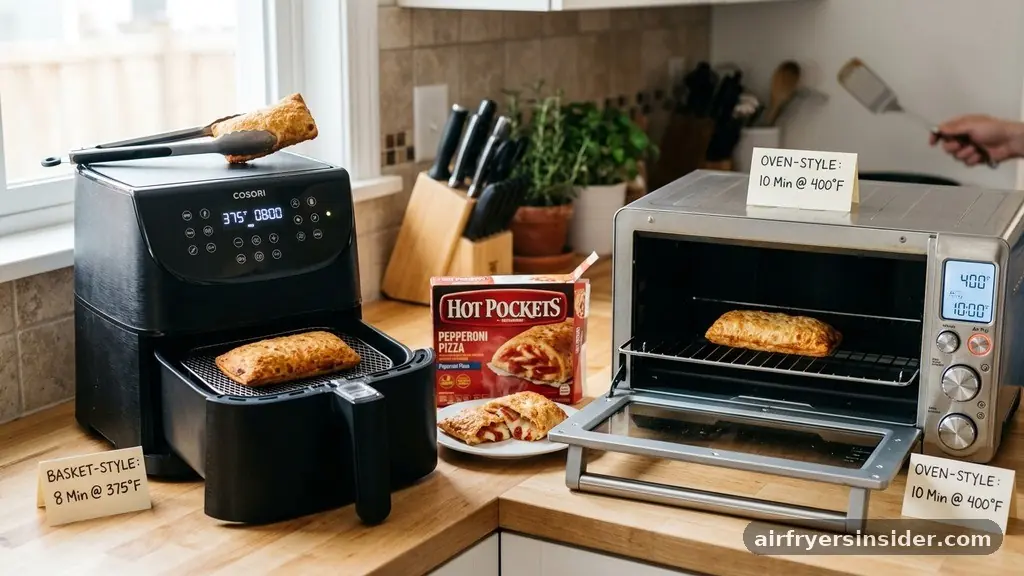
The type of appliance you own changes how you approach the cooking process. Basket-style air fryers are excellent for smaller batches because they create a very concentrated, high-velocity heat zone.
Because they are smaller, they often preheat faster and reach their target temperature with less energy. However, they also require you to be more careful about overcrowding, as restricted airflow will lead to uneven results.
Oven-style air fryers, which often feature glass doors and multiple racks, offer more capacity but slightly less intense airflow than the smaller baskets. If you are using an oven-style unit, you might find that you need to increase the cooking time by a minute or two compared to a basket-style unit.
You also have the advantage of being able to see the food as it browns, which is helpful if you are experimenting with different temperatures. Regardless of the style, the principle remains the same: ensure there is enough space around each item to allow the air to circulate freely.
Addressing Topical Gaps and Common Mistakes
One common mistake is failing to preheat the air fryer. Many users assume that because the unit is small, it doesn’t need to reach temperature first.
Skipping this step means the first few minutes of the cooking process are spent just warming up the chamber, which can lead to a soggy crust. Always run your air fryer at the desired temperature for three to five minutes before adding your food.
Another gap in many guides is the issue of moisture. If you notice your pastry is not getting as crispy as you would like, it might be due to the humidity level in the basket.
This happens if you are cooking multiple items that are too close together. Use the following table to understand how common adjustments affect your final outcome:
| Adjustment | Effect on Cooking | Recommended For |
|---|---|---|
| Lowering Temp to 350°F | Slower, more even heat | Thick, stuffed varieties |
| Increasing Temp to 400°F | Fast, aggressive browning | Thin-crust or smaller snacks |
| Flipping Halfway | Uniform color and texture | Large batches |
Optimizing the Process for Different Varieties
Not all frozen snacks are created equal. A pepperoni pizza variety, for example, has a different density and grease content than a vegetable-based or breakfast-style option.
High-fat fillings like pepperoni can render out during the cooking process, which can lead to a greasier crust if you are not careful. If you are cooking a particularly fatty variety, try placing a small piece of aluminum foil or a heat-safe liner at the very bottom of the basket to catch any drips.
Furthermore, if you are cooking multiple items, avoid stacking them. It is tempting to save time by piling them up, but the air fryer relies on surface area exposure. If one side of your pastry is touching another, that side will remain soft and pale.
Arrange them in a single layer with at least an inch of space between each one to ensure that the hot air can travel all the way around the food. This simple step is the difference between a mediocre meal and a restaurant-quality snack.
Maintaining Your Equipment for Better Performance
To keep your air fryer working optimally for years, routine maintenance is essential. After cooking, especially if you have had cheese or filling leak out, ensure you clean the basket thoroughly once it has cooled down.
A buildup of grease on the bottom of the basket can lead to smoking during your next cooking session. Most baskets are dishwasher safe, but hand washing with a soft sponge is usually better for preserving the non-stick coating.
Additionally, check your heating element periodically. If there is any carbon buildup on the element, it can affect the efficiency of the heat transfer. Use a damp cloth to gently wipe the element if you see any residue.
By keeping the interior clean and the airflow paths clear, you ensure that every time you prepare a snack, the results are consistent. When you treat your appliance with care, it will continue to provide that perfect crunch for all your favorite frozen foods.
Common Questions About Air Frying Frozen Snacks
Can I cook multiple items at the same time?
Yes, you can cook multiple items at once as long as they are not touching. Overcrowding the basket restricts airflow, which is the secret to a crispy exterior. If you need to cook more than two or three at a time, it is better to do them in batches.
What is the best temperature for a crispy crust?
The ideal temperature is 375°F. This setting is high enough to create a golden brown, crispy exterior without burning the pastry before the middle is fully heated. If you find the crust isn’t crisping fast enough, you can bump it up to 400°F for the final two minutes.
Should I use oil or cooking spray?
You generally do not need to add extra oil to a Hot Pocket, as the pastry already contains fat. However, a very light mist of high-smoke-point oil can help if you find your specific brand of pastry is particularly dry or if you want an extra-deep golden color.
Why is the center still cold?
If the center is cold but the outside is brown, your temperature is likely too high. Lower the heat to 350°F and increase the cooking time by three to five minutes. This allows the heat to penetrate the center of the filling without scorching the outer pastry crust.
Knowing how long to cook hot pocket in air fryer units transforms a quick snack into a satisfying culinary experience. By skipping the microwave and utilizing the power of convection, you achieve a level of texture that is simply impossible to replicate otherwise. Remember to preheat your device, avoid overcrowding the basket, and monitor your progress to ensure the internal temperature reaches safe levels.
With these simple adjustments, your frozen snacks will consistently come out with a perfectly crispy exterior and a steaming, delicious center. Experiment with your specific model to find the exact timing that works for your preferences, and enjoy the convenience of high-quality results right from your own kitchen.


