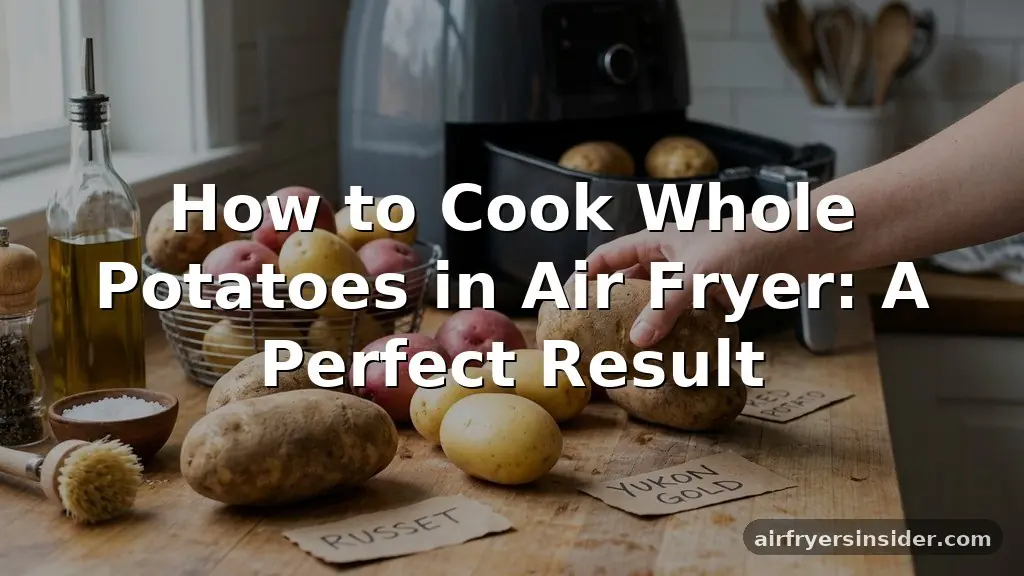
Learning how to cook whole potatoes in air fryer settings transforms a humble pantry staple into a gourmet side dish. By mastering the balance of heat and airflow, you can achieve that sought-after restaurant quality at home. You will find that the process is significantly faster than using a traditional convection oven, saving you precious time without sacrificing the quality of the meal.
Whether you are prepping for a quick weeknight dinner or need a reliable method for perfectly tender spuds, this approach provides the consistency you need. By following these techniques, you ensure a reliable outcome every single time you fire up your appliance.
Selecting the Right Potato Variety
The success of your meal begins long before you turn on the machine. Not all tubers behave the same way under high-heat convection cooking.
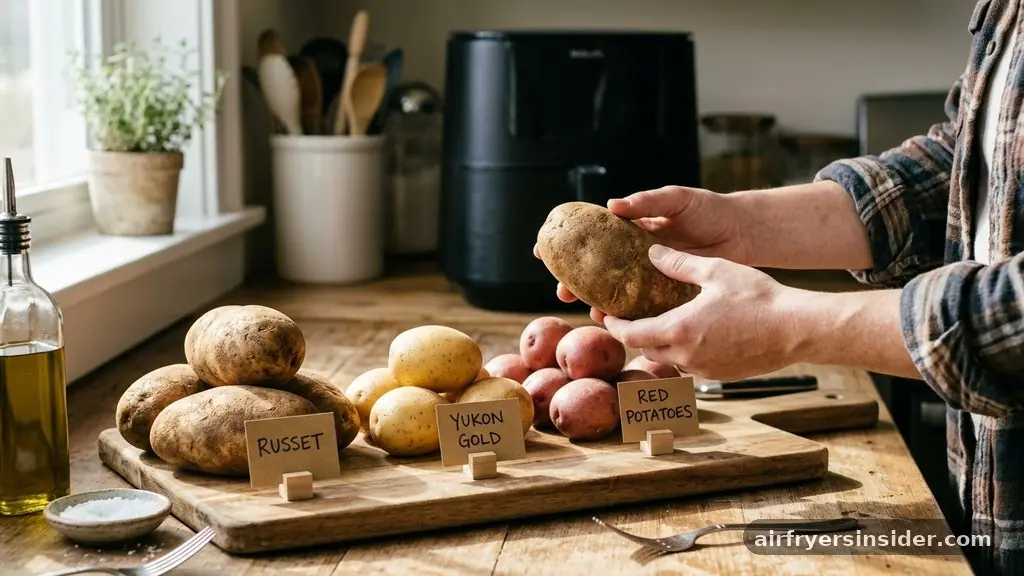
For the best results, you should look for high-starch varieties. Russet potatoes are the gold standard for baking because their high starch content and low moisture ensure a light, airy texture once cooked. When the heat hits the interior, the starch granules swell and separate, creating that signature fluffy interior that pairs perfectly with butter and sour cream.
If you prefer a creamier mouthfeel, Yukon Gold potatoes are an excellent alternative. While they have a slightly waxier texture than Russets, they hold their shape beautifully and offer a richer, more buttery flavor profile.
Avoid red-skinned or waxy varieties if your primary goal is a light, floury center, as these tend to remain firm and dense even after prolonged exposure to heat. Always aim for uniform sizes when cooking multiple pieces at once; this ensures that every potato reaches the desired internal temperature simultaneously, preventing the frustration of having some pieces undercooked while others are perfectly done.
The Importance of Preparation and Surface Treatment
Before placing your potatoes into the air fryer basket, proper preparation is non-negotiable. Start by scrubbing the skins thoroughly under cold running water to remove any dirt or debris.
Once clean, pat them completely dry with a paper towel. Moisture on the surface of the skin is the enemy of a crispy skin finish; if the potato is damp, it will steam rather than roast, resulting in a soggy exterior.
After drying, use a fork to perform fork-piercing all over the surface. This step is essential for food safety and texture. By creating small vents, you allow steam to escape during the cooking process, which prevents the potato from bursting under pressure.
Once pierced, rub the skins lightly with a neutral oil or olive oil. This coating acts as a conductor, helping to transfer heat evenly across the skin. Finally, a generous coating of kosher salt not only seasons the exterior but also draws out residual moisture, contributing to a more textured, flavorful bite that elevates the entire dish.
Understanding Convection Cooking Mechanics
An air fryer is essentially a high-powered, compact convection oven. It works by circulating superheated air at high speeds around the food.
Unlike a standard oven, where heat radiates from the elements and relies on slower air movement, the air fryer forces hot air into every corner of the basket. This high-velocity air circulation is what makes it possible to achieve a deep, golden-brown skin in a fraction of the time required by traditional methods.
Because the air is constantly moving, the thermal conductivity of the skin increases significantly. The hot air strips away the boundary layer of cooler air that usually surrounds food, allowing for faster browning and crisping. However, this intensity means you must be mindful of placement.
If you pack the basket too tightly, you obstruct the airflow, which leads to uneven cooking. Always leave enough space between the potatoes so the air can swirl around them freely. This ensures that the heat penetrates the center of the potato while simultaneously dehydrating and crisping the outer layer.
Optimizing the Cooking Duration and Temperature
Finding the perfect cooking duration is often a matter of trial and error, as air fryer models vary in wattage and efficiency. Generally, cooking whole potatoes at 400 degrees Fahrenheit is the sweet spot for achieving a balance between a crispy exterior and a cooked-through interior. For a medium-sized Russet, this typically takes between 35 and 45 minutes.
It is important to remember that the size of the potato dictates the time. Small baby potatoes might be finished in 20 minutes, while a massive baking potato could require nearly an hour. You should never rely solely on a timer.
Instead, use a meat thermometer to check the internal temperature. A potato is perfectly done when it reaches approximately 205 to 210 degrees Fahrenheit.
At this stage, the starch structure has fully broken down, yielding a fork-tender consistency. Do not forget to account for carry-over cooking; the residual heat inside the potato will continue to soften it for a few minutes after you remove it from the machine.
The Debate Over Aluminum Foil
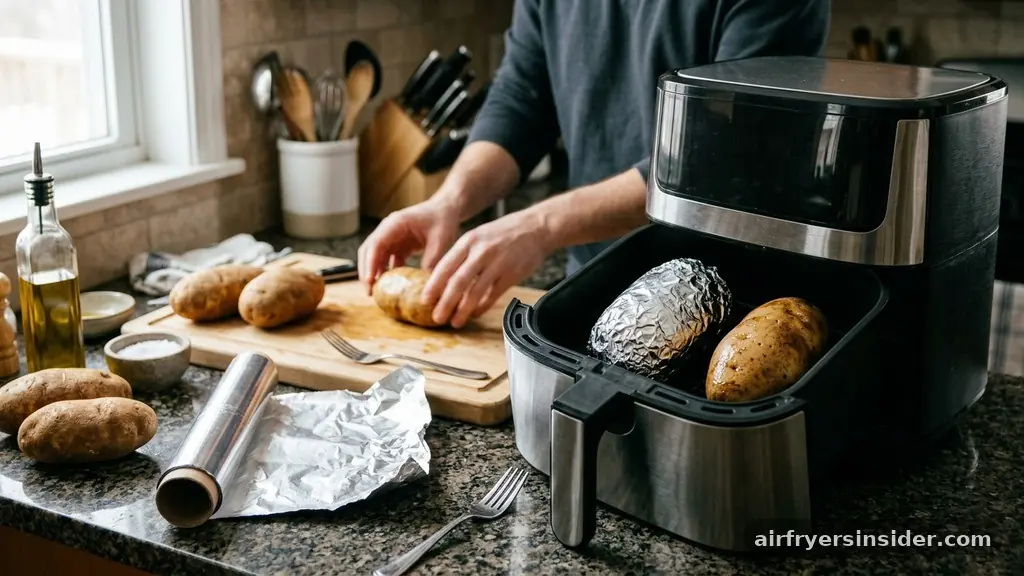
Many home cooks wonder if they should wrap their potatoes in aluminum foil before cooking. While foil is common in conventional oven baking to keep moisture in, it is generally counterproductive when using an air fryer.
If you wrap the potato, you effectively shield the skin from the hot, circulating air. This prevents the Maillard reaction from occurring on the skin, meaning you lose that delicious, salty, crispy crunch.
The only scenario where foil might be useful is if you find your specific air fryer runs exceptionally hot and is burning the skins before the center is cooked. In that case, you might loosely tent the potatoes during the final ten minutes. However, for 95% of recipes, leaving the potatoes unwrapped is the superior method.
You want the air to directly hit the skin to dry it out and crisp it up. By skipping the foil, you also save money and reduce waste, making the process more efficient and environmentally friendly.
Addressing Common Topical Gaps
One question that often arises involves the use of cooking spray versus manual oil application. While sprays are convenient, they often contain propellants that can leave a residue on the non-stick coating of your air fryer basket over time. Applying oil by hand with a brush or a paper towel allows for a more even, controlled coating.
Another common gap is the necessity of preheating. While many manufacturers claim preheating isn’t required, running the unit for three minutes before adding the potatoes ensures the cooking process starts at the target temperature immediately. This consistency helps in achieving a predictable result every time.
Another nuance is seasoning. Many people only salt the outside, but you can create a custom seasoning rub by mixing salt, black pepper, garlic powder, and dried herbs like rosemary or thyme. Applying this rub to the oiled skin before cooking infuses the skin with flavor that permeates the first few layers of the potato flesh.
If you are struggling with uneven browning, try using tongs to rotate the potatoes halfway through the cooking cycle. This simple physical intervention ensures that the bottom of the potato, which often sits against the basket, gets equal exposure to the heat.
| Potato Size | Estimated Time | Internal Temp Goal |
|---|---|---|
| Small (4-6 oz) | 25-30 Minutes | 205°F |
| Medium (8-10 oz) | 35-45 Minutes | 205°F |
| Large (12+ oz) | 50-60 Minutes | 205°F |
Managing Potato Skin Texture
The potato skin texture is often the defining characteristic of a great baked potato. To achieve a skin that is crackly and salty rather than leathery, you must ensure the surface is completely dry before adding any oil.
If you apply oil to a wet potato, the water and oil will create a steam barrier that prevents the skin from crisping. Some chefs even suggest letting the potatoes sit uncovered in the refrigerator for an hour before cooking to further dehydrate the skin, though this is an optional step for those seeking perfection.
Avoid using butter on the skin before cooking. Butter contains milk solids and water, which can burn quickly at the high temperatures required for air frying. Stick to oils with a high smoke point, such as avocado oil or grapeseed oil, if you are concerned about the smoke point of your olive oil.
If you notice the skins are getting too dark but the center is still firm, simply reduce the temperature by 25 degrees and add 10 minutes to the total time. This adjustment allows the interior to finish cooking without subjecting the skin to further aggressive heat.
Safety and Maintenance Tips
Operating an air fryer safely is vital for the longevity of your appliance and your own well-being. Always ensure the unit is placed on a flat, heat-resistant surface with at least five inches of clearance on all sides to allow the exhaust vents to function properly. Never crowd the air fryer basket; if you need to cook a larger quantity, it is much better to cook in two batches than to overload the basket and compromise the airflow.
Cleaning your basket properly after every use is also part of maintaining food safety. Starch buildup from potatoes can become sticky and difficult to remove if left to harden. Soak the basket in warm, soapy water immediately after use to loosen any debris.
Avoid using metal utensils to remove your potatoes, as these can scratch the non-stick coating and cause it to flake off into your food. Use silicone-tipped tongs instead. These small habits ensure that your appliance remains a reliable tool in your kitchen for years to come.
Troubleshooting Common Issues
If your potatoes are coming out hard in the middle despite a long cooking time, you are likely dealing with a calibration issue in your appliance or potatoes that are simply too large. Try slicing larger potatoes in half lengthwise to reduce the distance heat must travel to reach the center. If you find the skins are consistently tough, try massaging a bit more oil into the skin and ensuring you are using enough salt, as salt helps break down the skin structure during the cooking process.
Another common issue is the potatoes sticking to the bottom of the basket. This usually happens if the basket wasn’t seasoned correctly or if you didn’t use enough oil. A quick wipe of the basket with a drop of oil before adding the potatoes can prevent this.
If you are experiencing uneven cooking, it is almost certainly a result of the potatoes being too close together. Remember, the air fryer needs space to “breathe” around the food. If you follow these troubleshooting steps, you will quickly find that your results improve significantly, leading to consistent, delicious meals.
Frequently Asked Questions
How long does it take to cook a full potato in the air fryer?
Most medium-sized potatoes take between 35 and 45 minutes at 400 degrees Fahrenheit. However, the exact duration depends on the size of the potato and the specific wattage of your air fryer. Always check for doneness by piercing the center with a fork or using a thermometer.
Do you need to wrap potatoes in foil before air frying?
No, you should avoid wrapping potatoes in foil. Leaving them unwrapped allows the hot air to circulate directly around the skin, which is necessary to achieve a crispy, flavorful exterior. Foil traps moisture and essentially steams the potato, which is the opposite of the desired result.
Is it quicker to bake a potato in the oven or air fryer?
The air fryer is significantly faster than a traditional oven. Because the air fryer is a compact convection unit, it requires no preheating time and uses high-velocity air circulation to cook the potato much more efficiently, often cutting the total cooking time by nearly half.
Can you air fry a whole raw potato?
Yes, you can absolutely air fry a raw potato. There is no need to pre-boil or microwave the potato beforehand. Simply wash, dry, pierce with a fork, coat with oil and salt, and place directly into the air fryer basket for a perfectly baked result.
Cooking whole potatoes in the air fryer is one of the most effective ways to upgrade your meal prep. By focusing on the quality of your ingredients, ensuring the skins are dry, and allowing for proper airflow, you can consistently produce potatoes with a professional-grade texture. Remember that temperature control and monitoring the internal doneness are the keys to avoiding undercooked or burnt results.
As you experiment with different seasoning rubs and potato varieties, you will find that this method becomes an indispensable part of your routine. Start with a simple Russet, keep your settings consistent, and enjoy the perfect balance of crispy skin and fluffy interior.
If you have any favorite seasonings or tips that worked for your specific machine, feel free to share them as you refine your technique. Happy cooking!
Meta Description: Learn how to cook whole potatoes in air fryer perfectly every time. Get expert tips on seasoning, timing, and achieving that ideal crispy skin finish.