

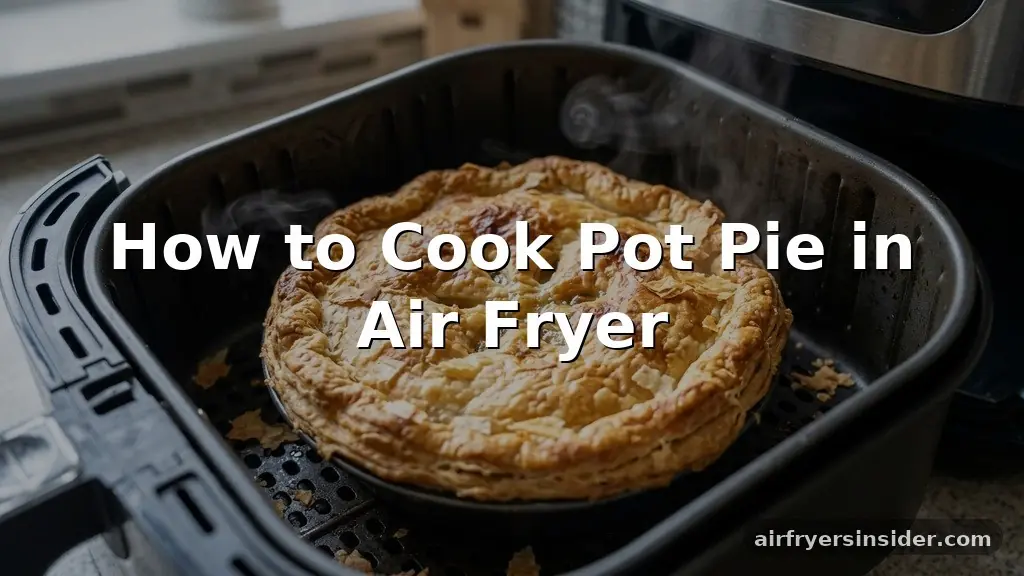
Mastering the art of cooking pot pie in air fryer units allows you to achieve that elusive, perfectly crisp pastry that conventional ovens often fail to deliver. Because these appliances rely on intense, focused convection heat, they transform a standard frozen meal into a restaurant-quality experience in a fraction of the time.
Whether you are dealing with a classic store-bought variety or a homemade creation, the secret lies in managing the airflow and temperature to ensure the center is piping hot while the crust stays light and buttery. By understanding how to balance these elements, you can stop settling for soggy bottoms and enjoy a superior texture every single time you prepare a meal.
The Mechanics of Convection Cooking for Pastry
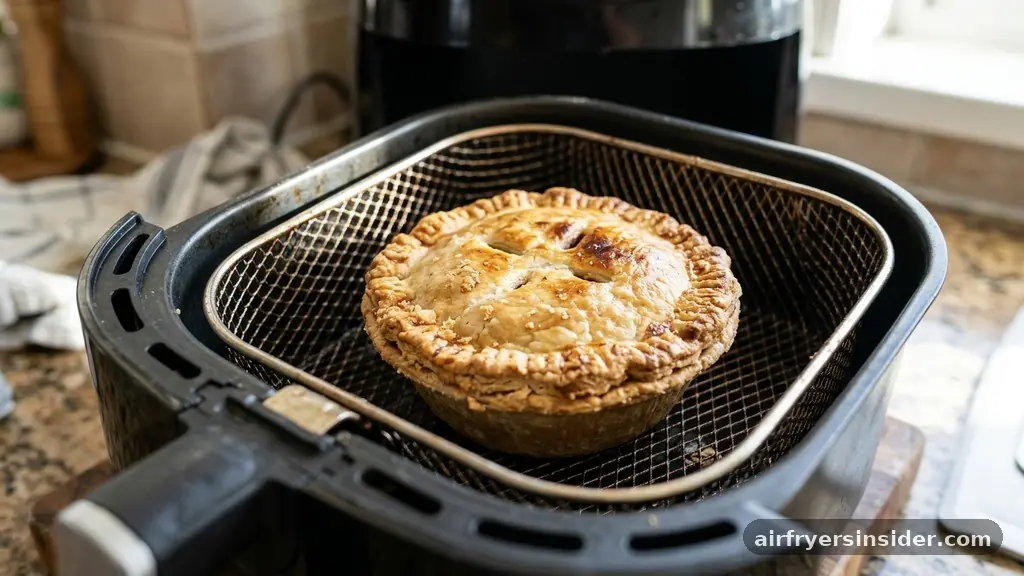
When you decide to cook a pot pie in an air fryer, you are essentially utilizing a miniature convection oven. The core advantage here is the convection fan, which forces hot air to circulate rapidly around the food. In a standard oven, heat often sits stagnant, which can lead to uneven baking or a crust that turns rubbery before it browns.
The air fryer basket design promotes superior air circulation, which is the primary reason the pastry achieves such a distinct, golden brown crust. The high-velocity air molecules collide with the surface of the dough, dehydrating the outer layers just enough to create that signature crunch while keeping the interior moisture locked in.
Understanding this process is essential for success. Because the heat source is often located directly above the food, the top of your pie will brown significantly faster than the sides or bottom. This is why many experienced home cooks choose to lower the temperature slightly compared to traditional oven instructions.
By slowing down the initial heat intake, you allow the interior filling—which is often frozen solid—to reach a safe internal temperature without burning the delicate pastry on top. This balance of heat distribution is the hallmark of effective air fryer usage.
Selecting the Right Pot Pie for Your Appliance
Not all pies are created equal when it comes to air frying. Most popular brands like Marie Callender’s or Swanson are designed for microwave or conventional oven use, meaning their packaging might not always account for the intense direct heat of an air fryer.
If you are using a frozen pot pie that comes in a traditional foil tin, you have to be careful. While foil is generally safe in most air fryers, it can sometimes interfere with the airflow if it sits too high in the basket, preventing the hot air from reaching the sides of the crust.
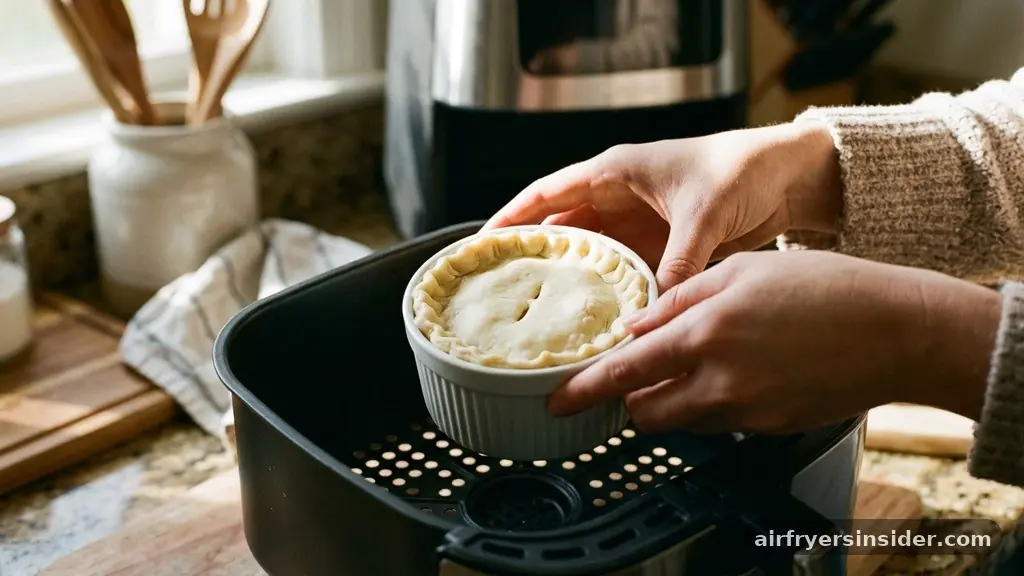
If you find that your pot pie is too large for your specific air fryer basket, don’t force it. The sides of the pie should not be touching the walls of the basket, as this restricts the necessary air circulation. You might need to remove the pie from its original container and transfer it to a smaller, oven-safe ramekin or a silicone mold.
This not only ensures better heat distribution but also makes it easier to remove the finished product without breaking the crust. Choosing the right vessel is just as important as setting the correct temperature, especially when you want to avoid a soggy base.
Step-by-Step Preparation for Optimal Results
To start, you should always preheat air fryer units for at least three to five minutes. Even though these machines heat up quickly, a stable environment is necessary for the pastry to puff up correctly. If you place a frozen pot pie into a cold basket, the butter in the crust may melt slowly, resulting in a greasy, dense texture rather than a light, flaky one.
Once the unit is ready, place your pie carefully inside. If you are worried about leakage, you can place a small piece of parchment paper underneath the pie, provided it is weighed down by the food so it doesn’t fly around and hit the heating element.
Cooking time will vary depending on the size and wattage of your specific model. Generally, you should aim for a lower temperature than what is listed on the box—usually around 325°F to 350°F. If you go too high, the top will burn before the center is cooked.
Keep a close eye on the color of the crust. If it starts to brown too quickly, you can tent a small square of aluminum foil over the top to protect it. This simple trick allows the inside to continue cooking without sacrificing the appearance or integrity of your pastry.
Monitoring Internal Temperature and Food Safety
Food safety is paramount when dealing with frozen meals that contain meat or cream-based sauces. Since air fryers cook so quickly, it is common to encounter a situation where the exterior looks perfectly done while the center remains cold. To avoid any health risks, you must use a food thermometer to check the internal temperature.
The center should reach at least 165°F to ensure that any chicken, beef, or vegetables are thoroughly heated. Relying solely on the timer or the appearance of the crust is a common mistake that can lead to uneven results.
If you find that the center is still cold but the crust is already golden brown, simply turn the heat down to 300°F and continue cooking in short, three-minute bursts. This method of “coasting” allows the residual heat to penetrate the core of the pie.
Remember that different ingredients have different thermal properties; a pie with a thick, chunky filling will take longer to heat through than one with a thinner, gravy-heavy consistency. Being patient and checking the temperature twice is a small investment of time that guarantees a safe and delicious meal.
Managing Airflow and Preventing Soggy Bottoms
One of the most persistent issues people face is the dreaded soggy bottom. This happens when moisture from the filling seeps into the pastry before the crust has had a chance to set and crisp up. To mitigate this, consider the positioning of your pie.
If you are using a ramekin, ensure it is placed directly in the center of the air fryer basket to maximize the impact of the convection fan. If the pie is sitting on a solid surface, the bottom will inevitably be less crispy than the top.
Some cooks find success by removing the pie from its tin halfway through the cooking process. Once the crust has firmed up enough to hold its shape, carefully slide it out of the container and place it directly on the basket rack or a piece of perforated parchment paper.
This allows the air to hit the bottom of the pie, effectively drying it out and ensuring that the pastry flakiness is consistent throughout the entire dish. While this requires a bit of dexterity, the payoff in texture is undeniable.
Comparing Traditional Oven vs. Air Fryer Methods
The debate between using a traditional oven and an air fryer often comes down to efficiency and texture. While an oven is great for cooking multiple items at once, it takes significantly longer to preheat and bake a single pot pie.
The air fryer, by contrast, acts as a high-speed engine for pastry. The following table highlights the key differences you might encounter when choosing your cooking method.
| Feature | Traditional Oven | Air Fryer |
|---|---|---|
| Preheat Time | 10–15 Minutes | 3–5 Minutes |
| Cooking Time | 40–50 Minutes | 20–30 Minutes |
| Crust Texture | Soft/Traditional | Extra Crispy |
| Energy Usage | High | Low |
As shown in the table, the air fryer is significantly more efficient for smaller portions. The convection heat creates a crust that mimics a deep-fried finish, which is often preferred for savory pies.
However, if you are planning to cook for a large family, the traditional oven remains the better choice simply due to volume constraints. For a quick solo lunch or dinner, however, the air fryer is almost always the superior tool for achieving that satisfying crunch.
Common Mistakes to Avoid When Cooking Pot Pie
Even seasoned cooks can stumble when transitioning from oven to air fryer. One of the most frequent errors is overcrowding the basket. If you attempt to cook two pot pies at once in a small basket, you are essentially blocking the airflow.
This leads to steam buildup, which is the enemy of a crispy crust. If you must cook multiple pies, ensure there is at least an inch of space between them and the sides of the basket to allow for proper convection.
Another mistake is neglecting the ventilation requirements. Modern air fryers need to be placed on a heat-resistant surface with plenty of space around the unit. Because the machine is working harder to circulate air, it will vent hot air out the back.
If this vent is blocked, the internal temperature can fluctuate wildly, leading to uneven cooking. Always ensure your workspace is clear and that your air fryer is positioned in a way that allows it to breathe. Finally, don’t be afraid to experiment with your convection oven settings if your model has them; sometimes, a lower fan speed can help prevent the crust from drying out too much while the center cooks.
Addressing Topical Gaps: Troubleshooting Common Issues
Many users ask why their crust cracks or why the filling leaks out during the process. When you cook a pot pie in an air fryer, the rapid expansion of the crust can sometimes cause it to split. This is usually due to the filling being too cold or the crust being too thick.
If you are making your own pies, try to ensure the filling is at room temperature before adding the pastry lid. This reduces the time the dough spends in the air fryer, which in turn reduces the risk of the pastry splitting under the pressure of the rising steam.
Another common gap in knowledge is the use of egg washes. Many recipes call for an egg wash to achieve a golden color, but in an air fryer, this can sometimes lead to premature browning. If you want that professional sheen, apply the egg wash lightly and only in the final five minutes of cooking.
This prevents the sugars in the egg from burning while the rest of the pie continues to crisp. If you prefer a more rustic look, a simple brush of melted butter halfway through the process works just as well and adds a rich, savory flavor that complements the pastry perfectly.
Essential Tips for Reheating Leftovers
Reheating leftovers in an air fryer is perhaps the best way to restore a pie to its former glory. Unlike the microwave, which turns pastry into a limp, soggy mess, the air fryer uses its convection fan to remove excess moisture and revive the crunch.
To reheat a slice or a whole leftover pie, set your air fryer to 300°F and heat for about 5 to 8 minutes. This gentle approach ensures the filling gets warm without drying out the crust.
If you are dealing with a particularly thick slice, you might want to cover the edges with a thin strip of aluminum foil to prevent them from burning while the middle heats up. This is a great way to handle meals from the previous night without wasting food.
The texture you get from reheating in an air fryer is remarkably close to the original, making it the preferred method for anyone who values food quality over pure convenience. Remember to always use a clean basket to avoid cross-contamination of flavors from whatever you cooked previously.
Frequently Asked Questions
Can I cook frozen pot pies directly in the air fryer?
Yes, you can cook frozen pot pies directly in the air fryer. It is often faster and results in a crisper crust than using a conventional oven. Just ensure you adjust the temperature lower—around 325°F—to allow the center to heat through without burning the pastry.
Do I need to remove the pot pie from its tin?
It depends on the size of the tin and your air fryer basket. If the tin fits with room for air to circulate, you can leave it in. However, if it touches the walls of the basket, transferring the pie to a ramekin will ensure even cooking and better results.
How do I know when the pot pie is fully cooked?
The best way to verify doneness is by using a food thermometer. Insert it into the center of the pie; it should read at least 165°F. Additionally, the crust should be a deep golden brown and the filling should be bubbling around the edges.
Can I use aluminum foil in the air fryer to prevent burning?
Absolutely. Using aluminum foil to tent the top of the pie is a great way to prevent the crust from over-browning while the center finishes cooking. Just make sure the foil is secured so it doesn’t get blown around by the powerful convection fan.
Conclusion
Mastering the technique of cooking pot pie in air fryer units opens up a world of convenience without sacrificing the quality of your meal. By focusing on temperature control, proper airflow, and the use of a food thermometer, you can transform frozen convenience food into a crispy, golden, and perfectly heated dinner. Remember to be patient with the cooking process; the goal is to balance the rapid browning of the pastry with the slower heating of the filling.
Whether you are using a store-bought staple or a homemade recipe, the air fryer is a reliable tool for achieving that sought-after texture. Start experimenting with these tips today, and you will quickly see why this method has become a favorite for home cooks everywhere.


