
Figuring out how long to reheat french fries in an air fryer is the secret to saving those leftover takeout portions from the sad, soggy fate of the microwave. Most people struggle with this because they either burn the edges or leave the centers cold and limp.
By using the right heat intensity and timing, you can transform yesterday’s fries into a snack that tastes almost as crisp as when it first came out of the deep fryer. Achieving that perfect crunch requires just a few minutes of patience and the right technique to ensure every fry gets consistent airflow.
Understanding the Mechanics of Air Frying Leftovers
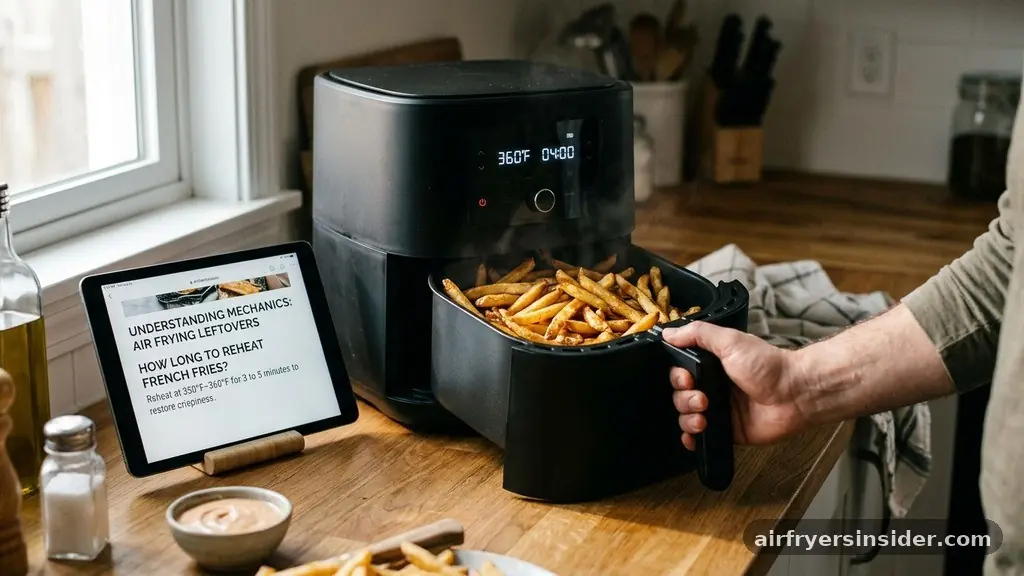
When you reheat food in an air fryer, you aren’t just heating it up; you are essentially re-toasting the exterior. The convection mechanism inside the appliance circulates hot air at high speeds, which is perfect for driving off excess moisture that has accumulated in the potato cells while sitting in the fridge. Unlike a microwave, which vibrates water molecules and leaves starch structures mushy, the air fryer mimics the original frying process.
The key to success lies in the surface area. Because french fries have a high surface-to-volume ratio, they respond incredibly well to the rapid air movement. If you set the temperature too low, the fries will sit in the heat for too long, causing them to lose their internal moisture and become cardboard-like.
If you set the temperature too high, the outside will char before the inside has a chance to warm through. Finding that middle ground is essential for maintaining the integrity of the potato.
Ideal Temperature and Timing Settings
For most standard-cut french fries, the sweet spot for reheating is between 350°F and 375°F. At this temperature, the exterior develops a Maillard reaction—the chemical process that creates browning and flavor—without incinerating the delicate potato flesh. Generally, you should plan on a duration of three to five minutes, depending on the thickness of the fries.
Thin, shoestring-style fries require the shortest duration, often hitting peak crispiness at the three-minute mark. Thicker steak-cut fries or wedges will naturally take longer, sometimes pushing toward the six-minute range.
Always start on the conservative side; you can always add another minute, but you cannot fix a fry that has been turned into a charred stick. Using a timer or checking the basket frequently is the best way to calibrate your specific appliance’s performance against the type of potato you are reheating.
The Importance of Proper Basket Loading
One of the most common reasons people fail to get crispy results is that they treat the air fryer basket like a dump bin. You must avoid overcrowding the basket if you want the air to circulate effectively. When fries are stacked on top of each other, the hot air cannot reach the surfaces in the middle of the pile, leading to uneven heating where the bottom fries stay soggy and the top ones potentially dry out.
To ensure success, spread the fries in a single, even layer. If you have a large batch, it is far better to reheat them in two smaller cycles than to cram them all in at once.
This simple adjustment ensures that every surface of the potato is exposed to the high-velocity heat. If you find your fries are clumped together from being refrigerated, give them a gentle shake or use tongs to separate them before you start the cycle, ensuring they aren’t stuck together in a mass.
The Oil Mist Technique for Revitalizing Texture
If your fries have been in the refrigerator for more than a day, they have likely lost a significant amount of their surface fat, which is what helps them conduct heat and stay crispy. A light application of the oil mist technique can be a literal lifesaver for stale potatoes. Using a light spray of neutral oil—such as canola, grapeseed, or avocado oil—helps to re-establish that golden, crunchy exterior that defines a great fry.
You don’t need to drench them; a very fine, light mist is sufficient. The oil acts as a heat conductor, helping the hot air from the fan “fry” the surface of the potato once more.
If you don’t have an oil mister, you can lightly toss the cold fries in a bowl with a half-teaspoon of oil before placing them in the basket. This small addition makes a world of difference in the final mouthfeel, providing that satisfying snap that reheated food often lacks.
Monitoring for Texture During the Cycle
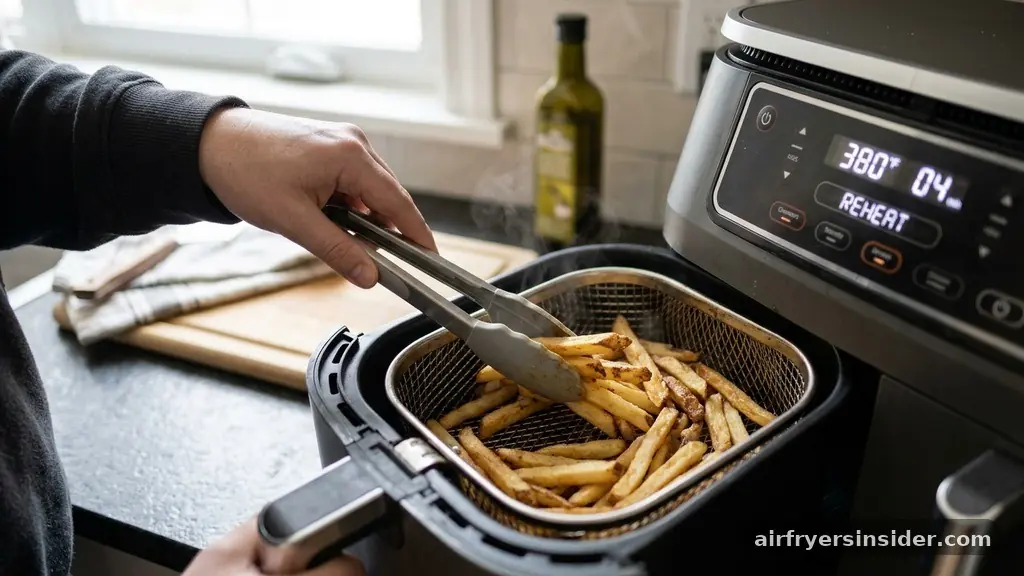
The process of reheating isn’t just a “set it and forget it” task. Monitoring for texture is a crucial step that separates amateur results from professional-level reheating.
Because air fryers vary significantly in wattage and fan strength, your unit might run hotter than the one your neighbor uses. By opening the basket halfway through the estimated time, you can assess the progress and adjust accordingly.
While you have the basket open, it is the perfect time to give the fries a good shake. This movement reorients the fries, ensuring that any spots that were previously shielded from the airflow are now directly exposed to the heat. If they look like they are browning too quickly, you can drop the temperature by 25 degrees for the final minute.
If they still look pale, keep the heat steady and add sixty seconds. Developing a visual intuition for when the fries are “done” is more reliable than strictly following a timer.
Common Mistakes to Avoid
Even with the best equipment, it is easy to fall into traps that ruin the final product. One of the most frequent errors is adding salt before the reheating process.
Salt draws moisture out of the potato; if you salt your cold fries before putting them in the air fryer, you are essentially pulling water to the surface, which will make them limp rather than crisp. Always wait until the fries are piping hot and finished to add your final seasoning.
Another mistake is failing to preheat. While many air fryers don’t strictly require a long preheat like a traditional oven, running the machine empty for two minutes helps it reach the target temperature immediately.
Putting cold fries into a cold basket means they start to dehydrate before they start to crisp. Below is a quick comparison table to help you manage your expectations based on fry thickness.
| Fry Type | Ideal Temp | Estimated Time |
|---|---|---|
| Shoestring | 350°F | 3-4 Minutes |
| Standard Cut | 360°F | 4-5 Minutes |
| Steak/Wedge | 375°F | 5-7 Minutes |
Addressing Topical Gaps in Reheating Methods
Many enthusiasts wonder if there is a difference between reheating frozen leftovers versus those that were simply kept in the fridge. The primary difference is the moisture content.
Frozen fries contain ice crystals that must melt and evaporate before the potato can crisp up. If you are starting from frozen, you should increase your total time by roughly two to three minutes and consider a slightly lower temperature initially to avoid burning the outside while the core remains icy.
Another gap in common knowledge involves the use of parchment paper or liners. While these make cleanup easier, they can actually block the airflow at the bottom of the basket. If you use a liner, ensure it is perforated specifically for air fryers.
If you use a solid liner, you are essentially turning your air fryer into a small oven, which will result in softer fries. For the absolute best results, always place the fries directly on the basket rack to maximize the circulation of heat.
Best Practices for Crispy Results
To consistently achieve the best results, consider these professional tips: always serve the fries immediately after they come out of the air fryer. Potatoes are notorious for losing their crispness as they cool down, as the internal steam migrates back to the surface. If you let them sit on a plate for ten minutes, the work you put into reheating them will be undone by simple thermodynamics.
You should also keep your seasoning simple. Since you are reheating, the fries likely already have some residual salt on them. If you add too much more, you risk ending up with an overly salty snack.
If you want to experiment, try adding a dusting of smoked paprika or garlic powder right at the end to mask any “leftover” flavor that might linger. By following these guidelines, you ensure that your snack session is just as enjoyable the second time around as it was the first.
- Always use a single layer of fries to allow maximum airflow.
- Shake the basket halfway through to ensure even browning.
- Avoid using solid foil or parchment liners that block holes.
- Wait until the fries are finished before adding fresh salt or herbs.
- Preheat your air fryer for two minutes if you want the crispiest possible texture.
FAQ Section
Can I reheat fries with other foods like chicken tenders?
It is possible, but not ideal. Different foods have different moisture levels and cook times. If you must, ensure the items are of similar size and density so they finish at the same time. Otherwise, you risk overcooking the smaller items while the larger ones remain underheated.
Why do my reheated fries taste dry even when I use the air fryer?
Dryness often occurs when the fries are left in the heat for too long. If you use too high a temperature, the air fryer will strip away all remaining moisture. Try dropping the temperature by 25 degrees and reducing the time, or add a light mist of oil to help.
Should I thaw frozen leftover fries before putting them in the air fryer?
No, you do not need to thaw them. Air fryers are designed to handle frozen items quite well. Just keep in mind that the ice crystals will add extra moisture, so you might need to add a few extra minutes to the cooking time to ensure they get crispy.
What is the best way to keep fries from sticking to the basket?
If you have a non-stick basket that is losing its coating, a very light spray of oil before adding the fries can help. Avoid using non-stick sprays with propellants like lecithin, as they can build up and become gummy on the basket surface over time.
Conclusion
Mastering how long to reheat french fries in an air fryer is a simple way to reduce food waste while enjoying a superior snack. By focusing on temperature control, avoiding the temptation to overcrowd your basket, and utilizing a light mist of oil, you can consistently achieve that coveted crunch. Remember that the size of the potato matters just as much as the heat setting, so adjust your timing based on whether you are working with thin shoestrings or chunky wedges.
With a little practice, your reheated fries will lose that soggy, refrigerated texture and return to their former glory. Don’t hesitate to experiment with your specific machine to find the exact timing that works for your kitchen setup, and enjoy those leftovers the way they were meant to be eaten.