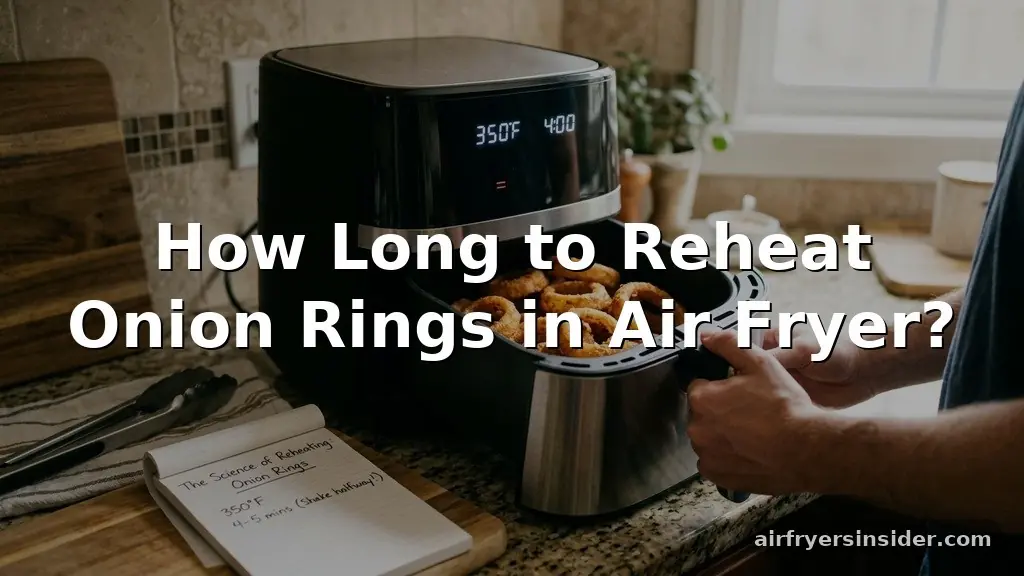
Finding the perfect balance of crunch and flavor when you are reheating leftovers is often a challenge, especially with deep fried foods that lose their appeal quickly. If you have been wondering how long to reheat onion rings in air fryer settings to restore that signature bite, you are in the right place.
Most people struggle with soggy results because they rely on microwaves, but the air fryer uses rapid air technology to bring back the crispiness you expect. With just a few minutes of attention, you can transform yesterday’s snack into a hot, crunchy treat that tastes nearly as good as it did when it was freshly cooked.
The Science of Air Fryer Reheating
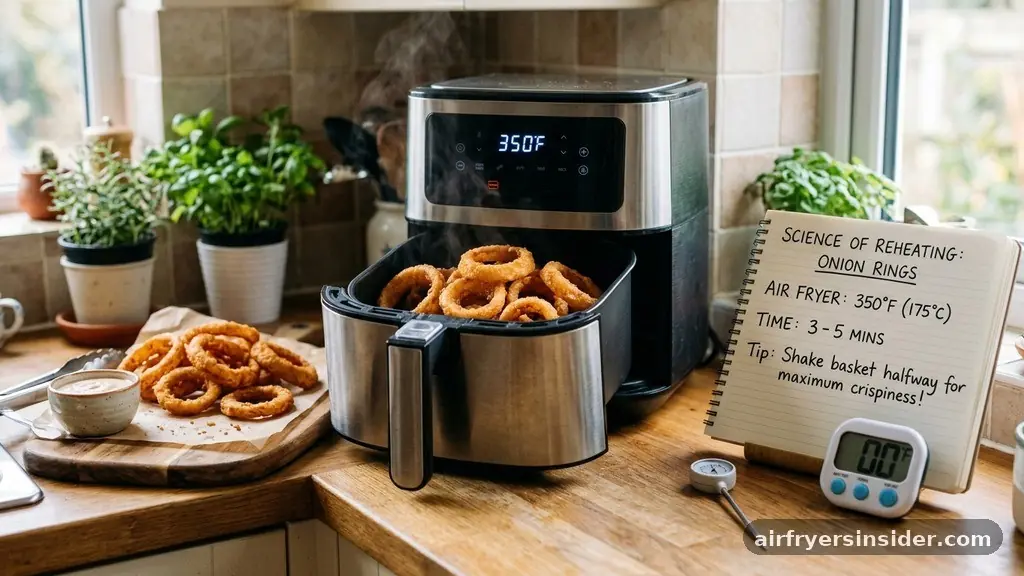
The reason an air fryer outperforms other kitchen appliances for restoring fried foods lies in its ability to simulate convection heating. Unlike a standard oven, which relies on a heating element and ambient air, an air fryer pushes hot air at high speeds through a compact chamber.
This intense air circulation effectively wicks away residual moisture from the surface of the breading, which is the primary culprit behind soggy onion rings. When you apply the right amount of heat, the moisture evaporates before it can soften the crispy coating, leaving you with a texture that mimics the original deep-fried experience.
Understanding this process is essential for achieving consistent results. When you place your onion rings inside, the rapid movement of air ensures that every side of the ring is exposed to heat simultaneously. This prevents the uneven heating often found in toaster oven comparison tests, where the top might brown while the bottom remains limp.
By utilizing the appliance’s specific design, you are essentially re-toasting the exterior breading while warming the center of the onion without turning it into a mushy consistency. Proper placement and timing are the only variables you need to control to master the technique.
Optimal Temperature and Timing Parameters
For most standard setups, knowing how long to reheat onion rings in air fryer cycles requires a consistent approach to temperature. You should generally aim for 350°F to 375°F. If the heat is too low, the onion rings will sit in the basket for too long, absorbing more oil and losing their structural integrity.
If the heat is too high, the outer breading will burn before the center has a chance to warm through. A temperature of 360°F is often considered the “sweet spot” for most models, providing enough energy to crisp the surface without scorching the delicate crumbs.
The reheating time typically ranges between three to five minutes. This duration is relatively short, so it is vital to keep a close eye on your kitchen timer. Because air fryers vary in power and basket size, the first time you try this, you should check the rings at the three-minute mark.
If they are not yet golden brown or if the center still feels cool to the touch, add another minute or two. Remember that smaller batches will always heat faster than a crowded basket, so adjust your expectations based on how many rings you are attempting to revive at once.
The Importance of Proper Basket Arrangement
One of the most common mistakes people make is stacking food on top of each other. To get the best results, you must place your onion rings in a single layer.
Air circulation is the engine of your air fryer; if the rings are overlapping, the air cannot reach the bottom surfaces, leading to uneven reheating and patches of sogginess. By giving each piece enough space, you allow the heat to penetrate evenly, ensuring that the breading texture remains uniform across the entire batch.
If you have a large quantity of onion rings, it is far better to reheat them in two separate batches rather than crowding the basket. While it might seem like a time-saver to do it all at once, the drop in quality is significant. A crowded basket traps moisture, which essentially steams the rings rather than frying them.
By maintaining a single layer, you ensure that every part of the onion ring is exposed to the direct flow of air, which is the secret to achieving that satisfying crunch. You will find that the extra two minutes spent on a second batch is well worth the improved texture.
Managing Moisture and Oil Absorption
When reheating leftovers, you are fighting against the natural migration of moisture from the onion into the breading. This is why leftovers often turn limp after refrigeration. Before you even start the air fryer, consider the state of your onion rings.
If they were heavily oiled during the initial cooking process, you might find that they release excess grease as they heat up. Using a small piece of parchment paper can help, but avoid putting paper towels in the air fryer, as they can become a fire hazard if the fan pulls them into the heating element.
If you notice that your rings are looking particularly oily, you can briefly dab them with a paper towel before putting them in the basket. However, do not over-press them, as this can crush the delicate structure of the ring.
If the rings seem dry, a very light spritz of oil can help restore the golden brown color, though most onion rings retain enough residual oil from their first frying to crisp up perfectly on their own. The goal is to evaporate the surface moisture without drying out the onion inside, which is why the short, high-heat burst is so effective.
Step-by-Step Execution for Perfect Results
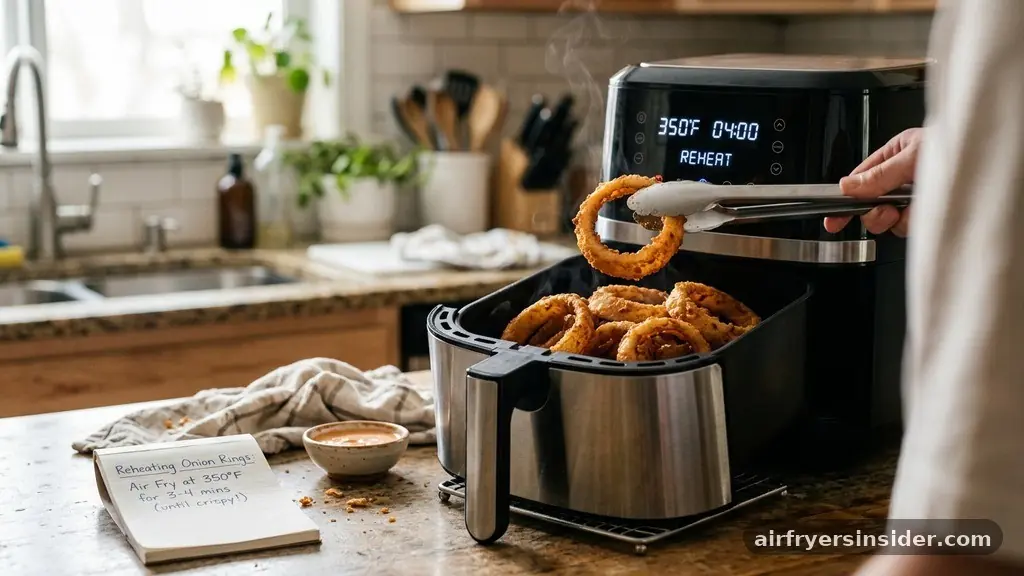
To get the best results every time, follow a consistent workflow. Start by preheating your air fryer for about two to three minutes. This ensures that the cooking chamber is at the optimal heat the moment the food enters, preventing the rings from sitting in a warming zone that encourages sogginess.
Once preheated, arrange the rings in your basket. If you are using a rack, ensure it is positioned correctly to allow airflow underneath the food, though a standard basket is usually sufficient for this task.
Set your timer for three minutes and wait. Once the timer goes off, inspect the rings. If they appear crispy and the breading looks firm, remove them immediately.
If they need more time, give the basket a gentle shake to rearrange the rings slightly before adding another minute or two. This small movement helps to ensure that any spots that were shielded from the airflow get a chance to crisp up. Always handle the rings carefully, as the breading can become quite fragile when hot.
| Factor | Recommendation |
|---|---|
| Temperature | 350°F to 375°F |
| Reheating Time | 3 to 5 minutes |
| Arrangement | Single layer only |
| Preheating | 2-3 minutes required |
Addressing Common Challenges and Failures
Many people encounter issues when reheating frozen onion rings versus those that were previously fried. When dealing with frozen onion rings, the reheating time will naturally be longer because the core is frozen solid.
You might need to extend the time to seven or eight minutes at a slightly lower temperature to ensure the middle is hot without burning the exterior. Food safety is also a factor here; always ensure the center is steaming hot before consumption, especially if you are reheating items that have been sitting in the refrigerator for more than 24 hours.
If your onion rings consistently come out soft, check your air fryer’s ventilation. Ensure the unit is not pushed against a wall, as the hot air needs a clear path to exhaust. Another common issue is the quality of the breading itself.
Some breadings are more prone to absorbing moisture than others. If you find that your favorite brand of onion rings never crisps up properly, it might be due to the type of flour or batter used in the original manufacturing process. In these cases, even the best air fryer techniques can only do so much to salvage the texture.
Comparing Air Fryer Performance to Other Methods
When you look at a toaster oven comparison, the air fryer almost always wins for this specific task. A toaster oven relies on radiant heat, which is much slower and less efficient at removing surface moisture.
In a toaster oven, the rings often have to cook for much longer to achieve a similar crispiness, which usually results in the onion becoming overcooked and rubbery. The microwave, by contrast, should be avoided entirely for this purpose; it works by exciting water molecules, which effectively steams the breading from the inside out, resulting in a completely soggy mess.
The speed of the air fryer is its biggest advantage. Because the air is moving so fast, it creates a “crust-forming” effect almost instantly. This preserves the internal temperature of the onion while the exterior undergoes a Maillard reaction, which is the chemical process that gives fried foods their golden brown color and deep, savory flavor.
By choosing the air fryer, you are prioritizing the preservation of the original culinary intent of the dish rather than just heating it up. It is the closest you can get to fresh-from-the-fryer results without actually using a deep fat fryer.
Common Questions About Reheating Fried Appetizers
Can I reheat onion rings that were stored in the refrigerator?
Yes, you can easily reheat them. The key is to avoid overcrowding the basket and to use a temperature of 360°F for about three to five minutes. This will restore the crunch while ensuring the onion inside is warm and tender.
Why do my onion rings get soggy in the air fryer?
Soggy results usually occur because the basket is too full, which blocks air circulation. Ensure the rings are in a single layer. Also, ensure you preheat the unit; if the air isn’t hot enough when you start, the breading absorbs moisture instead of crisping.
Is it necessary to use oil when reheating?
Most of the time, no. Onion rings are already coated in oil from their initial frying. Adding more oil often leads to a greasy result. Only add a tiny spritz if the breading looks extremely dry or if you want to enhance the browning.
How do I know when the onion rings are done?
The rings are done when the breading is golden brown and feels firm to the touch. If you are uncertain, use a kitchen timer to monitor them closely. They should be hot throughout and have a noticeable crunch when you bite into the coating.
Refining Your Approach to Leftovers
Mastering the art of reheating fried snacks is a simple way to reduce food waste and ensure you can enjoy your favorite sides whenever you want. By focusing on the principles of air circulation, single-layer placement, and precise temperature control, you can avoid the common pitfalls that lead to disappointing leftovers. The goal is to maintain that delicate balance between the crispy coating and the soft, savory onion inside.
As you become more comfortable with your specific appliance, you will find that these steps become second nature. You will no longer have to settle for soft or oily rings, as you will have the confidence to restore them to their former glory in just a few minutes.
Experiment with these timings to see what works best for your specific model and preferences. If you have any other tips or tricks that have worked for you in your kitchen, feel free to share your experiences and continue perfecting your technique.
Meta Description: Learn how long to reheat onion rings in air fryer for the perfect crunch. Follow these expert tips for golden, crispy results every time you reheat leftovers.