Figuring out how long to reheat pork chops in air fryer settings is the secret to avoiding the dreaded rubbery texture that often plagues leftover meat. Many people find that reheating pork in a microwave turns it into a tough, chewy mess, but the air fryer offers a much better alternative by circulating hot air to crisp the exterior while warming the center.
When you get the timing right, you can enjoy a meal that tastes almost as good as it did the first time it was cooked. Achieving the perfect result requires a balance of moderate heat and careful monitoring to keep the meat juicy and flavorful.
Why the Air Fryer Excels at Reheating Pork
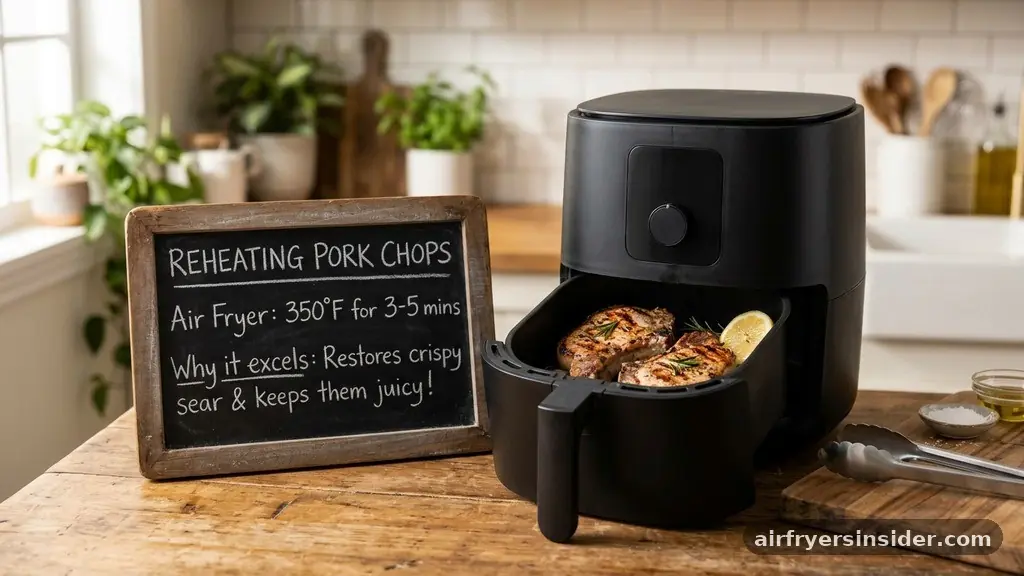
The primary reason to use an air fryer for your leftovers is the mechanism of dry heat combined with rapid convection. Unlike a microwave, which vibrates water molecules to heat food—often leading to uneven, soggy, or rubbery results—the air fryer mimics an oven but with much more efficiency. Because the unit is small, it heats up quickly and maintains a consistent flow of hot air, which is essential for bringing a pork chop back to a palatable temperature without overcooking it.
When you reheat a pork chop, you are essentially trying to warm the internal temperature back up to a food-safe level without pushing it into the “well-done and dry” territory. Pork chops are notoriously lean, meaning they lose moisture easily.
The air fryer’s ability to crisp the outside creates a small barrier that locks in the remaining juices. If you manage the process correctly, you can restore a pleasant texture that makes your leftovers feel like a fresh meal rather than a sad, repurposed afterthought.
Determining the Optimal Temperature and Timing
For most standard-sized chops, you should aim for a temperature setting between 320°F and 350°F. Setting the air fryer higher than 360°F often results in a burnt exterior before the center has had a chance to warm through properly. By keeping the heat moderate, you allow the interior to come up to temperature gradually, which is the most reliable way to maintain quality.
In terms of duration, the size and thickness of your pork chop dictate the exact window. A thin, boneless chop will reach a perfect serving temperature much faster than a thick, bone-in cut. Because air fryer models vary significantly in power and airflow, it is wise to start on the lower end of the time spectrum and check your progress frequently.
| Cut Type | Temperature | Estimated Time |
|---|---|---|
| Thin Boneless Chop | 320°F | 3-5 Minutes |
| Thick Bone-in Chop | 340°F | 6-9 Minutes |
| Breaded/Fried Chop | 350°F | 4-6 Minutes |
Preventing Dryness During Reheating
The biggest challenge when reheating lean proteins like pork is preventing dryness during reheating. Since the meat has already been cooked once, the muscle fibers are tighter and less capable of holding onto moisture. To combat this, you need to introduce a small amount of external hydration before the air fryer starts its work.
One effective method is to lightly brush the pork with a bit of olive oil, melted butter, or even a splash of chicken broth. This adds a protective layer that helps conduct heat while insulating the meat against the harsh dry air.
If your pork chops were cooked with a sauce or glaze, you can apply a fresh layer before reheating. The sauce acts as a sealant, keeping the heat from evaporating the internal moisture of the chop.
The Role of Foil in Retaining Texture
Sometimes, the airflow in an air fryer is a bit too aggressive for a delicate piece of leftover meat. If you find your chops are browning too fast, using foil can be a game-changer. By wrapping the pork loosely in a piece of aluminum foil, you create a mini steaming environment that warms the meat through without exposing it directly to the intense, drying convection currents.
This is especially helpful for thicker cuts. You can keep the foil wrapped for the first two-thirds of the cooking time, then open it up for the final minute or two if you want to crisp the crust.
This hybrid approach ensures that the center reaches a safe, warm temperature while the exterior retains a bit of that desirable crunch. It is one of the best practices for consistent results that separates amateur reheating from a more refined approach.
Step-by-Step Guide to the Process
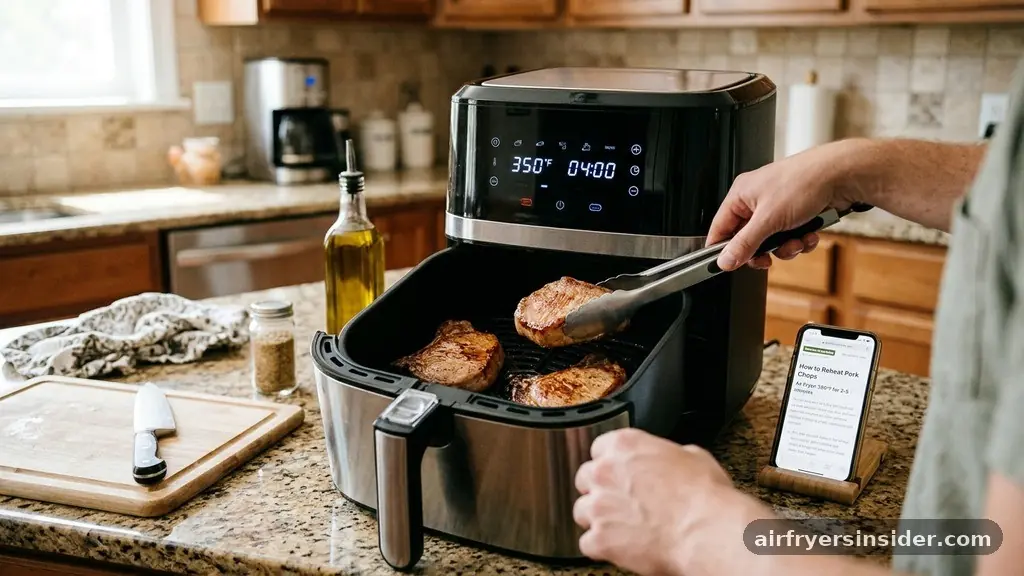
To achieve the best outcome, follow a consistent workflow every time you prepare your leftovers. Start by removing the pork from the refrigerator about 10 to 15 minutes before you plan to reheat it. Letting the meat come closer to room temperature prevents the center from staying cold while the edges overcook.
- Preheat your air fryer for 2-3 minutes to ensure even heating from the start.
- Lightly coat the basket with a tiny bit of oil or parchment paper to prevent sticking.
- Brush the pork chop with a small amount of liquid or fat to retain moisture.
- Place the chops in a single layer, ensuring they do not overlap.
- Check the meat at the halfway point, flipping it if necessary for even browning.
- Remove the pork immediately once it hits the desired temperature to prevent further moisture loss.
Addressing Topical Gaps: Safety and Internal Temperature
A common question that often goes unanswered is how to tell when the meat is actually safe to eat. While reheating is technically about warming, you should still ensure the internal temperature reaches at least 145°F if you are concerned about food safety, though many people prefer to pull it at 135°F to 140°F to avoid that “reheated” taste. Using an instant-read meat thermometer is the only way to know for sure.
Another gap in common advice is how to handle breaded pork chops. Breaded items are prone to becoming soggy in the fridge and burnt in the air fryer. If you have breaded chops, skip the oil-brushing step.
Instead, lightly spray them with cooking spray to revive the crunch. The breading itself acts as a shield, so you don’t need to add extra moisture to the center as aggressively as you would with a plain, seared chop.
Managing Different Thicknesses and Cuts
Not all pork chops are created equal, and the geometry of the meat plays a massive role in how it responds to heat. A thin, boneless chop is essentially a flat surface, meaning it heats quickly and evenly. Conversely, a thick, bone-in chop has a large, dense mass that acts as a heat sink.
When dealing with a bone-in chop, the bone itself takes longer to warm up than the surrounding meat. If you treat a bone-in chop the same way you treat a boneless one, you will likely end up with a lukewarm center near the bone and dry, overcooked edges.
To manage this, place the bone-in chops with the bone facing the center of the air fryer basket if possible, as this is often where the airflow is most concentrated. Always prioritize lower heat for longer durations when dealing with bone-in cuts to ensure the heat penetrates deep into the meat without drying out the surface.
Troubleshooting Common Reheating Errors
Even with the best intentions, things can go wrong. If you find your pork is still cold in the middle, don’t just blast it with more heat.
Instead, lower the temperature by 20 degrees and add another two minutes. This prevents the exterior from turning into leather while the middle catches up.
Another frequent mistake is overcrowding the basket. Air fryers rely on the circulation of hot air to work; if the basket is packed too tightly, the air cannot reach the sides of the chops.
This leads to steaming rather than crisping, which ruins the texture. Always leave at least an inch of space between each piece of meat to ensure the air can flow freely, ensuring every bite remains tender and perfectly warmed throughout the meal.
Maximizing Flavor After Reheating
Once your pork is properly reheated, don’t just plate it and call it a day. Reheating can sometimes dull the original seasoning, especially if the chop was cooked in a rub or a complex spice blend. A quick spritz of fresh lemon juice, a pinch of sea salt, or a drizzle of high-quality balsamic glaze can wake up the flavors that tend to fade during the refrigeration process.
If you have fresh herbs like parsley or chives, a light dusting over the top adds a brightness that makes the meal feel fresh rather than leftover. These small, final touches make a significant difference in the dining experience, transforming a simple reheating task into a satisfying dinner. By focusing on the quality of the finish, you bridge the gap between “leftover food” and a well-prepared, convenient meal.
Frequently Asked Questions
Is it safe to reheat pork chops more than once?
It is generally recommended to reheat pork only once. Repeatedly cooling and reheating meat increases the risk of bacterial growth and significantly degrades the texture and flavor of the protein. Only reheat the specific amount of pork you plan to eat in that sitting.
Can I put the pork chop directly in the air fryer from the fridge?
Yes, you can, but it is better to let it sit on the counter for 10-15 minutes first. Bringing the meat closer to room temperature helps it reheat more evenly, reducing the risk of the outside drying out before the center is warm enough to eat.
What if my pork chop has a heavy sauce or gravy?
If your pork is covered in a thick sauce, it is best to reheat it in a small oven-safe ramekin or on a piece of foil shaped into a bowl inside the air fryer. This prevents the sauce from dripping through the basket and burning at the bottom.
How do I know if the pork is overcooked during the reheating process?
The best indicator is the texture. If the meat feels firm or rubbery when poked with a fork, it has likely lost too much moisture. Using a meat thermometer is the most reliable way to monitor the process and stop the heating before the internal temperature exceeds 150°F.
Conclusion
Mastering the art of reheating pork chops doesn’t have to be a complicated endeavor. By focusing on moderate temperatures, the right amount of moisture, and careful monitoring, you can easily avoid the common pitfalls of dry, tough leftovers. Whether you are dealing with a thick, bone-in cut or a simple boneless chop, the air fryer remains one of the most effective tools in your kitchen for restoring the quality of your food.
Remember to use a little extra fat or liquid to keep things succulent, and don’t be afraid to use foil to protect the edges during the process. With these techniques, you’ll find that knowing how long to reheat pork chops in air fryer setups becomes second nature, ensuring your meals are consistently delicious from the first cook to the last bite.
Meta Description: Learn exactly how long to reheat pork chops in air fryer settings to keep them juicy and tender. Follow our expert tips for perfect, non-dry leftovers.