

Reheating a high-quality cut of meat is a delicate process that often leads to disappointment if done incorrectly. Many people struggle with the balance between warming the center and drying out the exterior, but understanding how long to reheat steak in air fryer units can significantly improve your results. By leveraging the specific mechanics of rapid air technology, you can achieve a finish that rivals the original cook.
This approach avoids the rubbery texture often associated with microwaves while providing a faster turnaround than a standard oven. Whether you are dealing with a thick ribeye or a leaner sirloin, mastering this technique ensures your leftovers remain juicy, flavorful, and perfectly edible.
The Mechanics of Air Fryer Reheating
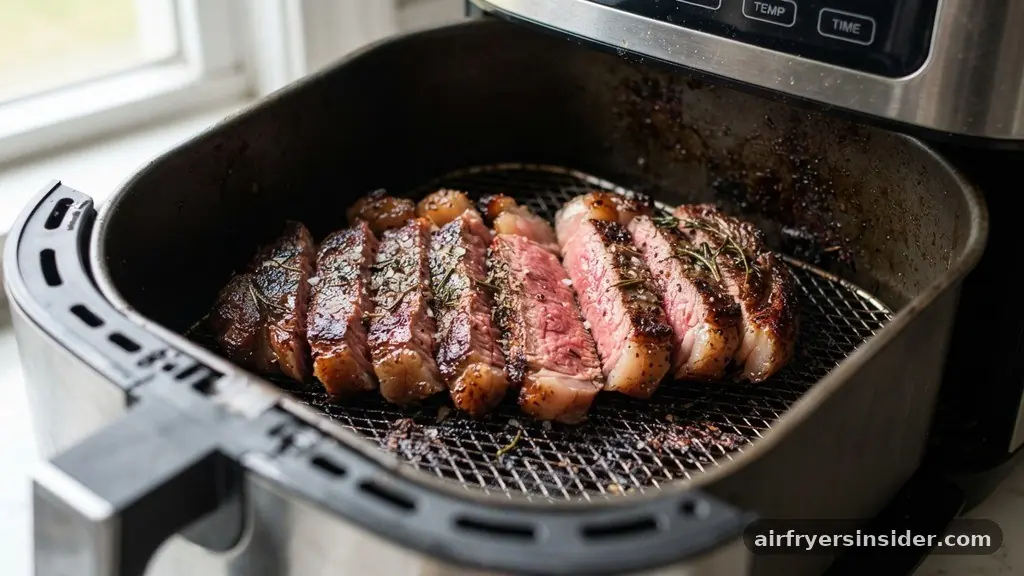
The primary reason air fryers excel at reheating leftovers is their design. Unlike a microwave, which uses electromagnetic radiation to excite water molecules—often causing uneven heating and turning meat into a tough, chewy mess—an air fryer functions as a compact convection oven.
It forces high-temperature air to circulate rapidly around the food. This movement of hot air creates a consistent environment that helps maintain the integrity of the protein fibers while gently warming the interior through conduction.
When you place a steak into the basket, the device begins to distribute heat evenly across the surface. Because the air is constantly moving, it prevents the localized hot spots that plague other methods. This is particularly important for meat that has already been cooked, as you are essentially trying to reach an ideal internal temperature without crossing the threshold into overcooking.
The rapid air technology ensures that the exterior stays relatively crisp, which provides a pleasant contrast to the tender center. Understanding the airflow patterns of your specific model, such as a Ninja Foodi or a Cosori, allows you to position the meat for optimal results.
Determining the Right Timing
Finding the exact duration for your protein depends heavily on the initial temperature of the steak and its physical dimensions. A standard rule of thumb is that a one-inch-thick steak typically requires between three and five minutes at a moderate temperature of 300°F to 325°F.
If you start with a cold steak directly from the refrigerator, you might need an extra minute or two to ensure the heat penetrates deep into the center. Conversely, if you have allowed the meat to sit on the counter for a few minutes to lose its chill, the process will be faster.
Steak thickness is the most critical variable. A thin cut of skirt steak will heat through almost instantly, while a thick-cut ribeye or porterhouse requires a more patient approach.
Always err on the side of caution; it is much easier to add another minute to the cook time than it is to recover a piece of meat that has been cooked until it is gray and dry. Start with a conservative estimate, check the progress, and adjust based on your specific appliance’s power.
The Role of Moisture Retention
One of the biggest risks when using an air fryer is moisture loss. Because the appliance moves air so efficiently, it can dehydrate the surface of the meat quickly. To combat this, many home cooks use a light coating of olive oil.
Applying a thin layer of oil to the surface of the steak before placing it in the basket helps create a protective barrier. This small amount of fat helps conduct heat more effectively and prevents the meat from becoming stringy or dry.
Another effective strategy involves the use of aluminum foil. By wrapping the steak loosely in foil, you create a micro-environment that traps steam. This method is excellent if you are worried about the edges becoming too crisp before the center is warm.
While you lose the benefit of a crispy exterior, you gain significant control over the final texture. If you prefer a bit of a crust, you can always remove the foil for the final minute of the cycle to allow the surface to sear slightly.
Managing Internal Temperature and Safety
Adhering to USDA guidelines is essential when dealing with any leftover protein. While the steak was likely cooked to a safe level during its first preparation, you must ensure it is reheated thoroughly to prevent the growth of bacteria.
The goal is to bring the internal temperature back to a range where it is pleasant to eat without pushing it into the “well-done” category. A reliable meat thermometer is your best friend in this scenario.
You should aim for an internal temperature of about 120°F to 130°F for a medium-rare steak. Once you pull the meat from the air fryer, the residual heat will continue to cook it for another few degrees. If you pull it out when the thermometer reads 125°F, it will likely rest at a perfect 130°F.
This resting time is non-negotiable. Even when reheating, allowing the juices to redistribute within the muscle fibers is key to maintaining a tender mouthfeel. Ignoring this step often results in the juices running out immediately upon the first slice, leaving you with a dry piece of meat.
Comparing Reheating Methods
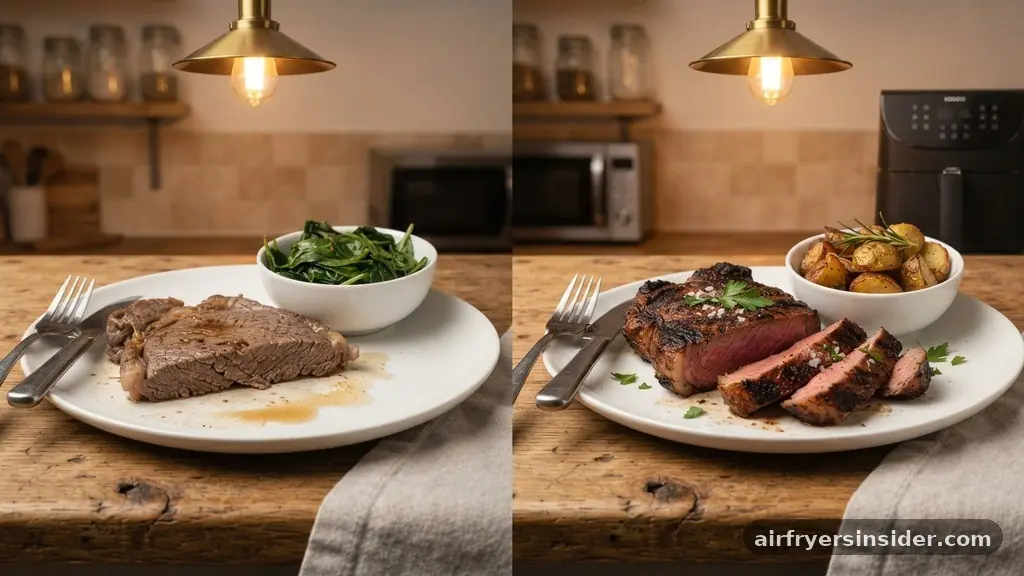
To understand why the air fryer is often superior, it helps to look at the alternatives. Microwaves are notorious for uneven heating and the dreaded “reheat flavor,” a byproduct of rapid oxidation that changes the taste of the fat. Ovens are better but take a long time to preheat and consume more energy for a small portion of food.
| Method | Texture Outcome | Speed | Ease of Use |
|---|---|---|---|
| Air Fryer | Crispy edges, tender center | Fast | High |
| Microwave | Chewy and rubbery | Very Fast | High |
| Oven | Even but dry | Slow | Medium |
| Stovetop | Good sear, uneven heat | Medium | Low |
As the table shows, the air fryer sits in a sweet spot. It provides the speed of a microwave with a texture profile that is much closer to a fresh sear. While the stovetop method can produce a great crust, it often requires constant monitoring to avoid burning the exterior while the inside stays cold.
Common Pitfalls and How to Avoid Them
Even with the right equipment, there are traps that can ruin your steak. The most common mistake is crowding the basket.
If you are reheating multiple pieces of meat, ensure they are in a single layer with enough space for the air to circulate. If the pieces are touching, the sides will steam rather than crisp, and the heating will be uneven.
Another issue is the temperature setting. Many people crank their air fryer to 400°F, thinking it will be faster. This is a mistake.
High heat will sear the exterior instantly, potentially charring it, while the inside remains cold. Stick to a lower temperature—around 300°F to 325°F—to ensure a gentle, consistent thaw and reheat. This technique minimizes texture degradation and keeps the meat from turning into a tough, leathery version of its former self.
Addressing Topical Gaps in Reheating
Many guides fail to mention the importance of the steak’s initial cook level. Reheating a medium-rare steak is fundamentally different from reheating a medium-well steak.
Because a medium-rare steak has less margin for error before it becomes medium or well-done, you must use shorter, more aggressive cycles. If you are reheating a slice that is already well-done, you have more leeway, but you also risk making it even drier.
Another gap is the “preheating” debate. Should you preheat the air fryer? For smaller items like steak, a short three-minute preheat is beneficial.
It ensures that the heat is consistent from the moment the meat enters the chamber. Without preheating, the first minute of your cycle is spent waiting for the machine to reach temperature, which can lead to confusion regarding your total cooking time. Always factor in the preheat phase to keep your timing consistent across different sessions.
Best Practices for Success
To master the process, consider the following checklist of best practices that will help you maintain quality every time you use your appliance:
- Always slice the steak into smaller, uniform strips if you are worried about uneven heating.
- Use a high-smoke-point oil like avocado or grapeseed if you want to add a light sear at the end.
- Allow the steak to come to room temperature for 15 minutes before putting it in the air fryer to reduce the necessary reheat time.
- Use a meat thermometer to confirm the internal temperature reaches at least 130°F for food safety.
- Avoid multiple reheat cycles; if the steak isn’t warm enough, add just 30 seconds at a time.
- Let the meat rest for 2-3 minutes after removing it from the basket to allow juices to stabilize.
Following these steps ensures that you are treating the meat with the respect it deserves, even if it is a leftover. The goal is to restore the steak to a state where it tastes as close to the original preparation as possible, rather than simply warming it up for consumption.
Optimizing for Different Cut Types
Not all steaks are created equal, and your strategy should shift based on the cut. A ribeye, with its higher fat content, benefits from the air fryer’s ability to render some of that fat during the reheating process. This actually helps keep the meat moist.
Conversely, a tenderloin is very lean and prone to drying out. When reheating a tenderloin, you should be even more diligent about using a light coating of oil or even a tiny splash of beef broth in the bottom of the basket to create a humid environment.
Sirloin and New York strip steaks fall somewhere in the middle. They are sturdy enough to handle the air fryer’s heat but still need care to avoid becoming tough.
By adjusting your timing based on the fat content and thickness, you become more proficient at handling any leftovers. Remember that the goal is to warm the protein without triggering further protein contraction, which is the primary cause of toughness in reheated beef.
FAQ
Is it safe to reheat steak in an air fryer?
Yes, it is perfectly safe as long as you ensure the internal temperature of the meat reaches a safe level to prevent foodborne illness. Using a meat thermometer is the best way to verify that the core has been heated sufficiently while maintaining a high-quality texture.
How do I prevent the steak from drying out?
To keep your steak juicy, apply a light coating of olive oil before cooking and consider wrapping the steak in aluminum foil if it is thin. This creates a barrier that retains moisture and prevents the rapid air circulation from dehydrating the meat fibers during the reheating process.
Should I preheat the air fryer before adding the steak?
Yes, preheating the air fryer for three to five minutes is highly recommended. Preheating ensures the cooking environment is at the correct temperature immediately, which allows for more predictable timing and helps achieve a better texture on the exterior of the steak without overcooking the center.
Can I reheat a medium-rare steak without making it well-done?
You can maintain a medium-rare finish by using a lower temperature, such as 300°F, and keeping a close eye on the internal temperature. Remove the steak when it hits approximately 120°F to 125°F, as the residual heat will continue to warm the center during the short resting period.
Conclusion
Mastering how long to reheat steak in air fryer is a skill that saves both time and money, ensuring that your leftovers are just as enjoyable as the original meal. By focusing on moderate temperatures, the right amount of oil, and the crucial use of a meat thermometer, you can avoid the common pitfalls of dry, rubbery, or unevenly heated meat. The key lies in treating the reheating process as a gentle restoration rather than a high-heat cooking event.
As you become more comfortable with your specific appliance, you will find that you can consistently achieve a tender, juicy result that respects the quality of the original cut. Don’t be afraid to experiment with your timing to find what works best for your preferred doneness, and always remember to let the meat rest before serving. With these techniques in your kitchen repertoire, you can confidently turn any leftover steak into a delicious, high-quality meal.
Meta Description: Learn how long to reheat steak in air fryer to keep it juicy and tender. Follow these expert tips on temperature, timing, and moisture for perfect leftovers.


