

Getting your leftover potato wedges back to their original glory is far easier than most people realize. While the microwave often leaves them soggy and limp, mastering the art of reheating potato wedges in an air fryer restores that signature crunch without the hassle of a traditional oven.
By leveraging convection heat, you can bring back the crispy texture you enjoyed the first time around. Whether you are dealing with seasoned wedges from a restaurant or homemade batches, this method ensures your snack remains delicious, hot, and perfectly golden brown every single time you decide to enjoy them again.
Understanding Why the Air Fryer Excels for Leftovers
When you look at the mechanics of reheating food, you are essentially trying to reverse the effects of cooling. As potatoes sit, they undergo a process called starch retrogradation, which causes the interior to become gummy and the exterior to lose its structural integrity.
Traditional ovens take too long to heat up, often causing the potato to dry out completely before the surface gets crispy again. Microwaves, conversely, use electromagnetic radiation to excite water molecules, which results in steam that destroys the crisp surface of any fried item.
The air fryer uses rapid air technology to circulate high-velocity heat around the food. This movement of air is the secret to maintaining the desired texture. Because the air fryer basket acts as a mini convection oven, it targets the surface of the potato wedge immediately, evaporating excess moisture from the skin while keeping the interior soft.
This creates a thermal gradient that mimics the original cooking process. When you focus on how to reheat potato wedges in an air fryer, you are prioritizing the preservation of that thin, flavorful crust that defines a good wedge.
Optimal Temperature Settings for Perfect Results
Choosing the right temperature is the most critical variable in your success. If the heat is too low, the wedges will sit in the basket for too long, leading to excessive moisture loss and a leathery texture.
If the heat is too high, the exterior will burn before the center has a chance to warm up. For most standard air fryers, such as the Ninja Foodi or Cosori models, the sweet spot for reheating lies between 350°F and 375°F.
At 350°F, you are gently coaxing the moisture out of the outer layer without scorching the seasoning. If your wedges are particularly thick, you might opt for the lower end of this range to allow the heat to penetrate the core of the potato. If you prefer an extra-crispy exterior, finishing the last minute of the cycle at 375°F can provide that final golden brown finish.
Always remember that every appliance varies slightly in its convection power, so your first attempt should be treated as a calibration run. Start at the lower end and adjust based on how quickly your specific unit recovers heat.
The Importance of Proper Preparation and Spacing
You cannot simply dump a pile of cold wedges into the basket and expect miracles. The core principle of air frying is airflow; if the wedges are stacked on top of each other, the air cannot reach the sides, and the potatoes will steam instead of crisping.
You must arrange them in a single layer to ensure the hot air can circulate freely around every surface. If you have a large batch, it is much better to reheat them in two smaller cycles than to crowd the basket.
Before placing them in the basket, check if they need a tiny bit of help. A light mist of oil spray can act as a conductor for heat, helping the surface starch respond more effectively to the blast of hot air. If the wedges have lost their seasoning, this is the perfect time to add a pinch of salt or paprika.
Do not use parchment paper unless you are worried about cleanup, as it can occasionally impede the flow of air coming from the bottom of the basket. If you do use it, make sure the holes in the paper are aligned with the basket perforations.
Managing Time and Monitoring the Reheat Cycle
Cooking time is rarely a static number when it comes to leftovers. Generally, reheating potato wedges in an air fryer takes between three to six minutes.
The exact duration depends on the thickness of the wedge, the quantity in the basket, and whether your machine was preheated. Preheating for two to three minutes is highly recommended, as it allows the unit to reach the target temperature immediately, ensuring the potatoes start crisping the moment they hit the basket.
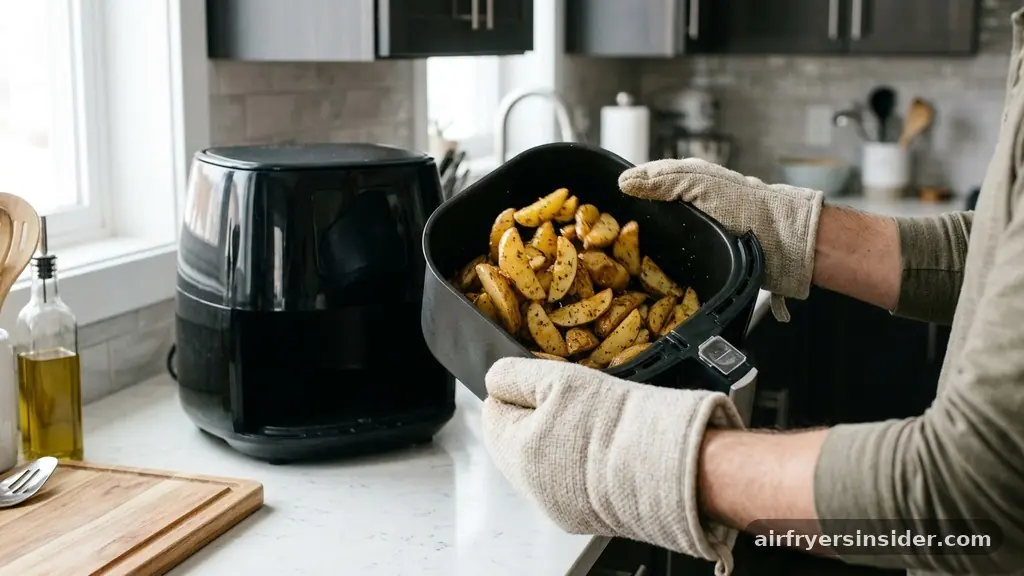
You should always shake the basket halfway through the cycle. This simple action redistributes the wedges and ensures that the side that was facing down now gets direct exposure to the heat. If you are using a basket-style air fryer, you will notice the wedges start to smell fragrant when they are near completion.
This is your best sensory cue. If they aren’t quite there, add time in one-minute increments. Over-reheating is the fastest way to turn a delicious potato into a dehydrated chip, so keep a close eye on them during the final sixty seconds.
Comparing Methods: Microwave vs Air Fryer
Many people default to the microwave because it is fast, but the results are rarely comparable. Understanding the physics of these two appliances helps explain why the air fryer is superior for this specific task.
| Feature | Microwave | Air Fryer |
|---|---|---|
| Texture | Soggy, limp, soft | Crispy, firm, golden |
| Heating Method | Radiation/Steam | Convection/Hot Air |
| Time Required | 1 minute | 3-6 minutes |
| Flavor Retention | Average | Excellent |
As demonstrated in the table above, the trade-off for the extra few minutes in the air fryer is a significantly better culinary outcome. While the microwave might save you two minutes, you sacrifice the structural integrity of the potato skin and the savory crunch of the seasoning. When you prioritize quality, the air fryer is the clear winner for any starchy side dish.
Addressing Topical Gaps: Safety and Storage
There are often questions about whether it is safe to reheat potatoes multiple times. From a food safety perspective, the main concern is the “danger zone” where bacteria can proliferate. If your potatoes were left out at room temperature for more than two hours after their initial cooking, they should not be reheated.
Once you have properly refrigerated them, you can safely reheat them once. Repeating the reheat cycle multiple times degrades the quality and increases the risk of uneven heating.
Another gap often overlooked is how to handle different types of potato wedges. A thick-cut wedge made from a starchy Russet potato will behave differently than a thin, skin-on wedge. Starchy potatoes tend to become fluffier on the inside, while waxy potatoes hold their shape better.
If your wedges have a heavy coating or batter, they might burn faster. In these cases, lower the temperature to 330°F and increase the time slightly. This prevents the outer coating from turning bitter while ensuring the dense center of the potato is thoroughly warmed.
Essential Tips for the Best Possible Texture
To truly master the process, you need to think about the chemistry of the potato. The crispiness comes from the dehydration of the outer layer and the caramelization of the potato starch.
If your wedges seem particularly greasy from the first round of cooking, place them on a paper towel for a minute before putting them in the air fryer. This removes excess surface oil that would otherwise cause the wedges to fry in their own grease, leading to a heavy, oily mouthfeel rather than a light, airy crunch.
Another pro tip is to avoid adding cold toppings or dips until after the reheating process is complete. If you are serving your wedges with cheese or sour cream, add these after they come out of the air fryer. Adding them beforehand creates a mess and prevents the hot air from reaching the potato surface.
Also, consider the internal temperature of the wedge. You are looking for a hot, steaming center. You can check this by piercing the thickest part of a wedge with a fork; it should slide in with zero resistance.
Maintaining Your Appliance for Consistent Results
The efficiency of your air fryer depends on how well you keep it clean. Residual grease and carbonized crumbs at the bottom of the basket can smoke during a high-heat reheat cycle, which will impart a burnt flavor to your food.
Before you start your snack preparation, ensure the basket is clean. This is especially important when using higher temperatures, as the air circulation will pick up any loose debris and blow it back onto your food.
If you find that your air fryer is producing inconsistent results, check the air intake and exhaust vents. These machines rely on a steady flow of air; if they are placed too close to a wall, the air cannot escape, and the internal temperature will fluctuate wildly.
Keeping your machine in a well-ventilated area ensures that the rapid air technology functions at peak performance. By treating your appliance with care, you guarantee that your method for how to reheat potato wedges in an air fryer remains reliable for years to come.
FAQ
Can I reheat potato wedges that have already been topped with cheese?
Yes, you can, but use a lower temperature of 325°F. The cheese will melt quickly, potentially before the potato is hot. Keep a close eye on the basket to ensure the cheese doesn’t burn while the potato warms through to the center.
How do I know if my potato wedges have gone bad in the fridge?
Check for a slimy texture on the potato skin or a sour odor. If they have been stored in an airtight container for more than three days, it is safer to discard them rather than risking food poisoning by attempting to reheat them.
Why do my potato wedges turn out dry in the air fryer?
Dryness usually occurs when the temperature is too high or the cooking time is too long. If you find your wedges are drying out, try adding a light mist of oil spray before heating, and reduce the total time by one or two minutes.
Can I use aluminum foil in the air fryer to keep it clean?
You can use foil, but only if it is weighed down by the food and does not cover the entire bottom of the basket. If the foil blocks the airflow, your wedges will not crisp up, and you will lose the benefit of the air fryer.
Conclusion
Mastering the technique for reheating potato wedges in an air fryer is a simple way to elevate your leftovers and reduce food waste. By focusing on the correct temperature, ensuring proper spacing for air circulation, and avoiding the urge to rush the process, you can achieve a crispy, delicious result that tastes nearly as good as when they were first prepared. The key lies in understanding how your specific appliance handles heat and being attentive to the texture of the potatoes as they warm.
Whether you are enjoying a quick snack or a side for a larger meal, this method provides the consistency you need. Next time you have leftovers, skip the microwave and give your air fryer a chance to shine.


