

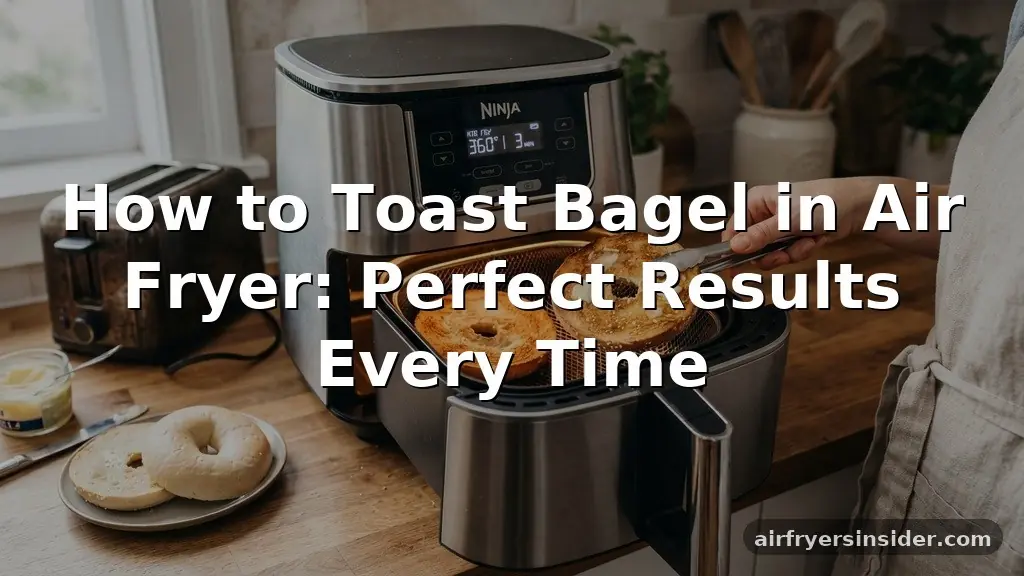
Getting that perfect crispy texture on a bagel shouldn’t require a bulky countertop toaster that only does one thing. When you learn how to toast a bagel in an air fryer, you unlock a level of control over the Maillard reaction that standard pop-up toasters simply cannot match.
By utilizing convection heat, the air fryer ensures that your bagel halves achieve a deep, even golden brown finish while keeping the center delightfully chewy. Whether you are prepping for a quick morning meal or a late-night snack, mastering this technique transforms your breakfast preparation into a reliable, high-quality routine.
Why the Air Fryer Outperforms Traditional Toasters
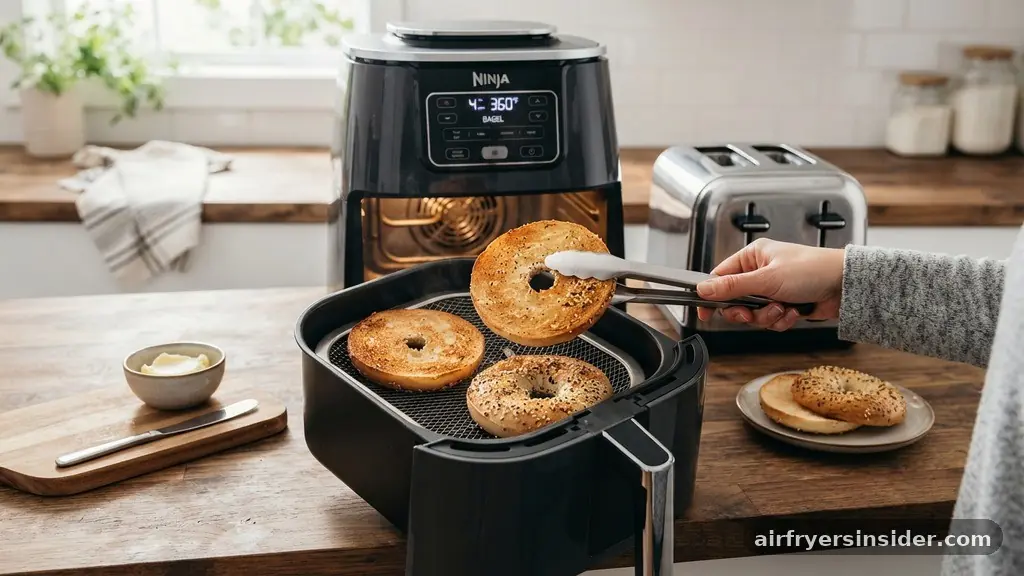
The primary advantage of using an air fryer for your morning bread is the sheer efficiency of the air circulation. Traditional toasters rely on radiant heat from wires, which often leads to uneven browning or burnt edges if the slots are too narrow.
An air fryer, however, acts like a mini-convection oven. It forces hot air around the entire surface of the bread, which is essential for achieving that desirable surface crunch without drying out the interior softness.
Beyond the texture, air fryers provide superior versatility. If you prefer your bread with specific bagel toppings like seeds or dried onions, the gentle fan won’t blow them off as easily as the vertical movement of a standard toaster.
Additionally, most modern kitchen appliances like the Ninja Foodi or Cosori models allow you to adjust the rack height or basket position, giving you even more control over how close the bagel sits to the heating element. This precision is a significant upgrade for anyone who takes their toast seriously.
Optimizing Temperature Settings for Your Bagel
Finding the right temperature settings is the most critical factor in achieving the ideal crunch. Most people make the mistake of cranking the heat too high, which results in a charred exterior and a cold, doughy center.
For a standard, room-temperature bagel, setting your air fryer to 350°F to 375°F (175°C to 190°C) is the sweet spot. This range allows the heat to penetrate the crumb while gently browning the cut side.
If you are dealing with a thicker variety, you may need to drop the temperature slightly and increase the cooking time. A very dense, New York-style bagel requires more time to warm through than a lighter, airy supermarket variety.
Always start on the lower end of your temperature range if you are unsure about your specific machine’s intensity. You can always add an extra minute, but you cannot fix a burnt bagel once the sugars in the crust have carbonized.
Managing Bagel Thickness and Airflow
Not all bagels are created equal. The bagel thickness plays a massive role in how quickly moisture evaporates from the dough.
Thinner bagels will crisp up in as little as two to three minutes, whereas thicker, bakery-style bagels might take five or six minutes. Because the air fryer basket relies on the movement of air, you must ensure you aren’t overcrowding the unit.
If you pack too many halves into the basket, you block the airflow, effectively steaming the bread rather than toasting it. This leads to a rubbery texture that ruins the experience. Aim to place your halves cut-side up, ensuring there is at least an inch of space between them.
If you are toasting multiple bagels, it is better to work in batches than to cram them all in at once. This ensures that the hot air hits every surface uniformly, resulting in a consistent, professional-grade toast.
The Science of Reheating Frozen Bagels
One of the most common dilemmas is what to do with a frozen bagel. Many people assume they need to thaw it on the counter for an hour, but the air fryer is actually the perfect tool for a “quick thaw and toast.”
To do this effectively, start with a lower temperature—around 300°F—for the first two minutes to allow the interior to defrost. Once the center feels soft to the touch, crank the heat up to 375°F for another two minutes to finish the crust.
This two-stage process mimics the fresh-baked quality of a bakery item. If you try to go straight to high heat with a frozen item, you will end up with a hard, icy core and a burnt exterior.
Using this method for reheating makes your freezer an asset rather than a graveyard for forgotten bread. It’s an essential skill for efficient snack preparation throughout the week.
Using Parchment Paper and Accessories
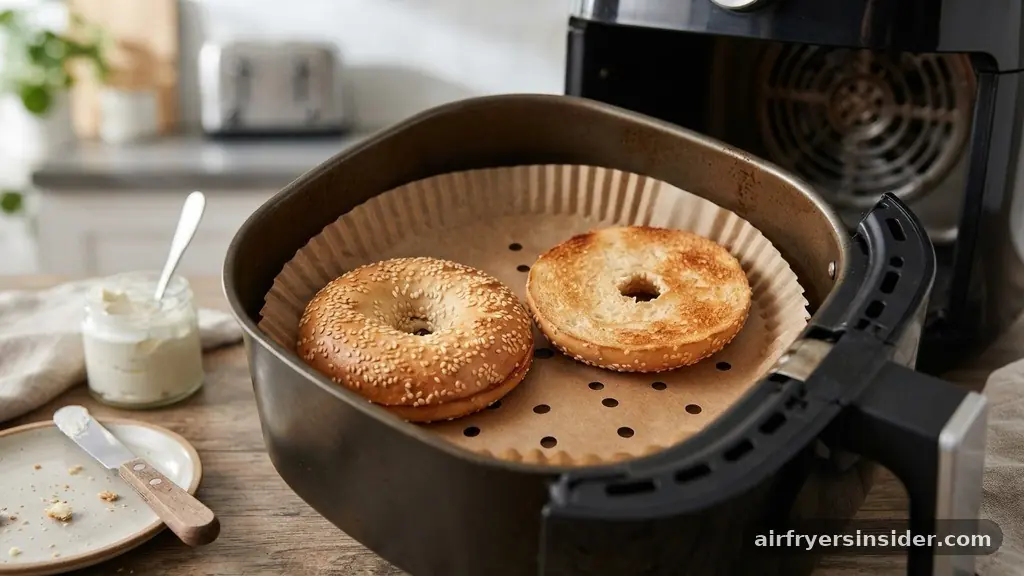
While you can place bagels directly on the rack or basket, using parchment paper—specifically the perforated kind designed for air fryers—can make cleanup much easier. This is especially helpful if you are adding butter or cheese before toasting.
However, be cautious: the air current in the fryer is powerful. If the paper isn’t weighed down by the food, it can fly up and hit the heating element, which is a major fire hazard.
Always ensure that the food is heavy enough to hold the parchment in place. If you are just toasting plain halves, you likely don’t need any liner at all.
The direct heat of the basket is perfectly fine and often results in a better crust on the bottom side of the bagel. If you are adding toppings like garlic or herbs, the paper becomes a great tool to keep your basket clean and free of charred bits that might smoke during future uses.
Comparing Toasting Methods
To understand why the air fryer is superior for this task, it helps to see how it stacks up against other common methods. The following table provides a quick look at the variables involved in different toasting techniques.
| Method | Texture Quality | Speed | Ease of Use |
|---|---|---|---|
| Pop-up Toaster | Inconsistent | Fast | High |
| Air Fryer | Excellent/Crispy | Moderate | Medium |
| Oven (Broil) | Good | Slow | Low |
As shown in the data, while the pop-up toaster is faster, it lacks the consistency and control offered by an air fryer. The oven is effective for large quantities, but it is inefficient for a single serving. The air fryer sits in the middle, offering a perfect balance of quality and convenience for daily use.
Common Mistakes to Avoid
Even with a reliable appliance, there are pitfalls that can ruin your morning meal. The most frequent error is neglecting to preheat the unit.
While many people think air fryers don’t need to preheat, doing so ensures that the cooking time is accurate from the moment the bread touches the basket. If you put the bagel in during the ramp-up phase, the total time will be inconsistent, and the bagel may dry out before it gets crispy.
Another common mistake is adding cream cheese or other spreads before toasting. Always toast the bagel first, then apply your spreads.
If you toast with toppings already applied, the moisture from the spread will prevent the bread from crisping properly, and you risk making a massive, oily mess inside your appliance. The only exception is a light brushing of butter or olive oil, which can actually help the browning process if applied sparingly.
Answering Common Topical Gaps
You might be wondering if you can toast a bagel without an air fryer if yours breaks, or how to handle specific dietary varieties. One frequent question involves gluten-free bagels. Because gluten-free dough lacks the structure of wheat, it is often more prone to crumbling.
When working with these, keep the temperature slightly lower and the time shorter. They tend to dry out much faster than traditional flour-based bagels.
Another gap is the use of the “Air Crisp” vs. “Bake” setting. If your machine has both, always choose “Air Crisp” or “Air Fry.”
The “Bake” function often relies on a lower fan speed, which won’t provide the aggressive, dry heat necessary to get that signature crunch. If you find your bagel isn’t browning, check your settings to ensure the fan is running at full capacity.
Essential Tips for the Best Results
To truly master the process, consider these additional tips for your routine:
- Always cut your bagel halves as evenly as possible to ensure they toast at the same rate.
- If you want a garlicky crust, rub a raw clove of garlic on the cut surface before placing it in the fryer.
- For a savory treat, add a thin slice of tomato or a sprinkle of shredded cheese during the final 60 seconds of cooking.
- If the bagel is getting too dark but the center is still cold, tent it with a small piece of foil.
- Clean your air fryer basket regularly; leftover crumbs from previous meals can burn and add an unpleasant acrid taste to your fresh bread.
By following these simple adjustments, you can ensure that your results are consistent every single time. It’s all about monitoring the process and learning the quirks of your specific machine.
FAQ
How long should I toast a bagel in an air fryer?
For most standard bagels, three to five minutes at 360°F is ideal. Thinner bagels may take only two minutes, while very dense or frozen ones can take up to six minutes. Always check at the three-minute mark to prevent over-browning.
Do I need to preheat my air fryer for bagels?
Yes, preheating for two to three minutes is recommended. This ensures the unit is at the target temperature immediately, which helps the bagel crust over quickly without drying out the soft, chewy interior. It makes the overall cooking time more predictable and consistent.
Can I put cream cheese on the bagel before air frying?
No, you should never add cream cheese or other moist spreads before toasting. The moisture will prevent the surface from becoming crispy and can create a mess inside your machine. Always toast the bread first, then add your toppings once it is out of the basket.
Is it better to use the air fryer than a toaster?
The air fryer is superior for texture because the circulating hot air browns the entire surface evenly. While a toaster is faster, it often results in uneven browning and can burn the edges. The air fryer provides a more professional, bakery-quality finish every time.
Conclusion
Mastering the art of using your air fryer for morning staples changes the way you approach your breakfast. By focusing on the right temperature, managing the air circulation, and avoiding the common pitfalls of pre-topping your bread, you ensure a superior result that a standard toaster simply cannot replicate. The combination of a crispy exterior and a soft, warm interior is the hallmark of a perfectly toasted bagel, and with a little practice, it becomes second nature.
Whether you are reheating a frozen favorite or crisping up a fresh one, the air fryer offers the precision you need. Start experimenting with your temperature settings today to find the exact level of crunch you prefer, and enjoy the difference in your daily routine.


