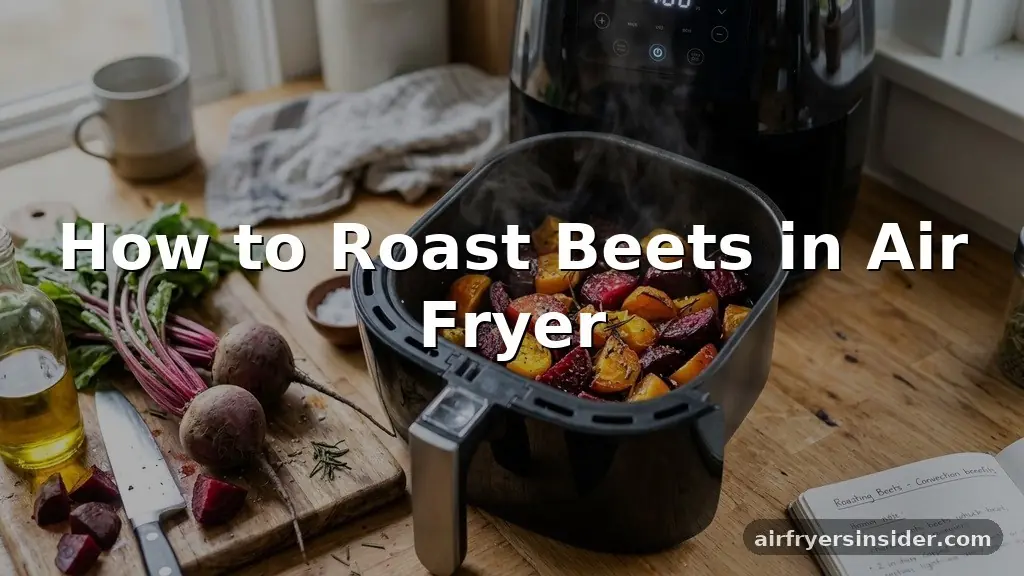
Learning how to roast beets in air fryer units transforms a humble garden staple into a sophisticated, earthy treat without the long wait times of a conventional oven. By using rapid air technology, you achieve a concentrated, candy-like sweetness that brings out the best in these vibrant root vegetables.
Whether you are looking to save time on a busy weeknight or simply want to avoid heating up your entire kitchen during the summer, this method delivers consistent results. You will find that the intense heat creates a beautiful caramelization while maintaining a tender, buttery interior that pairs perfectly with salads, grains, or as a stand-alone side dish.
The Benefits of Convection Cooking for Root Vegetables
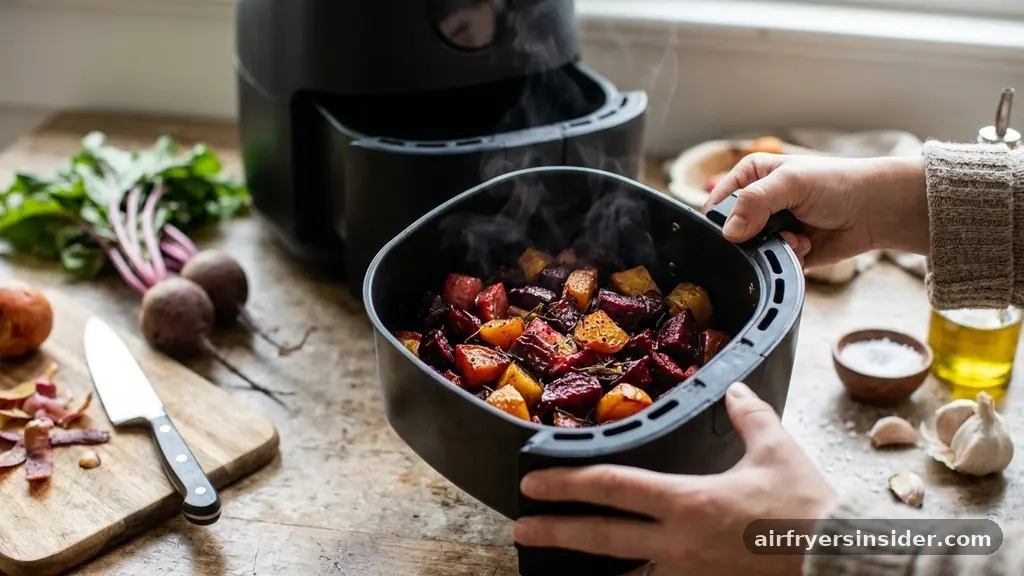
When you decide to roast beets in air fryer baskets, you are essentially utilizing high-powered convection cooking to achieve superior results. Traditional ovens often struggle to circulate heat evenly around dense, round vegetables like beetroot, leading to inconsistent cooking times.
An air fryer, however, forces hot air to move rapidly around the surface of the food. This process accelerates the breakdown of natural sugars, which is the secret behind the deep, intense flavor profile that makes air-fried beets so desirable.
Because the chamber is significantly smaller than a standard oven, the heat stays focused exactly where it needs to be. This efficiency means your roasting time is often cut in half, or even more, depending on the size of the beets. Beyond speed, the texture is distinct; you get a crisp outer layer that protects the moist, nutrient-dense interior.
This is a significant upgrade over boiling, which often leaches away the earthy sweetness and leaves you with a bland, waterlogged product. By keeping the cooking process dry, you preserve the integrity of the vitamins and minerals found in fresh produce.
Preparation and Cleaning for Best Results
Proper preparation is the foundation of any great vegetable dish. Before you start the process of roasting, you must address the exterior of the beetroot. Start by giving them a thorough scrubbing under cold running water to remove any lingering soil or grit from the fields.
If you prefer a rustic presentation or want to keep as much fiber as possible, you can opt for skin-on roasting. However, if you dislike the texture of the skin, using a high-quality vegetable peeler is the most efficient way to prepare them.
Once cleaned and dried, consider how you want them to finish. Uniformity is key here; aim to cut your beets into consistent cubes or wedges. If you leave them in large, irregular chunks, the smaller pieces will turn mushy before the larger ones are fully cooked.
Aim for one-inch pieces to ensure they become fork-tender at roughly the same time. If you are working with a specific model like a Ninja air fryer, the basket capacity might dictate how many beets you can cook at once. Avoid overcrowding the basket, as this restricts airflow and prevents the convection effect from doing its job effectively.
Seasoning and Flavor Enhancements
While beets have a naturally robust flavor, the right seasoning elevates them from a simple side to a standout component of your meal. A light coating of olive oil is essential, not just for flavor, but for conductivity. The oil helps the heat transfer efficiently to the surface of the vegetable, promoting the desired caramelization.
You don’t need much; a tablespoon or two is usually plenty for a standard batch. Toss the beets in a bowl before placing them in the basket to ensure every side is evenly coated.
Beyond the basics, seasoning allows for endless creativity. A generous sprinkle of kosher salt is non-negotiable, as it draws out the natural moisture and enhances the inherent sweetness.
Freshly cracked black pepper adds a necessary bite that cuts through the earthiness. If you want to experiment with more complex profiles, try these additions:
- Balsamic vinegar: Drizzle a small amount after cooking for a tangy, acidic contrast.
- Fresh thyme or rosemary: Add these dry herbs before cooking to infuse the beets with woody notes.
- Honey or maple syrup: If you prefer a sweeter profile, a tiny glaze can enhance the candy-like sweetness.
- Garlic powder: Provides a savory depth that pairs perfectly with the root vegetable’s natural profile.
Mastering the Roasting Time and Temperature
Navigating temperature settings is the most critical technical aspect of using an air fryer. For most root vegetables, a temperature of 375°F to 400°F works best. If you go too low, you simply steam the beets, resulting in a rubbery texture.
If you go too high, the exterior will burn before the center reaches a fork-tender state. Start by preheating your unit for about three minutes; this initial blast of heat ensures that the cooking process begins the moment the food enters the basket.
The following table outlines the general relationship between beet size and required cooking time. Please note that these are estimates, as every air fryer brand operates with slight variations in fan speed and heating element intensity.
| Beet Size (Cut) | Temperature | Estimated Time |
|---|---|---|
| Small Cubes (1/2 inch) | 380°F | 15–20 minutes |
| Medium Chunks (1 inch) | 380°F | 20–25 minutes |
| Large Wedges | 380°F | 25–30 minutes |
Addressing Common Topical Gaps
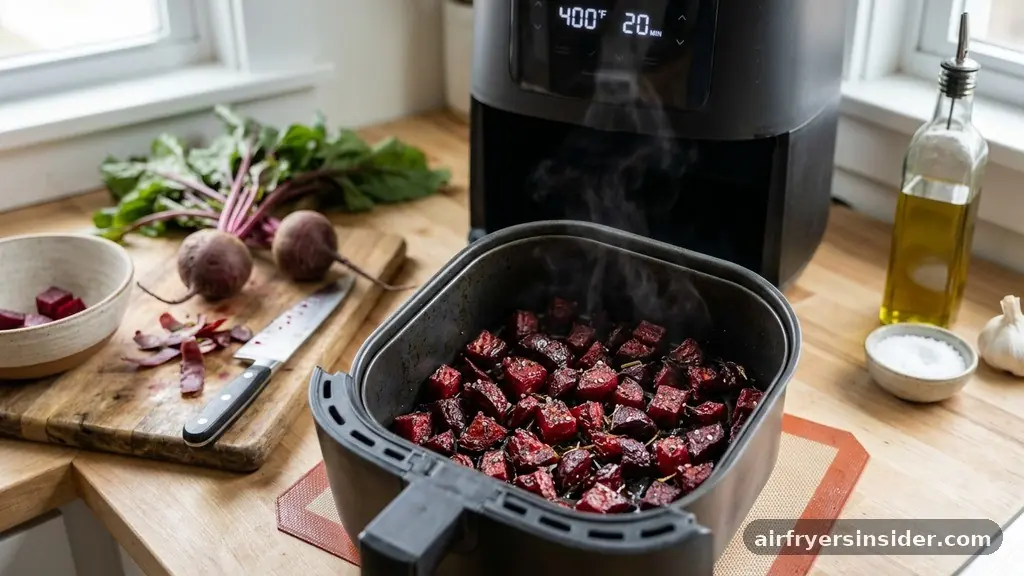
Many home cooks wonder if they truly need to use aluminum foil when roasting beets in an air fryer. The answer depends on your goals for cleanup and texture. Using foil creates a packet that essentially steams the beets inside the air fryer.
This results in a softer, more uniform texture and makes cleanup nearly instantaneous, as the juices are contained. However, if you prefer a roasted vegetable texture with slightly crisp edges, you should skip the foil and place the beets directly on the basket surface.
Another common concern is food safety regarding the greens. Many people discard the tops, but they are entirely edible and arguably just as nutritious as the root itself. You can toss the greens in the air fryer during the last three minutes of the roasting time.
They will wilt down similarly to spinach or kale and make an excellent, zero-waste addition to your meal. Always check that the greens are washed thoroughly, as they tend to hold onto more sand than the roots do.
The Science of Caramelization
The reason we love roasted vegetables comes down to the Maillard reaction. When you subject the natural sugars and amino acids in the beetroot to high, dry heat, they undergo a chemical transformation that creates hundreds of different flavor compounds.
This is why a raw or boiled beet tastes vastly different from one that has been air-fried. The rapid air technology in your device ensures that this reaction happens across the entire surface area of the vegetable rather than just the parts touching a metal tray.
To maximize this effect, ensure your beets are patted completely dry after washing. Excess moisture on the surface will turn into steam, which keeps the temperature of the vegetable at 212°F—the boiling point of water.
You need the surface temperature to climb above this point for the Maillard reaction to occur. By removing the surface water and using a light coating of oil, you allow the air fryer to work its magic, resulting in that signature deep brown color and complex, sweet flavor.
Integrating Air-Fried Beets into Your Diet
Because they are so versatile, air-fried beets can serve as the centerpiece for many healthy side dishes. They work exceptionally well in grain bowls, providing a pop of color and natural sweetness against nutty quinoa or farro.
If you are preparing a salad, try adding the warm beets to a bed of peppery arugula with goat cheese and walnuts. The contrast between the warm, soft beets and the cool, crisp greens is a classic culinary combination.
You can also use them as a topping for savory toasts. Mash them slightly with a fork and spread them over sourdough bread, perhaps topped with a drizzle of olive oil and a sprinkle of feta.
Because they are so nutrient-dense, they are a fantastic way to add volume and satisfaction to a meal without relying on heavy proteins or processed carbohydrates. Keep a container of pre-roasted beets in the fridge for up to four days; they reheat beautifully in the air fryer for just two or three minutes.
Troubleshooting Common Issues
Even for experienced cooks, air fryers can sometimes present minor challenges. If you find that your beets are charred on the outside but raw in the middle, you are likely using a temperature that is too high. Lower the setting by 25 degrees and increase the time to allow the heat to penetrate the center of the dense root.
Conversely, if your beets are coming out soft and pale, you are likely overcrowding the basket. Air fryers rely on the movement of hot air; if the pieces are touching or stacked, the air cannot pass through, and you effectively end up with a pile of steamed vegetables.
Another issue involves uneven cooking. This is easily solved by shaking the basket halfway through the cooking time. This simple action redistributes the beets, ensuring that pieces which were previously shielded from the direct heat get their turn in the flow of the hot air.
If you are using a tray-style air fryer rather than a basket model, use a pair of tongs to flip the pieces individually. Consistency in movement is the hallmark of a perfectly roasted vegetable.
FAQ
Do you have to peel beets before air frying?
Peeling is a matter of preference. If you enjoy a rustic texture, you can leave the skin on after a thorough scrub. If you prefer a smoother, more uniform bite, use a vegetable peeler. The skin becomes very thin and palatable once roasted, so it is perfectly safe to eat.
Is it better to roast in an air fryer or oven?
An air fryer is generally superior for smaller quantities due to its speed and efficiency. The rapid air movement creates a better crust and caramelization than a standard oven. For large batches intended to feed a crowd, a conventional oven remains the better choice for capacity reasons.
Can you roast beets in foil in the air fryer?
Yes, you can use aluminum foil to create a packet for the beets. This method effectively steams them, resulting in a very tender texture and easier cleanup. It is an excellent choice if you want to avoid scrubbing the air fryer basket after the cooking process is finished.
How do I know when the beets are finished?
The best way to test for doneness is to pierce a piece with a fork. It should slide in and out of the thickest part of the beet with zero resistance. If there is any firmness or crunch, they need a few more minutes of cooking time at the same temperature.
The process of roasting beets in air fryer units is a straightforward way to elevate your home cooking with minimal effort. By focusing on consistent sizing, adequate airflow, and the right seasoning, you can turn these earthy root vegetables into a sweet, caramelized delight that complements any meal. Remember to prioritize the texture you enjoy most, whether that means keeping the skins on for a rustic finish or using foil for a softer, steamed result.
As you get more comfortable with your specific device’s temperature settings, you will find that this method becomes a reliable part of your weekly routine. Experiment with different herbs and vinegars to keep things interesting, and enjoy the convenience of healthy, vibrant cooking.