
Learning how to make hard boiled eggs in an air fryer is a surprisingly efficient method that transforms your countertop appliance into a versatile tool. Many home cooks assume that eggs must be submerged in boiling water to achieve the perfect texture, but this convection-based approach offers consistent results without the need for a stovetop.
By understanding the interaction between dry heat and shell permeability, you can easily control yolk consistency to suit your personal preferences. Whether you need a quick snack or ingredients for a salad, mastering this technique simplifies your meal prep while saving you valuable time in the kitchen.
The Mechanics of Convection Cooking for Eggs
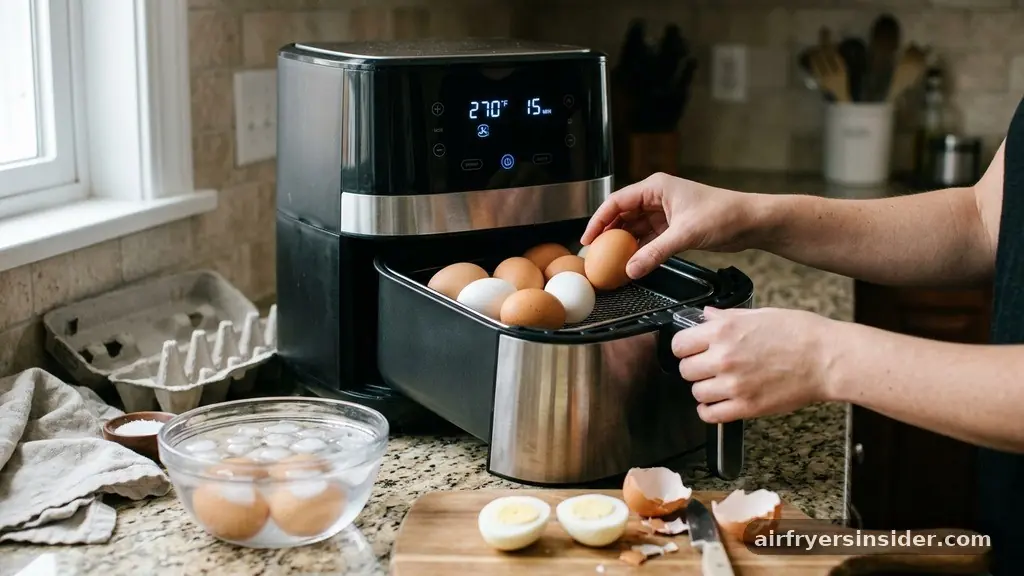
Using an air fryer for eggs relies on the principles of convection cooking. Unlike a traditional pot of water, which transfers heat through liquid, the air fryer circulates superheated air around the eggs. This rapid movement of air ensures that the heat is distributed evenly across the surface of the shell.
Because the air fryer is essentially a small, high-powered oven, it creates a controlled environment where the internal temperature of the egg rises steadily. This is particularly effective because it eliminates the risk of eggs bumping against each other and cracking, which often happens in a rolling boil.
One of the most significant advantages of this method is the precision it offers. You are essentially baking the egg inside its shell. Because the heat source is consistent, you can develop a reliable routine based on the specific wattage of your machine.
Most models reach the target temperature quickly, allowing the protein coagulation process—which turns the liquid white into a firm solid—to occur predictably. This method is ideal for those who find stovetop boiling finicky, as it removes the need to monitor a pot for potential overflows or fluctuating heat levels.
Preparing Your Eggs for the Air Fryer
Before you place your eggs into the machine, there are a few preparation steps that ensure success. First, if your eggs have been stored in a refrigerator, it is helpful to let them sit on the counter for a few minutes. While you can cook cold eggs, room temperature eggs are less likely to experience thermal stress when they hit the hot air.
This reduction in temperature contrast helps prevent hairline fractures on the shell during the initial stages of cooking. You do not need to wash the eggs, but ensure they are dry before placing them in the basket.
Placement is critical for even cooking. Most air fryers come with a basket that allows for airflow, but you should avoid overcrowding. Wether you are cooking a large batch, ensure there is enough space for air to circulate around each egg.
If you own an egg rack or a specialized insert, use it to keep the eggs stationary. If not, placing them directly in the basket is perfectly fine, provided they are arranged in a single layer. A crowded basket can lead to uneven heat distribution, which might result in some eggs being fully cooked while others remain slightly underdone.
Optimizing Temperature and Timing
Determining the right cooking temperature is the most important factor in achieving your desired result. Most recipes suggest setting your air fryer to 250 degrees Fahrenheit (approximately 120 degrees Celsius). This lower heat setting mimics the gentle nature of a simmer, preventing the eggs from becoming rubbery or developing an unappealing sulfur ring around the yolk.
High heat can cause the proteins to tighten too quickly, leading to a tough texture that is difficult to chew. By keeping the temperature moderate, you allow the interior to cook through gradually.
The cooking duration will vary depending on your specific machine and the size of your eggs. Use the following general guide as a starting point for your experiments:
| Desired Doneness | Cooking Time (Minutes) |
|---|---|
| Soft-boiled (runny yolk) | 9–10 minutes |
| Jammy eggs (creamy yolk) | 11–12 minutes |
| Hard-boiled (firm yolk) | 14–15 minutes |
The Role of Rapid Cooling and Ice Baths
Once the timer goes off, the process of rapid cooling begins immediately. This is perhaps the most critical step in ensuring easy shell peeling. When you remove the hot eggs from the air fryer, the inner membrane is still bonded to the shell.
By dropping the eggs directly into an ice water bowl, you trigger a sudden temperature drop that causes the egg to contract slightly inside the shell. This contraction creates a small gap between the white and the membrane, which is the secret to a clean, smooth peel every time.
Leaving the eggs in the ice bath for at least five to ten minutes is recommended. This not only makes them easier to handle but also stops the cooking process entirely.
If you skip this step and let the eggs cool at room temperature, the residual heat will continue to cook the yolks, potentially leading to overcooked, chalky centers. If you are batch-prepping for the week, ensure the water in your bowl remains cold; if the water warms up, add more ice to maintain the temperature differential required for the best results.
Addressing Common Challenges and Safety
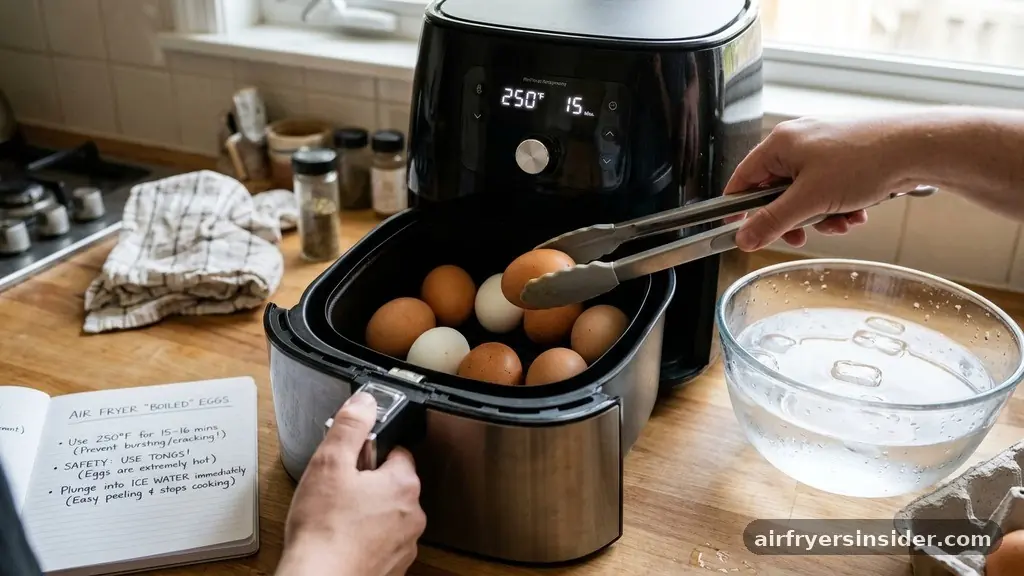
One common concern when using high-heat appliances for eggs is food safety. While air frying is generally safe, it is important to remember that raw eggs can carry salmonella. The high heat of the air fryer is more than sufficient to pasteurize the egg and eliminate pathogens, provided you reach an internal temperature that sets the yolk.
However, avoid eating eggs that have been left out at room temperature for more than two hours before cooking. If you notice any cracks on the shells before you start, it is safer to discard those or use them for baking where they will be fully incorporated into a batter.
Another potential issue is the development of the dreaded green or gray ring around the yolk. This is caused by a chemical reaction between the sulfur in the egg white and the iron in the yolk, which happens when eggs are cooked for too long or at too high a temperature.
By sticking to the recommended 250-degree Fahrenheit setting and ensuring you don’t exceed the 15-minute mark for hard-boiled eggs, you can avoid this entirely. If your eggs consistently end up with this ring, try reducing your cooking time by one minute in your next batch.
Maximizing Your Air Fryer Capacity
When you are looking to prepare a large quantity of eggs, the basket capacity of your air fryer becomes a limiting factor. Most standard air fryers can comfortably hold six to ten eggs depending on their size. To maximize your efficiency, consider the shape of your basket.
Square baskets often accommodate more eggs than circular ones. Always avoid stacking eggs on top of each other, as the ones in the middle will not receive the same amount of airflow as those on the edges, leading to inconsistent textures across the batch.
If you find yourself needing to cook a larger quantity, it is better to run two consecutive batches rather than cramming them all in at once. Because the air fryer is already preheated from the first batch, the second batch may cook slightly faster.
Keep a close eye on your egg timer during the second round, as you might need to shave off 30 to 60 seconds to account for the residual heat inside the chamber. This small adjustment ensures that your entire batch comes out with the same perfect consistency.
Why This Method Beats Traditional Boiling
Many home cooks are switching to air frying because it is a cleaner, more predictable process. When boiling eggs on a stovetop, you have to wait for a large pot of water to come to a boil, which consumes energy and time.
Furthermore, if the water boils too vigorously, the eggs can bang against the sides of the pot and crack, leading to messy whites leaking into the water. With an air fryer, the eggs remain stationary in the basket, keeping the shells intact and your cleanup minimal.
The lack of water also means there is no risk of the pot boiling dry if you get distracted. Air fryers are equipped with automatic shut-off features, providing peace of mind that your eggs won’t overcook to the point of being inedible.
This is a significant advantage for busy households where multitasking is the norm. Once you have mastered the timing for your specific model, you can reliably produce eggs for breakfast, salads, or snacks with virtually zero active monitoring.
Answering Topical Gaps and Common Queries
There are several nuances to this technique that often go unaddressed in basic guides. For instance, many people ask if preheating is necessary. While not strictly required for the eggs themselves, preheating your air fryer for three minutes ensures that the cooking cycle starts at the target temperature, leading to more predictable results.
Another common question involves the texture of the shell. Some users report that the shells become speckled or slightly brown during the process. This is perfectly normal and is caused by the dry heat interacting with the shell surface; it does not affect the flavor or safety of the egg inside.
- Always use a timer to avoid overcooking, as the air fryer is very efficient.
- Ensure your eggs are not touching the heating element at the top of the unit.
- If you prefer a softer yolk, remove the eggs precisely when the timer hits the nine-minute mark.
- Store cooked, unpeeled eggs in an airtight container in the refrigerator for up to one week.
- Do not attempt to cook more than two layers of eggs, as air circulation will be severely restricted.
Refining Your Technique for Consistent Results
Becoming an expert at this requires a bit of experimentation. Every air fryer is different; the heating element’s proximity to the basket, the power of the fan, and the overall insulation of the unit all play a role in how your eggs turn out. Keep a small notebook or a note on your phone to track your results.
If your 14-minute eggs were slightly too soft, note that down and try 15 minutes next time. Over time, you will develop a “perfect” setting that works every single time for your specific appliance.
Consistency is also improved by using high-quality, fresh eggs. Older eggs tend to have a larger air pocket, which can make them more prone to cracking under heat. If you are using eggs that have been in your fridge for a few weeks, be extra careful during the placement phase.
As you grow more comfortable with the process, you can even experiment with seasoning the shells with a light mist of oil or salt, though this is purely optional and mainly for aesthetics. The most important thing is to enjoy the convenience of this modern kitchen gadget.
Frequently Asked Questions
Is it necessary to preheat the air fryer before adding the eggs?
While you can put eggs in a cold air fryer, preheating for three minutes ensures the cooking time is accurate. Without preheating, the eggs will slowly warm up as the air fryer reaches temperature, which can make your timing inconsistent and difficult to predict across different batches.
How do I prevent my eggs from cracking in the air fryer?
Cracking is usually caused by thermal shock or the eggs hitting each other. To minimize this, let your eggs reach room temperature before cooking. Additionally, ensure they are placed in a single, stable layer so they do not roll around or bump into each other during the convection cycle.
Can I cook soft-boiled and hard-boiled eggs at the same time?
It is not recommended to cook different types of eggs simultaneously. Because the cooking duration determines the yolk consistency, you would have to pull the soft-boiled eggs out early, which would disrupt the airflow for the remaining hard-boiled eggs. It is best to cook them in separate batches.
Why do my eggs smell like sulfur after air frying?
A sulfur smell usually indicates that the eggs have been overcooked. When eggs are exposed to heat for too long, the sulfur in the whites reacts with the iron in the yolks. To avoid this, use a precise timer and move the eggs to an ice bath immediately after cooking.
Conclusion
Mastering the art of making hard boiled eggs in an air fryer is a game-changer for efficient meal preparation. By leveraging convection technology, you achieve consistent, easy-to-peel results without the hassle of boiling water or monitoring a stovetop. Remember to focus on the temperature, respect the need for a cold ice bath, and adjust your timing to match your specific appliance.
Whether you prefer a runny, jammy, or fully firm yolk, this method offers the reliability you need for perfect results every time. Start with a small batch to calibrate your timing, and you will soon find that this becomes your go-to method for preparing eggs in your kitchen. Feel free to experiment with the settings to find the exact texture you love most.