
Discovering whether you can make pizza in an air fryer is a game-changing moment for many home cooks who want quick, delicious results without heating up a full-sized oven. Since these compact kitchen appliances function as high-powered convection ovens, they are uniquely suited for achieving that elusive crispy crust. Whether you are dealing with a store-bought frozen pie or experimenting with fresh, homemade dough, the intense air circulation ensures even melting and perfect browning.
Understanding how to manage temperature and timing is the secret to success. By mastering a few simple techniques, you will find that your countertop appliance produces professional-quality slices in a fraction of the time required by traditional methods.
The Mechanics of Air Fryer Pizza Success

Understanding how your appliance works is the first step toward achieving a perfect pie. At its core, an air fryer is essentially a powerful convection oven. It uses a heating element and a high-speed fan to force hot air around the food.
When you place a pizza inside, this constant flow of heat mimics the environment of a professional pizza oven, albeit on a much smaller scale. This process promotes the Maillard reaction, which is the chemical interaction between amino acids and reducing sugars that gives browned food its distinctive, savory flavor.
Because the space is so confined, the heat distribution is incredibly efficient. You don’t have to worry about cold spots that often plague larger ovens. However, this efficiency also means your pizza can go from perfectly golden to burnt in a matter of seconds.
It is vital to monitor the cooking process closely, especially during your first few attempts. By keeping the cooking time short and the temperature consistent, you create an environment where the dough cooks through while the cheese remains bubbly and the toppings stay vibrant.
Adapting Recipes for Small Cooking Spaces
When you decide to make pizza in an air fryer, you must consider the physical dimensions of your non-stick basket. Most standard air fryers are circular, which naturally limits the size of the crust you can prepare.
You will likely need to trim your dough or purchase smaller pre-made crusts that fit comfortably without touching the sides. If the edges of the dough curl up against the basket walls, they may burn before the center of the pizza is fully cooked.
It is also worth noting that the thickness of your dough matters. Thinner, flatter crusts perform significantly better in this environment than deep-dish or thick-crust varieties. Because the air fryer heats from the top down, a very thick dough might result in burnt toppings and raw centers.
If you are using fresh dough, ensure it has undergone proper proofing before you stretch it out to ensure it is light and airy. A light dusting of flour on your work surface will help you stretch the dough to the exact size needed for your specific basket.
The Role of Preheating and Rack Placement
Many home cooks wonder if they need to preheat their air fryer before sliding in the pizza. While some newer models heat up almost instantly, giving the unit three to five minutes to reach the target temperature ensures a more consistent cook.
Preheating allows the basket to start at the right temperature, which is crucial for getting that initial crispiness on the bottom of the crust. If you put the pizza into a cold unit, the dough may turn soggy as it warms up slowly rather than crisping immediately.
Rack placement or basket height also plays a significant role in heat distribution. In some air fryer models, you can adjust the height of the tray. Ideally, you want the pizza to be close enough to the heating element to brown the cheese, but not so close that the toppings char before the crust is set.
If you are using a model with a deep basket, try placing the pizza on a small wire rack or a piece of parchment paper to facilitate airflow underneath. This ensures the bottom gets just as much heat as the top, preventing a doughy, undercooked base.
Using Parchment Paper and Oil Spray
One of the most common challenges when using an air fryer is preventing the dough from sticking to the bottom of the non-stick basket. A simple, effective solution is to use a piece of parchment paper cut to fit the base.
This not only makes cleanup a breeze but also allows you to easily slide the pizza in and out without tearing the crust. Ensure the parchment paper is weighed down by the pizza itself; if it is too loose, the fan might blow it upward, potentially hitting the heating element and causing a fire hazard.
Adding a light mist of oil spray to the edges of the crust can also enhance the final result. A small amount of olive oil spray helps the dough achieve a beautiful golden-brown color and adds a rich, toasted flavor. You don’t need much—a light coating is sufficient.
If you are adding toppings like pepperoni or fresh vegetables, a tiny drizzle of oil over the top can help them crisp up rather than just drying out under the intense heat. This balance of moisture and dry heat is what separates a mediocre air-fried snack from a truly impressive meal.
Selecting Toppings for Faster Cooking
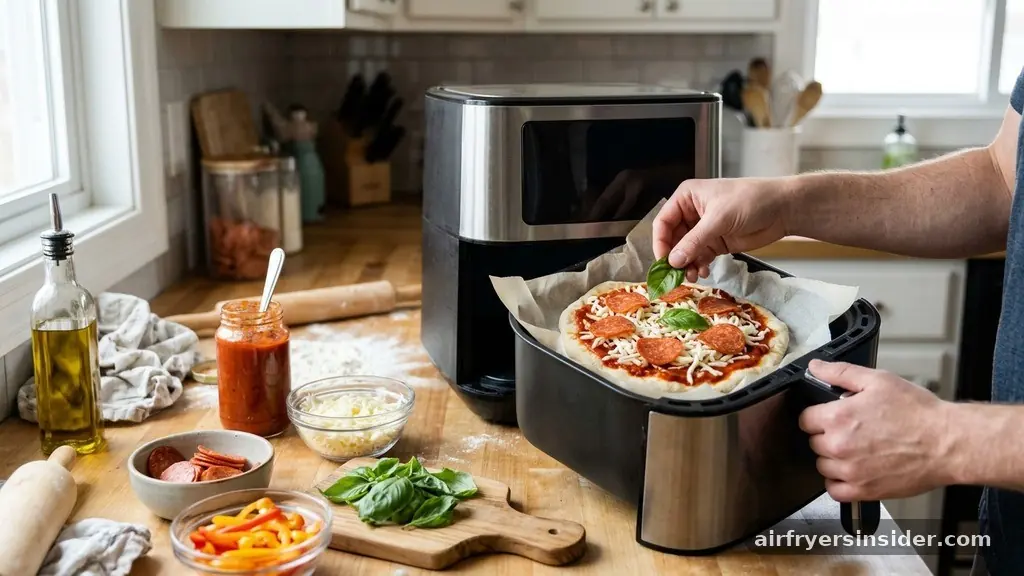
When you make pizza in an air fryer, you are working with a shorter cooking time than a traditional oven. This means your toppings need to be prepared accordingly. Heavy, raw vegetables like thick-sliced onions or bell peppers might not cook through before the cheese starts to burn.
It is often better to slice your vegetables thinly or sauté them briefly before applying them to the pizza. This ensures they are tender and flavorful by the time the crust is perfectly crisp.
Mozzarella cheese is the gold standard for pizza, but in an air fryer, you should be mindful of how much you use. Excess cheese can melt and slide off the sides of the crust, creating a messy cleanup scenario. Stick to a moderate amount of cheese and distribute it evenly to allow the hot air to circulate around the toppings.
If you love pepperoni, place the slices on top of the cheese so they become crispy and curled. The intense air circulation will render the fat in the meat perfectly, adding a deep, savory punch to every bite.
Addressing Common Challenges
Even experienced cooks encounter issues when transitioning to air fryer pizza. Perhaps the most common complaint is the crust remaining doughy in the middle. This usually happens when the temperature is set too high, causing the exterior to cook before the heat can penetrate the center.
If you notice this happening, try lowering the temperature by 25 degrees and extending the cooking time by a minute or two. This gentle approach allows the internal temperature of the dough to rise safely.
Another issue is the toppings blowing around due to the high-speed fan. If you are using light ingredients like fresh basil leaves or thin shavings of ham, they might fly off and get stuck in the air circulation system. To prevent this, you can place a small, heat-safe wire rack or a specialized pizza screen over the top of the pizza to hold everything in place.
Alternatively, add light toppings during the last minute of cooking. This keeps them fresh and prevents them from burning or flying away while the crust finishes its final browning stage.
Comparing Methods: Air Fryer vs. Toaster Oven
Many people already own a toaster oven and wonder how it compares to an air fryer for pizza. While both are convenient, they operate on slightly different principles.
A toaster oven relies mostly on radiant heat from heating rods, while an air fryer uses forced convection. This fundamental difference makes the air fryer superior for achieving a crispy crust, while a toaster oven is often better for accommodating larger pizzas or baking multiple items at once.
| Feature | Air Fryer | Toaster Oven |
|---|---|---|
| Cooking Speed | Very Fast | Moderate |
| Crust Texture | Crispy/Crunchy | Soft/Chewy |
| Heat Distribution | Even (Convection) | Variable (Radiant) |
| Best For | Individual Pizzas | Multiple Slices |
As shown in the table, the choice depends on your priorities. If you want a quick, personal-sized pizza with a restaurant-style crunch, the air fryer is the clear winner.
If you are preparing food for a family or prefer a thicker, softer crust, a toaster oven might be more appropriate. Mastering the air fryer requires a shift in mindset regarding batch sizes and ingredient prep, but the speed and texture benefits are well worth the effort.
Reheating Slices for Maximum Quality
One of the most practical uses for an air fryer is reheating leftover pizza. Forget the microwave, which often leaves the crust rubbery and the cheese tough. The air fryer restores the pizza to its original glory by crisping up the bottom and gently melting the cheese without drying out the toppings.
To get the best results, reheat your slices at a moderate temperature for three to five minutes. This brings the crust back to life and ensures the cheese is perfectly gooey.
If you are reheating a slice with heavy toppings, keep an eye on it to ensure they don’t burn. You might want to place the slice on a small piece of parchment paper to make removal easier.
Because the air fryer circulates heat so effectively, even a thick-crust slice will be heated through to the center in just a few minutes. It is arguably the best method for reviving leftovers, and once you try it, you will likely never go back to using a microwave or a conventional oven for your leftover slices.
Top Tips for Consistent Results
- Always ensure your dough is room temperature before stretching; cold dough is difficult to work with and prone to shrinking.
- Avoid overcrowding the basket; if the air cannot circulate freely, you will end up with soft, unevenly cooked spots.
- Experiment with different flour types; using a bit of semolina flour on your work surface can add extra crunch to the base.
- Keep a kitchen towel or oven mitts nearby; the basket and the pizza will be extremely hot immediately after cooking.
- Don’t be afraid to experiment with unique toppings; the air fryer is excellent at caramelizing onions and roasting garlic.
By following these simple guidelines, you will find that making pizza in an air fryer becomes a routine part of your cooking repertoire. The key is consistency and observation. Every air fryer model has its own personality, so treat your first few pizzas as a learning experience.
Once you understand how your specific machine handles heat and air, you will be able to produce delicious, crispy results every single time. It is a fantastic way to enjoy a classic comfort food without the hassle of a full-scale kitchen cleanup.
Frequently Asked Questions
Is it safe to put parchment paper in an air fryer?
Yes, it is safe as long as the paper is weighed down by food. If the paper is loose, the fan can blow it into the heating element, which is a fire hazard. Always ensure the pizza covers the paper completely.
Can I cook a raw pizza dough in an air fryer?
Absolutely. You can cook raw dough directly in the basket.
Just ensure it is preheated properly and the dough is thin enough to cook through before the toppings brown. A light dusting of flour helps keep it from sticking.
How do I stop the cheese from blowing around?
The high-speed fan can sometimes displace light toppings. To prevent this, use a small wire rack to weigh down the toppings, or add shredded cheese and delicate items like fresh basil in the final minute of the cooking cycle.
What temperature is best for air fryer pizza?
Most recipes work best between 375°F and 400°F. If your pizza has many toppings, lean toward 375°F to ensure the crust cooks through without burning the top. If you prefer a very crispy thin crust, 400°F is usually ideal.
Conclusion
Mastering the art of making pizza in an air fryer opens up a world of convenience and culinary satisfaction. By focusing on the fundamentals—proper preheating, mindful topping selection, and managing the airflow within the basket—you can consistently create delicious, crispy pies that rival those from a traditional oven. Whether you are crafting a fresh homemade pizza from scratch or simply reheating a slice from the night before, the air fryer delivers efficiency and texture that is hard to beat.
As you continue to experiment with different doughs and flavor combinations, you will find that this compact appliance is an essential tool in your kitchen. Enjoy the process of perfecting your technique and sharing your quick, crispy creations with friends and family.