Wondering if you can have an air fryer in a dorm room is a common dilemma for students looking to upgrade their campus dining experience. While the idea of crispy snacks and easy meals is appealing, campus housing policies are notoriously strict regarding high-heat kitchen gadgets. Before you hit “add to cart,” it is vital to understand that the answer depends entirely on your specific university’s residential life handbook.
Many schools classify these devices as prohibited appliances due to their potential to trigger fire alarms or overload fragile electrical circuits. Checking your local regulations is the only way to avoid confiscation or potential disciplinary action during your next room inspection.
Understanding University Housing Policies and Fire Safety
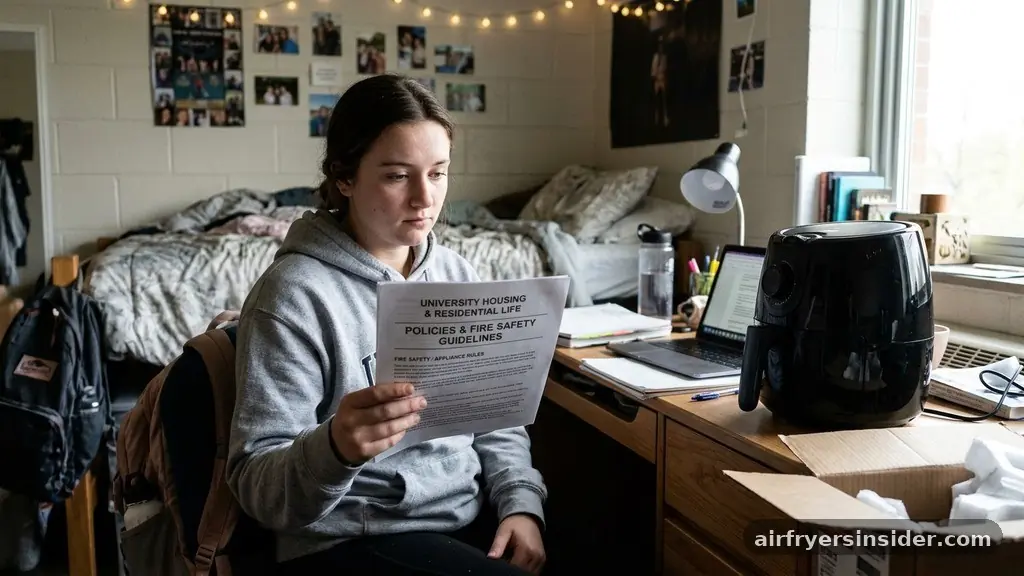
The primary reason most colleges restrict cooking equipment centers on fire safety regulations. Dormitories are high-density living environments, and a single malfunction can jeopardize the safety of hundreds of residents. When housing administrators draft the residential life handbook, they prioritize the prevention of accidental fires.
Most air fryers operate by circulating extremely hot air, which, if not properly ventilated, can cause a smoke detector to trigger a building-wide evacuation. This is why many institutions explicitly list these devices under prohibited appliances.
Beyond the smoke risk, there is the issue of electrical outlet capacity. Older dorm buildings often have outdated wiring that wasn’t designed to handle the power draw of modern kitchen gadgets. If you plug a high-wattage device into a power strip or a shared outlet, you risk tripping a circuit breaker.
Repeatedly blowing a fuse in your hallway or suite will quickly put you on the radar of your resident assistant. Always consult the official campus housing office website before bringing any electronic device that generates significant heat, as policies can change from one academic year to the next.
How to Check Your Specific Dorm Rules
Before you assume you can have an air fryer in a dorm, you need to conduct a bit of detective work. Start by logging into your university portal or checking the physical copy of the housing contract you signed. The section on “permitted items” or “prohibited appliances” is usually quite specific.
If the document doesn’t mention air fryers by name, look for categories like “open heating elements” or “appliances exceeding X wattage.” Some schools allow specific models that are certified by Underwriters Laboratories (UL) or those that feature an auto-shutoff mechanism, but this is the exception rather than the rule.
If the handbook remains ambiguous, reach out to your residence life coordinator or your resident assistant. Do not rely on hearsay from upperclassmen who might be getting away with an unapproved device; just because they haven’t been caught during a room inspection doesn’t mean you won’t be.
Sending a polite, professional email to the housing department ensures you have a paper trail if there is ever a dispute. If you find that these devices are strictly forbidden, it is better to invest in allowed compact kitchen appliances rather than risking a fine or the loss of your property.
The Reality of Electrical Capacity and Wattage Limits
Dorm rooms are notorious for having limited power access. When you consider bringing an air fryer, you must account for the total wattage limits of your room’s circuit.
Most standard dorm outlets are rated for a specific amperage, and adding a device that pulls 1,200 to 1,500 watts—the standard range for most air fryers—can push that circuit to its absolute limit. If you have a refrigerator, a laptop, and a desk lamp running on the same line, you are playing a dangerous game with your room’s power stability.
Furthermore, never use an extension cord or a standard power strip with high-heat appliances. These cords are rarely rated to handle the sustained high wattage that a cooking device demands, which can lead to overheating and, in worst-case scenarios, electrical fires.
If your school does allow an air fryer, you must plug it directly into a wall outlet to minimize the risk of a hazard. Understanding your room’s electrical infrastructure is just as important as knowing the rules; being a responsible student means recognizing that your dorm was designed for studying, not for heavy-duty meal preparation.
Managing Ventilation and Smoke Detection
Even if your university permits an air fryer, managing the aftermath of cooking is a challenge in small living spaces. Dorm room ventilation is often minimal, consisting of a single window or a basic HVAC system that isn’t designed to clear grease-laden steam or smoke.
An air fryer, while cleaner than a deep fryer, still produces odors and fine particulates that can easily set off a sensitive smoke detector. If your room is equipped with a wall-mounted fire alarm, you are essentially cooking in a space where the slightest puff of smoke could result in an expensive false alarm fee.
To mitigate this, you must be hyper-aware of what you are cooking. Avoid high-fat foods that drip and create smoke, and always ensure the unit has plenty of clearance from curtains, bedding, and paper-based study materials.
Keeping the device clean is also essential; a buildup of crumbs or grease in the bottom of the basket will inevitably burn the next time you turn it on. If you do use one, consider placing a fan in your window to pull air out of the room, but remember that the best way to avoid a fire extinguisher incident is to be mindful of your proximity to the detector.
Comparing Common Dorm Cooking Appliances
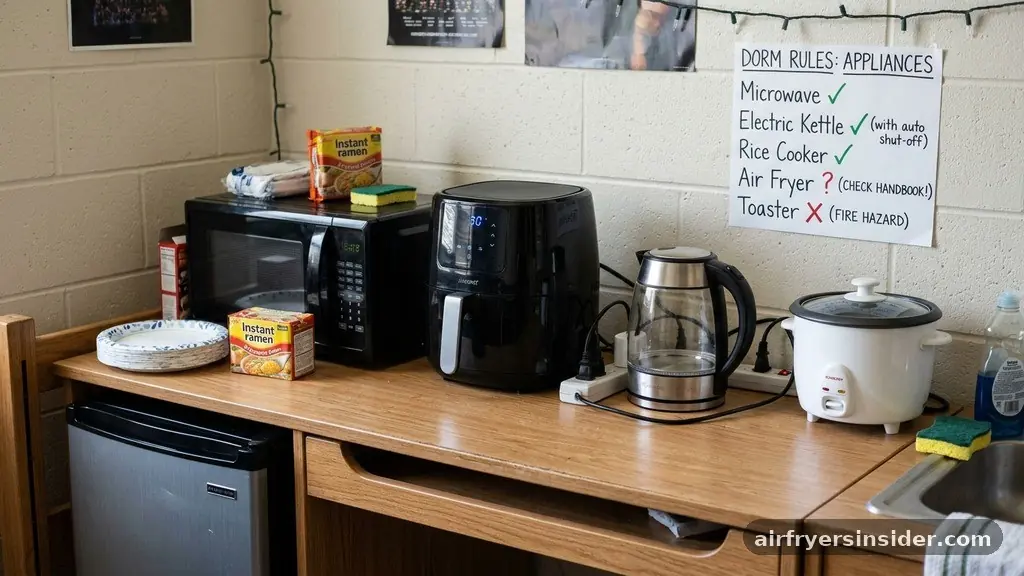
When deciding how to handle your nutrition in college, it helps to compare the risks and benefits of various tools. While the allure of an air fryer is strong, other devices might be more permissible or practical for your specific living situation.
| Appliance | Common Status | Safety/Risk Level |
|---|---|---|
| Microwave Oven | Usually Permitted | Low (if used correctly) |
| Air Fryer | Often Prohibited | Moderate to High |
| Induction Cooktop | Strictly Prohibited | Very High |
| Electric Kettle | Usually Permitted | Low (with auto-shutoff) |
As shown in the table, the microwave remains the gold standard for dorm living because it is widely accepted and relatively safe. Induction cooktops and traditional hot plates, on the other hand, are almost universally banned because they feature exposed heating elements or potential for high-intensity thermal damage.
If you are determined to cook, stick to the items that appear on your university’s “approved” list. Deviating from this list not only puts you at risk of losing your security deposit but also creates a fire hazard that could endanger your neighbors.
Addressing Topical Gaps in Dorm Cooking
A common question that often goes unanswered is how to handle meal prep when you are barred from using standard kitchen equipment. Many students feel that if they cannot have an air fryer in a dorm, they are relegated to a permanent diet of cold sandwiches or expensive takeout.
This is a misconception. You can effectively manage your nutrition using allowed tools like a high-quality blender for smoothies, a microwave-safe steamer for vegetables, or a small rice cooker, which is often permitted even when other appliances are not.
Another gap in the conversation is the impact of off-campus housing. Many students transition to apartments after their freshman year, where they regain the freedom to use whatever appliances they choose. If you are currently in a restrictive dorm environment, look at this as a temporary phase.
Use this time to master the art of “microwave gourmet” or learn how to utilize your campus meal plan to its fullest potential. By focusing on nutrition through permitted means, you build healthy habits that will serve you well once you move into a space where you can finally use your favorite kitchen gadgets without fear of a room inspection.
The Importance of Adhering to the Code of Conduct
Your university code of conduct is more than just a document of rules; it is a binding agreement that dictates your residency status. When you sign your housing contract, you agree to abide by all fire safety regulations, including those governing the use of electrical appliances.
Ignoring these rules because you want a crispy chicken wing is a breach of contract. If an incident occurs, the consequences can range from a warning and confiscation of the item to fines or even expulsion from housing.
Resident assistants are trained to spot prohibited items during routine room inspections. Even if you hide your air fryer in a closet, it is likely to be discovered if a maintenance issue requires staff to enter your room. Furthermore, if you are caught, you lose the trust of the housing department, which can make it harder to advocate for yourself in future housing-related situations.
Respecting the rules is a sign of maturity and a necessary part of the college experience. If you find the regulations too restrictive, the appropriate channel is to work with student government to request policy changes rather than simply breaking the rules.
Alternatives to Traditional Air Frying
If you find that you absolutely cannot have an air fryer in your dorm, there are several ways to satisfy those cravings without violating fire safety regulations. First, look into microwave-safe crisping trays.
These specialized pans are designed to brown food in the microwave, offering a texture that mimics air-frying without the need for high-heat coils. They are perfectly safe, usually very affordable, and won’t trigger a fire alarm.
You can also lean into no-cook or low-heat prep methods. Using a basic electric kettle allows you to make instant oatmeal, couscous, or ramen, providing a hot meal without the risks associated with high-wattage cooking. Additionally, focus on fresh, nutrient-dense foods that don’t require heating at all.
A well-stocked mini-fridge with pre-cut veggies, hummus, yogurt, and deli meats can provide a balanced diet that supports your academic performance. The goal is to be creative within the boundaries set by your university, ensuring you stay well-fed without risking your living situation or the safety of your dorm mates.
Preparing for Future Living Arrangements
Many students view the restriction on appliances as a major annoyance during their first year, but it is a valuable lesson in navigating institutional bureaucracy. Learning to read a residential life handbook, understanding the reasoning behind safety protocols, and finding workarounds for daily needs are all skills that translate to the professional world. As you prepare for your future, whether that means moving into an off-campus apartment or living in a communal house, you will eventually have the space and the permission to use all the kitchen equipment you desire.
For now, focus on your studies and use the resources provided by the university. Campus dining halls have evolved significantly and often provide a wide range of healthy, freshly prepared options that are far more convenient than cooking in a cramped room.
By utilizing your meal plan and focusing on simple, safe food preparation, you save time, money, and the stress of potential disciplinary action. When the time comes to move into your own place, your first purchase can be the best air fryer on the market, and you will appreciate it all the more because you waited until it was safe and allowed.
Frequently Asked Questions
Can I keep an air fryer in my dorm if it has an auto-shutoff feature?
Even if your air fryer features an auto-shutoff mechanism, it is likely still prohibited if your university bans high-wattage heating appliances. Most residential life handbooks prohibit these devices based on total power draw and fire risk, regardless of specific safety features or brand-name certifications.
Will a resident assistant definitely find my air fryer during an inspection?
While not every room inspection is a thorough search, resident assistants are trained to identify prohibited items. If they spot your air fryer during a routine check or a maintenance visit, they are required to report it, which usually leads to confiscation and potential fines.
Are there any exceptions to the rule against air fryers in dorms?
Some universities allow specific appliances if they are part of a school-approved list or if you have a medical necessity that requires specialized food preparation. You should always contact your campus housing office directly to request a formal exception before bringing the device onto campus property.
What happens if I trigger the fire alarm while cooking in my room?
Triggering a fire alarm due to unauthorized cooking is a serious offense. You will likely face a fine for the fire department’s response, potential disciplinary action through the university’s code of conduct, and a permanent mark on your student housing record regarding safety violations.
Conclusion
Navigating the rules of campus living is a fundamental part of the college experience. While it is natural to want the convenience of an air fryer, the risks associated with fire safety and electrical capacity are simply too high to ignore. By consulting your residential life handbook and respecting your university’s guidelines, you protect not only your own housing status but also the safety of your peers.
There are plenty of creative, safe ways to enjoy great food while living on campus, and the restrictions you face today are only temporary. If you find that you need more control over your cooking, look forward to your future off-campus living arrangements where you can fully equip your own kitchen. For now, stay safe, follow the rules, and make the most of the resources available to you.
Meta Description: Can you have an air fryer in a dorm? Learn the truth about campus fire safety, residential life rules, and the risks of using prohibited appliances.