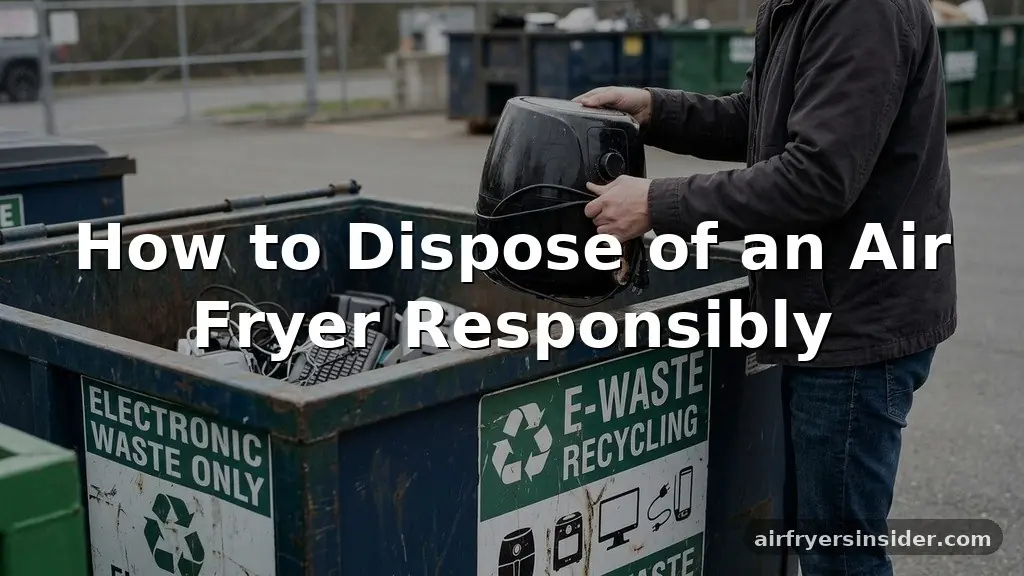
When your kitchen workhorse finally stops heating or the non-stick coating flakes away to the point of no return, figuring out how to dispose of an air fryer safely becomes a priority. You shouldn’t just toss these devices into the standard trash bin, as they contain complex materials that require specialized handling.
Proper disposal helps divert waste from landfills and ensures that valuable raw materials are recovered rather than left to break down in the environment. By taking a few moments to understand your local options, you can ensure your old appliance is handled in an environmentally responsible manner.
Understanding the Composition of Your Air Fryer
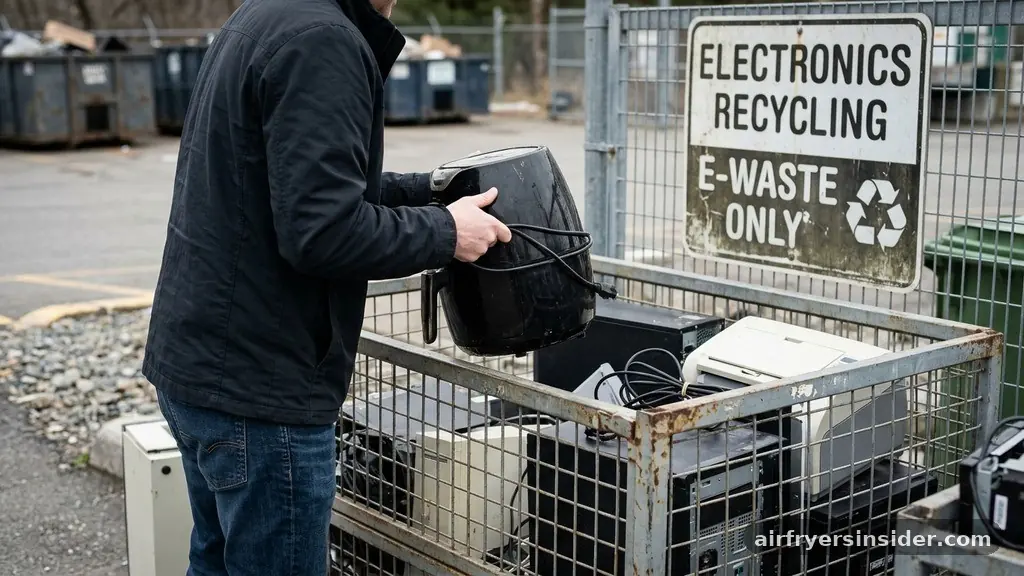
An air fryer is essentially a high-powered convection oven packed into a compact frame. Because it combines heating elements, fans, and digital control panels, it falls under the category of small kitchen appliances that are classified as e-waste.
When you look at the device, you see a plastic or stainless steel exterior, but the internal reality is much more complex. Inside, you will find a printed circuit board, copper wiring, and specialized electrical components that are not meant for general household trash.
The non-stick coating often found on the basket, which is typically a form of PTFE or similar polymers, adds another layer to the disposal conversation. While these coatings are generally safe during normal use, they can become an environmental concern if discarded improperly in large quantities.
Furthermore, the plastic housing and heavy metals used in the motor assembly must be processed in facilities equipped to separate these materials. Recognizing that your appliance is a composite of different substances is the first step toward effective and sustainable disposal.
Why Standard Curbside Trash is Not the Answer
Many people mistakenly believe that since an air fryer is a household item, it belongs in the regular trash bin. However, most local waste management authorities explicitly prohibit electronics and small appliances from standard curbside collection.
When these items end up in a landfill, they can leak hazardous components into the soil or groundwater over time. The heavy metals and chemical flame retardants present in the internal wiring are particularly problematic when left to decompose in a landfill environment.
Landfill diversion is a critical goal for modern waste management. By keeping your appliance out of the general waste stream, you support the recovery of valuable metals like copper and aluminum.
These materials can be recycled and repurposed for new manufacturing, reducing the need for raw resource extraction. If your local sanitation department sees an appliance in your regular bin, they might even leave it behind or issue a fine, making it far more practical to use the correct disposal channels from the start.
Locating Your Nearest Electronics Recycling Facility
The most direct way to handle your old machine is to visit an electronics recycling facility. These centers specialize in breaking down devices into their base components, ensuring that circuit boards, plastics, and metals are sorted correctly.
You can often find a local center by using online tools like Earth911, which allows you to search by your zip code and the type of material you need to discard. This is often the most reliable method for ensuring your device is handled according to strict environmental standards.
Many municipal recycling centers also host periodic collection events specifically for e-waste. These events are often free for residents and provide a safe, regulated environment for dropping off items that aren’t accepted during weekly pickups.
Check your city or county website to see if there is an upcoming date for hazardous waste collection or a designated drop-off day for appliances. Planning your disposal around these events can save you a trip to a private facility and ensures your appliance is processed by professionals.
Exploring Retail Drop-off Points and Trade-in Programs
If you aren’t near a specialized recycling center, check if any local retailers offer appliance trade-in programs or electronics recycling services. Some major retailers have established partnerships with recycling firms to accept old appliances, regardless of where they were originally purchased. Even if a store doesn’t have a formal trade-in program, the customer service desk can sometimes point you toward their own internal recycling protocols for small electronics.
Retailers like Best Buy have long been leaders in this space, often maintaining collection kiosks for various types of electronics. While policies change, it is always worth a quick phone call to the store manager or a check on their website to see if they are currently accepting small kitchen appliances.
These retail drop-off points are incredibly convenient, especially if you are already planning a trip to the store. Just be sure to wipe any personal data if your air fryer has a digital interface that stores settings or connectivity information, though this is rare for standard air fryers.
| Disposal Method | Convenience Level | Environmental Impact |
|---|---|---|
| Municipal E-waste Event | Moderate | High (Excellent) |
| Retail Drop-off | High | High |
| Scrap Metal Yard | Low | Moderate |
| Donation Center | High | Neutral (Depends on condition) |
Donation: When the Appliance Still Has Life
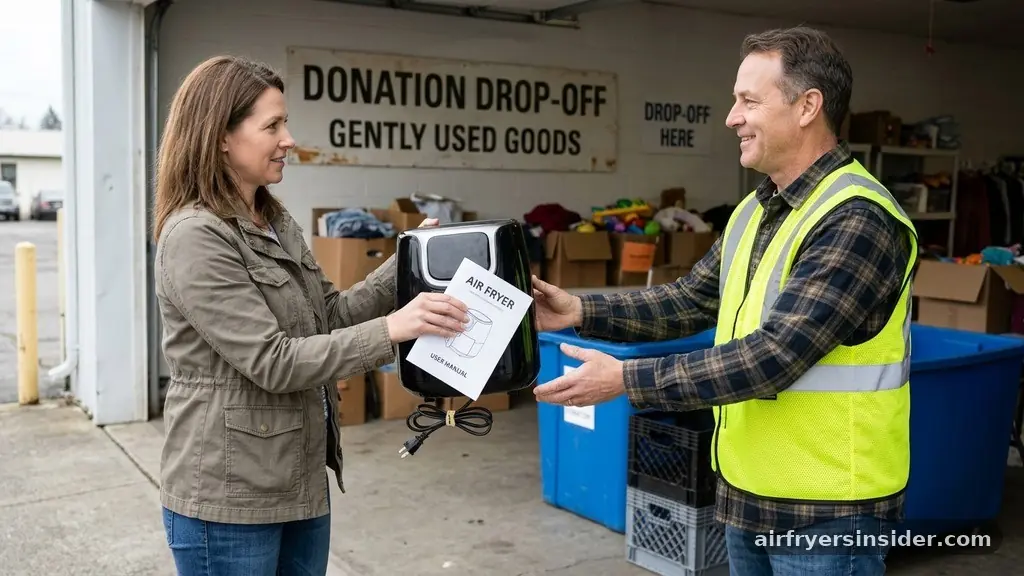
Before you commit to recycling, consider whether the appliance is actually broken or just unwanted. If the air fryer is still fully functional but you are simply upgrading to a newer model, it might be better to donate it rather than dispose of it.
Many local charities, thrift stores, and shelters are happy to accept clean, working small kitchen appliances. Donation is a form of waste prevention that extends the life of the product and helps someone else in your community.
However, be honest about the condition of the device. If the heating element is inconsistent or the basket is severely damaged, it is not a good candidate for donation. Most centers have strict policies against accepting broken electronics because they do not have the resources to repair them.
If you aren’t sure, call ahead to ask if they accept used appliances. If they don’t, you can still follow the recycling routes mentioned earlier to ensure the materials don’t go to waste.
Using Scrap Metal Recycling for Parts
If you are a DIY enthusiast or have a local scrap metal yard, you might be able to recover some value from the metal components of your fryer. Scrap metal recycling is an industry dedicated to the recovery of copper, aluminum, and steel.
If you are willing to disassemble the unit, you can strip the copper wiring and separate the metal housing from the plastic shell. This allows the metal to be sold or dropped off at a facility that specifically handles metal recovery.
This option is more labor-intensive and requires basic tools like screwdrivers and wire cutters. Be mindful of the hazardous components inside, such as the thermal fuses or delicate circuit boards, which should still be taken to an e-waste center even if you harvest the scrap metal. Only attempt this if you are comfortable with the process, as the goal is to keep the hazardous parts out of the regular trash while recycling the valuable base materials.
Addressing Common Disposal Gaps
A common question that often goes unanswered is how to handle the non-stick coating and plastic parts that are glued to metal components. Many people worry about the environmental impact of Teflon recycling or the chemical nature of the plastic housing.
The reality is that industrial recycling centers use shredders and magnetic separators to pull these materials apart. You do not need to manually peel off the non-stick coating; the specialized equipment at the processing plant handles the separation of polymers from the metal substrate during the high-heat smelting or mechanical shredding process.
Another gap is the issue of “smart” air fryers that connect to Wi-Fi. Many consumers worry about data privacy before they dispose of their device. While most air fryers have limited memory, it is a good habit to perform a factory reset if the interface allows it.
If the device is completely dead, there is no risk of data leakage. Simply treat it as standard e-waste, as the small amount of memory on these chips is destroyed during the shredding phase of the recycling process.
Navigating Appliance Disposal Regulations
Appliance disposal regulations vary wildly depending on your state and municipality. Some regions have “extended producer responsibility” laws that require manufacturers to pay for the recycling of their products.
This often results in more robust collection programs in those specific states. Before you toss your unit, a quick search for your city’s name followed by “e-waste disposal regulations” can save you significant trouble.
Some cities offer bulky item pickup, but this is usually reserved for large items like refrigerators or stoves. If you try to schedule a bulky item pickup for a small air fryer, the city might refuse it or charge an unnecessary fee.
Always verify the weight and size requirements for these services. Often, the city will have a separate, dedicated program for small electronics that is completely independent of their general bulk waste pickup schedule.
The Environmental Impact of Responsible Disposal
Choosing to recycle your appliance is a meaningful contribution to a circular economy. When you ensure your air fryer is processed by a legitimate facility, you are helping to reclaim materials that would otherwise require mining.
The energy required to recycle aluminum, for instance, is significantly lower than the energy required to create new aluminum from raw bauxite ore. By keeping these materials in the loop, you reduce the overall carbon footprint of your household.
Furthermore, responsible disposal prevents the leaching of heavy metals into the environment. Lead, cadmium, and mercury—which can sometimes be found in older electronic components—are hazardous to the ecosystem.
By choosing the right disposal path, you help keep these substances out of our water supply and soil. It is a small action, but when multiplied by thousands of households, it makes a substantial difference in the health of our environment.
FAQ
Can I throw an air fryer in the regular trash?
No, you should not put an air fryer in your regular trash bin. These appliances contain electronic components and heavy metals that must be processed at an e-waste facility to prevent hazardous materials from leaching into landfills and to allow for the recovery of recyclable materials.
Does Best Buy or other retailers recycle air fryers?
Many large electronics retailers do offer recycling programs for small appliances, but policies vary by location and current inventory capacity. It is highly recommended to check the retailer’s website or call your local branch to confirm if they are currently accepting small kitchen appliances for recycling.
What if my air fryer is still in good working condition?
If your air fryer is still functional, the best option is to donate it. Local charities, thrift stores, or community centers can often find a new home for the device. This extends the product’s life and prevents it from entering the waste stream prematurely, which is the most sustainable choice.
How do I find a recycling center near me?
The most efficient way to locate a facility is to use the Earth911 website or search for “e-waste recycling” followed by your city name. These resources provide a list of local drop-off points, municipal collection events, and specialized centers that handle small kitchen appliances safely.
Conclusion
Properly disposing of an air fryer is a straightforward process when you prioritize recycling and donation over the standard trash bin. By taking the time to identify the right local facility, checking for retail drop-off options, or ensuring the device finds a second home through donation, you contribute to a cleaner environment and the efficient reuse of valuable materials. Remember that your local waste management authority is a great resource if you are unsure about specific regional rules.
Taking this extra step ensures that your old kitchen appliance doesn’t become a long-term environmental burden. Reach out to your local municipality today to learn about their specific e-waste collection schedules and play your part in sustainable waste management.
Meta Description: Learn how to dispose of an air fryer responsibly. Discover eco-friendly recycling options, donation tips, and why your old appliance shouldn’t go in the trash.