Many home cooks wonder if they can cook a roast in an air fryer without sacrificing the quality of the meat. The short answer is yes, you absolutely can, and the results often rival those of a traditional oven. By circulating hot air at high speeds, this compact appliance creates a Maillard reaction that is difficult to achieve with standard roasting methods.
Whether you are aiming for a tender, succulent center or a perfectly browned surface, mastering the timing and temperature is the key to success. This approach saves time and energy, offering a faster way to enjoy a hearty, protein-packed meal on a busy weeknight.
Understanding the Air Fryer Roasting Process
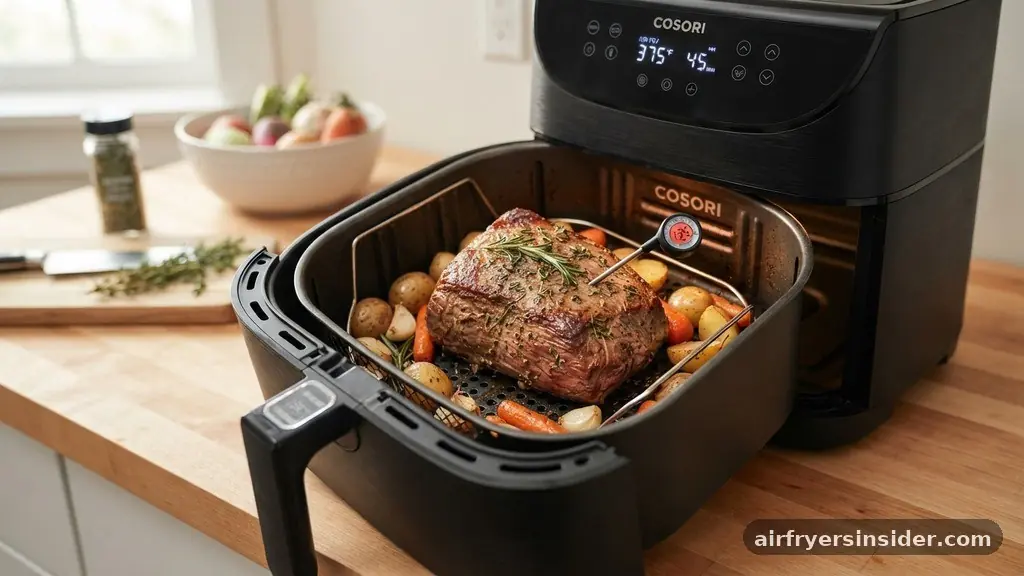
At its core, an air fryer is essentially a high-powered convection oven. When you roast a piece of beef in this device, you are relying on rapid air circulation to transfer heat directly to the surface of the protein.
Unlike a conventional oven, which relies on ambient heat and slower cycles, the air fryer forces hot air into every corner of the cooking chamber. This means your roast cooks more evenly and significantly faster than it would in a traditional range.
To achieve success, you must treat your air fryer like a miniature roasting rack. Because the space is confined, moisture management becomes a vital part of your technique. You aren’t steaming the meat; you are searing and roasting it.
This is why many chefs prefer to sear the meat in a pan before placing it into the basket, though modern air fryers with high-wattage heating elements can often handle the browning process entirely on their own. The goal is to balance the internal temperature with the desired exterior texture.
Selecting the Right Cuts of Meat
Not all cuts of beef respond to the air fryer in the same way. Dense, lean cuts like a sirloin tip are excellent candidates because they benefit from the quick, intense heat.
A sirloin tip, when prepared correctly, offers a beautiful texture that remains firm enough to slice thinly while staying juicy. You want to avoid extremely large, bone-in cuts that might touch the heating element or block the airflow, which would prevent the air from circulating properly.
When shopping, look for roasts that weigh between two and three pounds. This size is typically the sweet spot for most standard air fryer baskets, allowing enough room for the air to move around the meat.
If you choose a cut that is too large, the outside will dry out before the center has a chance to reach your preferred level of doneness. Compact, uniform shapes are always superior for air frying because they ensure a consistent cook from edge to center.
Preparation and Seasoning Techniques
Preparation and seasoning techniques are the foundation of a flavorful roast. Start by taking your meat out of the refrigerator at least thirty minutes before you plan to cook.
Allowing the roast to come to room temperature ensures that the heat penetrates the center more uniformly, rather than overcooking the outer layers while the core remains cold. Pat the surface of the meat completely dry with paper towels; moisture is the enemy of a good sear.
Once dry, rub the roast with a high-smoke-point oil like avocado or grapeseed oil. This acts as a conductor for the heat and helps the seasoning adhere to the surface. For the rub, keep it simple: coarse salt, freshly cracked black pepper, and perhaps some minced garlic or dried rosemary.
Avoid sugary rubs early in the process, as the high heat of the air fryer can cause sugar to char and turn bitter before the roast is finished. Apply your rub generously, pressing it into the meat to create a flavorful crust during the cooking phase.
Mastering Temperature and Doneness
To get that coveted crust, you must be precise with your thermal monitoring. Investing in a high-quality digital meat thermometer is non-negotiable if you want to achieve professional results.
You should aim for specific internal temperatures based on your preference for doneness. Using the following guidelines will help you pull the meat at the perfect moment:
- Rare: 125°F (52°C) – Aim for a cool, red center with a soft texture.
- Medium-Rare: 135°F (57°C) – Often considered the ideal balance for a roast.
- Medium: 145°F (63°C) – The meat will be firmer with a warm pink center.
- Well-Done: 160°F (71°C) – Fully cooked throughout with no pink remaining.
Remember that the temperature will continue to rise by about five to ten degrees after you remove the roast from the air fryer. This is known as carry-over cooking. Always pull the meat slightly before it hits your target temperature to ensure it lands exactly where you want it after resting.
The Importance of the Resting Period
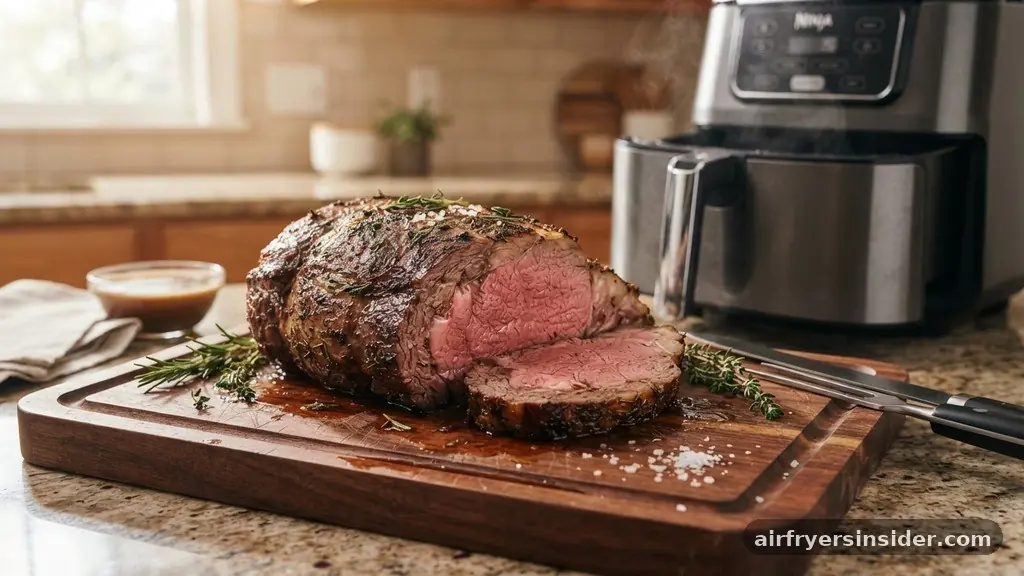
Resting is perhaps the most overlooked step in the entire cooking process. After the timer goes off, transfer your roast to a cutting board or a warm plate and tent it loosely with aluminum foil.
Let the meat sit for at least fifteen to twenty minutes before slicing. During this time, the muscle fibers relax and the juices, which were pushed toward the center by the intense heat, redistribute throughout the roast.
If you cut into the meat immediately, those juices will run out onto the board, leaving you with dry, disappointing slices. The resting period is not just about temperature; it is about texture.
It provides that elegant finish that defines a high-quality meal. While the meat rests, you can use the time to prepare a simple pan sauce or finish roasting your side vegetables in the residual heat of the air fryer basket.
Common Troubleshooting and Safety
Even with the best preparation, Common Troubleshooting and Safety concerns can arise when using an air fryer for large proteins. One common issue is the exterior browning too quickly while the interior remains raw, resulting in a gray, unappealing exterior if the temperature is set too high. If you notice the surface darkening too fast, lower the temperature by 25 degrees and increase the cooking time.
Another issue is smoke. Because air fryers use intense heat, fat drippings can smoke if they hit the bottom of the basket. To prevent this, add a small amount of water or a slice of bread to the bottom of the air fryer drawer to catch the drippings.
Never overcrowd the basket, as this restricts airflow and leads to uneven cooking. Always ensure the unit is on a stable, heat-resistant surface, and never leave it unattended for long periods while roasting larger cuts of beef.
Comparing Cooking Methods
Choosing between an oven and an air fryer often comes down to the volume of food and your time constraints. The following table highlights the primary differences between these two methods for roasting beef.
| Feature | Air Fryer | Traditional Oven |
|---|---|---|
| Cooking Speed | Fast (High convection) | Slow (Radiant heat) |
| Energy Use | Lower | Higher |
| Cleanup | Easy (Basket/Tray) | Moderate (Large pan) |
| Capacity | Limited (1-2 roasts) | High (Multiple roasts) |
As shown in the table, the air fryer is significantly more efficient for smaller, single-roast meals. It reaches high temperatures almost instantly, eliminating the long preheating time associated with conventional ovens. While you cannot fit a massive feast inside most air fryers, for a family dinner or a weekend treat, the speed and energy efficiency are hard to beat.
Addressing Topical Gaps
Many enthusiasts often wonder if they can cook a roast chicken or other proteins alongside their beef. While it is technically possible, it is generally discouraged due to differences in required cooking temperatures and the risk of cross-contamination. Furthermore, the juices from a chicken can create a soggy exterior on your beef, preventing the crispy crust you are working so hard to achieve.
Another common gap in knowledge involves the use of aluminum foil. While you can use foil in an air fryer to make cleanup easier, you must be careful. If the foil is too light, the force of the air circulation can lift it up and blow it into the heating element, which is a major fire hazard.
Always ensure your foil is tucked securely under the roast and does not obstruct the airflow path. Using a dedicated air fryer roasting rack is a much safer and more effective way to elevate your meat for better air circulation.
Optimizing Results for Success
To consistently achieve restaurant-quality results, focus on the consistency of your heat. Avoid opening the basket repeatedly to check on the meat; every time you pull the drawer out, the temperature inside drops significantly, which disrupts the cooking cycle and adds time to the process.
Trust your meat thermometer rather than the timer on the device. Every air fryer is calibrated differently, and the specific wattage of your model will dictate exactly how long your roast needs to stay in.
Finally, consider the seasoning profile. Because air frying is a dry-heat method, your seasoning needs to be robust. Garlic powder, onion powder, and smoked paprika are excellent additions that hold up well under high heat.
If you want to get creative, try a compound butter made with fresh herbs, which you can rub onto the roast for the final ten minutes of cooking. This adds a layer of richness that complements the intense sear of the air fryer.
Conclusion
Learning to cook a roast in an air fryer is a game-changer for any home cook looking to balance efficiency with quality. By understanding the mechanics of how your appliance works, selecting appropriate cuts of meat, and mastering the timing, you can produce a meal that is both tender and flavorful. Always prioritize the internal temperature of the beef to ensure safety and quality, and never underestimate the value of a proper resting phase.
As you become more comfortable with these steps, you will find that this method offers a reliable, low-maintenance way to enjoy a classic roast whenever the craving strikes. Experiment with different seasonings and techniques, and don’t hesitate to share your favorite results with friends and family.
Frequently Asked Questions
Is it better to cook a roast in the oven or air fryer?
The air fryer is faster and more energy-efficient for smaller roasts, providing a better sear. However, a conventional oven is better for larger cuts or when you need to cook multiple items at once. Choose the air fryer for speed and convenience on weeknights.
What meat shouldn’t be cooked in an air fryer?
Avoid very large, bone-in cuts that might touch the heating element, as these risk burning on the outside before the center is cooked. Also, avoid meats that need a long, low-temperature braise, as the air fryer is designed for high-heat, dry-cooking applications that would dry out those specific cuts.
How long does it take to cook a 2-pound roast in an air fryer?
Typically, a 2-pound roast takes between 30 to 45 minutes at 350°F to 375°F, depending on the thickness of the cut and your desired level of doneness. Always use a meat thermometer to check the internal temperature, as cooking times can vary significantly based on your specific appliance’s wattage.
How do you ensure the roast stays juicy?
The secret is to not overcook it and to allow it to rest properly. Pull the meat when it is 5-10 degrees below your target temperature, as the internal heat will continue to cook it while it rests. Resting for 20 minutes allows the juices to redistribute, ensuring every bite is moist.
Meta Description: Discover if you can cook a roast in an air fryer with our expert guide. Learn timing, temperature tips, and techniques for a perfect, juicy result.